Showing posts with label Gerald Fried. Show all posts

Friday, June 20, 2014

A fan-made Star Trek: The Motion Picture trailer from 2013 does a better job of selling Robert Wise's mixed bag of a film than the original 1979 trailers did

Yo Spock, you ought to be aiming your phaser at that Killer Klown from Outer Space.
(Photo source: My Star Trek Scrapbook)
Mission Log is an excellent Star Trek podcast I've previously written about here and more recently here. Hosts Ken Ray and John Champion have undertaken an ambitious mission: to analyze every single episode of Star Trek and its TV and movie spinoffs, from 1965 to 2005 (I'm not sure if they'll reach 2009 and 2013, but I already know bits and pieces of what Ray thinks of 2013, and I assume a lot of it is going to be him saying, "Orciiiiiiii!").

The two Star Trek fans want to find out which older Trek episodes stand the test of time, especially in the age of both the antihero on cable and more sophisticated sci-fi shows like former Deep Space Nine writer Ronald D. Moore's Battlestar Galactica, former DS9 writer Ira Steven Behr's much-missed creation Alphas and the current BBC America hit Orphan Black. Anyone who either currently writes for TV or is, like me, considering transitioning to that kind of career ought to listen to Mission Log. The audience gets to learn a lot from Ray and Champion about the things episodic TV from any era does effectively and the things episodic TV--especially TV in the '60s, long before the game-changing, novelistic Hill Street Blues or Game of Thrones--didn't do so effectively. For instance, if the '60s Trek were made for TV today, Edith Keeler's death at the end of "The City on the Edge of Forever" would have deeply affected Kirk's character for the rest of the series, and exploring his grief and guilt over Edith's death would have been a much better move than how the '60s Trek handled her death afterward, and that was to oddly brush Edith aside and completely forget about her as if she were yet another dead Cartwright bride.

Ray and Champion have reached the '80s Trek feature films by this point, and after they did their analysis of Robert Wise's Star Trek: The Motion Picture last week (Ray doesn't think the 1979 film stands the test of time, while Champion thinks it still does), a Mission Log listener from Norcross, Georgia named Alex Bales posted on the podcast's Facebook wall a fan-made TMP trailer he produced. Unless it's made by the people behind the Screen Junkies channel's Honest Trailers series or Ivan Guerrero, I don't care for fan-made movie trailers, but Bales' trailer is a rare fan-made trailer I actually like--and even more so than the 1979 film itself.


TMP is a mixed bag of a film. It's a rehash of concepts from both the 1967 Trek episode "The Changeling" and 2001: A Space Odyssey that were better executed in those '60s productions. TMP ripped off 2001's "evolution into a superior life form" finale (the film even recruited 2001 visual FX genius Douglas Trumbull, who was also involved with Close Encounters, a smash hit that, along with the success of Star Wars, spurred Paramount to rush a Trek feature film into production). I get that Wise and Gene Roddenberry wanted to make the last great old-fashioned space epic (TMP was one of the last Hollywood epics that opened with an overture before flashing the studio logo), and while I kind of appreciate how TMP chose to emulate the contemplative and moody 2001 instead of the then-frequently duplicated Star Wars, plopping crowd-pleasing heroes like Kirk and Spock and quippy secondary characters like McCoy and Scotty into the clinical tone of 2001 is like asking Kendrick Lamar to rhyme over polka music. It's not going to work.

We want to see Kirk, Spock and McCoy wittily sniping at each other and debating over serious ethical dilemmas or fighting their way out of trouble like they frequently did on the '60s show (and would later frequently do in Nicholas Meyer's superior Trek films). We don't want to see them gawking silently for 15 minutes at pothead-friendly laser light show FX. Even Wise's previous '70s sci-fi procedural, the equally clinically toned but much superior Andromeda Strain, had more humor and personality than this film, McCoy snarking about Spock being "warm and sociable as ever" aside.

Enterprise engineer Ron Burgundy clearly isn't enjoying the shit out of this meeting. Scottish Daily Dot writer Gavia Baker-Whitelaw runs Hello, Tailor!, a blog that analyzes costume design in geek-friendly movies ranging from TMP to the Marvel Cinematic Universe blockbusters, and in a biting Hello, Tailor! critique of TMP costume designer Robert Fletcher's ugly Starfleet uniform redesigns that's a must-read, she summed up TMP best. She called it "a three-hour screensaver interspersed with shots of William Shatner emoting into the middle distance."

Watching Bales' well-edited fan-made trailer made me notice that Paramount and whatever trailer house it hired in 1979 had no idea how to work around the weak material of this three-hour screensaver and market the film effectively, as evidenced in its Orson Welles-narrated teaser trailer and final trailer. Sure, the film wasn't finished and Jerry Goldsmith's incredible score--the strongest element of TMP--hadn't been recorded yet when the trailer house worked on the teaser, so they didn't have much footage to choose from. But aside from that still-amazing-looking model of the refitted Enterprise in drydock, they chose the least interesting footage--and the least enticing score music, some atonal, THX Deep Note-style synth piece.


Good God, Lemon, the Irwin Allen disaster flick music and the synth church organ cue in the final trailer are even worse than the THX Flat Note. And the announcer who's not Charles Foster Kane is the worst announcer in an illustrious history of Trek trailer and promo announcers that's included Welles, Hal Douglas, Christopher Plummer, Ernie "The Loooove Boat" Anderson, Don LaFontaine and Phil Terrence. The announcer in the final trailer has all the gravitas of Derek from Teenagers from Outer Space. I think maybe it is actually Derek from Teenagers from Outer Space.

Tuesday, June 19, 2012

5-Piece Cartoon Dinner (06/19/2012): Motorcity, ThunderCats, Dan Vs., Kaijudo and Ultimate Spider-Man

'Hey, the Robot from Fox NFL Broadcasts, what's your fucking deal?'
The helmeted villain with no name attempts to trim Mike's bangs.
Each Tuesday in "5-Piece Cartoon Dinner," I dine on five of the week's most noteworthy animated cable shows that are found outside my Adult Swim comfort zone. The episodes are reviewed in the order of when they first aired.

Motorcity introduces yet another adversary for the Burners during another solid episode of this finely crafted cartoon, "Vendetta." This time, it's a nameless, red muscle car-driving warrior (Eric Ladin, just recently killed off on The Killing) in a spiked helmet who looks like a rejected Tron: Uprising baddie and is referred to in the end credits only as "Red"--although this mystery man's beef is mainly with Burners leader Mike Chilton. On the one-year anniversary of the day Mike severed ties with Abraham Kane, Red emerges from out of nowhere to take revenge on Mike and eliminate him.

Like another gazillionaire, Mark Cuban, Abraham Kane apparently doesn't give a fuck about walking around in tight-fitting shirts that he's about 15 years too old to be wearing.
In juicy flashbacks that finally explain what Mike did when he was a KaneCo employee, we learn that he was a cadet in Kane's army of soldiers known as the Ultra Elites. The fact that a businessman assembled an army to guard him and do his dirty work shows how psychotic this particular businessman is.

At the height of Donald Trump's still-continuing racist nonsense about President Obama, Lewis Black did a hilarious Daily Show "Back in Black" segment where he joked that he wants Trump to be the next president because America needs to be run by someone as insane as Muammar Gaddafi and Kim Jong Il. Kane is like a mash-up of Trump's Third World dictator-style craziness and Steve Jobs' technological genius, his dickish treatment of his Apple colleagues and his love of the color white--in the wardrobe and burly body of a douchey gym manager.

Mike was one of Kane's most obedient cadets, and on the day the sinister Detroit Deluxe developer promoted him to lieutenant, he gave Mike his first mission to supervise: the demolition of a Motorcity tenement building. But when Mike discovered that Kane lied to him about the building being abandoned--it was actually still full of tenants inside--he realized Kane's evilness and walked away from his job. Mike was able to save the tenants' lives, but he wasn't able to save their home from the wrecking ball.

'I'm gonna shove this stick up your ass and turn you into a Popsicle.'--Mike Chilton's original line, banned by Disney XD
One of the residents who ended up homeless also happened to be Red, who blames Mike for the loss of his home. As a reminder to Mike of what he failed to save, Red has his armor emblazoned with the dual-triangle insignia that KaneCo marked on the building for demolition. "Vendetta" never really divulges Red's identity (Kane calls him "son" when he presents him with a job offer in the final scene, so I initially thought Red is Kane's son--and therefore, the brother of Burners member Julie--while another theory I had was that he's Mike's blond-haired cadet friend from the flashbacks, but his voice isn't the same as Red's).

Mike asks his new (and rather standoffish) underworld ally, the Duke of Detroit (Dee Snider), if he knows the whereabouts of Racer X. The Duke has no idea who this mystery man is either, but he's a little more helpful when it comes to the Burners' other current predicament, Kane's robomites, tiny robots that feed on metal and quickly multiply. Julie's father made cars illegal in both Detroit Deluxe and Motorcity, and now he's invented robomites to infest Motorcity and deprive the Burners of their cherished rides, as well as destroy the plumbing and housing in the subterranean city.

The Duke, who's worried that the mites will munch on the cars in his mansion and junkyards, supplies the Burners with a surplus of iron in the form of an inexplicably gigantic cube, which the team uses to lure the wafer-sized bots away from the Ambassador Bridge, old Detroit's biggest hunk of iron, and other parts of Motorcity. The Burners spray the block of iron with a corrosive oxidizing agent to poison the mites, which frighten the hell out of the Burners' squeaking robot assistant Roth, even though Roth is made mostly of polymer (copped from KaneCo robot parts by Burners tinkerer Dutch) rather than metal. But the mites are nowhere as frightening as the snack baked by older Burners member Jacob to celebrate the one-year anniversary of Mike's conversion to heroism: okra-mayonnaise muffins.

Texas has become Motorcity's breakout character because of his dumb-jock dialogue (he even refers to himself in the third person like many sports celebrities do), but he isn't always this Keanu-esque Asian jock whose solution for everything is sweet Muay Thai kicks, and he can be quite perceptive when his ego isn't in the way. In this episode, Texas gets to act as a voice of reason when Mike expresses to him his guilt over not having been more aware of Kane's evilness when he worked for him. He tells Mike that his late realization about his tyranny is understandable because a master manipulator like Kane makes it difficult for people to see his true agenda, and then he says, "You've got to stop thinking about what you didn't do and start thinking about what you're doing to save people now."

Texas speechifies it.

And then...

...he Texas-ifies it.
(Photo source: Latia I. Am)
No one in cartoon voice acting does rage quite like Mark Hamill, and while he's terrific as Kane (he was downright menacing when Kane shook Julie around like a rag doll and barked at her in the "Battle for Motorcity" premiere episode), the character has tended to be a one-note villain who does nothing but sneer and rant and lash out at his underlings. (I bet Motorcity creator Chris Prynoski gave Kane's dumbass underling the name Tooley as a shout-out to both Harley Quinn from Hamill's Batman: The Animated Series days and the distinctive way Hamill would put the accent on "Har-LEEEY!!!" whenever The Joker would bark at her. I've noticed Hamill, who's been reunited with his Batman voice director Andrea Romano on this show, does that same accent thing when he yells "Too-LEEEY!!!")

But in the flashbacks in "Vendetta," Hamill gets to tone Kane down a bit and show a more subtle and fatherly side to him, which illustrates Texas' later point about Kane being such an effective enemy because of how he lured to his side good people like Mike, Jacob and the R&D scientist from "Power Trip." I also like how in the flashbacks, "Vendetta" writer John O'Bryan doesn't hold back in turning Kane into the cruelest Disney villain since Scar from The Lion King. Ordering the demolition of a tenement building with residents still inside and without even letting them know that they should evacuate? Wow, that's as vile as an okra-mayonnaise muffin.

***

Revenge is also on the mind of Pumyra (Pamela Adlon), who actually died during Mumm-Ra's destruction of Thundera and has been working for the ThunderCats' nemesis ever since he called on the Ancient Spirits to resurrect her, as the conclusion of ThunderCats' two-part "What Lies Above" finale reveals. She wants Lion-O to suffer for not saving her and has been spying on the ThunderCats for Mumm-Ra.

The Tech Stone, which the ThunderCats tried and failed to borrow from the bird people to defeat Mumm-Ra, winds up in the hands of their nemesis, thanks to the efforts of Pumyra, who's also Mumm-Ra's lover. Thanks a lot, ThunderCats, for putting in my head the disgusting (and most likely Frank Ocean-soundtracked) picture of what Pumyra does with her extremely elderly sugar daddy when they're not plotting to conquer Third Earth.

'Jaga told me he once passed a kidney stone that big.'

Tuesday, August 4, 2009

Let's have some asses wigglin': AFOS August 2009 segment playlists

Purple Rain by Mike Reddy
Starting today at 3pm, these August '09 playlists (intro'd by yours truly, of course) will air Tuesdays and Thursdays at 4am, 10am, 3pm, 7pm and 11pm, and Saturdays and Sundays at 7am, 9am, 1pm, 3pm and 5pm all through August on the Fistful of Soundtracks channel.

This summer marks several anniversaries related to some of my favorite movies or soundtracks: the 25th anniversary of both Ghostbusters and Purple Rain (an example of a movie being outshined by its soundtrack, although I always find myself keeping the channel on Purple Rain whenever it airs on TV) and the 20th anniversary of both Batman (a movie I liked more as a kid than I do now) and Do the Right Thing. So four of this month's segment playlists contain music from those four movies.

"Purify Yourself in the Waters of Lake Minnetonka":
1. Prince and the Revolution, "Computer Blue," Purple Rain, Warner Bros.
2. Prince and the Revolution, "Take Me with U," Purple Rain, Warner Bros.
3. Sharon Jones & the Dap-Kings, "Take Me with U," Purplish Rain, SPIN Media LLC

"Imitation Spaghetti":
4. Lalo Schifrin, "Quick Draw Kelly," Kelly's Heroes, Film Score Monthly
5. Seatbelts, "Go Go Cactus Man," Cowboy Bebop: Blue, Victor
6. Alan Silvestri, "The Mexican--End Credits Medley," The Mexican, Decca/UMG Soundtracks
7. J.G. Thirlwell, "Spag," The Venture Bros.: The Music of JG Thirlwell, Williams Street

The heat from those soundstage lights must be killing Kirk.
"Five Definitive Star Trek Cues":
8. Gerald Fried, "The Ritual/Ancient Battle/2nd Kroykah" (from the episode "Amok Time"), Star Trek Volume Two, GNP/Crescendo
9. Sol Kaplan, "Kirk Does It Again" (from the episode "The Doomsday Machine"), Star Trek Volume Two, GNP/Crescendo
10. Jerry Goldsmith, "Spock Walk," Star Trek: The Motion Picture: 20th Anniversary Collector's Edition, Columbia/Legacy
11. James Horner, "Battle in the Mutara Nebula," Star Trek II: The Wrath of Khan, GNP/Crescendo
12. Michael Giacchino, "Enterprising Young Men," Star Trek, Varèse Sarabande

"#followvarèse":
13. Elmer Bernstein, "Library & Title," Ghostbusters: Original Motion Picture Score, Varèse Sarabande
14. Patrick Doyle, "Overture" (from Much Ado About Nothing), Varèse Sarabande: A 25th Anniversary Celebration Volume Two, Varèse Sarabande
15. Royal Scottish National Orchestra, "Trailer" (from Judge Dredd), Hollywood '95, Varèse Sarabande
16. Jerry Goldsmith, "End Titles" (from The 'Burbs), Varèse Sarabande: A 25th Anniversary Celebration Volume Two, Varèse Sarabande
17. Shawn Davey, "Harry Pendel: The Tailor of Panama" (from The Tailor of Panama), Varèse Sarabande: A 25th Anniversary Celebration Volume Two, Varèse Sarabande

"Unstreamed Ghostbusters":
18. Elmer Bernstein, "We Got One!," Ghostbusters: Original Motion Picture Score, Varèse Sarabande
19. Elmer Bernstein, "We Got One! (Alternate)," Ghostbusters: Original Motion Picture Score, Varèse Sarabande

"Always Bet on Brown":
20. Billy Preston, "Slaughter" (from Slaughter), Ultimate Collection: Billy Preston, Hip-O
21. Danny Elfman, "Art's Demise/Chase/Punch Out/Viva Las Vegas," Mars Attacks!, La-La Land
22. Danny Elfman, "Final Address," Mars Attacks!, La-La Land

"Omnia Illa Et Ante Fiebant":
23. Bear McCreary, "Grand Old Lady" (from the episode "Islanded in a Stream of Stars"), Battlestar Galactica: Season 4, La-La Land
24. Bear McCreary featuring Raya Yarbrough, "Assault on the Colony" (from the episode "Daybreak"), Battlestar Galactica: Season 4, La-La Land

"1989, a Number, Another Summer":
25. Danny Elfman, "Batman to the Rescue," Batman: Original Motion Picture Score, Warner Bros.
26. Bill Lee, "Wake Up Suite," Do the Right Thing: Original Score, Columbia

Bonus track:
27. Bear McCreary, "Kara's Coordinates," Battlestar Galactica: Season 4, La-La Land

Tuesday, June 23, 2009

Five definitive Star Trek cues

Space hippie instruments furnished by Fat Albert and the Cosby Kids.
I was hoping a May 21 post about my unpublished 2007 wish list for J.J. Abrams' Star Trek prequel or reboot or preboot or whatever would be my last Trek-related post for a while. No dice.

A Film Score Monthly blogger recently posted a list of five Trek score cues that best sum up or represent the venerable franchise. It's a nice list--it's cool to see Gerald Fried get some love, and though I still think the nearly wordless Star Trek: The Motion Picture travel pod sequence (in which Admiral Kirk looks like he wants to take his own starship behind a Spacedock and get her pregnant) is overlong, it's hard to dispute the post's argument that the pod sequence contains one of Jerry Goldsmith's most sublime moments as a film composer. The list inspired me to post my five favorite cues from the franchise and stream a block of these five tunes on the Fistful of Soundtracks channel all through August.

1. Charles Napier, "Heading Out to Eden," Star Trek ("The Way to Eden")
This "Way to Eden" number is one of Trek's proudest musical moments.

2. Charles Napier, "Hey Out There!," Star Trek ("The Way to Eden")
This other "Way to Eden" highlight is such a poignant expression of Gene Roddenberry's philosophy of IDIC (Infinite Diversity in Infinite Combinations).

3. Charles Napier, "The Good Land," Star Trek ("The Way to Eden")
Aw, Trek, you can do no wrong.

4. Kirk Thatcher, "I Hate You," Star Trek IV: The Voyage Home
This touching melody was written and performed by a Trek IV visual effects PA who was promoted to associate producer and even got to appear onscreen as a mohawked miscreant Earthling during the playing of his own composition.


5. Bruce Hyde, "I'll Take You Home Again, Kathleen," Star Trek ("The Naked Time")
Not a dry eye in the house.

Alright, I'm kidding.

Not exactly a shining moment in the career of legendary female Trek scriptwriter D.C. Fontana (who hid behind an even more male-sounding pseudonym for the heavily rewritten "Way to Eden"), Trek's atrocious space hippies episode is proof that network TV series writers in their 30s or 40s aren't the best people to turn to when you need someone to capture the pulse of the counterculture.

"I Hate You" is such an ersatz punk tune Avril Lavigne mistook it for the real thing.

It's funny that Thatcher complained about the inaccurate sound of the music that was previously selected for the Trek IV bus scene because lyrics-wise, the song he contributed ended up sounding only slightly more authentic. A real punk band would never say "Screw you!" like Thatcher's "Edge of Etiquette" did during "I Hate You."

Seriously, here are my actual five definitive Trek cues.

The heat from those soundstage lights must be killing Kirk.
1. Gerald Fried, "The Ritual/Ancient Battle/2nd Kroykah," Star Trek ("Amok Time")
Fried would bristle whenever the show would recycle cues like what I think is his crowning achievement, the piece that launched a million Trek music parodies ("Sometimes, I thought it was ludicrous what they did [to keep the series' music budget down], and sometimes, I think, 'Well yeah, alright, it sort of works.'"), but after the show's post-network success, I bet he's been touched by how much recognition and spoofage his catchy fight theme receives.


2. Sol Kaplan, "Kirk Does It Again," Star Trek ("The Doomsday Machine")
Oh, so that's where John Williams got his Jaws theme from.


3. Jerry Goldsmith, "Spock Walk," Star Trek: The Motion Picture
The cue that best captures the cerebral and mysterious feel of The Motion Picture isn't the rousing but somewhat out-of-place main title theme. It's the eerie "Spock Walk," which accompanies the movie's only genuinely thrilling sequence (besides the still-dazzling opening shot of the Klingon armada and the upgraded Enterprise's launch sequence): Spock's thruster-suited trip into the v'gina of V'Ger. As a Trek installment, ST:TMP is uninvolving, witless and flat (the original cast comes off as nervous and stiff in their first feature film together), but it's a triumph of mood and atmosphere, especially during the spacewalk sequence and the sterling Goldsmith cue that accompanies it.


Young Kirk's apple in the 2009 Star Trek is a shout-out to this Wrath of Khan scene.
4. James Horner, "Battle in the Mutara Nebula," Star Trek II: The Wrath of Khan
My favorite Trek II cue, which kicks off when Kirk bites into his apple and tells Saavik, "I don't like to lose," accompanies the perfectly paced sequence in which the Enterprise and the Reliant circle each other like a matador and a bull with nacelles instead of horns.

5. Michael Giacchino's Star Trek main title theme (not found on the score album--the brief cue is most likely just snippets of "Enterprising Young Men" edited together)
The moment this enjoyably pompous new theme played over the opening title image of the gleaming Starfleet arrowhead insignia, I knew Trek was back--even though the theme wasn't Alexander Courage's classic fanfare. Like the rest of Giacchino's new material during the score, Kirk's theme, in its various forms, perfectly embodies the spirit of classic Trek.

Some viewers are disappointed that Courage's fanfare doesn't appear until the film's climax. Have they forgotten this is a prequel? To borrow Giacchino's own words, this film is about everything that came before the Trek we know. Delaying the classic Trek theme (a la the late appearance of "The James Bond Theme" in David Arnold's Casino Royale score to enhance the moment when the upstart hero finally comes into his own) was a bold and fitting move.

Wednesday, May 6, 2009

Gerald's game: Star Trek composer Gerald Fried opened hailing frequencies with A Fistful of Soundtracks back in 1999

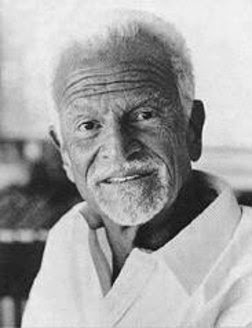
Gerald FriedIn his stand-up act, Dana Gould hilariously envisioned the composer of the Spock bass guitar theme from the original Star Trek as a tortured drug addict cursing loudly at four in the morning like a junkie version of Don Music from Sesame Street while trying to come up with the perfect theme for Spock. The calm and genial Gerald Fried--the now-retired TV and film composer who penned both Spock's theme and Kirk's frequently spoofed fight theme for Star Trek's 1967 "Amok Time" episode--isn't exactly Don Music on smack.

As I await both J.J. Abrams' new Star Trek feature film and its Michael Giacchino score--which I've refused to hear excerpts from until I see the film itself--I thought it would be the perfect time to transcribe half of a phoner I recorded with Fried (pronounced "freed") for the terrestrial radio incarnation of A Fistful of Soundtracks in 1999. (Almost all the pre-2000 broadcasts of A Fistful of Soundtracks were pre-recorded on audiocassette, and I don't have the equipment to transfer audiocassette content to computer--the audio quality would suck anyway--so I'd rather just post text of the interview below.)

During our conversation, Fried promoted the 1999 Silva Screen Records release Dr. Strangelove: Music from the Films of Stanley Kubrick, which contained re-recordings of themes Fried composed for the first few films of his childhood friend Kubrick. But what I was most interested in was Fried's TV work, which he loved doing despite the rushed schedules and older TV's tendency to recycle score music to cut costs ("As a composer, it's disturbing to hear music I wrote for one scene appear somewhere else," said Fried in a 1991 Starlog magazine interview). I particularly enjoyed talking with Fried about his scores for the Roots miniseries, which I first caught when the Family Channel (now ABC Family) reran it while I was in high school, and the original Star Trek, which I grew up watching and is now being relaunched by Abrams on the big screen.

Young Spock gives 90210 Kirk an 'Amok Time'-style ass-whupping.
(Photo source: TrekCore)

Jimmy J. Aquino: Now Jerry Goldsmith wrote the theme to The Man from U.N.C.L.E. Lalo Schifrin wrote the theme to Mission: Impossible. Alexander Courage wrote the theme to Star Trek. When you worked on those shows, were you ordered by the producers to compose in their styles or were you allowed artistic freedom?

Gerald Fried: We had to refer to the theme, which was okay with me. I think both those themes... The Sandy Courage thing, you know, that female voice--that was kind of stupid to me. Jerry's theme and Lalo's theme from Mission: Impossible are just fine. I had no problem using them.

As far as style goes, the first year, Jerry Goldsmith, I think, scored most of the Man from U.N.C.L.E.s, and it was a kind of symphonic style. Then they brought me in the second year, and Lalo also did a few of them, and we were the ones who changed it into a kind of Latino jazz... you know, the... [Hums his faster-paced arrangement of Goldsmith's U.N.C.L.E. main title theme.] That was my kind of contribution. They wanted style change from Jerry's style, and then it stuck pretty much like that for the next two or three years, however long the series ran.

JJA: Yeah, when it changed to color, they got campier and less serious.

GF: Yeah, which was part of the joy of doing it.

JJA: Now I want to talk about what I remember you the most for, your work for Star Trek. You did a total of five episodes: "Shore Leave," "Amok Time" I remember most fondly, as well as "Catspaw," "Friday's Child" and "The Paradise Syndrome." Was Star Trek taken seriously in the industry when it initially aired on NBC like it was by the sci-fi community or did everybody you know in the industry dismiss it as, you know, shallow, Flash Gordon-type hokum?

GF: Somewhere in between. They had no idea that it would become part of Americana. But neither did they see it as a piece of junk. You got some pretty classy writers--Harlan Ellison and some of the big sci-fi writers--so I think it was respected, and Gene Roddenberry was kind of an impressive guy. But certainly, they had no idea that it was going to take hold as it did.

JJA: I remember reading reviews from the '60s when it premiered, and Variety and TV Guide dismissed it as being shallow and just another space opera.

GF: Heh! Okay. I hope Gene Roddenberry is enjoying that statistic wherever he is.

JJA: He got the last laugh.

GF: Yes, he sure did.

JJA: Now for "Shore Leave," you wrote two unforgettable themes: the love theme for when Kirk is reunited with Ruth, his first love, and the Irish tune for Finnegan, Kirk's bully from his academy days. Tell me about writing those themes.

GF: Well, the love theme--the flute solo--was just kind of a movie-type pop thing, which I thought was appropriate and immediately accessible. The other one--I figured, well, how do you do it? It was an opportunity to write something special, kind of like an epic Irish fistfight. Remember the movie The Quiet Man? Something like that. To keep it Irish and keep it large and keep it insouciant like the Finnegan character was. So it seemed like a jig would be a good idea, and I was nervous about it because whenever you take a gamble, you're always in danger of having some conservative person throw it out. Well, [Bob] Justman and Roddenberry did not throw it out. But you do get nervous when you take chances like that, which I always do because I think any good composer... Jerry Goldsmith is the greatest chance-taker, probably of all time, and Elmer Bernstein... Yeah, I love them for that, for letting me do something with some kind of left-field imagination.

JJA: Now in "Amok Time," you created a theme for Spock for bass guitar. Let's talk about that. Why a bass guitar for Spock?

GF: Spock had a lot of trouble with emotion. If he did have any, he hardly knew how to get it out. Now if you try to play a lyrical line on a big thumpy bass guitar, you're gonna have trouble sounding lyrical, so I thought it would be a match to write a lyrical theme but put it on the bass guitar. It somehow parallels Spock's trouble and confusion with emotion.

JJA: Who played the bass guitar?

GF: Barney Kessel.

JJA: What were some of his previous credits? Did he work with you before?

GF: Yeah, he was a studio guitarist by the time I came to him, but before that, he was one of the half-dozen greatest jazz guitarists in history. You'll find him on records like with Art Tatum and Earl "Father" Hines. He's right up on the top. In fact, he, Herb Ellis, Joe Pass, Kenny Burrell, Eddie Lang and Charlie Christian--I just named to you the half-dozen great guitar players of all time.

JJA: Before you wrote the scores for the Star Trek episodes, were you handed the script or did you watch the episode first? The dailies?

GF: Yeah, there were no videocassettes in those days, so you get a chance to see... no, not the dailies. They called it then a workprint, and that was usually like about 10 or 12 days before airtime, so it was very scary. You just go home and work practically 22 hours a day for an intensive five or six days. You see it once. At first, Bob Justman--and maybe even Roddenberry for the first one--sit there with you and then we talk about where the music should go. The last few, they were so busy and so tired and so worried about the next show that I just thought by myself with the music editor in the room and just chose where the music goes and what I should do by myself.

'Spock, let go! This big-ass Hershey's Kiss on a stick is MINE!'JJA: Now your music for the Kirk/Spock fight scene in "Amok Time" has been called the greatest fight music ever written for television. It's even been quoted in parodies of Star Trek.

GF: Oh yeah. [Laughs.]

JJA: For instance, the characters on Mystery Science Theater 3000 would hum the fight music whenever they saw a B-movie fight scene.

GF: [Laughs.] That's funny. I know. I get royalties from The Simpsons and The Cable Guy. I know it was used there.

JJA: Do fans at the Star Trek cons come up to you and hum the fight music?

GF: Yeah, I actually attended two or three of those Star Trek conventions. There was a program. I made a suite of all my main themes from Star Trek into sort of a concerto for oboe, which I played myself. I'm still an oboe player. Yeah, some people would come up and talk mostly about those specifically.

JJA: I know that in television, like you said before, composers don't have much time to work with. Do you feel your music is better when it's written in such a limited amount of time or do you feel the opposite?

GF: I had only one opportunity to find out because 100 percent has been on a rushed schedule. The exception is the documentary Birds Do It, Bees Do It. I had lots of time for that. That was my one and only Oscar nomination, so maybe there is a correlation. Except for that, I have no way of knowing!

The 'Amok Time' action figure collection: for lonely housewives who want to reenact the 'Amok Time' fight with their Kirk and Spock dolls but always thought, 'It needs tons of kissing.'

JJA: Now themes from your Star Trek scores would be recycled in many episodes. Were you flattered by this or did you find that practice inappropriate?

GF: Well, if I were to give a speech on the aesthetics of film composing, I'm sure I would rant and rave about "music must be composed specifically for this and that." But when you get your music, for one thing, played on network television, you've got a helluva lot of money, and that kind of tempers your thinking... It doesn't temper your thinking. It tempers your mouth, so I didn't do any public complaining. Sometimes, I thought it was ludicrous what they did, and sometimes, I think, "Well yeah, alright, it sort of works." But generally, I'd like to go down in the books as saying it's a bad policy. It makes a product out of movie and TV stuff. I still like to consider it a great art form, so with that high road in mind, I come down against it.

JJA: So how do you feel when people come up to you and say, "Oh, I like that love theme from 'This Side of Paradise,'" but it was the love theme from "Shore Leave"?

GF: Yeah. [Laughs.] I smile. What are you gonna do? Read them a lecture on cinematic aesthetics?

JJA: Anybody who has worked on the original Star Trek, whether they're an actor, a writer or a composer, is always stopped on the street and remembered for their contribution even if it was only a guest stint. Why do you think Star Trek has been so popular?

GF: I think the intent and quality of the writing and the concept of it, to try and comment on earthly problems in terms of outer space... The dynamics of jealousy, rage, envy, power, lust and all those things were commented on intelligently and fairly. I think they reflected--as all good writing does--on the conditions of all the people down here on Earth, and I think that came through.

JJA: Any advice for anybody who took one listen to your music from Star Trek and said, "I wanna do that too"?

GF: [Laughs.] Yeah, it's possible. There will always be music for movies and television. It's hard to get into because a lot of people want to do it, but if there's a major motivation, and the person is willing to do the work and the research and become an all-around person in music... The days of having specialists are over. Producers need to hire a composer who they know has enough range, so that they can handle whatever problem might come up. Yeah, my advice is go for it.

Thursday, May 29, 2008

Alexander Courage (1919-2008)

"I have to confess to the world that I am not a science fiction fan. Never have been. I think it's just marvelous malarkey, so you write some marvelous malarkey music that goes with it."--Alexander Courage

Another legendary Silver Age composer best known for his TV work has passed away. Alexander Courage, the composer of the original Star Trek's famous fanfare, died May 15 at the age of 88. Courage's fanfare hasn't lost any of its power, despite the countless permutations since the pivotal Star Trek II: The Wrath of Khan, which was the first Trek project to utilize the fanfare since the NBC show's 1969 cancellation.

The fanfare is expected to reappear in Michael Giacchino's score for the 2009 big-screen relaunch of Trek. "To me, that fanfare, boom, that says it all right there," said Giacchino in a SciFi Wire interview. "And this film is about everything that came before that. So, yes, I want to keep that."

Courage also wrote the '60s series' bongo-driven main title theme, which the fanfare has eclipsed in popularity--the composers who worked on the first 10 Trek feature films and The Next Generation quoted the fanfare more often than the title theme. The wordless siren song was considered bold and hip when it first hit the airwaves, while some found it to be hokey, like composer Gerald Fried, who wrote what has to be the '60s Trek's third most popular theme, the "fight theme" that originated in the "Amok Time" episode. Fried once told me in a 1999 interview that he wasn't much of a fan of Courage's operatic title theme, which resembles a South Seas melody.

Outside of the Trek TV series, Courage wrote scores for episodes of Lost in Space, Voyage to the Bottom of the Sea and The Waltons, filled in for John Williams on most of the score to Superman IV: The Quest for Peace and served as an orchestrator for Williams, Andre Previn, Adolph Deutsch and Jerry Goldsmith.

Geek Monthly editor-in-chief Jeff Bond, who's also the author of The Music of Star Trek, has posted a detailed obit on TrekMovie.com.

A clip from an entertaining documentary about Courage: