This is the seventh of 12 or 13 all-new blog posts that are being posted on a monthly basis until this blog's final post in December 2017.
I love the work of Korean filmmaker Bong Joon-ho. Based on a real-life serial-killer case that remains unsolved, 2003's Memories of Murder, the second feature film from "Director Bong," intriguingly takes the standard "grisly serial-killer case psychologically damages the detectives on the case" thriller and expands its scope so that it morphs into a dark comedy about the ineptitude of institutions like the police, and it's so critical of institutions you'd expect David Simon to have had a hand in writing it. The Host, Bong's 2006 follow-up to Memories of Murder, became South Korea's biggest box-office hit ever by effectively mashing up the monster movie genre with dysfunctional family comedy and trenchant satire about both Korean and American institutions. Mother, Bong's 2009 whodunit about a mentally challenged prime suspect in a small-town murder case, is a worthy addition to the pantheon of twisted movies to watch on Mother's Day like Psycho and Serial Mom. Snowpiercer, a rare dystopian sci-fi flick that takes place in perpetual snowfall rather than being drenched in acid rain or set against orange desert landscapes, is both an inventive take on class warfare and 2014's most mesmerizing blockbuster starring a white guy named Chris.
These are all darkly comic films with a recurring disdain for either broken institutions or corporate malfeasance. So I was prepared to dislike the made-for-Netflix Okja, a globetrotting fantasy film that finds Bong venturing into Free Willy territory for a story about a Korean farm kid's bond with a genetically modified female "superpig"--an empathetic creature that behaves less like a pig and more like a dog/hippo hybrid--she wants to save from the slaughterhouse. Has Bong the sharp satirist gone all soft and cuddly on us?
Nah, not really. For his first family-friendly film since The Host (its R rating in America is, by the way, overblown--the original Gremlins is grislier than The Host--and I think its bittersweet ending had a lot to do with it being slapped with an R), Bong takes on the GMO industry and two-faced corporate culture, and his satirical vision of a feud between animal rights activists and Mirando, a Monsanto-style corporation with a deceptively sunny disposition, is slightly darker than I expected from a film that spends much of the first half-hour in idyllic, nearly dialogue-less rural splendor that's visually inspired by My Neighbor Totoro.
My Neighbor Totoro
Oh yeah, I almost forgot about the amount of F-bombs freely tossed around by Steven Yeun and Daniel Henshall--who play members of a Paul Dano-led "Animal Liberation Front"--as well as by Jake Gyllenhaal and Snowpiercer star (and Okja co-producer) Tilda Swinton, who's given this time by Bong a dual role as a pair of twin sisters who run Mirando (and have differing approaches to handling the corporation's crusade against world hunger). Bong has an awesome interpretation of "family-friendly."
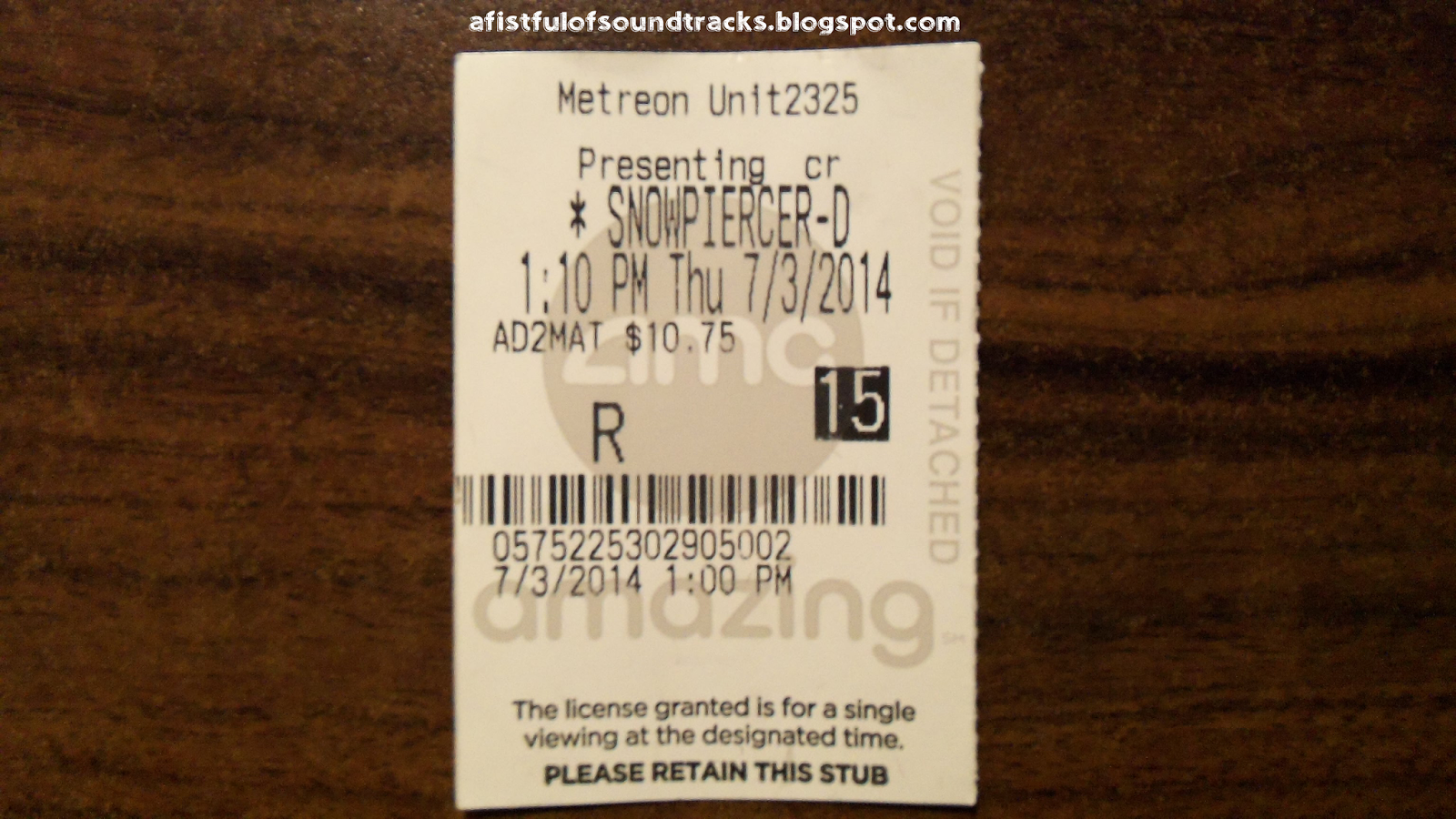
Every Throwback Thursday, I randomly pull out from my desk cabinet--with my eyes closed--a movie ticket I saved. Then I discuss the movie on the ticket and maybe a little bit of its score, which might be now streaming on AFOS.
"Folks who exasperatedly dismiss discussion of color with 'Not everything is about race,' are usually people who (unknowingly) have the privilege of being viewed as race-less (white). The race-less of course have the freedom to decide what is and isn't about race. Those that are not seen as race-less (people of color) don't. [Joe] Cornish seems to understand what many people don't want to admit, that a person's race shapes their experience in the world. Whether it should or shouldn't, it very much does. Ignoring this fact, even if well intentioned, perpetuates inequality. The boys in Block, as young men of color, are always aware of racial dynamics. So constant is this awareness, neither positive nor negative, that it becomes unconscious, like breathing. It's always there. The film takes place completely within this understanding."--Kartina Richardson (2011)
If it weren't for its teen characters' awareness of the elephant in the room called race, as well as the equally intriguing way Joe Cornish avoids being heavy-handed about it, Attack the Block--the British comedian's 2011 feature-length directorial debut--would just be an ordinary low-budget monster movie with a diverse cast instead of the above-average low-budget monster movie with a diverse cast it wound up becoming. Sure, it's always nice to see a black teen or an Asian American as the main protagonist in a sci-fi story, but what really matters in the end is how that story makes that protagonist of color come alive as a credible human being, and Attack the Block succeeds in that department.
Cornish is white, but one thing that makes him bolder than other white creators who have placed characters of color at the center of the sci-fi action is his decision to make Moses (John Boyega) a regular street kid instead of the saintly (and more palatable to older and more affluent white folks) cop or soldier of color who's usually pitted against unfriendly creatures in sci-fi. At one point, Sam (Jodie Whittaker), a 20-something white nurse who's mugged by Moses and his mostly black friends at the start of the film and evolves from despising them to relying on them for her survival, is seen suggesting to them that they turn to the police for help in protecting their South London neighborhood from bloodthirsty alien beasts that have suddenly landed in South London for mysterious reasons.
Moses and his male and female friends want nothing to do with the Five-0--"You think the police is gonna help them? They might not arrest you, but they'll arrest them," says Tia (Danielle Vitalis), a neighborhood girl with a crush on Moses, to Sam--and Moses believes the aliens were sent to South London by the same government that sics the police on black kids and is responsible for various other things in what the British call the block and what we Americans call the projects. "Government probably bred those creatures to kill black boys. First they sent drugs to the ends. Then they sent guns. Now they sent monsters to get us. They don't care, man. We ain't killing each other fast enough, so they decided to speed up the process," says Moses. Right when Tia points out to Sam the privilege she has as a white person and Moses spouts his theory about the aliens being government-made, an acknowledgement of the racism that permeates the world outside the theater or TV screen finally emerges in the dialogue of this escapist movie--rather than the movie acknowledging it through coded dialogue from white characters like one lady's earlier view of Moses and the hoodies as "fucking monsters"--and Attack the Block, which was co-executive-produced by Edgar Wright, becomes something truly special and alive as escapist entertainment.
At that moment, this sci-fi story that takes place in the projects declares that, for once, it's not going to shy away from race and hide behind silly sci-fi metaphors to address race or naively attempt to put a Band-Aid on racism (the teens' frankness about the ignorant attitudes of the police in blocks like Moses and Sam's makes this film continue to resonate, especially during the rise of #BlackLivesMatter and the stupidity of #AllLivesMatter, a hashtag that could only come from the minds of privileged dolts). Also at around that point in the story, Attack the Block makes it clear that a cop won't be the hero of the narrative like he or she often is. Instead, the misunderstood kid who frequently gets harassed or cuffed (or killed) by such cops becomes the hero here, and though he's tougher than the other hoodies and will outlive some of them, he's extremely human, thanks to Cornish's writing for Moses and Boyega's ability to balance toughness with vulnerability. It's no wonder Boyega was cast in the J.J. Abrams-directed Star Wars: The Force Awakens: he's great at reacting to the mayhem surrounding him, just like how his Force Awakens co-star Harrison Ford was terrific at reacting to mayhem in action classics like Raiders of the Lost Ark and The Fugitive.
While being interviewed by Esquire about the upcoming 007 movie Spectre, Daniel Craig said he admires Ford's performance in Raiders because "he's so fallible, to the point of comedy. You know at any time he might fuck up, and that adds to the danger and the excitement and the joy of it." That's also the key to why Boyega's performance in Attack the Block is equally enjoyable. There's a scene where you expect Moses to have a grand action hero moment and save Tia and her best friends from aliens who have invaded Tia's flat, but his katana gets stuck in a wall behind him, and Sam ends up having to save him. Meanwhile, Tia and Dimples (Paige Meade) don't really need Moses' help and are doing quite okay on their own, thanks to their fighting skills with whatever item they can get their hands on. Fuck Matt Damon. These ice skate-wielding South London girls should be the stars of Damon's next Bourne movie. Later on, when Moses gets his opportunity to finally blow each and every alien to smithereens with his lighter, his hands start to shake out of nervousness.
A lesser filmmaker would write Moses as being badass and flawless all the time, but Cornish prefers to make his protagonist a bit more complicated. He's as flawed as the Park siblings from the Bong Joon-ho masterpiece The Host (a double feature of Attack the Block and The Host, by the way, would be like the illest double feature ever) and is perhaps even more thoughtless than either of the Parks because in addition to mugging Sam, he's made the mistake of getting into business with an impulsive, murks-anybody-who-looks-at-him-wrong neighborhood drug lord named Hi-Hatz (Jumayn Hunter) and has made the additional mistake of murking the female alien whose pheromone summons all the male "gorilla wolf motherfuckers" to South London. In Predator, Arnold Schwarzenegger wasn't responsible for bringing to the jungle the titular hunter from outer space, whereas in Attack the Block, our hero is the cause of all the bloodshed and the losses of some of his friends. So when it's up to Moses to fix what he started and decide what kind of adult he wants the block to remember him as, the climax of Attack the Block takes on an unexpected power, aided by both slow motion that doesn't look clichéd and silly for once and "Moses vs. the Monsters," a pulsating score cue by composer Steven Price and Basement Jaxx partners Felix Buxton and Simon Ratcliffe ("Moses vs. the Monsters" is in rotation during the AFOS blocks "Beat Box," "Hall H" and "AFOS Prime").
One other thing makes Cornish bolder than other white writers who are outsiders looking in on ethnic settings they've chosen to write about: the wide range of black teen characters Sam encounters as the alien invasion forces her out of her comfort zone. (Had Attack the Block been a mainstream hit in America, it would have caused that racist old moron Lou Dobbs to get his panties in a bunch over the kinds of characters it chooses to sympathize with.) A lesser white writer would probably make every black teen character interchangeable and as sullen and parentless as Moses or as hotheaded as Dennis (Franz Drameh), whereas each of Moses' friends is distinctive in background (Moses is the only one who comes from a broken home, and the closest thing he has to a parent is an uncle who's never there) and temperament. For instance, Biggz (Simon Howard) has a white mom and is less willing than the others to get himself into dangerous situations; Tia and Dimples are similarly disdainful about Moses' flirtation with a criminal lifestyle. This also ties into how Attack the Block doubles as a thankfully non-preachy critique of the demonization of the working class in England.
Cornish was a one-time mugging victim who wanted to better understand his muggers and their everyday lives instead of being resentful of them (the mugging of Sam, who's clearly a stand-in for Cornish, was based on the incident Cornish experienced), so he takes working-class kids like the kindly and dorky Jerome (Leeon Jones) and the dorkier Biggz, who spends most of the film hiding in a trash bin, and he fleshes out those characters to prove the irrationality of demonizing and simplifying the underclass. One minute, they're mugging somebody and not enjoying it at all (they later admit to being scared while doing the mugging), and the next, they're chatting with Mum or Grandmum on their phones like typical 13-to-15-year-olds trying to make it home in time for dinner.
What also makes Attack the Block stand out is the much-welcome absence of CGI ("We used CGI a little to enhance, but mainly to remove details," said Cornish to GQ in 2011). The creature FX work in Cornish's film is largely practical. The alien attacks are fast and brutal, and this is a rare case where the fast-cutting that so many film critics complain about when they critique contemporary action movies is absolutely necessary. The fast-cutting prevents us from noticing how low-budget the monsters are: they're essentially just stuntmen--led by the great Terry Notary, one of the motion-capture performers who starred as the apes in the last two Planet of the Apes movies and a movement coach for those movies, by the way--inside eyeless gorilla suits outfitted with neon green teeth. But because the Attack the Block aliens aren't CG, there's a formidability and weighty presence to them that's missing from most CG creatures.
On one of Attack the Block's Blu-ray audio commentaries, Cornish says the inability to afford extensive CG FX allowed him to get authentic reactions from his child actors since the monsters were physically there on the set. The performances of the kids--who hadn't been in the acting game long enough to receive training on how to look like you're not pretending during a job that requires you to pretend things that aren't there are actually there--wouldn't have been the same if they had to react to a tennis ball on a stick. Attack the Block is more of a sci-fi actioner than a genuinely scary horror flick--The Walking Dead contains 10 times more gore each week--but the film contains one horrific moment: the child actors may have been way more terrified of the aliens than us adult viewers are, but the split-second shot of a mutilated Hi-Hatz looking like a black Voldemort makes you finally understand the kids' genuine fear.
The year 2011 saw four different Steven Spielberg-produced projects about alien invasions emerge in the same summer: the Abrams-directed Super 8, Transformers: Dark of the Moon, Cowboys & Aliens and the TNT original drama Falling Skies, which just recently ended its run. I barely remember any of them, aside from Elle Fanning's amusing transformation into a zombie for Super 8's movie-within-a-movie and the troublemaking antics of Colin Cunningham's biker character Pope during Falling Skies' first season, whereas Attack the Block, which was made for much less and details an invasion that's on a much smaller scale, is a film that's still on my mind. Its potent mix of monster movie thrills and nuanced, non-preachy social commentary about both racial inequality and white privilege makes it a film I keep revisiting. Attack the Block murks them all.
Steven Price and Basement Jaxx's outstanding score cues from Attack the Block can currently be heard during the AFOS blocks "Beat Box," "Hall H" and "AFOS Prime." The 1993 KRS-One classic "Sound of da Police" and Richie Spice's "Youth Dem Cold," the two most memorable existing songs during Attack the Block, cannot be heard on AFOS, but they would have been part of the now-defunct AFOS block "Rock Box," which was discontinued in 2012 due to limited station hard drive space and the elimination from rotation of anything that wasn't original score material.
Every Throwback Thursday, I randomly pull out from my desk cabinet--with my eyes closed--a movie ticket I saved. Then I discuss the movie on the ticket and maybe a little bit of its score, which might be now streaming on AFOS.
Jurassic World just experienced the most successful opening weekend in film history, outgrossing even the opening weekend of the original Jurassic Park, a kaiju (Japanese for "strange beast") movie where smaller-sized dinosaurs are the kaiju instead of a 164-foot-tall lizard with atomic breath. But as much as I like both the craftsmanship Steven Spielberg brought to the moments of suspense (and occasionally, levity) in the first installment and Stan Winston and ILM's effective blend of practical FX and CGI in that installment, I find the Jurassic movies to be oddly underwhelming in comparison to Spielberg's masterful work in the original Jaws. As material in between the creature scenes, which are the main reason for flocking to these Jurassic blockbusters, the "Sam Neill learns to get in touch with his paternal side" storyline--a tiresome staple of post-SNL comedy vehicles starring either Billy Crystal, Adam Sandler or more recently, Will Ferrell--is less intriguing than the character interplay between Roy Scheider, Richard Dreyfuss and Robert Shaw in Jaws.
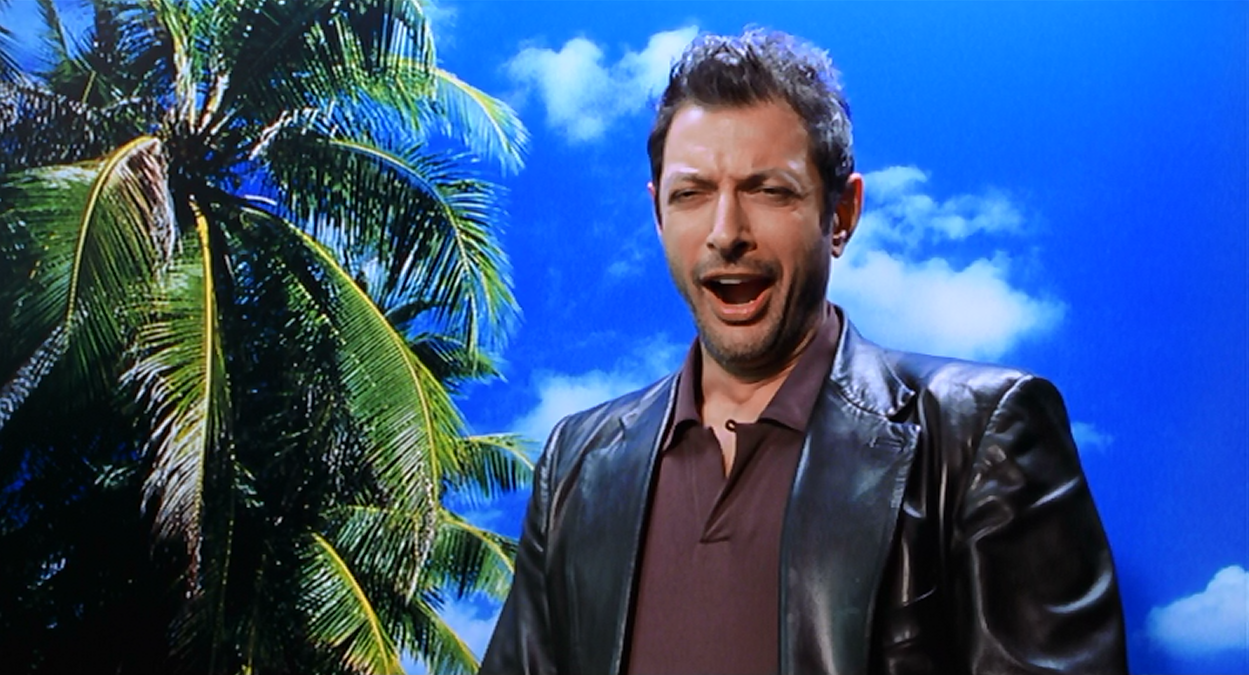
I lost interest in the Jurassic franchise about halfway through The Lost World: Jurassic Park and never got on board the franchise again (I still haven't seen Jurassic Park III and will most likely wait until Jurassic Not-Yet-5, as I like to call it, comes to Blu-ray). I remember falling asleep in the theater during The Lost World--at some point between Julianne Moore nearly falling to her death while glass slowly breaks beneath her and the lame moment when a raptor gets kicked in the face by the gymnastic moves of Jeff Goldblum's preteen daughter, I dozed off with my eyes open--and I got the sense that Spielberg, whose first shot of Goldblum in The Lost World shows the star yawning in a subway station, was equally disinterested with the material in his own sequel. (Fifteen years later, you could sense the same thing when Christopher Nolan only truly became alive during the stunning plane hijack sequence for The Dark Knight Rises, and for the rest of the project, it felt like the death of Dark Knight star Heath Ledger had sapped Nolan of his enthusiasm and energy.) Spielberg was phoning it in. He, in fact, later admitted in interviews to experiencing a constant feeling of "Is that all there is? It's not enough for me" throughout the filming of The Lost World. However, there is one moment in The Lost World where Spielberg didn't phone it in, and it's that literal cliffhanger scene with a petrified Moore unable to move or sneeze, the only genuinely nerve-wracking scene in The Lost World, as well as the only moment where Spielberg is back to his old enthusiastic and alert self, and it's not even a dinosaur attack.
So the Jurassics have never been my favorite kaiju movies. But Korean director Bong Joon-ho's The Host, a.k.a. Gwoemul (Korean for "monster")? Now that, to me, is the perfect kaiju movie, in which the human side of the movie is, for a change, as satisfying as the monster action and isn't an ordeal to sit through in order to get to the monster action. The Host is an effective mix of monster movie thrills, dysfunctional family comedy and political satire (about the incompetence of both American and Korean institutions) that's reminiscent of the anti-nuke satire in Ishirô Honda's original 1954 version of Godzilla.
Bong wanted to take everyday people like the extremely flawed members of the working-class Park family (in comparison to Sam Neill's sole flaw of being awkward and standoffish around kids, which isn't all that interesting as a character flaw) and place them in a central role that's usually reserved in monster movies for scientific geniuses or muscle-bound heroes, the kinds of characters Bong says he finds to be boring. His risky and unconventional decision resulted in my favorite human protagonists in an earthbound kaiju movie since, well, the trio in Jaws. Like all the films in Edgar Wright's superb Cornetto trilogy, The Host isn't a genre spoof; it's a thriller with genuine stakes that happens to be comedic and is full of characters worth being invested in, so that when one of the protagonists dies or is nearly dead, it's a moment that genuinely stings.
Even the creature in The Host, despite being an efficient and single-minded killing machine, or rather, in the parlance of both Matt Hooper and Jaws trailer announcer Percy Rodrigues, an "eating machine," is imbued with personality too. The film's digital FX may vary in quality, but they're never too cartoonish-looking. The creature's clumsy gait cleverly mirrors the klutziness of Host star Song Kang-ho's anti-hero Park Gang-du. Sure, Gang-du learns to be a better dad just like in that sappy Jurassic Park/Billy Crystal/Adam Sandler storytelling device that annoys me so much, but The Host handles that device so much better. It also handles humor better than Roland Emmerich's Jurassic Park-ified 1998 reboot of Godzilla--a kaiju movie in the form of a terrible and unfunny '90s Fox sitcom stretched out to over two excruciating hours--did (the terrible '90s Fox sitcomminess of it all is further enhanced by Emmerich's casting of both Maria Pitillo, star of Fox's short-lived Partners, as Matthew Broderick's love interest, and Simpsons veteran Hank Azaria, star of Herman's Head, a.k.a. Inside Out if it were an oversexed '90s Fox office sitcom).
The Host's effectiveness as both a character study and a creature feature is precisely why I've never warmed up to any of the old-school Godzilla movies, except for the intriguing first movie, which I first caught on TCM, luckily without the stupid Raymond Burr-related changes that were made to it by the movie's first American distributor (the horrendous dubbing in the American versions of these films has also made me avoid the Godzilla franchise; except for spaghetti westerns and some of the Studio Ghibli films, I can't stand watching foreign films when they're redubbed by Americans or the British). As a kid, I took one look at 1973's Godzilla vs. Megalon back when it was once the feature presentation on Mystery Science Theater 3000 and thought, "That's the formula for Godzilla? It's a terrible one. Nah, I think I'll skip the other Godzilla flicks."
Godzilla vs. Megalon is one of the least beloved Godzilla installments, partly because Godzilla was basically a guest star in his own movie. It was produced during a time when the Toho Studios franchise was past its prime and had abandoned its nifty roots as an allegory about post-war Japan to strictly cater to the kids in the audience. I know Godzilla vs. Megalon is a lousy way to be introduced to the Godzilla franchise. It would be like if someone who's never seen any of the 007 movies chose A View to a Kill or Die Another Day as their first 007 flick to watch; they won't understand what all the fuss over the other movies is about. But Godzilla vs. Megalon is a good example of how boring and pointless the human characters tend to be in kaiju movies, a problem that doesn't afflict the 1954 Godzilla and is also a problem I was hoping British director Gareth Edwards wouldn't fall prey to when he got the chance to not repeat Emmerich's countless mistakes while reintroducing Godzilla for a second time (not counting the two Americanized and badly butchered Godzillas that starred Perry Mason) to non-Japanese audiences.
While there's much to enjoy about Edwards' gritty, Fukushima-inspired 2014 version--like Alison Willmore said, the MUTOs (Massive Unidentified Terrestrial Organisms) and the redesigned Godzilla look terrific and are "lumbering and massive with a sense of incredible heft to them, despite being CGI creations"--Edwards, unfortunately, has a problem of focusing his films on white lead characters who aren't as interesting as he thinks they are. It's a problem that goes back to Edwards' prior sci-fi film Monsters, his low-budget 2010 breakthrough. Monsters is a film about Mexico experiencing first contact with giant alien creatures, and it's told not through the eyes of any of its citizens but through the eyes of the most annoying white hipsters since those douches who gentrified the barrio side of Arlen and slipped salmon into Enrique's fish tacos?
As The Daily Dot astutely pointed out, Godzilla suffers from a boring white guy problem--a problem that mars another recent kaiju flick, Pacific Rim--and is part of a long line of Hollywood tentpole blockbusters that opt for the least interesting characters as their leads. Out of a cast that includes the likes of Ken Watanabe, Bryan Cranston, Elizabeth Olsen, David Strathairn and Sally Hawkins as audience surrogates, Edwards chose to center the film around the individual with the least charisma or personality? Yo, Honest Trailers, your "Discount Channing Tatum" line is dead fucking on.
"The funny thing here is that the franchise originated in Japan. I actually haven't seen any of the old movies, but I'm going to assume that they--at least the Japanese ones--don't use Japan and its people as merely the backdrop against which white protagonists can shine and save the day," noted one of the teen authors of the blog Cool Asian Kids. "And that's essentially what the new film does."
Warner Bros. advertised Edwards' whitened-up take on the Japanese franchise as Godzilla and his atomic breath vs. Cranston and his atomic toupee--the studio made it look like Cranston would be channeling Dr. Loomis from Halloween--but (spoilers!) that's not the movie we got. Edwards told Willmore in a BuzzFeed interview that he chose to kill off Cranston's nuclear physicist character early on in Godzilla in order to raise the movie's stakes and create the sense that "anything could happen." Sure, Cranston's physicist dad character is kind of a boring white guy too, but kicking his badacondunk out of the movie so early is such a mistake because Cranston is much more alive and present in his scenes than Blando McBombdefuser--who, as Willmore says, "jumps through a series of increasingly improbable plot hoops to stay in the path of the creatures"--is in his.
It's just the wrong character to be spending a huge chunk of the movie with (and as the type of white savior Cool Asian Kids rightly criticizes him as being, he's amusingly inconsequential in comparison to Godzilla's heroics in the movie), and it's a shame, because Edwards kicks the movie off so promisingly with one of my favorite opening title sequences in a recent tentpole blockbuster. The sequence is a cleverly assembled montage of both real and fake archive footage that establishes the history of MUTOs, nicely scored by Alexandre Desplat--who's skillfully following in the footsteps of the old Akira Ifukube score music that both Pharoahe Monch and Tracy Morgan love so much--and surrounded visually by hastily redacted text from fake government files. The Prologue Studios opening titles are one of the 2014 Godzilla's few instances of humor, one of many things Edwards accomplishes better than Emmerich did. The passages that are redacted to isolate the names of the cast and crew are either silly, freeze-frame-worthy sentences like "The monster communicates through music composed and conducted by Alexandre Desplat" or are full of in-jokes like "Walter Malcolm has claimed that government men dressed in white lab coats routinely appear at site and Bryan Cranston shortly after the event all residents are sworn to silence." Walter is a reference to Breaking Bad, and Malcolm is, of course, a shout-out to Malcolm in the Middle (although shouldn't it say Hal, Cranston's character's name on Malcolm, instead of Malcolm?).
Despite all the sleep-inducing moments involving Discount Channing Tatum, as well as the fact that it's nowhere near the league of The Host, the 2014 Godzilla is superior to Emmerich's previous attempt to bring Godzilla to America and is more effective at building tension and staging monster action. Also, it's not trying to rip off so much of Jurassic Park. Recent Throwback Thursday guest blogger Hardeep Aujla, who hails from Word Is Bond, a U.K.-based hip-hop blog I've contributed pieces to, disagrees. He dislikes the 2014 Godzilla so much that he's skeptical about how Edwards will handle Star Wars in his next directorial effort, Star Wars Anthology: Rogue One. So Hardeep, how would you have improved the 2014 Godzilla if you worked on it? Would you have made the reboot into a boy-and-his-best-friend-who's-a-strange-creature story like the old Godzilla sequels, the Gamera sequels and my favorite of all those stories, The Iron Giant? Or would you have said "Fuck the American audience" and told it from the point of view of Ken Watanabe's scientist character? Or would you have completely gotten rid of any audience surrogate characters and told it from the point of view of Godzilla, which would have probably caused the movie to cost 200 million more American dollars to make but is a kaiju movie that's never been done before?
***
Hardeep Aujla: I think I read that Godzilla's screen-time was only 10 minutes in the whole 130-something minute film. This isn't Jaws, Edwards - less is not more in kaiju films.
As for what I would have done, I love The Iron Giant and that whole story too but I would've gone with your last suggestion, hands down. This is what I always thought AvP should have been. I would have started the film introducing a crack team of badasses equal to Dutch's or Apone's team, but then would've had them torn apart gloriously by the titular creatures (perhaps they stumbled into the vicinity of a one-on-one confrontation). Then the title of the movie comes up accompanied by strong audio tone with the intention of stating "That's fucking right" to the audience and their expectations. I'm thinking a very loud shrill-type noise that starts off monotonous but evolves a couple of seconds later into something with a bit more character before ultimately revealing itself to be the war-cry of either a Predator or an Alien as we cut straight back to the duel (yep, this idea has been rolling around in my head for a while). From there on out we get a pure Aliens versus Predators narrative with no more English spoken.
I haven't seen many of the old kaiju movies (the Gamera trilogy from the 90's is superb though), and the ones I did see were a long time ago, but I do remember some very protracted sequences where it's just Godzilla or his kid doing stuff and the audience just follows along. I may be completely fabricating those memories though. Either way, the challenge for Gareth Edwards would have been to make an engaging film like this in the modern era, one that is good enough to stand strongly unaided by human faces and words. There could of course be some human characters (retaining Ken Watanabe who was wasted in the actual film) but they should have minor roles. I can see how this would be tricky for a character like Godzilla who seemingly doesn't have a rich variety of activities to fill a movie with apart from swim, smash and roar, but therein lies the challenge, and I would be a lot more impressed with Gareth Edwards as a filmmaker if he pulled it off, or at least respect his effort if he tried.
None of Alexandre Desplat's score cues from Godzilla are currently in rotation on AFOS, but Desplat's main title theme ought to be.
Every Throwback Thursday, I randomly pull out from my desk cabinet--with my eyes closed--a movie ticket I saved. Then I discuss the movie on the ticket. The following was previously posted on September 5, 2014, under the title "Jezebel says summer 2014 was too depressing to deserve a song of the summer, but it's definitely earned a movie of the summer."
Every time the summer wraps up, music or entertainment news orgs come out with their annual think pieces or listicles about the song of the summer, and the end of the summer last week was no exception. But Jezebel makes the bold argument that we shouldn't be talking about a song of the summer, especially after a summer of Ferguson, various other kinds of civil rights abuses, Elliot Rodger, the missile attack on the Malaysian Airlines jet, the Israel-Gaza conflict, ebola and Robin Williams' suicide. "There wasn't a 'song of summer' that defined these months, like 'Call Me Maybe' did in 2012 and 'Hot In Herre' does every summer. But this summer doesn't fucking deserve its own song. It hasn't earned it," wrote Erin Gloria Ryan at Jezebel.
In addition to a dismal three months of world news, the candidates that showbiz reporters have brought up as the possible song of summer 2014 are pretty dire. "Fancy" by Iggy Azalea, cultural appropriation's newest star? Fuck that song. (I don't like picking songs of the summer, and I agree that summer 2014 doesn't deserve one, but "Bom Bom Fiya" by Slimkid3 & DJ Nu-Mark, "Always Winnin" by Shad, "Remedy" by All About She, "Klapp Klapp" by Little Dragon and "Sup Bruce," a tribute to Bruce Lee by The Bar, were all pretty damn good, especially "Bom Bom Fiya.")
However, summer 2014 has definitely earned a movie of the summer. I can't think of any other recent movie right now that speaks to summer 2014's feelings of unrest quite like director Bong Joon-ho's dystopian sci-fi blockbuster Snowpiercer does. That and many other reasons are why Snowpiercer is my favorite movie of summer 2014, as well as why selections from Marco Beltrami's score to the movie, in which Beltrami used instruments like the cimbalom to establish "a sound of antiquity" during Bong's futuristic tale of class conflict, are now playing on "AFOS Prime" and "New Cue Revue" on AFOS.
As much as I like Guardians of the Galaxy, the year's highest-grossing movie so far and one of the summer's most favorably received blockbusters in critics' circles (as well as a movie with a score that's also now being streamed on AFOS), Guardians suffers from a dull lead villain (what was his name again?). Snowpiercer doesn't have that problem. It features one of the year's most entertaining and well-drawn antagonists, in the snaggle-toothed form of Minister Mason, Tilda Swinton's Thatcher-ish politician/spokesperson character ("I am a hat. You are a shoe. I belong on the head. You belong on the foot... Know your place. Keep your place. Be a shoe."). Like Guardians, Snowpiercer is based on an obscure comic--the 1982 French graphic novel Le Transperceneige by Jacques Lob, Benjamin Legrand and Jean-Marc Rochette--but unlike Guardians, it's set in a rather depressing milieu. The Bong movie, which actually came out last year in Korea, Japan and Europe before hitting American theaters in June, centers on a violent revolt aboard the Snowpiercer, a state-of-the-art train that's circling the world and carrying the last remaining survivors of a failed and disastrous attempt to prevent global warming. The cramped train is, of course, a metaphor for our current world, and as Bong said when he told The Mary Sue about why Le Transperceneige intrigued him, the train exemplifies his observation that "No matter what situation we find ourselves in, there's no peace."
Do the Right Thing, Attack the Block and now Snowpiercer are the best kind of summer movie: darkly funny, bleak (even though Moses defeats the aliens at the end of Attack the Block, he still winds up as another black man in prison), sequel-proof, racially diverse and a Fox News viewer's nightmare, due to both their political views and their diverse casts (sorry, Dawn of the Planet of the Apes, but you're lacking in the well-drawn female character department, and your version of San Francisco is implausibly devoid of Asians for some weird goddamn reason). I like escapist popcorn fare during the summer months like everybody else, but I prefer much of that kind of fare to carry some sort of weight or meaning and be reflective of some of the real-world madness outside the theater. Many tentpole blockbusters that use tiresome 9/11 imagery to attempt to raise the dramatic stakes are especially terrible at this, whereas the smaller-scale action movies Attack the Block and Snowpiercer don't play the 9/11 card and find other ways to make their material relevant and pungent. For Bong, one of those ways is the economic inequality in Korea, which appears to form much of the basis for Snowpiercer's class conflict.
Snowpiercer and The Lego Movie, which enraged Fox News' comrade in right-wing bullshit, Fox Business, would make for a terrific double bill of humorous films about the evils of big business. At the same time though, Snowpiercer, despite its disdain for big business in the form of the Wilford Corporation, doesn't opt for a simplistic "the left will ultimately prevail" narrative. It doesn't provide easy and comforting answers for the left, much like how Do the Right Thingdoesn't provide answers on how to effectively deal with racism. Snowpiercer's (spoiler!) late twist that Chris Evans' lead revolutionary character Curtis was, without him realizing it, being groomed to inherit the corporation he was fighting against conveys Bong's bleak point that even when revolutionaries try their hardest, the corrupt system they're fighting will never be broken. That point is also conveyed by the harrowing confession Curtis makes to Namgoong Minsu, frequent Bong film star Song Kang-ho's perpetually stoned security expert character, about--without giving too much away--how even a revolutionary like himself, when he was younger, wasn't immune to the worst kind of behavior encouraged by the system.
If you're enraged by the police lately because of the situation in Ferguson, check out Snowpiercer, as well as Bong's other movies from South Korea, if you haven't done so; Bong feels your disdain for the police. The fact-based 2003 procedural Memories of Murder and the great 2006 monster movie The Host--where, just like in Snowpiercer, Song and Ah-sung Ko star as a father-and-daughter duo--also carry a huge disdain for authority and institutions at their most incompetent (in "Reverse Trip: Charting the History of Bong Joon-ho's Snowpiercer," RogerEbert.com's Scout Tafoya writes that Korean New Wave films like Snowpiercer reflect their directors' frustrations with corruption and bureaucratic incompetence in their own homeland). Even the 2009 thriller Mother, the Bong feature film with the least amount of social commentary, is tinged with that same distrust of authority.
From Memories of Murder to Snowpiercer, Bong has emerged as one of the sharpest satirical minds working in film today. I can't think of another current director who juggles various tones as unusually and effectively as Bong does. Like the grieving scene in the gym during The Host, Mason's speech to the lower-class Snowpiercer passengers early on in the movie is classic Bong: satire, slapstick and drama are going on all at once. The minister hilariously bumbles through her "Be a shoe" speech (she gets disrupted by clumsy translators and a tray that falls loudly on the ground, which wasn't in the script and was a blooper that Bong liked so much that he kept it in the film) while a torture scene ensues behind her, and we don't know whether to laugh or be disturbed over the bizarre punishment the goofy-looking Ewen Bremner character receives on his arm (it gets frozen and then amputated).
The "Be a shoe" speech/torture scene is one of many Bong moments where you, the viewer, are experiencing several things at once: anger over the cruelty of authority figures, laughter over their incompetence and silly behavior, sympathy for the mistreated protagonists and disappointment with those same protagonists because of mistakes they could have easily avoided (Bong's protags are never perfect and flawless saints). Bong explained his approach to these moments to The Mary Sue by saying, "These types of moments are generally kind of awkward for the audience, and I like that, because I think life is like that. It's not like something happens and everyone knows 'Oh, this is a funny moment,' or 'Oh, this is a sad moment.' It's not really divided like that."
That sort of tonal weirdness--other examples include Curtis slipping on a fish on the floor in the middle of a serious fight scene and Alison Pill's one great scene as a cheery and psychotic schoolteacher--is an endearing part of Snowpiercer and Bong's other films, but I see why it can be challenging and off-putting for some moviegoers ("People didn't know if [The Host] was supposed to be funny--if they were supposed to laugh--or if they were supposed to be sad," said Bong about the confused reactions many Japanese moviegoers had to The Host). However, tinkering with Bong's idiosyncratic brand of filmmaking--which is exactly what Harvey Weinstein, the bullying studio chief with a history of getting his sausage-fingered hands on perfectly fine Asian movies and then butchering them, attempted to do when he wanted to shorten the running time of the American release of Snowpiercer--is just the worst way to make Bong's work attract moviegoers who aren't fans of his filmmaking. Bong opposed Weinstein's attempt to trim Snowpiercer and got into a war of words with The Weinstein Company that mirrored Curtis and the lower-class passengers' attempt to overthrow the upper class.
Fortunately, Bong won the battle, and although Weinstein cut down the amount of theaters he originally planned for Snowpiercer's American release in what comes across to me as a petty form of payback for Bong getting his way, Snowpiercer ultimately found its audience, not in theaters as a midnight-movie sensation but on VOD. We have Radius-TWC, The Weinstein Company's own boutique division, to thank for rescuing Snowpiercer in America and helping to turn it into a hit on iTunes two weeks after debuting in theaters.
"A lot of people come back to this movie a second, third, fourth, fifth time [on VOD]. I think the immediacy of that and how it shows up in social media speak directly to what the themes of this movie are," said Radius-TWC co-president Tom Quinn when he discussed the experimental distribution strategy that led to Snowpiercer's VOD success on KCRW's The Business.
That VOD success is also why Snowpiercer is the movie of the summer: it represents an interesting future for a certain kind of blockbuster that's neither a superhero movie nor a movie for kids, where an above-average action movie that, for some reason, would have had a difficult time finding an audience in theaters can succeed via this new platform--or where a movie that's receiving good word-of-mouth but isn't being released in smaller markets is now easily accessible to moviegoers from those markets who want to see it. Thanks to VOD, they can watch it now with just one click. As Josh Levin said in his Slate post about his enthusiasm over being able to catch Snowpiercer on demand, "We should embrace and celebrate the fact that we can now watch great movies on TV the same day they're in theaters."
As someone who's becoming increasingly less enamored with going to the theater to watch movies--I keep wanting to punch the lights out of younger moviegoers whenever they get unruly or start playing with their smartphones (this is why theaters need to start hiring bouncers)--I've been all for the rise of VOD ever since Radius-TWC made its first splash with the multi-platform release of the indie comedy Bachelorette in 2012. Though I saw Snowpiercer in the theater instead of on demand, that old saying of "Support this little film by buying a ticket to see it"--a line I frequently heard when Asian American college students and supporters of Asian American indie movies tried to get members of various Asian American subcommunities to see Better Luck Tomorrow in theaters in 2003--is just going to sound silly and outdated when three or four more Snowpiercers or They Came Togethers take off on VOD or when that inevitable day comes when Asian American content creators who have been successful on YouTube start releasing feature films on iTunes.
I shudder to think about what would have happened if Bong lost the power of final cut to Weinstein and a truncated version of Snowpiercer wound up on VOD instead. Snowpiercer already has several bleak endings. Why does it need another? Plus the sight of Bong's vision being compromised would have added to making the past three months--which, headline-wise, were as dismal as the living conditions and black protein block food the lower-class Snowpiercer passengers are forced to put up with--a tad more dismal. The fact that Snowpiercer was able to arrive in America with all of its scenes intact--plus the fact that the film turned out to be so damn good and is yet another work in Bong's filmography that's both enjoyable and so dead-on about the fucked-up real world outside the theater--are, to borrow the words of Raymond Carver, a small, good thing in a time like this.
Selections from the score to Snowpiercer can currently be heard during "AFOS Prime" on AFOS.
Every time the summer wraps up, music or entertainment news orgs come out with their annual think pieces or listicles about the song of the summer, and the end of the summer last week was no exception. But Jezebel makes the bold argument that we shouldn't be talking about a song of the summer, especially after a summer of Ferguson, various other kinds of civil rights abuses, Elliot Rodger, the missile attack on the Malaysian Airlines jet, the Israel-Gaza conflict, ebola and Robin Williams' suicide. "There wasn't a 'song of summer' that defined these months, like 'Call Me Maybe' did in 2012 and 'Hot In Herre' does every summer. But this summer doesn't fucking deserve its own song. It hasn't earned it," wrote Erin Gloria Ryan at Jezebel.
In addition to a dismal three months of world news, the candidates that showbiz reporters have brought up as the possible song of summer 2014 are pretty dire. "Fancy" by Iggy Azalea, cultural appropriation's newest star? Fuck that song. (I don't like picking songs of the summer, and I agree that summer 2014 doesn't deserve one, but "Bom Bom Fiya" by Slimkid3 & DJ Nu-Mark, "Always Winnin" by Shad, "Remedy" by All About She, "Klapp Klapp" by Little Dragon and "Sup Bruce," a tribute to Bruce Lee by The Bar, were all pretty damn good, especially "Bom Bom Fiya.")
However, summer 2014 has definitely earned a movie of the summer. I can't think of any other recent movie right now that speaks to summer 2014's feelings of unrest quite like director Bong Joon-ho's dystopian sci-fi blockbuster Snowpiercer does. That and many other reasons are why Snowpiercer is my favorite movie of summer 2014, as well as why selections from Marco Beltrami's score to the movie, in which Beltrami used instruments like the cimbalom to establish "a sound of antiquity" during Bong's futuristic tale of class conflict, are now playing on "AFOS Prime" and "New Cue Revue" on AFOS.
As much as I like Guardians of the Galaxy, the year's highest-grossing movie so far and one of the summer's most favorably received blockbusters in critics' circles (as well as a movie with a score that's also now being streamed on AFOS), Guardians suffers from a dull lead villain (what was his name again?). Snowpiercer doesn't have that problem. It features one of the year's most entertaining and well-drawn antagonists, in the snaggle-toothed form of Minister Mason, Tilda Swinton's Thatcher-ish politician/spokesperson character ("I am a hat. You are a shoe. I belong on the head. You belong on the foot... Know your place. Keep your place. Be a shoe."). Like Guardians, Snowpiercer is based on an obscure comic--the 1982 French graphic novel Le Transperceneige by Jacques Lob, Benjamin Legrand and Jean-Marc Rochette--but unlike Guardians, it's set in a rather depressing milieu. The Bong movie, which actually came out last year in Korea, Japan and Europe before hitting American theaters in June, centers on a violent revolt aboard the Snowpiercer, a state-of-the-art train that's circling the world and carrying the last remaining survivors of a failed and disastrous attempt to prevent global warming. The cramped train is, of course, a metaphor for our current world, and as Bong said when he told The Mary Sue about why Le Transperceneige intrigued him, the train exemplifies his observation that "No matter what situation we find ourselves in, there's no peace."
Do the Right Thing, Attack the Block and now Snowpiercer are the best kind of summer movie: darkly funny, bleak (even though Moses defeats the aliens at the end of Attack the Block, he still winds up as another black man in prison), sequel-proof, racially diverse and a Fox News viewer's nightmare, due to both their political views and their diverse casts (sorry, Dawn of the Planet of the Apes, but you're lacking in the well-drawn female character department, and your version of San Francisco is implausibly devoid of Asians for some weird goddamn reason). I like escapist popcorn fare during the summer months like everybody else, but I prefer much of that kind of fare to carry some sort of weight or meaning and be reflective of some of the real-world madness outside the theater. Many tentpole blockbusters that use tiresome 9/11 imagery to attempt to raise the dramatic stakes are especially terrible at this, whereas the smaller-scale action movies Attack the Block and Snowpiercer don't play the 9/11 card and find other ways to make their material relevant and pungent. For Bong, one of those ways is the economic inequality in Korea, which appears to form much of the basis for Snowpiercer's class conflict.
Snowpiercer and The Lego Movie, which enraged Fox News' comrade in right-wing bullshit, Fox Business, would make for a terrific double bill of humorous films about the evils of big business. At the same time though, Snowpiercer, despite its disdain for big business in the form of the Wilford Corporation, doesn't opt for a simplistic "the left will ultimately prevail" narrative. It doesn't provide easy and comforting answers for the left, much like how Do the Right Thingdoesn't provide answers on how to effectively deal with racism. Snowpiercer's (spoiler!) late twist that Chris Evans' lead revolutionary character Curtis was, without him realizing it, being groomed to inherit the corporation he was fighting against conveys Bong's bleak point that even when revolutionaries try their hardest, the corrupt system they're fighting will never be broken. That point is also conveyed by the harrowing confession Curtis makes to Namgoong Minsu, frequent Bong film star Song Kang-ho's perpetually stoned security expert character, about--without giving too much away--how even a revolutionary like himself, when he was younger, wasn't immune to the worst kind of behavior encouraged by the system.
If you're enraged by the police lately because of the situation in Ferguson, check out Snowpiercer, as well as Bong's other movies from South Korea, if you haven't done so; Bong feels your disdain for the police. The fact-based 2003 procedural Memories of Murder and the great 2006 monster movie The Host--where, just like in Snowpiercer, Song and Ah-sung Ko star as a father-and-daughter duo--also carry a huge disdain for authority and institutions at their most incompetent (in "Reverse Trip: Charting the History of Bong Joon-ho's Snowpiercer," RogerEbert.com's Scout Tafoya writes that Korean New Wave films like Snowpiercer reflect their directors' frustrations with corruption and bureaucratic incompetence in their own homeland). Even the 2009 thriller Mother, the Bong feature film with the least amount of social commentary, is tinged with that same distrust of authority.
From Memories of Murder to Snowpiercer, Bong has emerged as one of the sharpest satirical minds working in film today. I can't think of another current director who juggles various tones as unusually and effectively as Bong does. Like the grieving scene in the gym during The Host, Mason's speech to the lower-class Snowpiercer passengers early on in the movie is classic Bong: satire, slapstick and drama are going on all at once. The minister hilariously bumbles through her "Be a shoe" speech (she gets disrupted by clumsy translators and a tray that falls loudly on the ground, which wasn't in the script and was a blooper that Bong liked so much that he kept it in the film) while a torture scene ensues behind her, and we don't know whether to laugh or be disturbed over the bizarre punishment the goofy-looking Ewen Bremner character receives on his arm (it gets frozen and then amputated).
The "Be a shoe" speech/torture scene is one of many Bong moments where you, the viewer, are experiencing several things at once: anger over the cruelty of authority figures, laughter over their incompetence and silly behavior, sympathy for the mistreated protagonists and disappointment with those same protagonists because of mistakes they could have easily avoided (Bong's protags are never perfect and flawless saints). Bong explained his approach to these moments to The Mary Sue by saying, "These types of moments are generally kind of awkward for the audience, and I like that, because I think life is like that. It's not like something happens and everyone knows 'Oh, this is a funny moment,' or 'Oh, this is a sad moment.' It's not really divided like that."
That sort of tonal weirdness--other examples include Curtis slipping on a fish on the floor in the middle of a serious fight scene and Alison Pill's one great scene as a cheery and psychotic schoolteacher--is an endearing part of Snowpiercer and Bong's other films, but I see why it can be challenging and off-putting for some moviegoers ("People didn't know if [The Host] was supposed to be funny--if they were supposed to laugh--or if they were supposed to be sad," said Bong about the confused reactions many Japanese moviegoers had to The Host). However, tinkering with Bong's idiosyncratic brand of filmmaking--which is exactly what Harvey Weinstein, the bullying studio chief with a history of getting his sausage-fingered hands on perfectly fine Asian movies and then butchering them, attempted to do when he wanted to shorten the running time of the American release of Snowpiercer--is just the worst way to make Bong's work attract moviegoers who aren't fans of his filmmaking. Bong opposed Weinstein's attempt to trim Snowpiercer and got into a war of words with The Weinstein Company that mirrored Curtis and the lower-class passengers' attempt to overthrow the upper class.
Fortunately, Bong won the battle, and although Weinstein cut down the amount of theaters he originally planned for Snowpiercer's American release in what comes across to me as a petty form of payback for Bong getting his way, Snowpiercer ultimately found its audience, not in theaters as a midnight-movie sensation but on VOD. We have Radius-TWC, The Weinstein Company's own boutique division, to thank for rescuing Snowpiercer in America and helping to turn it into a hit on iTunes two weeks after debuting in theaters.
"A lot of people come back to this movie a second, third, fourth, fifth time [on VOD]. I think the immediacy of that and how it shows up in social media speak directly to what the themes of this movie are," said Radius-TWC co-president Tom Quinn when he discussed the experimental distribution strategy that led to Snowpiercer's VOD success on KCRW's The Business.
That VOD success is also why Snowpiercer is the movie of the summer: it represents an interesting future for a certain kind of blockbuster that's neither a superhero movie nor a movie for kids, where an above-average action movie that, for some reason, would have had a difficult time finding an audience in theaters can succeed via this new platform--or where a movie that's receiving good word-of-mouth but isn't being released in smaller markets is now easily accessible to moviegoers from those markets who want to see it. Thanks to VOD, they can watch it now with just one click. As Josh Levin said in his Slate post about his enthusiasm over being able to catch Snowpiercer on demand, "We should embrace and celebrate the fact that we can now watch great movies on TV the same day they're in theaters."
As someone who's becoming increasingly less enamored with going to the theater to watch movies--I keep wanting to punch the lights out of younger moviegoers whenever they get unruly or start playing with their smartphones (this is why theaters need to start hiring bouncers)--I've been all for the rise of VOD ever since Radius-TWC made its first splash with the multi-platform release of the indie comedy Bachelorette in 2012. Though I saw Snowpiercer in the theater instead of on demand, that old saying of "Support this little film by buying a ticket to see it"--a line I frequently heard when Asian American college students and supporters of Asian American indie movies tried to get members of various Asian American subcommunities to see Better Luck Tomorrow in theaters in 2003--is just going to sound silly and outdated when three or four more Snowpiercers or They Came Togethers take off on VOD or when that inevitable day comes when Asian American content creators who have been successful on YouTube start releasing feature films on iTunes.
I shudder to think about what would have happened if Bong lost the power of final cut to Weinstein and a truncated version of Snowpiercer wound up on VOD instead. Snowpiercer already has several bleak endings. Why does it need another? Plus the sight of Bong's vision being compromised would have added to making the past three months--which, headline-wise, were as dismal as the living conditions and black protein block food the lower-class Snowpiercer passengers are forced to put up with--a tad more dismal. The fact that Snowpiercer was able to arrive in America with all of its scenes intact--plus the fact that the film turned out to be so damn good and is yet another work in Bong's filmography that's both enjoyable and so dead-on about the fucked-up real world outside the theater--are, to borrow the words of Raymond Carver, a small, good thing in a time like this.
On Thursday, October 31, from 5pm to 11pm, AFOS will once again be streaming original music that's suited for Halloween. The "Buckets of Score" block will be full of score cues from movies like the original Halloween, 2007's Trick 'r Treat and Attack the Block. I don't like horror movies, but I'm crazy about '70s and '80s John Carpenter and the following works, which are great horror movies for peeps who don't like horror movies. Some of them contain music that will be streamed during "Buckets of Score."
Attack the Block
Set in a rough South London neighborhood attacked by "gorilla wolf muthafuckas" from outer space, the 2011 Edgar Wright-produced cult favorite Attack the Block is inventive sci-fi with a youth of color as the lead for a change. Hoodie leader Moses (John Boyega) and his crew find themselves dealing with alien invaders, as well as two much more typical South End threats: the Five-0 and a trigger-happy drug lord named Hi-Hatz (Jumayn Hunter). The film doubles as an inspired, non-preachy critique of the demonization of the working class in the U.K. A one-time mugging victim who wanted to better understand his muggers and their lives instead of being resentful and fearful of them, writer/director Joe Cornish takes working-class kids like Moses and the brainy Jerome (Leeon Jones) (their mugging of Jodie Whittaker's nurse character Sam at the start of the film was based on the incident Cornish experienced) and fleshes out those characters to prove the irrationality of demonizing the underclass. (Had Attack the Block been a much bigger hit in America, it would have caused that racist dickcheese Lou Dobbs to get his panties in a bunch over the kinds of characters it chooses to sympathize with.) What also makes Attack the Block stand out is the absence of CGI. All the creature FX in Cornish's film are practical. The alien attacks are fast and brutal, and this is a case where the fast-cutting that so many critics complain about when they see present-day action movies is absolutely necessary because here, it prevents us from noticing how cheap-looking the monsters are--they're essentially just stuntmen leaping around in eyeless and coal-black bear suits outfitted with ginormous blue neon teeth. But because the Attack the Block aliens aren't CG, there's a realness and formidability to them that's missing from most CG creatures. Attack the Block is more of a sci-fi actioner than a genuinely scary horror film, although it contains one horrific moment: the split-second shot of a mutilated Hi-Hatz doing his best impression of Voldemort.
Dawn of the Dead (1978)
Danny Boyle's 28 Days Later was my gateway to the zombie genre when the Boyle film first hit DVD, and it led me to check out for the first time George Romero's 1978 follow-up to his breakthrough zombie film Night of the Living Dead. The 1968 film was straightforward apocalyptic horror, while Dawn of the Dead, which centers on a pack of zombie attack survivors who hole up in a Pennsylvania shopping mall, throws satire into the mix. The mall backdrop and the survivors' gradual immersion into mall culture while biding their time both serve as a clever commentary on the downside of consumerism. The sequence where zombies turn an unlucky biker gang into a SAMCROnut buffet still holds up as grisly horror makeup FX wizardry. What doesn't hold up so well are a few non-FX-related elements that are a result of the film's low budget, like a really terrible, Mr. Peabody & Sherman-esque library music cue that drops when lead hero Ken Foree reconsiders killing himself and shoots and punches his way out of the mall.
Dawn of the Dead (2004)
Zack Snyder's first feature film still remains his best directorial effort. Duplicating the satire of the original Romero film would have been a pointless effort, so Snyder focused more on the action side of the material, and that's the one aspect where this remake outdoes the original. The Romero version is stronger as a satirical horror film, while the Snyder film is much better at action and suspense (the film's first few minutes, in which Sarah Polley watches the zombie apocalypse erupt, are still a corker). The Snyder version isn't without a humorous side though: the rooftop sequence where the survivors assign celebrity nicknames to zombies they use as target practice is genuinely funny, as is a pre-Modern Family Ty Burrell as the douchiest of the survivors.
Evil Dead II
Groovy.
The Fury
The original Carrie is a far better Brian De Palma horror flick. But the lesser-known 1978 De Palma bloodbath The Fury, which was three years ahead of David Cronenberg's Scanners as a hybrid of espionage thriller and psychokinetic horror flick, has its charms, like crazy gore FX by Rick Baker and William Tuttle, an intense John Williams score, a villainous turn by John Cassavetes and the sight of one of the greatest pioneers of indie cinema exploding into several pieces, still my favorite movie ending ever.
This one's for any Godzilla fan. Unlike say, Tracy Morgan, I'm not much into Godzilla movies, but as someone who's a fan of the 2006 Korean monster movieThe Host, I can understand why some of my listeners in the past were so enthusiastic about Godzilla flicks and would request to hear themes from those films. Out of all the Akira Ifukube marches I've heard from Godzilla score compilations, "Monster Battle March" from Invasion of the Astro-Monster, a.k.a. Godzilla vs. Monster Zero, is the best-sounding one.
Is it me or do Ifukube's Godzilla scores sound more like Jewish monster movie music than Japanese monster movie music? I keep expecting Godzilla to dance the hora.
The Hills Have Eyes II
Somebody should feed Larry the Cable Guy to these redneck mutants.
The Host
This popular monster movie from South Korea has a deleted scene in which the mutated sea creature snacks on that Korean-bashing douchebag Rex Reed. Then the monster pukes up his remains because it can't stand the taste of washed-up movie critic.
The Illusionist
Edward Norton stars as a magician who comes to Jessica Biel's rescue. He makes her memories of Stealth disappear.
The Invisible ¿Quien es mas emo? ¿Justin Chatwin de The Invisible o Milo Ventimiglia de Heroes?
Killer of Sheep
You know African American cinema is in trouble when Soul Plane gets better treatment than this long-buried Charles Burnett cult favorite.
Lady in the Water
The much-maligned M. Night Shyamalan based his latest film on a bedtime story he told to his kids. It could have been worse, like Uwe Boll grabbing a pile of his own feces and calling it a movie. Oh wait--that was BloodRayne.
The Last Mimzy
Aliens befriend a couple of kids by giving them toys. Isn't that how Michael Jackson preys on little boys?
Lemming
Another one of those movies where you're left wondering which part of it is a hallucination and which part is real. Unfortunately, those lame car commercials before the feature presentation are not a hallucination.
Leonard Cohen: I'm Your Man
The acclaimed Canadian singer/songwriter is the subject of a new doc. Once upon a time, Cohen's "Hallelujah" wasn't a bad song. Now thanks to repetitive airplay on prime-time drama shows, "Hallelujah" has turned into the depressed white person's "Macarena."
Letters From Iwo Jima
Clint Eastwood depicts Iwo Jima from the Japanese POV in the second of two Iwo Jima movies. A third Iwo Jima movie will be produced by the people behind the Look Who's Talking movies. This time, it'll be told from the POV of babies whose thoughts are voiced by Bruce Willis ("Do tanks tank? Do rifles rifle?").
License to Wed
We always cry at wedding movies that suck.
Lions for Lambs
Meryl Streep, you don't know the history of U.S. military strategy in the Middle East. Tom Cruise does. You're being glib.
Live Free or Die Hard
John McClane has been described more than once as "an analog man in a digital world." Nah, he's more like "an R man neutered by a PG-13 movie."
The Lookout
The title character is a man who suffers from brain damage and amnesia after a traumatic accident. You would want to also if you saw that horrifying White House Correspondents Dinner clip of Karl Rove trying to rap and dance.
Manda Bala
Errol Morris called this documentary about corruption and frog farming in Brazil "powerful," while Vomiting Kermit from Late Night with Conan O'Brien gave it two out of four oatmeal raisiny heaves.
Miami Vice
Where the hell is Elvis the alligator? Did he want too much money?
Miss Potter
Renee Zellweger is so squinty-eyed she makes Clint Eastwood look like Astro Boy.