Showing posts with label Jaws. Show all posts

Thursday, June 18, 2015

Throwback Thursday: Godzilla (2014)

Too bad the feature presentation wasn't preceded by Bambi vs. Godzilla because that would have fucking ruled.

Every Throwback Thursday, I randomly pull out from my desk cabinet--with my eyes closed--a movie ticket I saved. Then I discuss the movie on the ticket and maybe a little bit of its score, which might be now streaming on AFOS.

Jurassic World just experienced the most successful opening weekend in film history, outgrossing even the opening weekend of the original Jurassic Park, a kaiju (Japanese for "strange beast") movie where smaller-sized dinosaurs are the kaiju instead of a 164-foot-tall lizard with atomic breath. But as much as I like both the craftsmanship Steven Spielberg brought to the moments of suspense (and occasionally, levity) in the first installment and Stan Winston and ILM's effective blend of practical FX and CGI in that installment, I find the Jurassic movies to be oddly underwhelming in comparison to Spielberg's masterful work in the original Jaws. As material in between the creature scenes, which are the main reason for flocking to these Jurassic blockbusters, the "Sam Neill learns to get in touch with his paternal side" storyline--a tiresome staple of post-SNL comedy vehicles starring either Billy Crystal, Adam Sandler or more recently, Will Ferrell--is less intriguing than the character interplay between Roy Scheider, Richard Dreyfuss and Robert Shaw in Jaws.

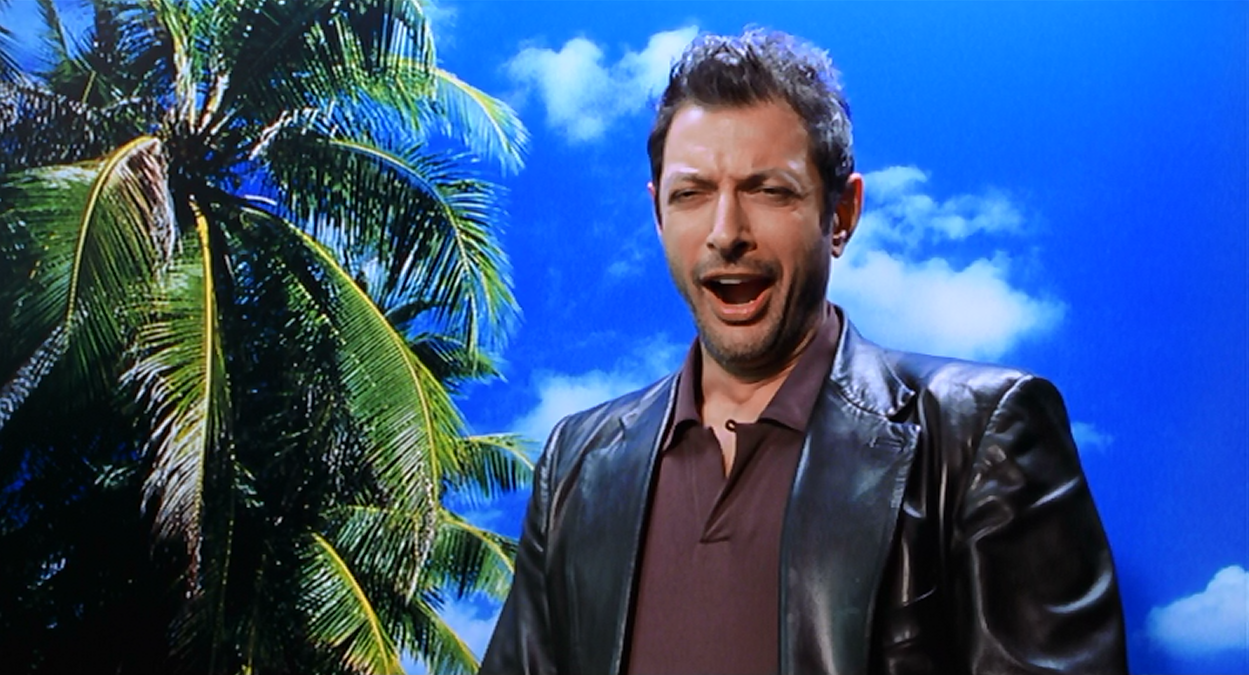
I lost interest in the Jurassic franchise about halfway through The Lost World: Jurassic Park and never got on board the franchise again (I still haven't seen Jurassic Park III and will most likely wait until Jurassic Not-Yet-5, as I like to call it, comes to Blu-ray). I remember falling asleep in the theater during The Lost World--at some point between Julianne Moore nearly falling to her death while glass slowly breaks beneath her and the lame moment when a raptor gets kicked in the face by the gymnastic moves of Jeff Goldblum's preteen daughter, I dozed off with my eyes open--and I got the sense that Spielberg, whose first shot of Goldblum in The Lost World shows the star yawning in a subway station, was equally disinterested with the material in his own sequel. (Fifteen years later, you could sense the same thing when Christopher Nolan only truly became alive during the stunning plane hijack sequence for The Dark Knight Rises, and for the rest of the project, it felt like the death of Dark Knight star Heath Ledger had sapped Nolan of his enthusiasm and energy.) Spielberg was phoning it in. He, in fact, later admitted in interviews to experiencing a constant feeling of "Is that all there is? It's not enough for me" throughout the filming of The Lost World. However, there is one moment in The Lost World where Spielberg didn't phone it in, and it's that literal cliffhanger scene with a petrified Moore unable to move or sneeze, the only genuinely nerve-wracking scene in The Lost World, as well as the only moment where Spielberg is back to his old enthusiastic and alert self, and it's not even a dinosaur attack.

So the Jurassics have never been my favorite kaiju movies. But Korean director Bong Joon-ho's The Host, a.k.a. Gwoemul (Korean for "monster")? Now that, to me, is the perfect kaiju movie, in which the human side of the movie is, for a change, as satisfying as the monster action and isn't an ordeal to sit through in order to get to the monster action. The Host is an effective mix of monster movie thrills, dysfunctional family comedy and political satire (about the incompetence of both American and Korean institutions) that's reminiscent of the anti-nuke satire in IshirĂ´ Honda's original 1954 version of Godzilla.

Bong wanted to take everyday people like the extremely flawed members of the working-class Park family (in comparison to Sam Neill's sole flaw of being awkward and standoffish around kids, which isn't all that interesting as a character flaw) and place them in a central role that's usually reserved in monster movies for scientific geniuses or muscle-bound heroes, the kinds of characters Bong says he finds to be boring. His risky and unconventional decision resulted in my favorite human protagonists in an earthbound kaiju movie since, well, the trio in Jaws. Like all the films in Edgar Wright's superb Cornetto trilogy, The Host isn't a genre spoof; it's a thriller with genuine stakes that happens to be comedic and is full of characters worth being invested in, so that when one of the protagonists dies or is nearly dead, it's a moment that genuinely stings.

Even the creature in The Host, despite being an efficient and single-minded killing machine, or rather, in the parlance of both Matt Hooper and Jaws trailer announcer Percy Rodrigues, an "eating machine," is imbued with personality too. The film's digital FX may vary in quality, but they're never too cartoonish-looking. The creature's clumsy gait cleverly mirrors the klutziness of Host star Song Kang-ho's anti-hero Park Gang-du. Sure, Gang-du learns to be a better dad just like in that sappy Jurassic Park/Billy Crystal/Adam Sandler storytelling device that annoys me so much, but The Host handles that device so much better. It also handles humor better than Roland Emmerich's Jurassic Park-ified 1998 reboot of Godzilla--a kaiju movie in the form of a terrible and unfunny '90s Fox sitcom stretched out to over two excruciating hours--did (the terrible '90s Fox sitcomminess of it all is further enhanced by Emmerich's casting of both Maria Pitillo, star of Fox's short-lived Partners, as Matthew Broderick's love interest, and Simpsons veteran Hank Azaria, star of Herman's Head, a.k.a. Inside Out if it were an oversexed '90s Fox office sitcom).

The Host's effectiveness as both a character study and a creature feature is precisely why I've never warmed up to any of the old-school Godzilla movies, except for the intriguing first movie, which I first caught on TCM, luckily without the stupid Raymond Burr-related changes that were made to it by the movie's first American distributor (the horrendous dubbing in the American versions of these films has also made me avoid the Godzilla franchise; except for spaghetti westerns and some of the Studio Ghibli films, I can't stand watching foreign films when they're redubbed by Americans or the British). As a kid, I took one look at 1973's Godzilla vs. Megalon back when it was once the feature presentation on Mystery Science Theater 3000 and thought, "That's the formula for Godzilla? It's a terrible one. Nah, I think I'll skip the other Godzilla flicks."

Godzilla vs. Megalon is one of the least beloved Godzilla installments, partly because Godzilla was basically a guest star in his own movie. It was produced during a time when the Toho Studios franchise was past its prime and had abandoned its nifty roots as an allegory about post-war Japan to strictly cater to the kids in the audience. I know Godzilla vs. Megalon is a lousy way to be introduced to the Godzilla franchise. It would be like if someone who's never seen any of the 007 movies chose A View to a Kill or Die Another Day as their first 007 flick to watch; they won't understand what all the fuss over the other movies is about. But Godzilla vs. Megalon is a good example of how boring and pointless the human characters tend to be in kaiju movies, a problem that doesn't afflict the 1954 Godzilla and is also a problem I was hoping British director Gareth Edwards wouldn't fall prey to when he got the chance to not repeat Emmerich's countless mistakes while reintroducing Godzilla for a second time (not counting the two Americanized and badly butchered Godzillas that starred Perry Mason) to non-Japanese audiences.

Godzilla threatens to unleash his atomic garlic breath on this MUTO.

While there's much to enjoy about Edwards' gritty, Fukushima-inspired 2014 version--like Alison Willmore said, the MUTOs (Massive Unidentified Terrestrial Organisms) and the redesigned Godzilla look terrific and are "lumbering and massive with a sense of incredible heft to them, despite being CGI creations"--Edwards, unfortunately, has a problem of focusing his films on white lead characters who aren't as interesting as he thinks they are. It's a problem that goes back to Edwards' prior sci-fi film Monsters, his low-budget 2010 breakthrough. Monsters is a film about Mexico experiencing first contact with giant alien creatures, and it's told not through the eyes of any of its citizens but through the eyes of the most annoying white hipsters since those douches who gentrified the barrio side of Arlen and slipped salmon into Enrique's fish tacos?

As The Daily Dot astutely pointed out, Godzilla suffers from a boring white guy problem--a problem that mars another recent kaiju flick, Pacific Rim--and is part of a long line of Hollywood tentpole blockbusters that opt for the least interesting characters as their leads. Out of a cast that includes the likes of Ken Watanabe, Bryan Cranston, Elizabeth Olsen, David Strathairn and Sally Hawkins as audience surrogates, Edwards chose to center the film around the individual with the least charisma or personality? Yo, Honest Trailers, your "Discount Channing Tatum" line is dead fucking on.


"The funny thing here is that the franchise originated in Japan. I actually haven't seen any of the old movies, but I'm going to assume that they--at least the Japanese ones--don't use Japan and its people as merely the backdrop against which white protagonists can shine and save the day," noted one of the teen authors of the blog Cool Asian Kids. "And that's essentially what the new film does."

Warner Bros. advertised Edwards' whitened-up take on the Japanese franchise as Godzilla and his atomic breath vs. Cranston and his atomic toupee--the studio made it look like Cranston would be channeling Dr. Loomis from Halloween--but (spoilers!) that's not the movie we got. Edwards told Willmore in a BuzzFeed interview that he chose to kill off Cranston's nuclear physicist character early on in Godzilla in order to raise the movie's stakes and create the sense that "anything could happen." Sure, Cranston's physicist dad character is kind of a boring white guy too, but kicking his badacondunk out of the movie so early is such a mistake because Cranston is much more alive and present in his scenes than Blando McBombdefuser--who, as Willmore says, "jumps through a series of increasingly improbable plot hoops to stay in the path of the creatures"--is in his.

It's just the wrong character to be spending a huge chunk of the movie with (and as the type of white savior Cool Asian Kids rightly criticizes him as being, he's amusingly inconsequential in comparison to Godzilla's heroics in the movie), and it's a shame, because Edwards kicks the movie off so promisingly with one of my favorite opening title sequences in a recent tentpole blockbuster. The sequence is a cleverly assembled montage of both real and fake archive footage that establishes the history of MUTOs, nicely scored by Alexandre Desplat--who's skillfully following in the footsteps of the old Akira Ifukube score music that both Pharoahe Monch and Tracy Morgan love so much--and surrounded visually by hastily redacted text from fake government files. The Prologue Studios opening titles are one of the 2014 Godzilla's few instances of humor, one of many things Edwards accomplishes better than Emmerich did. The passages that are redacted to isolate the names of the cast and crew are either silly, freeze-frame-worthy sentences like "The monster communicates through music composed and conducted by Alexandre Desplat" or are full of in-jokes like "Walter Malcolm has claimed that government men dressed in white lab coats routinely appear at site and Bryan Cranston shortly after the event all residents are sworn to silence." Walter is a reference to Breaking Bad, and Malcolm is, of course, a shout-out to Malcolm in the Middle (although shouldn't it say Hal, Cranston's character's name on Malcolm, instead of Malcolm?).


Despite all the sleep-inducing moments involving Discount Channing Tatum, as well as the fact that it's nowhere near the league of The Host, the 2014 Godzilla is superior to Emmerich's previous attempt to bring Godzilla to America and is more effective at building tension and staging monster action. Also, it's not trying to rip off so much of Jurassic Park. Recent Throwback Thursday guest blogger Hardeep Aujla, who hails from Word Is Bond, a U.K.-based hip-hop blog I've contributed pieces to, disagrees. He dislikes the 2014 Godzilla so much that he's skeptical about how Edwards will handle Star Wars in his next directorial effort, Star Wars Anthology: Rogue One. So Hardeep, how would you have improved the 2014 Godzilla if you worked on it? Would you have made the reboot into a boy-and-his-best-friend-who's-a-strange-creature story like the old Godzilla sequels, the Gamera sequels and my favorite of all those stories, The Iron Giant? Or would you have said "Fuck the American audience" and told it from the point of view of Ken Watanabe's scientist character? Or would you have completely gotten rid of any audience surrogate characters and told it from the point of view of Godzilla, which would have probably caused the movie to cost 200 million more American dollars to make but is a kaiju movie that's never been done before?

***

Hardeep Aujla: I think I read that Godzilla's screen-time was only 10 minutes in the whole 130-something minute film. This isn't Jaws, Edwards - less is not more in kaiju films.

As for what I would have done, I love The Iron Giant and that whole story too but I would've gone with your last suggestion, hands down. This is what I always thought AvP should have been. I would have started the film introducing a crack team of badasses equal to Dutch's or Apone's team, but then would've had them torn apart gloriously by the titular creatures (perhaps they stumbled into the vicinity of a one-on-one confrontation). Then the title of the movie comes up accompanied by strong audio tone with the intention of stating "That's fucking right" to the audience and their expectations. I'm thinking a very loud shrill-type noise that starts off monotonous but evolves a couple of seconds later into something with a bit more character before ultimately revealing itself to be the war-cry of either a Predator or an Alien as we cut straight back to the duel (yep, this idea has been rolling around in my head for a while). From there on out we get a pure Aliens versus Predators narrative with no more English spoken.

'Speaking words of wisdom, let them fiiiiiiiiiiight.'

I haven't seen many of the old kaiju movies (the Gamera trilogy from the 90's is superb though), and the ones I did see were a long time ago, but I do remember some very protracted sequences where it's just Godzilla or his kid doing stuff and the audience just follows along. I may be completely fabricating those memories though. Either way, the challenge for Gareth Edwards would have been to make an engaging film like this in the modern era, one that is good enough to stand strongly unaided by human faces and words. There could of course be some human characters (retaining Ken Watanabe who was wasted in the actual film) but they should have minor roles. I can see how this would be tricky for a character like Godzilla who seemingly doesn't have a rich variety of activities to fill a movie with apart from swim, smash and roar, but therein lies the challenge, and I would be a lot more impressed with Gareth Edwards as a filmmaker if he pulled it off, or at least respect his effort if he tried.

None of Alexandre Desplat's score cues from Godzilla are currently in rotation on AFOS, but Desplat's main title theme ought to be.

Thursday, October 30, 2014

Tip-Top Quotables: Special Halloween Edition

As the new host of Project Runway, Sally finds all the contestants' ideas for holiday fashion lines to be so fucking hideous she'd rather tear her arm off and donate it to a shitty kids' puppet theater production of Spider-Man: Turn Off the Dark than have to see any more ideas.
(Photo source: DVD Beaver)
My favorite monthly section in old Source magazine issues was "Hip-Hop Quotables," in which the Source editors printed out their favorite new rap verse of the month, from the first bar to the last. "Tip-Top Quotables," which I've named after that Source section, is a collection of my favorite quotes of the week from anywhere, whether it's a recent TV show or a new rap verse. "TTQ" won't appear on this blog every week. It'll appear whenever the fuck I feel like it.

* "I worked harder on that probably than anything I'd done in my life, so I was really, really sad that it didn't find an audience when it came out. But then, over the course of 10 or 15 years, to see that it really did—it just was a slow-cooking thing—it was one of those really rare things that just took on a life of its own. It was incredibly gratifying. I've worked on many things that failed, and that, more than anything else at that point, was something that I really wanted people to find. But when it came out, nobody knew how to market it. Nobody knew what it was. It wasn't a marketable entity. But to Disney's credit, they saw that it was developing a following, and they sensed they could nurture that and make it have a second and third life. So really, kudos to them. To say, 'You know what? This thing has potential now, 10 years later. Let's feed it, let's nurture it, let's develop it more. Let's re-release it, let's do an 'inspired by' record.' They really did catch on after the fact. But at the time, it really was heartbreaking."--Danny Elfman on 1993's The Nightmare Before Christmas, the sixth of 842 feature films he scored for Tim Burton, A.V. Club


(AFOS programming note: "This Is Halloween" from The Nightmare Before Christmas can be heard during the annual AFOS Halloween night block "Buckets of Score," from 5pm to 11pm Pacific.)

* "Halloween is when every hack comedian's premises turn into costumes."--Hari Kondabolu

* "Do you know why we carve jack-o'-lanterns on Halloween? The origins of this curious tradition actually date back hundreds of years, to the early Puritan settlers in the American colonies. The Puritans believed that every Halloween, the Devil would enchant the pumpkins' faces so that they would come to life and say complimentary things about the legs of all the Puritan men, such as, 'Nice legs. Very muscular,' and 'Your legs are tremendous!' The man who got the most leg-based compliments from the jack-o'-lanterns would then be forced to spend Halloween in jail."--ClickHole, "Exploring The Origins Of 4 Halloween Traditions"

Looking forward to 'Black Piranha' for the sequel to 'Black Jaws.'
* "To increase blood pressure in the black community, we are adding sodium to sports clothing."--the Nixon Administration's '70s robot R.A.C.I.S.T. (Robotic Asynchronous Computerized Information System Two-Thousand), Black Dynamite, "Black Jaws! Or Finger Lickin' Chicken of the Sea"

* "Later, an interracial couple was attacked, but the shark did not eat the white girl. In fact, the shark even gave her a ride home."--R.A.C.I.S.T., updating President Nixon on the activities of a shark that attacks only black swimmers, Black Dynamite, "Black Jaws"

* "It's only a beach, Cream Corn. Just a big-ass bathtub with fish in it. And if you seen one big-ass bathtub with fish in it, you seen 'em all."--Black Dynamite (Michael Jai White), Black Dynamite, "Black Jaws" (true that, Dynamite; the beach is overrated as fuck)

* "I'm in love with chicken waings/Fuck them string beans/Gotta feel that hypertension/Tuggin' my heartstrings/And when I'm feelin' hungry/Start it off with ribs and fries/Ham hocks and bacon grease/Diabetic paradiiiiiiiiise!"--"Thick James" (Phonte), singing the "Mary Jane"-style "Chicken Waings" (composed by music supervisor Fatin "10" Horton) during Black Dynamite's "Black Jaws" end credits


Zombie Fred and Ethel were conspicuously missing from the evening's festivities, probably because a drunk Rule 63 Daryl Dixon took them down with her crossbow on the way to the party.
Marry Me's Halloween episode
* Julie (Jessica St. Clair) to her son Mason (Jet Jurgensmeyer): "Well, you are in a lot of trouble, Mister, so you get inside and you start practicing that Mandarin."
Mason: "I wish Annie and Jake were my mom! [Proceeds to say to Julie a bit of Mandarin dialogue that's so shocking to her that she gasps]"
Jake (Ken Marino): "What does that mean?"
Julie: "'Die, white devil.' He's going through a phase."
--Marry Me, "Scary Me"

* "Wow, babe, you are just like Oprah. You don't have any kids of your own, but you tell everybody else what to do with theirs."--Jake (Marino), complimenting his fiancée Annie (Casey Wilson) on the advice she gave at the end of Halloween night to her arch-enemy Julie about kids, Marry Me, "Scary Me"

* "We have no idea how prevalent sugar is in almost everything that we eat. Look at Clamato juice, the original tomato cocktail with clam. One serving has 11 grams of sugar in it, so they clearly thought, 'Well, look, let's improve the taste by adding sugar,' instead of thinking, 'Let's improve the taste by removing the clam.'"--Last Week Tonight's John Oliver

Thursday, July 24, 2014

Tip-Top Quotables: "Some couples have a song. Ours is the theme from Jaws," plus a few other great lines this week

Kumail Nanjiani gives better advice than Dr. Phil does.
My favorite monthly section in old Source magazine issues was "Hip-Hop Quotables," in which the Source editors printed out their favorite new rap verse of the month, from the first bar to the last. "Tip-Top Quotables," which I've named after that Source section, is a collection of my favorite quotes of the week from anywhere, whether it's a recent TV show or a new rap verse. "TTQ" won't appear on this blog every week. It'll appear whenever the fuck I feel like it.

* "Tell him that snoring is usually a sign of a condition called sleep apnea, which causes a lot of people to die in their sleep. Be like, 'Here, Google it.' And then he'll be so scared he'll never be able to sleep again."--Kumail Nanjiani, giving advice to an Esquire reader about how to deal with a roommate's boyfriend who snores too loud

* "We've got some very attractive rewards at every level. For instance, $10,000 lands you in a signature CNN mass-shooting coverage six-box. For $25,000, you get to take molly with Fareed Zakaria. What what! For $5 million, CNN will air a 24-hour, two-week hunt for your lost car keys."--Jon Stewart, announcing his Kickstarter to buy CNN

(Photo source: Wendy Liebman)


* "Tony played it like a failed Scientologist."--Sam Rockwell, recalling to MTV News his Galaxy Quest co-star Tony Shalhoub's hilarious performance as a constantly stoned, non-Asian TV actor playing an Asian character, which Shalhoub based on constantly stoned Kung Fu star David Carradine, '70s TV's most infamous example of a non-Asian playing an Asian


(Photo source: Pia Glenn, the writer behind the #TimeTitles hashtag, which is a mockery of this)

(Photo source: Hari Kondabolu)

* "That is not good. The only time when you are happy to hear the words 'Maggots were found' is when you are a maggot whose family was lost at sea."--Last Week Tonight's John Oliver, joking about a news report of maggots being found in prison food supplied by a shady subcontractor


* "Garner was an expert at pulling the viewer into the action and acknowledging the ridiculousness of most television storytelling without quite breaking the fourth wall. He was the guy who crawled out of the screen and sat beside you munching popcorn on the couch."--Todd VanDerWerff, Vox, "James Garner has died; these five roles will remind you of his greatness"

* "If Netanyahu is so bothered by how dead Palestinians look on television then he should stop killing so many of them."--Benjamin Wallace-Wells, New York, "'Telegenically Dead Palestinians': Why Israel Is Losing the American Media War"

Monday, August 12, 2013

Who's that voice on AFOS?

If you don't watch Childrens Hospital, go YouTube 'skin clothes.' You'll immediately understand why Esquire posted 'We Have a Crush on Lake Bell.'
(Portions of the following were culled from a series of "Who's That Voice on AFOS?" posts from July 13-17, 2010.)

The new indie film In a World... is distinctive for being the first comedy set against the voiceover industry. I took a bunch of voice acting classes back when I was considering breaking into the voiceover industry, so the subject of In a World... is of great interest to me. In a World... is the feature-length directorial debut of actress Lake Bell, one of the stars of the most hilarious 11-minute show on cable, Childrens Hospital, as well as an occasional director of Childrens Hospital episodes. Bell stars in In a World... as a vocal coach who attempts to break into the male-dominated movie trailer side of the industry and ends up competing with her announcer father for the lucrative gig of reading copy for an ad campaign for The Amazon Games, a much-hyped tentpole franchise based on a popular series of YA page-turners with similarities to a certain Suzanne Collins YA franchise.

In a World... opens with footage of the late Don LaFontaine--the copywriter-turned-legendary voiceover artist who's credited with coming up with the ubiquitous '80s and '90s trailer phrase "In a world where..."--cold killing it as a trailer narrator. In a post-LaFontaine world where everyone's still in awe of DLF's baritone and incredible work ethic, only two or three voiceover artists have carried on LaFontaine's raspy, imposing and frequently parodied style--most notably Ashton Smith, whose baritone was all over the TV spots for the first three Bourne movies (Smith once said, "When you die, the voice you hear in heaven is not Don's. It's God trying to sound like Don.").

But as Bell, a self-described trailer fanatic, noted when she and actor/voiceover artist Fred Melamed, who plays her dad in In a World..., both plugged the film on Fresh Air last week, trailer houses are increasingly veering away from voiceovers and letting the footage speak for itself. While that's great for trailer houses that want their product to look more sophisticated and stylish and sound not as dated as the '80s and '90s "In a world..." days of advertising, I'm a little concerned about that because it adds some difficulty to my task of tracking down more recent trailer audio clips I could use for AFOS, in which announcers like Smith portentously utter the taglines and titles of recent movies or TV shows.

'I first saw Lauren Bacall in a movie, and I heard her voice, and then like Faye Dunaway and Anne Bancroft, I mean that sounded hot to me. That sounded like something I wanted to aspire to. And Lauren Bacall was like 19 years old in To Have or Have Not or something, but she was talking like a big girl.'--Lake Bell

I attach these clips of trailers or radio/TV spots to score tracks from the movies or shows that are promoted in these trailers or spots because I don't want to go through the tedium of switching on both my mic and Audacity and recording a back-announcement for every single track that's in rotation on AFOS. These intros I cull from trailers or TV spots are, to me, an entertaining way to let the listeners know what they'll be hearing next, as well as a way to keep them from asking me what they're hearing. (Only rarely will I receive a message from a really dumb and lazy listener who doesn't bother to either pay attention to the intro or read the track info on the radio station widget, so he'll ask me to identify the already-ID'd track that was streamed at yadda-yadda-yadda in the afternoon. Yo, Einstein, it's impossible for me to go back and check because I don't exactly keep a running tab on when shit was streamed during the day. I wish these dumb shits were more like illustrator Kevin Greene, who's much more helpful when asking me about a track he was having some trouble IDing.)

In 2005, I experimented with attaching the vintage radio spots for Black Caesar and Foxy Brown to the themes from those movies, and I liked how the old ads sounded as intros (any old ad or trailer that features the late Adolph Caesar's voice is always fun to listen to). Then shortly thereafter, Warner Bros.' home video division dropped the Batman Begins soundtrack album, and I was looking for an effective and ominous way to announce "This next track is from the Batman Begins score" without having to say those words. I found it in the form of an audio clip of the Batman Begins TV spot that consisted solely of the bat swarm graphics from the film's opening titles. I thought that was an even niftier intro than the blaxploitation radio ads, so from then on, I tacked on trailer or promo clips to almost every single track during the block that's now known as "AFOS Prime." (On AFOS, LaFontaine's voice can be heard during clips of trailers or TV spots that were produced for Purple Rain, The Untouchables, The Living Daylights, Mo' Better Blues, A Rage in Harlem, Passenger 57, Batman: Mask of the Phantasm, Hoodlum, South Park: Bigger, Longer & Uncut, Ratatouille, The Simpsons Movie and Midnight Run.)


As In a World... gets audiences to better appreciate the art of trailer voiceovers and the talents who partake in such a faceless profession, here's a guide to some of the distinctive non-LaFontaine voices that surface during the movie or TV trailer clips that function as intros to the tunes during "AFOS Prime," "Beat Box," "The Whitest Block Ever" and "Brokedown Merry-Go-Round."

Adolph Caesar attempts to beat up Denzel for making him sit through Virtuosity.
Adolph Caesar
Who's he?: A New York stage actor whose classy baritone was all over trailers and ads for blaxploitation flicks, Caesar earned acclaim late in his career for some of his acting work both on stage and screen before dying from a heart attack in 1986.
Most memorable on-screen role: A role he reprised from the stage: the self-hating light-skinned black sergeant in A Soldier's Story who, in the above pic, is preparing to whup the ass of some future double Oscar winner.
Most memorable voiceover work: The trailers and TV/radio spots for the original Dawn of the Dead ("When there's no more room in hell, the dead will walk the earth").
When can you hear him on AFOS?: The radio spots for Trouble Man, Foxy Brown and Claudine and the trailers for Three Tough Guys and Superfly.

Wednesday, July 14, 2010

Who's That Voice on A Fistful of Soundtracks? #2: Percy Rodrigues

This commodore doesn't sing about being easy like Sunday morning.

Percy Rodrigues
Who is he?: As an announcer, this African Canadian actor and Peyton Place cast member was best known for scaring millions of white people away from the water during the Jaws trailers and ads (he's one of the interviewees in The Shark Is Still Working, a 2006 documentary about the making of Jaws that also marks the actor's final public appearance before his death). But because the release of the original Jaws was before my time, I know Rodrigues best from the She's Having a Baby trailer ("I stopped taking the pill") and the Alien³ trailer, where he declared that "the bitch is back." I like how he could sound ominous one moment and then be tongue-in-cheek seconds later--or be both at the same time, like in the She's Having a Baby and Alien³ previews.
Most memorable on-screen role: On the original Star Trek, Rodrigues guest-starred as a Starfleet commodore whose voice must have frightened Dr. McCoy away from the Enterprise swimming pool.
When can you hear him on the Fistful of Soundtracks channel?: The trailers for Taxi Driver, Lifeforce and The Empire Strikes Back: Special Edition.

Previous "Who's That Voice?" bio:
Adolph Caesar