Showing posts with label Throwback Thursday. Show all posts

Thursday, December 10, 2015

Throwback Thursday: A Very Harold & Kumar 3D Christmas

A Very Hard-to-Read 3D Christmas Stub
Usually on Throwback Thursday, I randomly pull out from my desk cabinet--with my eyes closed--a movie ticket stub I saved. Then I discuss the movie on the stub and maybe a little bit of its score, which might be now streaming on AFOS. Today, instead of drawing some random ticket, I'm going to focus today's TBT piece on a Christmas movie whose stub I've kept. This is the final post of the AFOS blog's year-long TBT series. A TBT piece was the blog's first post of 2015, so this final TBT piece is the blog's final post of 2015. The blog will resume with all-new posts some time in 2016.

A Very Harold & Kumar 3D Christmas is a triple Christmas miracle. It's a threequel that actually doesn't suck, a slapstick holiday comedy that doesn't suck and the hard-R Asian American Christmas comedy movie I--an Asian American who prefers his Christmas movies to be either irreverent (Kiss Kiss Bang Bang, The Nightmare Before Christmas) or non-sentimental (The Ref)--always dreamed of.

Tired of comedies that don't reflect the diverse Jersey milieu they grew up in, writing partners Jon Hurwitz and Hayden Schlossberg came up with Harold & Kumar Go to White Castle--starring John Cho as Harold (company man by day, pothead by night) and Kal Penn as Harold's more laid-back best friend Kumar--as an antidote. Hurwitz said, "Eventually we decided, wouldn't it be different if we wrote a movie where the Asian guys weren't the 'best friend,' and they were front and center." The hilarious and unabashedly crude Harold & Kumar Go to White Castle delivered a French fry grease-covered middle finger to Asian American stereotypes, placed Asian American men in non-stereotypical roles and gave them well-rounded and genuinely funny characters to play--11 years before Aziz Ansari and Alan Yang entertainingly did the same on Master of None and Fresh Off the Boat did the same with a Chinese American family very loosely (while some have viewed as way too loosely) based on restaurateur Eddie Huang's real-life fam.


I've also always wanted to see an Asian American version of Lemmon and Matthau anchoring a buddy movie. Thank fuck for the Harold & Kumar movies, in which Cho and Penn are our Lemmon and Matthau (I wish Cho and Penn would do 11 movies together like Lemmon and Matthau did, and in these buddy movies, they would get to leave behind Harold and Kumar and play other characters). Hurwitz, Schlossberg and director Danny Leiner broke new ground with the first Asian American pothead buddy comedy. In 3D Christmas (spelled with no hyphen between the 3 and D), Hurwitz, Schlossberg and director Todd Strauss-Schulson attempt to break some new ground with the first hard-R Asian American Christmas flick, and the result is both a more consistently funny Harold & Kumar sequel than Harold & Kumar Escape from Guantanamo Bay (unlike Guantanamo Bay, it doesn't recycle gags from the first movie) and a much more visually inventive installment than the previous two.

The visual flair of 3D Christmas--despite an evidently low budget that has Detroit attempting to pass itself off as New York--is mainly due to the addition of Strauss-Schulson, a more visually adventurous director than Leiner and the duo of Hurwitz and Schlossberg, who shared directing duties on Guantanamo Bay (Strauss-Schulson's currently receiving good notices for his horror comedy The Final Girls), and the work of Laika, the great Portland stop-motion animation studio behind Coraline, ParaNorman and The Boxtrolls, during the 2011 threequel's Claymation drug trip sequence. Laika's sequence is a raunchy and gory parody of Rankin-Bass holiday specials that has Harold and Kumar seeing nothing but Rankin-Bass when their search for a Christmas tree for Harold's house gets disrupted by hallucinations caused by hallucinogen-spiked eggnog. In addition to a Claymation sequence, 3D Christmas treats the audience to a spoof of hyper-stylized heist-movie planning sequences, parodies of Sin City and Zack Snyder movies, a holiday musical number (and it too is raunchy, of course, with Kumar's '90s TV idol Neil Patrick Harris, once again playing a hyper-masculine, constantly-high-on-E version of himself, appearing to have orally satisfied a female dancer right in the middle of it) and sight gags about the ridiculousness of the film's 3-D gimmick.


The 3-D sight gags still manage to be funny even in 2-D. There's an especially crazy 3-D gag involving both a Christmas tree and Danny Trejo, who plays the tough and occasionally racist father-in-law Harold wants so badly to impress ever since he married Maria (Paula Garces), his love interest in the previous two movies. The Trejo/Christmas tree gag is classic Harold & Kumar.

Like the movie itself, the original score by William Ross isn't much of a game-changer, but it's a lot of fun. Ross, who frequently scored episodes of Tiny Toon Adventures, gets to revisit his Warner Bros. Animation scoring past for this Warner Bros. movie that's basically a live-action Warner cartoon, and the best parts of his 3D Christmas score are not the faithful covers of Christmas standards like "Dance of the Sugar Plum Fairy" but Carl Stalling-style parodies of scores like James Horner's Mask of Zorro score ("Merry Christmas!"), any score where Lisa Gerrard's wailing ("Eggtion") and Don Davis' Matrix score ("Super Baby").

Ross' spoof of Davis' work on The Matrix is especially amusing because he was an orchestrator on The Matrix Reloaded. He wrote the Matrix-style motif for a scene where a toddler (triplets Ashley, Chloe and Hannah Coss) who's been accidentally high on weed and cocaine somehow develops superhuman strength and prepares to attack a famously vicious Ukrainian gangster (Elias Koteas). The brief motif is a great misdirect too: it tricks the audience into thinking the film is going to bust out yet another hacky parody of The Matrix's bullet-time scenes, but instead, the hacky bullet-time parody we're all expecting (fortunately) never happens.

Thomas Lennon's coked-up toddler daughter was the least favorite part of 3D Christmas for film critics who bizarrely cry foul over making humor out of kids inadvertently getting high. Like critic Stephanie Zacharek--a fan of White Castle and Guantanamo Bay who found 3D Christmas to be underwhelming but enjoyed its coked-up baby scenes--said back in 2011, the coked-up baby gags are a pretty daring move in a contemporary culture where kids are mini-potentates who must be protected from bad influences at all costs. Without the toddler's accidental encounters with drugs, 3D Christmas would have been deprived of one of my favorite scenes in the movie: Kumar's choice of "Wu-Tang Clan Ain't Nuthing ta Fuck Wit" as a lullaby to calm her down.

(Photo source: The Nihilistic Cinephile)

RZA, whose voice is all over "Wu-Tang Clan Ain't Nuthing ta Fuck Wit," even makes a cameo as a Christmas tree salesman who likes to fuck around with customers and role-play with his business partner (Da'Vone McDonald), who, at one point, desperately pleads with RZA's character to "play Angry Black Guy this time." Their scene is another great example of the Harold & Kumar movies' playful approach to racial stereotypes, which is basically "Yes, they're terrible, but you can't let them get you down, and the only way to cope with them and various other forms of racism is to laugh about them or mock them." It's not surprising why Harold and Kumar toke up a lot. Weed helps them get through the racism they have to put up with.

But in 3D Christmas, Harold has given up the herb because it lowers sperm count, and he's trying to have a baby with Maria (meanwhile, Kumar has distanced himself from an increasingly money-grubby Harold, dropped out of med school and replaced Harold with a bong--and sometimes Amir Blumenfeld--as his best friend). So in a deleted scene where an old Jewish lady at a Chinese restaurant mistakes the Korean American Harold for a Chinese waiter, Harold reacts not with a stoned laugh but in a way that's typical for those of us when we don't have a joint or a blunt to cope with racism: silent, world-weary resignation.


Hurwitz and Schlossberg frequently get criticized for the huge amounts of naked women and gay-panic jokes (fortunately, 3D Christmas has none of the gay-panic jokes that were all over White Castle and Guantanamo Bay) during their trilogy. But they've remarkably gotten two things right--and they've never gotten praise for it--in their three attempts to give Asian Americans the kinds of leading comedic roles they never previously got, which, if Hurwitz and Schlossberg hadn't been so careful or understanding, could have turned into self-serving, one-sided or clueless acts of white saviordom: 1) the way that race is an intrinsic part of the lives of people of color and affects everything we, as people of color, do; and 2) the many different ways we deal with racism, as opposed to just one way. A lot of us prefer to laugh about it, like Harold and Kumar do when they see the police artist sketches of themselves on TV at the end of White Castle. Meanwhile, the two Christmas tree salesmen in 3D Christmas prefer role-playing and running cons as their way of dealing with it. Or there are others who prefer to be more Zen about it, like the Gary Anthony Williams character in White Castle, who tells Harold that he realized long ago that there's no sense in getting riled up by racism, plus he has a really large penis, and that keeps him happy.

Those two things these two Jews managed to get right in these movies they've written as tributes to their Asian American friends (they named Harold after a real-life friend of theirs, Harold Lee) are perhaps the greatest gift the Harold & Kumar franchise has presented to us, even more so than crazy Neil Patrick Harris cameos, clever Claymation sequences, naked nun shower scenes or a waffle-making sentient robot named WaffleBot.


Nah, wait a minute. Nothing can top WaffleBot. Okay, they're the second greatest gift.

None of William Ross' score cues from A Very Harold & Kumar 3D Christmas are currently in rotation on AFOS, but the triumphant-sounding "WaffleBot Rescue" ought to be. The AFOS blog resumes in 2016.

Thursday, December 3, 2015

Throwback Thursday: Transformers: Dark of the Moon

Frances McDormand's finest hour as an actress
Every Throwback Thursday, I randomly pull out from my desk cabinet--with my eyes closed--a movie ticket stub I saved. Then I discuss the movie on the stub and maybe a little bit of its score, which might be now streaming on AFOS. The AFOS blog's year-long TBT series concludes its run on December 10.

That skydiving scene in 3-D was amazing.

The rest of the movie can go fuck itself.

They should toss Shia to his death while they're at it.

Thursday, November 26, 2015

Throwback Thursday Throwback: Fight Club

The 'B' is for 'Bitch Tits.'
The AFOS blog's year-long Throwback Thursday series concludes its run on December 10. Today's edition of TBT is a repost of a TBT piece from April 9. It's perfect for the day before the day when consumerism whips its dick out and unloads on every single crazed shopper's face.

Cell phones have ruined movies forever. They've made it more difficult for screenwriters to come up with suspenseful situations. You couldn't write either Rear Window or North by Northwest today because every moment of suspense would become impossible for the nitpickers in the audience to take seriously due to "Hmm, you know he or she could use his or her smartphone to save his or her own ass in this situation." The constant advances in cell phone technology have even affected movies that have aged pretty well--when they don't involve phone scenes, that is. The appearance of any kind of phone in a largely timeless movie that's not a present-day cell phone immediately makes that otherwise timeless movie dated.

Thanks to the cutting-edge work of cinematographer Jeff Cronenweth and director David Fincher, whose visuals have always been cutting-edge and distinctive (whether in Fincher-directed music videos like Aerosmith's "Janie's Got a Gun" video or more recent Fincher films like the Cronenweth-lensed Gone Girl), the 1999 anti-consumerism cult favorite Fight Club looks like it could have been filmed yesterday, and it stands the test of time--for several minutes. But then Edward Norton is seen standing in a pay phone booth to dial up his new soap salesman friend Tyler Durden (Brad Pitt), and Fight Club instantly becomes dated.

I had not watched Fight Club in 16 years, before rewatching it as prep for today's edition of Throwback Thursday. In addition to containing the only film score by the Dust Brothers of Paul's Boutique fame (who really ought to compose more scores, due to their outstanding work on the 1999 film, which can be heard during either "AFOS Prime" or the first 33 seconds of the trailer below), Fight Club remains my favorite Fincher film. It's still my favorite even when the appearance of a pay phone wrecks the timelessness and anonymity both Fincher and the various adapters of Chuck Palahniuk's thought-to-have-been-unfilmable 1996 novel of the same name, including credited screenwriter Jim Uhls and uncredited Andrew Kevin Walker from Seven, tried to aim for in their portrayal of modern-day malaise (the city Fight Club takes place in is unspecified, despite the frequent use of L.A. locations, as is the name of Norton's narrator character, although the shooting script referred to him as Jack--we'll call him Jack from this point on).


Much of the appeal of Fight Club stems from the fact that we've all experienced Jack's feelings of malaise (he's nameless for a reason: so that male audience members can name the narrator after themselves). Okay, so you may not be a privileged white male yuppie like Jack, but you can definitely relate to his dissatisfaction with his job as an auto recall specialist and the feeling of emptiness that triggers his insomnia and has him doing anything to feel alive, whether it's going through an IKEA shopping phase, faking diseases and crashing support group meetings with his frenemy Marla Singer (Helena Bonham Carter) or forming with Tyler an underground fight club to blow off steam, for men only (no Marlas allowed).

A good example of the film's ability to connect with viewers long after it tanked at the box office (Palahniuk's material isn't unfilmable--it's unmarketable, as 20th Century Fox realized while inanely trying to sell Fight Club as a TBS Movie for Guys Who Like Movies back in 1999) was when former RogerEbert.com editor Jim Emerson interestingly called Fight Club one of the most accurate depictions of clinical depression ever made and praised how it captures the way that depression is all-consuming. "It helped shake me out of the grips of a depression that was sucking me down at the time," wrote Emerson.

Funny how the most dated thing in this shot is not Brad Pitt's Soul Train outfit. Instead, it's that fucking pay phone.
(Photo source: DVD Beaver)

(Spoiler time. Weirdos who have never seen Fight Club can leave now.)

Thursday, November 19, 2015

Throwback Thursday: Source Code (with guest blogger Hardeep Aujla)

If Source Code wasn't sufficient enough as an unofficial movie version of Quantum Leap starring Jake Gyllenhaal, go watch Gyllenhaal sing 'And I Am Telling You I'm Not Going' in drag. Just pretend that SNL sketch is one of those various Quantum Leap episodes where Sam leaps into a woman and has to sing in front of people in order to leap again.

Every Throwback Thursday, I randomly pull out from my desk cabinet--with my eyes closed--a movie ticket stub I saved, and then I discuss the movie on the stub. This time I've gotten Hardeep Aujla, an album reviewer for a U.K.-based hip-hop blog I've contributed pieces to, Word Is Bond, to come back after his guest TBT post about The Cabin in the Woods and discuss the movie on the stub I drew. Spoilers ahead. The AFOS blog's year-long TBT series concludes on December 10.

Thursday, November 12, 2015

Throwback Thursday Throwback: Short Term 12

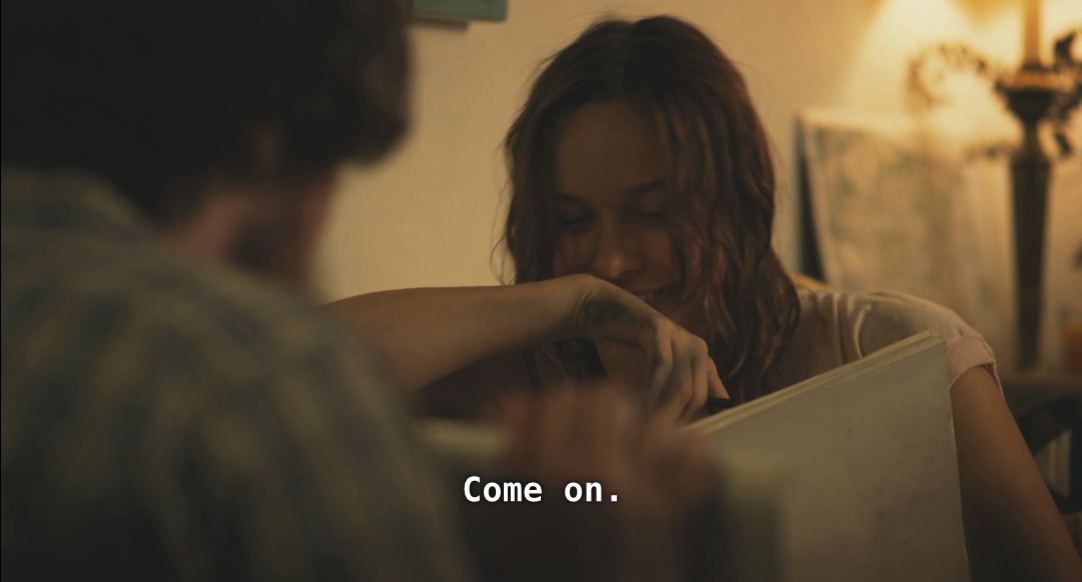
Short Term 12 star Brie Larson was a frontrunner for Emilia Clarke's role of Sarah Connor in Terminator: Genisys. The way that movie spells 'genesis' is so fuckyng insypyd.

Today's edition of Throwback Thursday is a repost of a TBT piece from April 2, 2015.

There was only one word that kept surfacing in the mental notes I took in my head as I was watching Short Term 12 for the third time, in preparation for today's edition of Throwback Thursday, and that word was "economical." Asian American indie filmmaker Destin Cretton's second feature film, the story of a group foster home counselor (Brie Larson) and her determination to save her facility's newest resident (Justified's Kaitlyn Dever) from the same kind of child abuse she herself used to be subjected to, is a triumph of economical storytelling, a film that prefers to show rather than tell, while many other films with similar subject matter opt to smother the audience with dollops of on-the-nose exposition, speechifying and worst of all, mawkishness.

'SXSW has a lot of companies that specialize in pens, T-shirts and beer cozies.'--Hari Kondabolu
Destin Cretton (center), the Short Term 12 cast and the film's SXSW Grand Jury Award

Neither of those three things show up to ruin Short Term 12, which Cretton based on his own 2009 short film of the same name. The only major exposition the audience receives at the start of the film is the terse instructions Larson's character Grace gives to Nate (Rami Malek), the facility's newest staffer, about how to handle the at-risk kids they're assigned to look after ("Remember, you are not their parent, you are not their therapist; you are here to create a safe environment, and that's it"). None of the backstories of the film's four main characters--Grace, her good-humored co-worker and boyfriend Mason (John Gallagher Jr.), Dever's character Jayden and Marcus (Keith Stanfield), a resident with both musical and ichthyological aspirations who's turning 18, so his new age requires him to move out of the short-term home, but he's deeply troubled about having to leave--are unveiled in clumsily written infodumps or pointless flashbacks. They're unveiled gradually, piece by piece, and at believable moments. For example, when Marcus refuses to celebrate his 18th birthday with a party or cake and simply requests to have his head shaven, the film withholds for a while from the audience Marcus' reason for his request. When the film finally makes clear--after the haircut--why Marcus wanted it, it's an unexpected and quietly devastating moment.

Nobody in the film says "My dad's been hitting me" or "I was raised by the system" when they first appear on screen. It just wouldn't ring true. Grace, Jayden and Marcus are survivors of abuse who have difficulties with communication and trusting anyone, so Jayden and Marcus prefer to express the pain they're experiencing through the art they create. In Marcus' case, his art takes the form of a mesmerizing freestyle Cretton shot in one long uninterrupted take.

Marcus' freestyle scene is a good example of the effectiveness of Short Term 12's digital cinematography.

Short Term 12 was shot with Red cameras.

Winter's Bone was also shot with Red cameras.

I like any digital camera that's named after a Bruce Willis action flick.

The believable and stripped-down dialogue is a great example of the verisimilitude Cretton aimed for in Short Term 12 (Cretton himself once worked at a similar facility for at-risk youth, and his experience with social work is evident in moments like Grace's thorough inspection of the kids' rooms for drugs and the scene where Mason and Nate have to carefully restrain Jayden when she has a meltdown in her room). This is the kind of off-kilter film where a character like Mason introduces himself not in a monologue about how his foster family saved him from the streets--that monologue is saved for later, for the most fitting occasion--but in a monologue to Nate about a comedically disastrous workday: the day he shit his pants in front of a kid who tried to run away from both him and Short Term 12, to be exact. It's a brilliant way to establish Mason's compassion and doggedness--a doggedness that surfaces later when he has to deal with Grace's sudden reticence about both being pregnant with his child and accepting his marriage proposal--without lapsing into the standard bad-movie-writing method (ridiculed most memorably by Walk Hard: The Dewey Cox Story) of having Mason declare that "I'm compassionate and dogged."

Grace is equally compassionate and dogged in both her attempts to help the introverted Jayden, who's too scared to report her father's abuse, and her interactions with another similarly introverted charge of hers, Sammy (Alex Calloway), who frequently makes escape attempts that are foiled by Grace, Mason and another counselor, Jessica (a pre-Brooklyn Nine-Nine Stephanie Beatriz, who bizarrely looks and sounds 10 years younger than how she normally looks in her leathery, Emma Peel/Catwoman-esque cop outfits on Nine-Nine). But because Grace didn't grow up with the type of loving and nurturing parents Mason was lucky to have and she still bears emotional and self-inflicted scars from the years of physical and sexual abuse she suffered, social work is more of a challenge for her emotionally and mentally than it is for Mason. Margaret Cho recently said in an interview that the late Robin Williams, one of the kindest comedians she knew in the business, "knew how to give but he had a problem receiving." That perfectly describes Grace.

Kaitlyn Dever also played the kid Raylan has to rescue from Mags Bennett on Justified. I'm two seasons behind on Justified. I wonder if Jeremy Davies is still being outacted by his own hairdo on the show.

Jayden's ordeals outside the facility--combined with Grace's fear that the system will fail Jayden, as well as the distressing news that Grace's abusive father is about to be released from prison--reawaken inner demons Grace has fought so hard to suppress. They cause Grace to have doubts about her future with Mason and to shut her fiancé out of the pain she's experiencing and he so desperately wants to help her overcome. Much of the beauty of Larson's excellent performance as Grace is due to her ability to physically express Grace's private worries that she might someday pass on the cycle of abuse to her and Mason's child--without ever verbalizing those worries.

The film's implication that artistic expression has saved and will continue to save these troubled kids' lives--including Grace's--is never spelled out in dialogue either. It's nicely conveyed in only visual terms. Speaking of which, as someone who'd always get huge pencil stains on the sides of the hands while doodling or sketching with pencils, I love how Cretton and cinematographer Brett Pawlak let the audience see the pencil stains on the sides of Grace and Mason's hands while they're relaxing at home by sketching portraits of each other.

I know I've sworn off writing listicles because I now hate them so much, but up next is a list of people Mason's pencil sketch of Grace bears more of a resemblance to instead of closely resembling Brie Larson.

1. Demetri Martin

2. Neil Young

3. Joaquin Phoenix in Inherent Vice

Larson's performance is another one of those performances that make you say, "Why, Academy? Why the hell did you sleep on this performance?" The SXSW audience was far more attuned to Short Term 12's stripped-down wondrousness. They awarded Short Term 12 with Audience and Grand Jury prizes in 2013. This gritty but life-affirming film makes me eager to see what else Larson, Dever and Stanfield have up their sleeves acting-wise, as well as any of Cretton's future film work. It's hard to dislike any film where a character names his pet fish after a certain legendary Queensbridge rapper who happens to have a way with telling a story, just like Short Term 12 itself.

Spoiler alert: Nas suffers a terrible fate at the facility. In other words, Short Term 12 let Nas down.

None of Joel P West's minimalist score cues from Short Term 12--which, to borrow the words of animator Timothy Reckart regarding Ry Cooder's Paris, Texas score, don't dictate the emotions of the film and instead suggest the depth of those emotions--are currently in rotation on AFOS, but they ought to be.

Thursday, October 29, 2015

Throwback Thursdeath: The Guest

That recent Netflix outage was actually caused by Native American hacktivists. They were doing a trial run for the day when they hack Netflix to totally fuck up the service's premiere of that Adam Sandler Native American movie, which would be an awesome protest in the alternate universe I want to live in.

Usually on Throwback Thursday, I pull out from my desk cabinet--with my eyes closed--a movie ticket stub I didn't throw away, and then I discuss the movie on the stub and maybe a little bit of its score, which might be now streaming on AFOS. This week, instead of drawing some random stub, I'm going to completely break protocol and focus on a movie I didn't see in the theater. I caught this movie instead on Netflix, and it's an especially timely one because it takes place during Halloween.

"Mumblegore" filmmaker Adam Wingard has said the concept for his offbeat 2014 action thriller The Guest arose from watching a double feature of The Terminator and John Carpenter's original Halloween. So what would happen if you got your Terminator in my Halloween and you got your Halloween on my Terminator?

Marrying those two classic thrillers (and borrowing Carpenter's favorite typeface for the opening and closing titles, although Wingard would later regret choosing Albertus due to its sudden ubiquity) then led to the You're Next director and his regular collaborator, screenwriter Simon Barrett, taking additional inspiration from the 1987 cult classic The Stepfather for their story of a small-town waitress (Maika Monroe) who notices something's not quite right about her parents' houseguest, a well-mannered stranger (Dan Stevens) claiming to have served in Afghanistan with her dead soldier brother Caleb. Wingard and Barrett also took some inspiration from the various "seemingly nice stranger insinuates himself or herself into a benign household and gradually turns out to be a psycho" thrillers that followed in The Stepfather's wake, like 1992's The Hand That Rocks the Cradle, which turned into the box-office behemoth some Stepfather fans wish the 1987 film had gotten to be.

'Whattup, snitches?'
The duo ended up making a film that's more satisfying and engrossing than any of the gazillion Stepfather clones and Hand That Rocks the Cradle ripoffs that dominated movie houses--and the Lifetime schedule--in the '90s. Even though The Guest is a highly stylized action thriller (dig that pulsating synth score by musician Steve Moore and the well-chosen and hypnotic existing songs by Love and Rockets and Norwegian electro-pop singer Annie) and Stevens does that hyperrealistic action movie thing of nonchalantly unpinning a grenade in each hand at the same time as if he's in a John Woo joint, there's a nice tinge of believability to The Guest that's not found in those '90s killers-living-in-the-house thrillers.

The believability emerges in the form of Anna Peterson, Monroe's character, figuring out way earlier than you'd expect--especially from a thriller like The Guest--that the stranger who identifies himself as David Collins is an imposter. Wingard said, "One of the things that we liked about being able to work in a movie that has some '80s and '90s genre nostalgia to it was, you're able to do the kind of thing where the kids get what's going on but the parents are totally clueless. That was a key factor to those films. That's just a fun dynamic to play with." The intelligence of Anna and her younger brother Luke (Brendan Meyer)--who's somewhat aware that there's something off about David, but he doesn't really care as much as Anna does because he's enjoying how David has taken to helping him fight off bullies at school--sheds light on how distracting it was that the family in The Hand That Rocks the Cradle was badly dumbed down in order for Rebecca De Mornay to get away with her reign of terror.

If you ever rewatch The Hand That Rocks the Cradle, the movie turns into 100 minutes of you muttering, "No family in real life is that dumb!" The family in The Hand That Rocks the Cradle was so clueless and so trusting of the evil nanny that the mentally challenged handyman played by Ernie Hudson ended up looking like a Mensa member compared to everyone in the family.

Here we see Sarah Connor trying to protect her teenage son John from the virus of overused action movie catchphrases.

The tension of "When is someone in this family going to get the hint that this new guy fell out of crazytown?" is nicely done away with in The Guest so that greater--and more interesting--tension can be built from "Will Anna or David gain the upper hand?" and "Where did this psycho come from?" The Guest is at its most effective as a thriller when it conceals the mysterious David's backstory. In fact, Wingard's original cut of The Guest ran much longer because it delved so much into his backstory. Getting rid of all that backstory was a wise decision. The first and second acts of The Guest keep you guessing David's actual identity and why he has infiltrated on Halloween this family that's still grieving over Caleb. Is David a criminal trying to get his hands on a stash of money stored in the Petersons' house? Could he be a cyborg who escaped from the military to hide out among civilians? Or is he an alien who slaughtered all of Caleb's unit in Afghanistan and then took the form of one of Caleb's comrades as part of a plot to lull Earth into an invasion?

Stevens, who's playing against his Downton Abbey romantic lead persona, is great at embodying two sides of David and doing subtle things with his performance-within-a-performance to make the audience say, "What is the story with this guy?" There's the well-mannered and chivalrous side that wins over Anna and Luke's parents, Spencer (Leland Orser) and Laura (Sheila Kelley), and attracts women like Kristen (Tabatha Shaun), Anna's co-worker at the local diner. And then there's David's abnormal side, like when he stares too long and hard at Luke at the dinner table when he first meets Luke, as if he's an alien trying to figure out how to consume ice cream in a cone for the first time, or the way David unsettlingly stares into space when he's by himself. Stevens is reminiscent of a younger Jeff Fahey, and in an alternate-universe version of this story if it were made in 1989 or 1990 by Hemdale, the indie studio that produced the original Terminator, or Cannon Films, whose logo is amusingly channeled by the Snoot Films logo that kicks off The Guest, you could easily picture Fahey starring as David.

For some reason, this logo makes me think Shabba Doo and Boogaloo Shrimp are about to go save a rec center with their popping and locking.
(Image source: Keith Calder)

But the real find during The Guest is Monroe, the lead from last week's Throwback Thursday entry, director David Robert Mitchell's similarly striking horror flick It Follows. She looks like Gwen Stefani without all the weird and off-putting racial baggage. The Guest and It Follows are a fascinating pair of thrillers where Monroe stars as the kind of horror movie character author Carol J. Clover dubbed as "the Final Girl"--the last female standing in a horror flick with a massive body count--and is now the basis for director Todd Strauss-Schulson's meta slasher flick The Final Girls.

In It Follows, Mitchell subverts the Final Girl formula by making the girl who has the most sex in the movie the one who faces off against the killer at the end--instead of pitting a virginal heroine against the killer--and as that atypical Final Girl, Monroe makes for a solid lead who's more frazzled and vulnerable than action-thriller tough because of the incomprehensible nightmare her character is unable to overcome or make sense of for most of the movie. Meanwhile, in this thriller that preceded It Follows, Monroe plays a more traditional--and more strong-willed--Final Girl. But I actually prefer her performance in The Guest because she gets to show a little more range and cut loose for a couple of moments and be genuinely funny, like when Anna, before she takes David along with her to a Halloween party where she temporarily lets go of her suspicions about him, accidentally stumbles into a towel-clad David and becomes flustered by his chiseled bod, but in a believable way rather than an inane and cheesy rom-com kind of way.

Dan Stevens Presents: A Demonstration of Carving Pumpkins, the Hit-Girl Way.
(Image source: Calder)

There's humor in The Guest, but Wingard and Barrett handle it with subtlety (rather than playing it broadly) and a couple of odd references nobody in Stevens' native country of England or outside America will understand. I'm amused by the weird way the film emphasizes how much of an ordinary American family the Petersons are by naming Caleb's siblings and parents after characters from General Hospital. Anna's name is clearly a nod to heroic secret agent Anna Devane, while Luke gets his name from Luke Spencer and the names of the Peterson parents come from Luke's longtime love Laura. Either Wingard or Barrett is a secret fan of all the drama over in Port Charles.

It's great that the suitably named Anna gets to be smarter than everyone else in the film, but I wish she were smarter in one particular area: being able to notice that Stevens' otherwise perfect Southern accent, like almost all other American accents attempted by British actors who portray Americans, gets all weird when he says the word "anything" and pronounces it as "ennathin." I've always wanted to write that one thriller where someone realizes he or she is being held captive in a fake, the Village from The Prisoner-esque version of America by a British person who's pretending to be American and is actually working for the enemy (or maybe evil aliens) because the way the captor pronounces "anything" gives away that something isn't right about their surroundings.

Then our protagonist shoots his or her captor in the head and says, "That's not how to pronounce 'anything,' bitch."

None of Steve Moore's original score cues from The Guest are currently in rotation on AFOS, but they ought to be.


Thursday, October 22, 2015

Throwback Thursdeath: It Follows

There's probably some other dimension where Netflix hasn't made the leap to streaming yet and is shipping only VHS rentals to customers' mailboxes. I bet it's that dimension where Doofus Rick and everyone else like to eat their own shit.

Usually on Throwback Thursday, I randomly pull out from my desk cabinet--with my eyes closed--a movie ticket stub I saved. Then I discuss the movie on the stub and maybe a little bit of its score, which might be now streaming on AFOS. Eh, I don't have much to say about the movie on the stub I drew this week. So in its place is a different movie I have more to say about, although I actually didn't see it in the theater.

As a teen horror flick, It Follows, director David Robert Mitchell's second feature film, is more creepy than scary. Mitchell has said in interviews that while making It Follows, he wanted to evoke the dread he experienced during a recurring nightmare he had as a kid: a shape-shifting monster kept stalking him, much like the shape-shifting, non-verbal entity that, without any logical explanation, stalks a Detroit college student named Jay (Maika Monroe) and proceeds to make Jay's life miserable, after she swings an episode in the backseat with Jeff (Jake Weary), another college student. If you're expecting frequent jump scares from It Follows, it's not that kind of teen horror flick.

Here we see what has to be foot fetishist Quentin Tarantino's favorite scene during It Follows.

And if you're also expecting the murky and confusing mythology of the titular creature (is it an STD or is it an invisible alien that feeds on post-coital energy?) to make a lick of sense and to be wrapped in a tidy bow by a pipe-smoking and extremely expositiony scientist character who knows how to stop the creature, say goodbye to those things too. Much like David Lynch's Mulholland Drive, It Follows is open to interpretation and operates on dream logic, and in case you've forgotten what dream logic is all about, nothing makes sense in a dream.

Quentin Tarantino seemed to not be aware of that, which explains that odd Vulture interview where Tarantino nitpicked Mitchell's movie ("It's one of those movies that's so good that you start getting mad at it for not being great") and complained that Mitchell violated his own mythology "left, right and center." Much of the allure of It Follows is due to its decision to not over-explain the creature with a backstory or a set of rules about its behavior (when Jeff tells Jay that he infected her with the creature when they had sex and that the best way to get rid of it is to bang someone else, the movie indicates that his solution is a bunch of hogwash and not even he knows exactly how to defeat it, which ties into an aspect of the climax I particularly like: none of the characters are scientific geniuses, so they're never certain if their tactics for fighting off the creature will work). Would those rules about the creature's behavior and the rules of how to stop such a creature make any sense in a dream (the rules of how to kill it would also probably contradict each other in that dream)? If Mulholland Drive came with a set of rules for how its strange universe operates, it would be a much less interesting movie. Like someone once wrote about that Lynch movie, you don't need to understand It Follows to enjoy it.

Cleanup on Aisle 666.
There's a lot to enjoy about It Follows, whether it's the performances of its largely unknown teen actors (the most familiar face is Keir Gilchrist, who played Toni Collette's gay son on United States of Tara), the striking cinematography by Mike Gioulakis--it's nice to encounter a horror flick where the visuals are driven not by found-footage shakiness but by stillness, a la one of my favorite Johnnie To action flicks, The Mission, which is full of moments of stillness that are somehow as energetic as the moments of gunplay--or the unsettling synth score by Disasterpeace, a.k.a. video game composer Rich Vreeland. I'm no musician, so I have no idea how to explain whatever Vreeland did to achieve the dissonant sounds that accompany Jay's post-coital despair, but those sounds are so mesmerizing--did he sample the noises of a deep fryer?--that I'll be adding them to rotation during AFOS blocks like "AFOS Prime" and the annual Halloween evening block "Buckets of Score." Vreeland's It Follows score has been compared to the instrumentals of John Carpenter and Goblin, but in It Follows, Vreeland carves his own musical identity without being too derivative of either. In fact, Vreeland isn't even familiar with Carpenter's work as a composer.


Thursday, October 15, 2015

Throwback Thursdeath: Kung Fu Killer (2014)

The problem with the title Kung Fu Killer is that you don't know if it means he's a killer who uses kung fu or if he's trying to put an end to kung fu as if it's a grizzly bear that killed his dad.
Today's edition of Throwback Thursday is a repost of a TBT piece from May 7, 2015.

As a streaming service, Netflix has both merits and drawbacks. Let's get the drawbacks out of the way first: some of the widescreen movies the studios hand over to Netflix's streaming library aren't in their original aspect ratios, so customers are subjected to poorly cropped and confusing-looking versions of those movies (the version of Step Brothers I watched on Netflix Instant in 2009 was one such poorly cropped version). And whenever Netflix loses the streaming rights to a title it's licensed to carry for a limited time, procrastinators like me often find ourselves scrambling to watch that title a couple of hours before it vanishes from the site.

They're annoying drawbacks. But they're outnumbered by merits like Netflix's terrific HD quality; no ad breaks; content that never freezes like it often does on a DVD or Blu-ray rental that's not in the best shape; and easy access to so many foreign films, which wouldn't have been possible in the VHS days when barely any home video companies cared about fully satisfying or catering to niche markets and the only way to experience a classic Jackie Chan actioner from Hong Kong was to grudgingly accept whatever Miramax or New Line Cinema gave you, and that would always be a butchered and badly dubbed version.

Donnie Yen channels Harrison Ford in Air Force One and tells Wang Baoqiang to get off his boat.

Those foreign films that are easy to access through Netflix's streaming library include the oeuvre of Hong Kong action star Donnie Yen. With the exception of the Miramax-butchered version of Iron Monkey that currently exists on Netflix, many of Yen's films are on Netflix in their original and untouched form, thanks to niche companies like Well Go USA, the way-more-hands-off-than-the-Weinsteins distributor of Yen's Ip Man films and the most recent Yen actioner to hit American theaters, the 2014 serial killer procedural Kung Fu Jungle, which reteamed Yen with his Bodyguards and Assassins director Teddy Chen. On Netflix, it's easy to get to know the charismatic (and unlike Chuck "1,000 Years of Darkness" Norris and Steven Seagal, able-to-act-during-non-fight-scenes) performer whom Deadspin "Netflix Action Movie Canon" columnist Tom Breihan calls "Hong Kong's greatest action star right now."

Breihan also refers to Yen as "one of the great movie-fight visionaries working today" due to his preference for making fight scenes look more visceral and tough, not to mention coherent--unlike the incomprehensible work of too many non-Asian directors who attempt to tackle elaborate action sequences--and never bringing in stunt doubles to replace the stars (who have done so much fight training that they don't need to be replaced), which lends authenticity to even the most improbable-looking moment of wirework. As Breihan says, Yen's preference for visceral fight scenes has elevated the movie-fight game (Tony Jaa's Thai actioners and director Gareth Evans' Raid movies are other similar examples where that game has been raised), and it "elevates something like 2007's Flash Point past standard Hong Kong cops-and-mobsters fare, turning it into something truly special."

The fight scenes in the Chen-directed Kung Fu Jungle don't break new ground like the climactic Flash Point brawl between Yen and Collin Chou did when it incorporated MMA fighting moves that were new to Hong Kong action cinema at the time, but they're still thrilling to watch, thanks to Yen, who directed the fight scenes in Kung Fu Jungle, and his fellow fight choreographers, who all won Best Action Choreography at the Hong Kong Film Awards a few weeks ago for their work in Kung Fu Jungle. The film pits both Yen, who stars as Hahou Mo, a former martial arts instructor for the police who's doing time for manslaughter, and Charlie Yeung, who plays a female Hong Kong police inspector, against a serial killer who could only exist in movies: a martial arts expert who learns to master other martial arts experts' skills and then uses their skills against them so that taking their lives will result in him being the greatest fighter in Hong Kong.

Yen may be playing the hero in Kung Fu Jungle, but the performer who gets to really shine in Kung Fu Jungle--even more so than Yen--is Wang Baoqiang, whose serial killer character Fung Yu-Sau is able to vanquish his targets despite being born with a club foot. He's the club-footed ass-kicker Damon Wayans--who was born with a club foot and turned his tough, orthopedic shoe-wearing past into both material for his stand-up act and a Kids' WB animated show about his childhood--must have always dreamed of becoming.

Wang Baoqiang channels Harrison Ford in Patriot Games and gets himself involved in a clumsily tacked-on motorboat chase.

I don't know if a club-footed serial killer antagonist with kung fu skills would have saved Dexter as it degenerated after its first two seasons into an often poorly written slog and a right-wing vigilante fantasy that became far too worshipful of Dexter, but such an antagonist would have definitely made post-season 2 Dexter less of a slog to sit through. The most preposterous aspects of the titular killer and the stupidity of the cops pursuing the killer are also a lot less grating and noticeable as convenient plot holes in a fast-moving two-hour action flick than as plot holes on an eight-season, 96-episode drama where said plot holes are recycled so often that the show turns into a wheel-spinning mess (I blame network interference and showrunner musical chairs for that show's decline, or rather, treadmill fall into lumberjack-y absurdity).

As Fung Yu-Sau, Wang actually does more fighting in Kung Fu Jungle than Yen does. Yen's in his 50s now, and while he's still in prime physical shape, like during a prison brawl where Hahou takes down 17 other inmates all by himself or Hahou's climactic fight with Fung Yu-Sau in the middle of a busy highway, Kung Fu Jungle is basically Yen's acknowledgement that this will be the last time he'll make as intense and brutal an action flick as this one or Flash Point.


Actually, Yen's not completely saying farewell to action: his next few films will include Ip Man 3 with Mike Tyson (I take it this one's a remake of Rocky III, and Tyson's supposed to be playing Clubber Lang, like how Ip Man 2 was a remake of Rocky IV featuring Sammo Hung as Apollo and the late Darren Shahlavi as Drago) and Netflix's upcoming Crouching Tiger, Hidden Dragon sequel. But for this quasi-swan song, Yen passes the hyperkinetic-martial-arts-cinema torch to Wang, and--slight spoiler--in another act of stepping aside, Yen generously gives the film's final heroic action-movie moment to Yeung's cop character.

Charlie Yeung's frequently incompetent police department in Kung Fu Killer makes Miami Metro from Dexter look like a tight ship.

As part of its victory-lap feel, Kung Fu Jungle is populated with cameos from legendary Hong Kong figures like Golden Harvest studio founder Raymond Chow and so many of Yen's martial arts cinema colleagues. For instance, Riki-Oh: The Story of Ricky star and Ip Man series regular Fan Siu-Wong appears as one of Fung Yu-Sau's targets, a Hong Kong stuntman Fung Yu-Sau challenges on an empty movie set to a weapons duel that's nearly as entertaining as similar fight scenes on fictional movie sets in Dragon: The Bruce Lee Story and Scott Pilgrim vs. the World.

The only major change Well Go USA made to Kung Fu Jungle was retitling it Kung Fu Killer, which makes little sense because the title change causes Yen's movie to get easily confused with another movie of the same name, a poorly received 2008 American TV-movie that reunited David Carradine with his Kill Bill henchwoman Daryl Hannah. However, Well Go USA forgot to scrub away the movie's original title from the on-screen text during the lengthy dedication to martial arts cinema colleagues at the end. Whichever way you prefer to call the Yen actioner, the film is worth a look when it inevitably hits Netflix's streaming library--and hits Netflix hard like Fung Yu-Sau's orthopedic shoe to the face.

Kung Fu Killer is--surprise!--now streaming on Netflix. In between the time I wrote the above piece and now, Yen was interestingly cast in Rogue One: A Star Wars Story or whatever Lucasfilm is calling the Gareth Edwards blockbuster this week.

Thursday, October 8, 2015

Throwback Thursdead: Better Off Dead 30th Anniversary Live Read

This beats that time I went to see Eek! the Cat on Ice.

Usually on Throwback Thursday, I pull out from my desk cabinet--with my eyes closed--a movie ticket stub I didn't throw away, and then I discuss the movie on the stub and maybe a little bit of its score, which might be now streaming on AFOS. This Sunday will be the 30th anniversary of the wide release of Better Off Dead, which began on October 11, 1985, so today, instead of drawing some random stub, I'm intentionally pulling out the stub that says "Better Off Dead 30th Anniversary Live Read."

David Wain's They Came Together is a hilarious rom-com spoof I recommend to anyone who longs for a spoof movie that actually doesn't suck. The most worthwhile of its Blu-ray extras is the complete footage of the 2012 live read of the They Came Together screenplay at SF Sketchfest in San Francisco, back when the film was just a project Wain and co-writer Michael Showalter had trouble getting off the ground at Universal, and their silly screenplay, a vicious skewering of--as well as an affectionate homage to--rom-coms, sat quietly in a cabinet until the day Wain, Showalter and their friends from the alt-comedy world unleashed it on stage.

A lot of the gags from the 2012 draft of the screenplay actually made it into the final cut, so the only major differences between the live read and the movie are the absence of a framing device, a few different bits of casting (for instance, Wet Hot American Summer star Marguerite Moreau doesn't appear in They Came Together, but she had a role in the live read) and the sight of actors like Paul Rudd constantly laughing while playing their roles. They were cracking up because they were encountering Wain and Showalter's odd lines--particularly "Oh God, Bubby, I wanna fuck you so bad"--for the very first time, as they were reading them on stage (this was also why They Came Together cast member Bill Hader kept cracking up as Stefon on Weekend Update: then-SNL writer John Mulaney always replaced portions of Hader's cue cards with newly written lines Hader had never seen before).

Despite the shitty video quality of the Sketchfest live read footage, I was so entertained by that They Came Together live read that it caused my largely agoraphobic ass to travel up to Sketchfest for the very first time in its 14-year history and watch a similar live read at the Marines Memorial Theatre. This time it wasn't an unproduced screenplay that was being read by actors on stage--it was the screenplay for Better Off Dead, my favorite '80s teen flick.


To celebrate the 30th anniversary of his film, writer/director Savage Steve Holland got a few original cast members--Curtis Armstrong, Diane Franklin, Amanda Wyss and Kim Darby--to reprise their roles during the live read at the Marines. Napoleon Dynamite star Jon Heder and Kevin Pollak took over the roles that previously belonged to John Cusack and David Ogden Stiers, respectively, and a bunch of Sketchfest regulars like Paul F. Tompkins, Steve Agee and festival co-founder Janet "Korra" Varney filled in for other roles from the film as well.

Why is Better Off Dead--Holland's semi-autobiographical story of a teenage cartoonist with an overactive imagination who attempts to kill himself after he's dumped by his girlfriend Beth (Wyss), but he keeps failing at every suicide attempt--both my favorite '80s teen flick and the one I've watched more times than any other? It's due to the surrealism of it all.


During a classroom scene, the hair on the heads of all the students is seen standing up when their ears are subjected to the sound of chalk screeching down a blackboard. Mute supergenius Badger (Scooter Stevens), the little brother of Cusack's Lane Myer, orders a book about how to attract trashy women and then is later seen arm-in-arm with a bunch of them. Ultra-dorky Ricky Smith (Dan Schneider, who later made a fortune as a producer of Nickelodeon sitcoms, which are also where Holland has spent most of his directorial career after co-creating the '90s Saturday morning cartoon Eek! the Cat) makes a grand entrance to the sound of lightning at a school dance. Lane becomes the Bugs Bunny-ish target of a psychotic paperboy (Demian Slade) who won't leave without the two dollars Lane owes him for his delivery. Those are just some of the many examples of how Better Off Dead is a live-action cartoon, in the same way that Raising Arizona is basically the Coen Brothers bringing to life a Road Runner short--or the same way that many Joe Dante movies are influenced by the Warner Bros. animated shorts Dante adores.


But the uniqueness of Better Off Dead as a live-action cartoon is due to Holland working with traditional '80s teen flick tropes--whether it's a scene at a typically boring and unfulfilling after-school job or a romance with the girl next door (who, in this case, is French)--and taking them in as surreal a direction as he can go. The movie even contains animated interludes that bring to mind Woody Allen's brief transformation of Annie Hall into Disney's Snow White and the Seven Dwarfs (in fact, Wyss once described Holland's work as "like a punk Woody Allen"). It would be inane to react to Better Off Dead with "Badger can't pick up women like that in real life! That's impossible!" Either you sit back and roll with the cartoonishness--and let it reduce you to laughter--or just watch something else. You prefer your movies to be completely laughless and devoid of either larger-than-life storytelling or inventiveness, right? I have the item just for you. It's called the entire filmography of Kirk Cameron.

Holland's film also chooses to take the pain of teenage heartbreak and emphasize the absurdity of that pain rather than go all emo on us and wallow in the pain. Whenever your love life doesn't go the way you want it to, doesn't it feel like the whole world's having a laugh at your expense? No other movie has captured that strange feeling quite like Better Off Dead has. Even something as innocuous as a Flintstones rerun becomes threatening and somehow annoying when you're deep in misery after getting rejected, and in Better Off Dead, that's exactly what happens when Barney Rubble suddenly addresses Lane from the TV screen and asks Lane if he can date Beth too.

Sketchfest's Better Off Dead live read didn't quite nail the surrealism that makes Holland's film unique--it's impossible to do so in a live read--but seeing Armstrong, Franklin, Wyss and Darby reprise their roles and hearing Franklin speak in her French exchange student character's accent again on stage both made the live read the type of enjoyable extra Better Off Dead has always deserved on disc and has never gotten since both its DVD and Blu-ray editions have been disappointingly light on extras. You know how Anton Ego immediately flashes back to being a boy comforted by his mom's home cooking after he takes his first bite of ratatouille? When Franklin finally spoke up at the live read for the first time as Monique in that accent (if you forgot, Monique doesn't speak during the movie's first half), I similarly flashed back to being a little kid watching Better Off Dead for the first of many times on cable in the '80s and thinking, "Who's this French actress? She's funny."

Thursday, October 1, 2015

Throwback Thursdeath: What We Do in the Shadows

Vampires Suck has the same 85-minute running time as What We Do in the Shadows, but unlike What We Do in the Shadows, the jokes during Vampires Suck are probably so hacky that Vampires Suck feels like it's 85 hours long.

Today's edition of Throwback Thursday is a repost of a TBT piece from March 12, 2015.

One of my favorite SNL sketches that Yahoo's "complete SNL archive" currently doesn't carry is a 1989 Dracula sketch written by Jack Handey and James Downey, who told interviewer Mike Sacks in his 2014 book Poking a Dead Frog: Conversations with Today's Top Comedy Writers that a few other SNL writers disliked his sketch when they first heard about its premise because they thought it sounded hacky: "What if Dracula were AIDS-aware?" The sketch, which featured James Woods as an inquisitive Dracula who asks his potential victims about their medical histories (one of whom was played by the late, great Jan Hooks), turned out to be funny anyway, and it's a shame that Yahoo doesn't have it. If you do fondly remember that James Woods Dracula sketch, then you're bound to get a kick out of the similar "old-world vampire who's had to adapt to the modern world" humor of co-stars/co-directors Jemaine Clement and Taika Waititi's clever 2014 mockumentary What We Do in the Shadows.

At only 86 minutes, What We Do in the Shadows doesn't wear out its welcome. It ends before it can exhaust any of its gags about vampire housemates who are hardly as suave as the stars of True Blood and bicker over household chores or fashion choices, fussy werewolves, chatty and verbose zombies and a modern-day Renfield who's more like a personal assistant than a spider-eating mental patient. If Christopher Guest or the geniuses at Aardman Animations ever wanted to make a mockumentary where all the main characters are famous movie monsters, the result would probably resemble What We Do in the Shadows.

Wow, the production budget for this 258th season of MTV's The Real World is considerably lower than in previous seasons.

The film, which takes place mostly in an apartment in Wellington, New Zealand that's shared by a group of vampire friends, could have been a one-joke mockumentary. But thanks to the rich screenplay and capable direction by Clement, the bespectacled half of Flight of the Conchords, and Waititi, a fellow New Zealand comedian who directed Clement in the 2007 film Eagle vs. Shark and a few Flight of the Conchords episodes, What We Do in the Shadows is packed with so many effective jokes that it's difficult to catch them all in a single viewing, which makes it a film worth watching again and again.

It's also got a tender side underneath the comedic gore--you're as insane as Renfield if you're expecting What We Do in the Shadows to be a bloodless affair--and the gags about vampire genre clichés. Much of that tender side involves Waititi's character Viago, a 379-year-old aristocrat who traveled to New Zealand in a coffin to marry his girlfriend, but thanks to a coffin postage error, he wound up lost at sea and she married someone else instead. Viago's pining for his lost love is handled beautifully: it's sad, but it's also tinged with some raunchy humor (I've seen tons of TV shows and movies where people fuck each other in coffins, but I've never seen a moment where someone masturbates from inside a coffin, until What We Do in the Shadows came along), which keeps that side of the movie from turning unbearably sappy.

The nicely drawn characters created by Clement and Waititi are a plus, but what's even more enjoyable about What We Do in the Shadows is how its vampire universe is more enticing than most vampire universes from other genre works because it's so amusingly mundane and lived-in. I love the offbeat rules and customs Clement and Waititi came up with for their vampire world, like the bloodsuckers' inability to eat French fries or the little bit of business where they have to draw on notepads to each other how they look in outfits they're trying out because they can't see themselves in mirrors. By emphasizing the mundane, whether it's in those little details or the humorous neuroses of either Viago, his housemates or their werewolf rivals (whose leader is played by Clement's old Conchords co-star Rhys Darby), What We Do in the Shadows takes back the vampire genre from the detestable and banal Twilight and makes vampires relatable--and human--again.