I have a theory that the Mission: Impossible movies got better once Tom Cruise stopped being touchy about his short stature and allowed his character to be put in situations that emphasized how short he actually is. (It took this long for Cruise to become slightly less vain, which is so unlike Agents of S.H.I.E.L.D. star Clark Gregg, who has awesomely never given a shit about sharing the screen with Marvel Cinematic Universe actresses who tower over him, whether that actress is Gwyneth Paltrow or Mallory Jansen. On the first day on the S.H.I.E.L.D. set, Gregg, a veteran of so many David Mamet projects, must have said something Mametian like "Fuck these fucking apple boxes you want me to stand on.")
That creative resurgence for the Impossible movie franchise (Ghost Protocol and Rogue Nation turned out to be the best Impossible movies since the first one) began right at the start of Ghost Protocol, when Cruise was surrounded by prison thugs who were a foot taller than him, and the creative resurgence continued when Cruise, for the first time ever in the series, sighed and rolled his eyes like a too-old-for-this-shit, Rockford Files-era James Garner while getting knocked on his ass by an even taller enemy agent in Rogue Nation's terrific opera house assassination attempt sequence. That's another thing about the weird late-period resurgence of the Impossible movie franchise (which will come out with a sixth installment next year): the addition of more humor to these movies has resulted in Ethan Hunt becoming a slightly more likable and relatable protagonist, except the humor never feels forced or overly campy.
"Light the Fuse," the opening title theme Michael Giacchino, Ghost Protocol's composer, arranged for the fourth Impossible movie, is a stunning symphonic reinterpretation of Lalo Schifrin's main title theme from the '60s Impossible. The extra spit and polish Giacchino brought to an old (and kind of overplayed) Schifrin tune are why I chose "Light the Fuse" as the very first track for "Incognito I," the first of three mixes of spy movie/TV show score cues I assembled for the AFOS Mixcloud page. The oldest score cue during the three mixes is John Barry's Ipcress File main title theme from 1965, while the newest score cues during the mixes are from the Epix espionage drama Berlin Station and xXx: Return of Xander Cage. Below these three mixes is a repost of my July 30, 2015 discussion of both Giacchino's score from Ghost Protocol and the Ghost Protocol movie itself, a series-revitalizing installment that's on a par with what Fast Five did really late in the game as a creative boost to the Fast and the Furious franchise.
I wasn't alive when the original Mission: Impossible first aired on CBS, and I didn't watch any of the Mission: Impossible reruns until I saw FX's badly butchered versions of them back when the future home of Vic Mackey and SAMCRO started out as a low-rent Nick at Nite, so I don't have an attachment to Jim Phelps like I do to other characters from shows I'm much more fond of, like, say, Yemana from Barney Miller or anybody from the Greendale gang who's not Pierce. When Brian De Palma's 1996 Mission: Impossible reboot picked Jon Voight to take over the Peter Graves role of Phelps, the cool-headed (and rather bland) leader of the Impossible Missions Force and the hero of both the '60s and '80s versions of the show, and the movie reimagined Phelps as a traitor who had his fellow IMF agents killed, I didn't hiss "Blasphemy!" at the screen or angrily storm out of the theater in the middle of the feature presentation like Graves' old Mission: Impossible co-star Greg Morris did when he watched De Palma's movie. I actually dug the shocking plot twist.
Action film reviewer Outlaw Vern perfectly described why the twist remains an intriguing one in his recent reassessment of De Palma's Mission: Impossible. A master of paranoid thrillers who proved to be the perfect filmmaker to revive and re-energize Mission: Impossible for these post-Cold War times, De Palma "doesn't look fawningly at the cloak and dagger Cold War fun of the ['60s] series... Using the original show's hero as the villain is not only a surprising plot twist, it's a statement." Vern added, "Back then spy shit was fun and glamorous, now we're more aware of the messes it causes, and the consequences of training people with deadly skills and then running out of things for them to do. The guy that was the hero back then is now willing to betray everyone because he's not getting paid enough. Times are tough."
While I found the first Mission: Impossible movie that Tom Cruise both starred in and co-produced to be genuinely thrilling and clever--the beauty of that classic Langley break-in sequence is mostly due to its use of silence, which was De Palma's way of critiquing the noisy storytelling of most summer blockbusters--the villainization of Phelps, which actually made Phelps slightly more interesting as a character, wasn't what bugged me about the movie. What bugged me was Cruise's de-emphasis on teamwork in the movie's third act so that his Ethan Hunt character saved the day on his own and everyone else on Hunt's makeshift team was ancillary. The emphasis on a team of specialists from different fields was what made both the '60s and '80s incarnations of Mission: Impossible stand out from other spy shows, besides the enticing concept of what was essentially a one-hour heist movie every week. If you're going to revive Mission: Impossible on the big screen, it ought to be the espionage equivalent of Seven Samurai or Ocean's Eleven like the old show was, or else why call it Mission: Impossible? Without an ensemble, it's nothing more than 007 as a two-hour shampoo commercial--which was basically what John Woo's abysmal Mission: Impossible II was.
The "Danzón No. 2" sequence from Mozart in the Jungle
"I Can't Believe I've Never Seen It Till Now!" is a series of posts that appear sporadically here on the AFOS blog rather than weekly. In each post, I reveal that I never watched a certain popular movie--or that I never encountered a certain popular piece of music--until very recently, and that's largely because I'm Filipino, we're always late to the party and that's how we do.
When Mozart in the Jungle, the Amazon original series about the New York classical music world, took home Best Comedy Series and Best Actor in a Comedy for Gael García Bernal--as unorthodox conductor Rodrigo de Souza--at the Golden Globes earlier this year on January 10, Amazon celebrated its show's Golden Globe wins by allowing viewers who don't subscribe to Amazon Prime to stream for free every Mozart in the Jungle episode for only one day on January 17. I really wanted to see if Mozart in the Jungle got any better after its so-so pilot, which I watched for free on Amazon during Amazon pilot season a year before (I don't subscribe to Amazon Prime because it's too expensive for my blood), so I had to kiss the whole Sunday goodbye and try to stream Mozart in the Jungle's entire run before it turned back into a pumpkin at midnight.
Streaming two whole seasons in one Sunday is difficult to accomplish, especially when you're like me and you don't believe in binge-watching. I think it's a terrible way to savor scripted TV--I believe in taking my time when it comes to watching shows--and I also don't like to call it binge-watching because that word makes the act of TV-watching sound disgusting and Mr. Creosote-ish. Streaming two seasons in one Sunday is also difficult when you're the kind of viewer who can get fidgety after only two hours of marathoning a show and Sunday isn't the best day to be marathoning the entire lifespan of a show because after much procrastination, Sunday usually ends up being the day when you have to go replenish your fridge with groceries or else you're screwed for the next few days. Despite those obstacles, I was able to get as far as the third-to-last episode of the second season before Mozart in the Jungle turned back into a pumpkin.
As Rodrigo, the mercurial artistic soul whom aspiring oboist Hailey Rutledge (Lola Kirke) falls in love with and whom Mozart in the Jungle creators Roman Coppola, Jason Schwartzman (Coppola's cousin) and Alex Timbers loosely based on Venezuelan rock-star conductor Gustavo Dudamel, Bernal definitely deserved that Golden Globe. At times, Mozart in the Jungle threatens to turn into Entourage-y lifestyle porn, but it's neither as douchey as Entourage nor as unconvincing in its attempts to establish why its fictional central figure is an A-list star. I never could buy that the rather boring-ass Vincent Chase is a movie star--a CW star maybe, but not the 1997-ish DiCaprio type Entourage frequently hyped up Vinnie to be--whereas thanks to the amount of time Mozart in the Jungle spends on Rodrigo's creative process, as well as the vitality and warmth Bernal brings to Rodrigo, you understand why Rodrigo is such a highly regarded conductor and why every musician in the fictional New York Symphony would take a bullet for him.
iZombie--the first CBS procedural outside of Elementary that fortunately doesn't feel too much like "a Dad show" (it airs on the CW, a joint venture between CBS and Warner Bros., so that qualifies it as a CBS show)--was one of network TV's most pleasant surprises last season. I don't care for the "Dad show" writing of most procedurals, and the case-of-the-week structure that's such a fixture of those procedurals initially made me doubtful about latching onto iZombie when it debuted. But the farcical and mildly supernatural elements iZombie added to that structure--like how whenever assistant medical examiner Liv Moore (Rose McIver), a zombie who must snack on brain matter to keep herself from going full zombie, wolfs down a murder victim's brains to grab clues from the victim's memories, she also absorbs the victim's personality traits--immediately won me over as they freshened up a walking corpse like the tired case-of-the-week format.
What's a Dad show, by the way? It's any procedural with an alphabet-soup title. The forensic heroes in these interchangeable procedurals quip a lot but aren't all that compelling when Daddy takes their one-liners away. It's "keep it on in the background while folding laundry" TV that doesn't require so much attention from exhausted, pooped-out and drowsy dads who find Mr. Robot or Rick and Morty to be too taxing for the brain or too morally ambiguous as light entertainment. It's fast food TV.
Criminal Minds is particularly shitty and unwatchable: it plays into every 92-year-old Fox News viewer's fears about how the world outside his door is going to hell in a handbasket. It fetishizes serial killers and is full of everything I despise about both the serial killer genre and torture porn, so it bugs me that smart comedic performers like Paget Brewster and Aisha Tyler have attached themselves to a dour, pretentious and repugnant show that's so beneath them. And I know the Asian American blogosphere worships the modern-day Hawaii Five-0 because the show gives juicy roles to Asian American actors--sure, as an Asian American, that's a nice thing to see--but I otherwise don't understand the worship: Five-0 is essentially another right-leaning Dad show from CBS.
Loosely based on a comic DC's Vertigo imprint published from 2010 to 2012, iZombie is, like any other CBS procedural, full of forensic experts who quip and often drop geeky pop-culture references, but it's far from a Dad show. The sharp writing and not-so-dour-and-pretentious sensibility of Veronica Mars creator Rob Thomas and frequent Veronica Mars writer Diane Ruggiero-Wright, iZombie's showrunners, are among the reasons why iZombie never feels like I'm spending a week inside the mind of a 92-year-old Fox News viewer. The elderly murder victim whose racist personality traits Liv acquired in "Grumpy Old Liv," the second-season premiere, is clearly Thomas and Ruggiero-Wright's way of mocking the 92-year-olds who eat up Criminal Minds or CSI: Cyber.
iZombie may be imbued with the DNA of Veronica Mars--Liv is the same kind of plucky detective heroine who, during Veronica's run, captivated fans of neo-noir, feminists, feminist fans of neo-noir and neo-fans of noir feminists--as well as the DNA of what Ruggiero-Wright has cited as the part of The Matrix where kung fu skills are uploaded into Neo's mind, but a bit of Orphan Black seems to have also been slipped into the show like the chunks of brain matter Liv slips into her lunch. The show is a weekly acting exercise for the New Zealand-born McIver--and she's been killing it, whether as an immature frat boy, an extremely sensual artist, a stoner who talks to imaginary friends or, this week, a melodramatic, stiletto-obsessed "Real Housewife of Seattle"--like how the scenes where Tatiana Maslany has to play either a clone impersonating another clone or a clone impersonating another clone impersonating another clone are a crazy exercise each week for Maslany.
It also features the best ensemble on a Thomas show since Party Down. There isn't a weak link in the iZombie cast. Sure, Detective Clive Babineaux (Malcolm Goodwin), the Seattle cop who turns to Liv for help on his cases, is a tad underwritten as an audience surrogate, but he's an effective foil to both the personality changes Liv experiences (Clive has, like the Santa Barbara Police Department on Psych, been led to believe her visions stem from psychic abilities rather than zombie ones) and the morgue humor of Dr. Ravi Chakrabarti (Rahul Kohli), the supervising M.E. who keeps Liv's zombie side a secret from the rest of the police.
As drug dealer Blaine DeBeers, the now-former zombie who got high on his own (tainted) supply of a drug called Utopium--the cause of the underreported emergence of zombies in Seattle--and was responsible for Liv's transformation into an Undead American, and Vaughn Du Clark, a narcissistic energy drink magnate who's perhaps even more ruthless than Blaine, David Anders and Steven Weber, respectively, are the best kind of villain for a show based on a comic: they're blessed with comedic timing, but their performances are also carefully modulated and they're never prone to treating the material like camp or pantomime. Anders' turn as Blaine, the machinations of Blaine and the downward spiral of Major Lillywhite (Robert Buckley)--Liv's amusingly long-suffering ex-fiancé--from idealistic social worker to completely broken, Utopium-addicted killer of zombies are key to why the non-procedural half of iZombie is rarely "keep it on in the background while folding laundry" TV.
Before penning YA novels and creating shows with both passionate cult followings and unfortunately short life spans, Thomas was a member of several Texas rock bands--which is funny because people who aren't familiar with his TV work frequently confuse him with Matchbox 20 singer Rob Thomas, so his past as a musician in Texas hasn't exactly helped to distinguish him from the Matchbox 20 guy--and his not-so-hackneyed tastes in music led to a lot of well-chosen existing songs on Veronica Mars. Those same tastes have also been integral to the existing song choices on iZombie. The show opens each week with a great forgotten tune, "Stop, I'm Already Dead" by the now-defunct Deadboy & the Elephantmen. The scoring work of regular Thomas show composer Josh Kramon is equally solid, like whenever it emphasizes the primal nature of Liv's zombie side with just the use of percussion.
Usually on Throwback Thursday, I pull out from my desk cabinet--with my eyes closed--a movie ticket stub I didn't throw away, and then I discuss the movie on the ticket and maybe a little bit of its score, which might be now streaming on AFOS. Today, instead of drawing some random ticket, I'm going to focus today's TBT piece on Mission: Impossible--Ghost Protocol, due to this week's release of Rogue Nation, the latest Mission: Impossible installment.
I wasn't alive when the original Mission: Impossible first aired on CBS, and I didn't watch any of the Mission: Impossible reruns until I saw FX's badly butchered versions of them back when the future home of Vic Mackey and SAMCRO started out as a low-rent Nick at Nite, so I don't have an attachment to Jim Phelps like I do to other characters from shows I'm much more fond of, like, say, Yemana from Barney Miller or anybody from the Greendale gang who's not Pierce. When Brian De Palma's 1996 Mission: Impossible reboot picked Jon Voight to take over the Peter Graves role of Phelps, the cool-headed (and rather bland) leader of the Impossible Missions Force and the hero of both the '60s and '80s versions of the show, and the movie reimagined Phelps as a traitor who had his fellow IMF agents killed, I didn't hiss "Blasphemy!" at the screen or angrily storm out of the theater in the middle of the feature presentation like Graves' old Mission: Impossible co-star Greg Morris did when he watched De Palma's movie. I actually dug the shocking plot twist.
Action film reviewer Outlaw Vern perfectly described why the twist remains an intriguing one in his recent reassessment of De Palma's Mission: Impossible. A master of paranoid thrillers who proved to be the perfect filmmaker to revive and re-energize Mission: Impossible for these post-Cold War times, De Palma "doesn't look fawningly at the cloak and dagger Cold War fun of the ['60s] series... Using the original show's hero as the villain is not only a surprising plot twist, it's a statement." Vern added, "Back then spy shit was fun and glamorous, now we're more aware of the messes it causes, and the consequences of training people with deadly skills and then running out of things for them to do. The guy that was the hero back then is now willing to betray everyone because he's not getting paid enough. Times are tough."
While I found the first Mission: Impossible movie that Tom Cruise both starred in and co-produced to be genuinely thrilling and clever--the beauty of that classic Langley break-in sequence is mostly due to its use of silence, which was De Palma's way of critiquing the noisy storytelling of most summer blockbusters--the villainization of Phelps, which actually made Phelps slightly more interesting as a character, wasn't what bugged me about the movie. What bugged me was Cruise's de-emphasis on teamwork in the movie's third act so that his Ethan Hunt character saved the day on his own and everyone else on Hunt's makeshift team was ancillary. The emphasis on a team of specialists from different fields was what made both the '60s and '80s incarnations of Mission: Impossible stand out from other spy shows, besides the enticing concept of what was essentially a one-hour heist movie every week. If you're going to revive Mission: Impossible on the big screen, it ought to be the espionage equivalent of Seven Samurai or Ocean's Eleven like the old show was, or else why call it Mission: Impossible? Without an ensemble, it's nothing more than 007 as a two-hour shampoo commercial--which was basically what John Woo's abysmal Mission: Impossible II was.
The J.J. Abrams-directed Mission: Impossible III attempted to be more of an ensemble piece than Mission: Impossible Woo, but in the end, the threequel turned into yet another Cruise-saves-the-day-alone installment. It was also too much of a remake of Alias, with Cruise in the role of Sydney Bristow, Simon Pegg in the role of Marshall Flinkman and yet another guest appearance by the old Alias storytelling device of in medias res. Meanwhile, the grifter show Hustle and the caper show Leverage (as well as way before Hustle or Leverage and in the interval between the first and second Mission: Impossible movies, a lesser-known vigilante/private eye show called Vengeance Unlimited, in which Michael Madsen subjected the tormentors of his clients to mind games that owed a lot to the mind games of the small-screen IMF) were doing a better job of channeling the old Mission: Impossible than the actual Mission: Impossible movies themselves--until Mission: Impossible--Ghost Protocol came along in 2011.
Written by former Alias writer/producers Josh Appelbaum and André Nemec, Ghost Protocol recycles the premise of Hunt being falsely accused of wrongdoings and going on the run (this time to Dubai and Mumbai, after he and his team are framed for bombing the Kremlin) while trying to clear his name, which is starting to get old after two of the three previous movies featured the same thing. By now, Hunt ought to be asking himself, "How can the same shit happen to the same guy thrice?" However, the fourth installment is the closest the Cruise movies have gotten to capturing the ensemble spirit of the old show. It's clear from the start of Ghost Protocol that animator Brad Bird, directing his first live-action film, is an even bigger fan of the old show than either Cruise or Abrams have claimed to be, because Bird reverts to the show's practice of spoiling clips from the mission to come during the opening titles to get viewers excited and pumped (a practice later emulated by '60s Mission: Impossible alums Martin Landau and Barbara Bain's sci-fi show Space: 1999 and the Battlestar Galactica reboot). The only other Mission: Impossible movie to do that was the first one. You can tell someone's a millennial or teen who never watched both the old show and the 1996 movie whenever they tweet (or post in a comments section) a complaint about Ghost Protocol's opening titles containing too many spoilers.
I like to pretend Bird took Cruise aside and persuaded him to give his ego a rest to bring back the ensemble spirit of the show Bird grew up watching. The result is the most generosity we've seen from Cruise as a star and co-producer in the entire franchise (in fact, the film was originally intended to be a passing of the torch from Hunt, who was semi-retired in Mission: Impossible III, to Jeremy Renner's new character William Brandt). It explains why Jane Carter (Paula Patton), instead of Hunt, becomes the first Mission: Impossible character to light the fuse on-screen for the opening titles since Phelps in the '80s Mission: Impossible opening titles, and why the climax ends not with Hunt stopping the villainous Cobalt (Michael Nyqvist) by himself but with the teammates, despite being separated from each other, combining their efforts to stop the Swedish terrorist and his nuclear threat. Critics like to complain about how boring Ghost Protocol gets whenever it pauses from the action to dip into the angst of both Carter, who wants revenge for the killing of her lover and teammate Hanaway (Josh Holloway), and Brandt, who feels guilty for failing to protect Hunt's wife Julia (Michelle Monaghan, briefly reprising her Mission: Impossible III role to help wrap up a character arc that clearly turned into Cruise's way of coming to terms with the dissolution of his then-marriage to Katie Holmes), but thanks to Bird's skills with pacing, it's not boring. It makes Carter and Brandt more fully realized characters than Jonathan Rhys-Meyers and Maggie Q's forgettable (aside from Maggie Q's sultry entrance in a red evening gown) IMF agent characters in Mission: Impossible III.
As Ghost Protocol's female lead, Carter is an improvement over the damsel-in-distress roles written for the female leads in the second and third Mission: Impossible installments, which isn't surprising when Bird's the director, because of the assertiveness and agency he and his animators brought to Elastigirl in The Incredibles and Colette in Ratatouille. Carter's thirst for revenge also feels like Bird's comment on what went wrong with Mission: Impossible II and what caused Mission: Impossible III to take a turn for the generic in its third act. When Carter defies Hunt's orders to keep alive Sabine Moreau (Léa Seydoux), the assassin who killed Hanaway, for intel purposes and kills her instead, her act jeopardizes the mission. It's as if Bird's saying, "When you take teamwork out of the equation and have the characters act on their own, it's no longer the Mission: Impossible I used to enjoy on TV."
One of the most appealing elements of Ghost Protocol is the sight of Carter and the other agents making mistakes. It freshens up the franchise in the same way that De Palma brought his "all bets are off" stamp to Mission: Impossible by starting his movie out as a traditional Mission: Impossible episode where everything seems to go according to plan and then blindsiding the audience by killing off nearly all the agents the movie introduced only a few minutes before. In Ghost Protocol, Hunt and Pegg's Benji Dunn, left without the backing of the government due to ghost protocol going into effect and the IMF being disavowed and shut down, are forced to deal with gadgets that become unreliable without the resources to fix them, a storytelling thread Shane Black appeared to have borrowed somewhat when he opted for a similar back-to-basics, on-the-lam story for Tony Stark in Iron Man Three. Before the Kremlin disaster that triggers ghost protocol, Hunt receives his mission instructions from a recording that conks out and fails to self-destruct, so Hunt has to give the old Russian pay phone that was playing the recording a Fonzie-style whack to get the message to self-destruct. Then after the Kremlin disaster, the mask-building gadget the IMF has relied on since Mission: Impossible III breaks down, which deprives the team of the state-of-the-art masks that have become such a staple of the Cruise movies. During the much-talked-about Burj Khalifa climbing sequence where, like in the rest of Ghost Protocol, Cruise's brand of crazy is Jackie Chan crazy (he insisted on doing his own climbing stunts again) as opposed to Scientology crazy, one of Hunt's suction gloves malfunctions and turns into Hunt's worst enemy.
These gags are organic to Ghost Protocol's story in a way that the forced running gags about the Enterprise-A's ineffectiveness as a new ship were not during Star Trek V: The Final Frontier. The tech mishaps both raise the stakes of Ghost Protocol and act as a clever metaphor for the anxieties the Mission: Impossible producers must be having about maintaining the durability of a movie franchise that's now pushing 20, whereas all those Enterprise-A malfunction gags were there for no reason, other than because '70s Mission: Impossible alum Leonard Nimoy's Star Trek IV: The Voyage Home conquered the box office after adding more humor and both Paramount and William Shatner wanted another Star Trek IV without exactly understanding why the humor in Nimoy's directorial effort worked.
In fact, Ghost Protocol does several other things better than other movies do, whether that movie is Star Trek V or Hudson Hawk. Benji's playing of "Ain't That a Kick in the Head" to time Hunt's prison break at the start of Ghost Protocol appears to have been lifted from Bruce Willis and Danny Aiello's use of pop standards to time their heists in Hudson Hawk, but according to sci-fi author Christopher L. Bennett, a Mission: Impossible geek, it echoes "the use of carnival music to time a prison break in season 1's 'Old Man Out.'" Bird's background in animated storytelling explains why he's better at writing and directing humor than Shatner and maybe Michael Lehmann (I'm aware that Hudson Hawk has become as much of a cult favorite as Lehmann's earlier flick, the classic anti-John Hughes teen movie Heathers, in the decades since its disastrous release, but all I've watched of Lehmann's Hudson Hawk is the "Swinging on a Star" heist scene).
Bird's animation background also lends a lot of visual snap to Ghost Protocol's massively scaled set pieces, particularly the sequences in Dubai and the climactic Mumbai parking garage fight between Hunt and Cobalt. The strong visual sense Bird brought to Ghost Protocol is timeless in ways that the speed-ramping and second-rate CGI throughout Die Another Day, the fourth entry in Pierce Brosnan's run as 007 just like how Ghost Protocol is fourth in Cruise's franchise, are not. Those were a couple of attempts to visually transition 007 into the early '00s, but they ended up instantly dating Die Another Day and giving it a whiff of desperation (Bird's visual sense is also preferable over the fondness for shaky-cam both Abrams, who stayed on as co-producer on both Ghost Protocol and the new Rogue Nation, and his Star Trek and Star Wars cinematographer Dan Mindel brought over to Mission: Impossible III after Abrams made the camera wobble throughout Alias and the first season of Lost). It's a bit of a shame that Paramount denied Ghost Protocol fans the option on Blu-ray of rewatching Ghost Protocol's IMAX sequences in their original aspect ratio so that they can re-experience the awe of seeing Cruise and the other actors dwarfed by such tall surroundings, like during the Kremlin explosion and the Dubai sandstorm sequence.
The lack of an IMAX viewing option also kind of waters down the great visual joke of Bird and cinematographer Robert Elswit framing Cruise in certain shots so that he looks like little Remy scampering through the kitchen and the streets of Paris during Ratatouille. Both that 2007 Pixar flick and The Incredibles concluded with inventive title sequences that were worth staying in the theater for a few more minutes to enjoy, but the opening title sequence Kyle Cooper's Prologue Films company created for Ghost Protocol is easily the most entertaining title sequence in a Bird movie, especially when it's in full IMAX, which adds more frustration to the Ghost Protocol Blu-ray's lack of an IMAX option. The old imagery of the Mission: Impossible fuse passing through sneak peeks at future scenes nicely receives a more immersive, 3-D-inspired spin from Prologue, which follows the fuse as it zooms and plummets like a roller coaster through those yet-to-come scenes, shot from angles that are completely different from how we later see them in full.
Ghost Protocol's opening title sequence is a great marriage of visuals and music. Mission: Impossible III composer Michael Giacchino's reunion with Bird, whom he wrote outstanding score music for during The Incredibles and Ratatouille, seemed to have amped up Giacchino during Ghost Protocol, because he came up with my favorite modern arrangement of Lalo Schifrin's Mission: Impossible opening title theme, outshining even Danny Elfman's loving reinterpretations of the theme in the first movie. I love how the rhythm of Giacchino's "Light the Fuse" responds to the clips of Benji's modification of a hotel room number, the Hunt/Brandt gun snatch scene and the Indian dancers during the opening titles. But the best element of Giacchino's Ghost Protocol revamp of the Schifrin theme has to be his rearrangement of the strings. In a 2011 interview, Giacchino said, "Traditionally in that [Schifrin] tune the strings are used in a very specific way. You have the low strings doing the obvious 'Bom, Bom, Bom-Bom,' and then you have the upper strings following along with the woodwinds playing the melody... One of the things I wanted to do was not necessarily have the strings play any of the melody, just give us the energy behind the melody. That's why they are just going 'Bop-pa-pa, Bop-pa-pa...'" Giacchino also came up with my favorite movie theme written for a skyscraper, the epic "A Man, a Plan, a Code, Dubai" cue that introduces the Burj Khalifa.
"The Plot," the march theme Schifrin first created for the Mission: Impossible pilot episode to represent the professionalism of the IMF agents while under enormous pressure, resurfaces in Giacchino's Ghost Protocol score, and its return appearance lends credence to my theory that the more a Mission: Impossible movie uses "The Plot," the more enjoyable the installment. Elfman included "The Plot" in his score for the first movie. Giacchino previously referenced "The Plot" in his Mission: Impossible III score. Rogue Nation composer Joe Kraemer, who regularly collaborates with Rogue Nation director Christopher McQuarrie, makes use of "The Plot" even more than Giacchino does, which is a sign that Rogue Nation might not be terrible. Meanwhile, Hans Zimmer never featured "The Plot" in his Mission: Impossible II score. Mammoth box-office grosses aside, we know how that sequel turned out.
But even if Giacchino didn't use "The Plot" at all, Ghost Protocol would still tower over the second and third Mission: Impossible movies like the Burj Khalifa looming over Dubai, simply because of Bird's ability to find the perfect balance of spectacle, suspense and humor while fully restoring the most missed element of the old Mission: Impossible: the teamwork. Sure, Ghost Protocol lacks a villain as intimidating and perfectly realized as the late Philip Seymour Hoffman was in Mission: Impossible III. Nyqvist is too much of a non-entity as Cobalt. Despite having such minimal dialogue, Seydoux makes so much of an impression as an adversary--with her sexy pouts and Beyoncé hair--that I wish Ghost Protocol contained a Ra's Al Ghul-style twist where Cobalt turned out to be a decoy for the real mastermind behind the nuclear threat, Sabine, which would have given the Blue Is the Warmest Color star more screen time. But otherwise, Bird understands that Mission: Impossible stories work best as what the A.V. Club's A.A. Dowd describes as "tributes to process, when they're observing the detail-oriented business of breaking into an impregnable fortress or pulling a technology-abetted heist." It would be a crime if the franchise were to disavow any knowledge of that.
Selections from Giacchino's Ghost Protocol score are in rotation during both "AFOS Prime" and "AFOS Incognito."
The one-and-a-half-year-old podcast Song Exploder has a tantalizing premise for a show about the craft of music. Each episode, produced and edited by musician Hrishikesh (pronounced "rih-shee-kaysh") Hirway, who records under the name The One AM Radio, takes a new or recent piece of music from any genre, whether instrumental or with vocals, and explains each of the components that form the composition. As a sometime hip-hop blogger, the Song Exploder installments about tracks by Open Mike Eagle, Ghostface Killah and RJD2 (whom people outside hip-hop only know as "the Mad Men theme guy," but he's more than just "A Beautiful Mine," old white fogeys) definitely captured my interest, but my favorite Song Exploder episodes would have to be any installment that delves into the making of a film or TV score cue, and they're all worth a listen.
Bob's Burgers presently kicks off with one of the most effective mood-setting themes in animation, a ukulele piece accented with xylophone and Casio keyboard samples of drum fills and some of Gene Belcher's favorite sound FX, in much the same fashion as a beef patty getting accented with outré ingredients or toppings by Bob Belcher (an example of one of these outré ingredients is when Bob attempts to win a burger contest by adding Korean black garlic, and an enemy of his amusingly responds to his intro for the garlic burger recipe with "Don't blame Korea for your stupid burger, Bob"). On Song Exploder, Hirway got Bob's Burgers creator Loren Bouchard to go into detail about how he composed the show's opening theme, which he also revealed is actually a longer composition than what we currently hear on the air.
Bouchard said, "This had to be a story of hardship as it pertains to running a restaurant, but it's supposed to be an optimistic show and a nice slice of life with a lot of happiness in it. The ukulele was perfect, so I knew that I wanted to start with that." In more recent seasons, Bob's Burgers has occasionally flirted with slicing out the opening titles--and sadly, the local business name puns during those titles as well--and cutting straight to the first scene of the story, but fortunately, the theme survives in the form of the presence of Bouchard's uke during those episodes.
Other score music-related installments of Song Exploder have delved into Jeff Beal's House of Cardstheme; Brian Reitzell's eerie and complicated sound design for his music on Hannibal, as part of a crossover with Roman Mars' architecture-and-design podcast 99% Invisible; the brief score cue Brian Tyler wrote for the Avengers: Age of Ultron title card; and Jeremy Zuckerman's creation of the very last cue in the final episode of The Legend of Korra ("On a kids' show, showing a lesbian relationship... I kind of wanted the music to reflect that this is a historic moment"), during what has to be Song Exploder's most oddly affecting installment. Zuckerman's masterful Korra cues are a good example of what animator Timothy Reckart once told me about score cues that excel by not overdoing sentimentality: they don't dictate the emotions and instead suggest the depth of those emotions.
For its premiere episode as a new addition to the podcasting network Radiotopia about two weeks ago, Song Exploder chose as a suitably grand first subject the global phenomenon that's spawned everything from billions of YouTube musician covers of its main title theme to really annoying and asinine fan reaction supercuts of narcissistic viewers recording themselves and hamming it up for the camera while they watch beloved characters perish: Game of Thrones. The Ramin Djawadi episode doesn't go into the pressure Djawadi must have been under when he had to replace Stephen Warbeck as the Game of Thrones composer about a few weeks before the premiere of the very first episode. That's a forgotten part of the history of the hit show's music I'd like to hear more about.
But the episode does have Djawadi breaking down each element of his Game of Thrones main title theme (which can be heard during "AFOS Prime" and "Hall H" on AFOS), from the cello to the female choir. The ability to finally get to hear about the origins of this piece of music I've heard trillions of times in many different forms--including the vocal version South Park came up with--is one of the many aural highlights of Song Exploder.
Mic.com aptly compared each Song Exploder episode to watching somebody take apart a car and put it back together. Hirway's podcast is also the aural equivalent of a chef visiting the table and describing the ingredients of his meal before unveiling it and letting the diners savor it. It's a terrifically edited and very cut-to-the-chase podcast, which explains the 10-to-15-minute length of most episodes. After 15 minutes, any music discussion by anybody--I don't care if you're Sheila E. explaining hi-hat techniques in a Victoria's Secret catalog outfit or in Ava Gardner's femme fatale gown from The Killers--can start to wear thin.
Hirway is clearly aware of the virtues of brevity, hence the thankfully short length of each episode. He speaks only during the podcast's opening, the intro to the score cue or song in its entirety and the podcast's outro. The rest of the time, he gets out of the way, and the musicians behind the track do all the talking. This approach is a nice change of pace from the often tedious navel-gazing of too many podcast hosts, even during some of the comedy podcasts I like. Song Exploder is far from omphaloskeptic. Look it up, fool!
If you prefer your podcasts to be insightful about the creation of art but very succinct--or if you're a film or TV score music fan who's curious about the scoring process but doesn't have time to sit through lengthy discussions of the process, which can be tedious or incomprehensible if you're not versed in music theory--Song Exploder is your jam. Too bad Song Exploder didn't exist when I was a kid. I really wanted to know what was going on inside the head of the genius who wrote "By Mennen!"
Every Throwback Thursday, I randomly pull out from my desk cabinet--with my eyes closed--a movie ticket I saved. Then I discuss the movie on the ticket and maybe a little bit of its score, which might be now streaming on AFOS.
Jurassic World just experienced the most successful opening weekend in film history, outgrossing even the opening weekend of the original Jurassic Park, a kaiju (Japanese for "strange beast") movie where smaller-sized dinosaurs are the kaiju instead of a 164-foot-tall lizard with atomic breath. But as much as I like both the craftsmanship Steven Spielberg brought to the moments of suspense (and occasionally, levity) in the first installment and Stan Winston and ILM's effective blend of practical FX and CGI in that installment, I find the Jurassic movies to be oddly underwhelming in comparison to Spielberg's masterful work in the original Jaws. As material in between the creature scenes, which are the main reason for flocking to these Jurassic blockbusters, the "Sam Neill learns to get in touch with his paternal side" storyline--a tiresome staple of post-SNL comedy vehicles starring either Billy Crystal, Adam Sandler or more recently, Will Ferrell--is less intriguing than the character interplay between Roy Scheider, Richard Dreyfuss and Robert Shaw in Jaws.
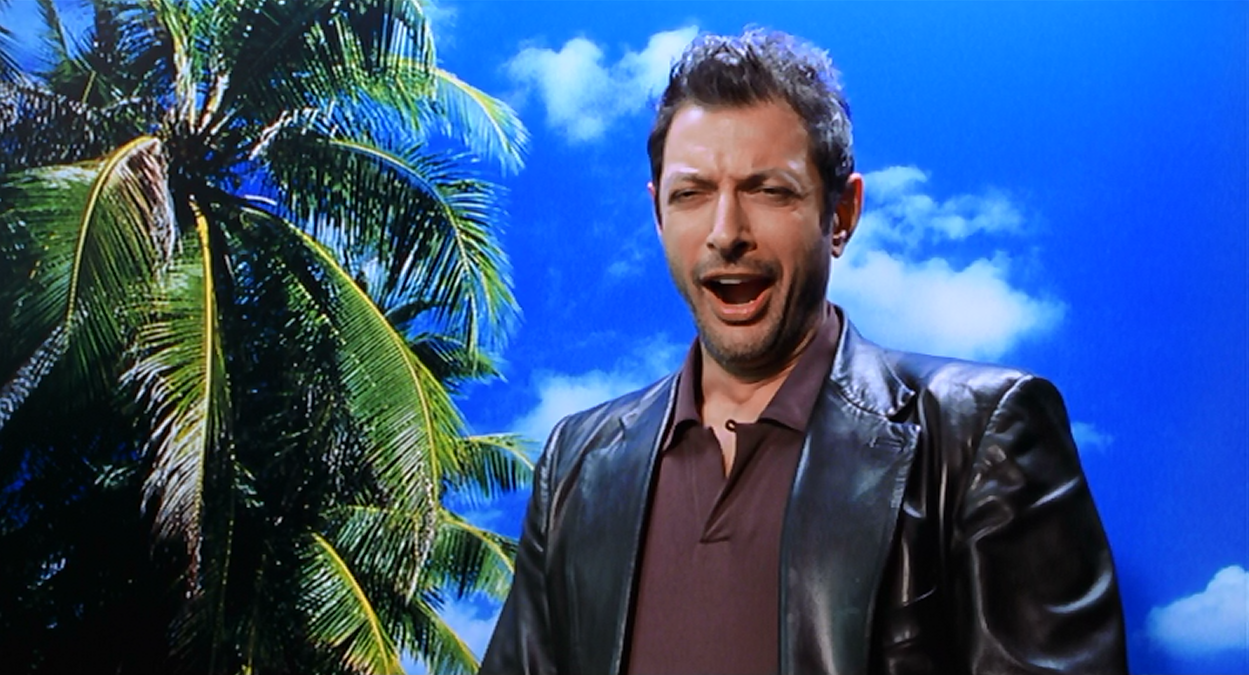
I lost interest in the Jurassic franchise about halfway through The Lost World: Jurassic Park and never got on board the franchise again (I still haven't seen Jurassic Park III and will most likely wait until Jurassic Not-Yet-5, as I like to call it, comes to Blu-ray). I remember falling asleep in the theater during The Lost World--at some point between Julianne Moore nearly falling to her death while glass slowly breaks beneath her and the lame moment when a raptor gets kicked in the face by the gymnastic moves of Jeff Goldblum's preteen daughter, I dozed off with my eyes open--and I got the sense that Spielberg, whose first shot of Goldblum in The Lost World shows the star yawning in a subway station, was equally disinterested with the material in his own sequel. (Fifteen years later, you could sense the same thing when Christopher Nolan only truly became alive during the stunning plane hijack sequence for The Dark Knight Rises, and for the rest of the project, it felt like the death of Dark Knight star Heath Ledger had sapped Nolan of his enthusiasm and energy.) Spielberg was phoning it in. He, in fact, later admitted in interviews to experiencing a constant feeling of "Is that all there is? It's not enough for me" throughout the filming of The Lost World. However, there is one moment in The Lost World where Spielberg didn't phone it in, and it's that literal cliffhanger scene with a petrified Moore unable to move or sneeze, the only genuinely nerve-wracking scene in The Lost World, as well as the only moment where Spielberg is back to his old enthusiastic and alert self, and it's not even a dinosaur attack.
So the Jurassics have never been my favorite kaiju movies. But Korean director Bong Joon-ho's The Host, a.k.a. Gwoemul (Korean for "monster")? Now that, to me, is the perfect kaiju movie, in which the human side of the movie is, for a change, as satisfying as the monster action and isn't an ordeal to sit through in order to get to the monster action. The Host is an effective mix of monster movie thrills, dysfunctional family comedy and political satire (about the incompetence of both American and Korean institutions) that's reminiscent of the anti-nuke satire in Ishirô Honda's original 1954 version of Godzilla.
Bong wanted to take everyday people like the extremely flawed members of the working-class Park family (in comparison to Sam Neill's sole flaw of being awkward and standoffish around kids, which isn't all that interesting as a character flaw) and place them in a central role that's usually reserved in monster movies for scientific geniuses or muscle-bound heroes, the kinds of characters Bong says he finds to be boring. His risky and unconventional decision resulted in my favorite human protagonists in an earthbound kaiju movie since, well, the trio in Jaws. Like all the films in Edgar Wright's superb Cornetto trilogy, The Host isn't a genre spoof; it's a thriller with genuine stakes that happens to be comedic and is full of characters worth being invested in, so that when one of the protagonists dies or is nearly dead, it's a moment that genuinely stings.
Even the creature in The Host, despite being an efficient and single-minded killing machine, or rather, in the parlance of both Matt Hooper and Jaws trailer announcer Percy Rodrigues, an "eating machine," is imbued with personality too. The film's digital FX may vary in quality, but they're never too cartoonish-looking. The creature's clumsy gait cleverly mirrors the klutziness of Host star Song Kang-ho's anti-hero Park Gang-du. Sure, Gang-du learns to be a better dad just like in that sappy Jurassic Park/Billy Crystal/Adam Sandler storytelling device that annoys me so much, but The Host handles that device so much better. It also handles humor better than Roland Emmerich's Jurassic Park-ified 1998 reboot of Godzilla--a kaiju movie in the form of a terrible and unfunny '90s Fox sitcom stretched out to over two excruciating hours--did (the terrible '90s Fox sitcomminess of it all is further enhanced by Emmerich's casting of both Maria Pitillo, star of Fox's short-lived Partners, as Matthew Broderick's love interest, and Simpsons veteran Hank Azaria, star of Herman's Head, a.k.a. Inside Out if it were an oversexed '90s Fox office sitcom).
The Host's effectiveness as both a character study and a creature feature is precisely why I've never warmed up to any of the old-school Godzilla movies, except for the intriguing first movie, which I first caught on TCM, luckily without the stupid Raymond Burr-related changes that were made to it by the movie's first American distributor (the horrendous dubbing in the American versions of these films has also made me avoid the Godzilla franchise; except for spaghetti westerns and some of the Studio Ghibli films, I can't stand watching foreign films when they're redubbed by Americans or the British). As a kid, I took one look at 1973's Godzilla vs. Megalon back when it was once the feature presentation on Mystery Science Theater 3000 and thought, "That's the formula for Godzilla? It's a terrible one. Nah, I think I'll skip the other Godzilla flicks."
Godzilla vs. Megalon is one of the least beloved Godzilla installments, partly because Godzilla was basically a guest star in his own movie. It was produced during a time when the Toho Studios franchise was past its prime and had abandoned its nifty roots as an allegory about post-war Japan to strictly cater to the kids in the audience. I know Godzilla vs. Megalon is a lousy way to be introduced to the Godzilla franchise. It would be like if someone who's never seen any of the 007 movies chose A View to a Kill or Die Another Day as their first 007 flick to watch; they won't understand what all the fuss over the other movies is about. But Godzilla vs. Megalon is a good example of how boring and pointless the human characters tend to be in kaiju movies, a problem that doesn't afflict the 1954 Godzilla and is also a problem I was hoping British director Gareth Edwards wouldn't fall prey to when he got the chance to not repeat Emmerich's countless mistakes while reintroducing Godzilla for a second time (not counting the two Americanized and badly butchered Godzillas that starred Perry Mason) to non-Japanese audiences.
While there's much to enjoy about Edwards' gritty, Fukushima-inspired 2014 version--like Alison Willmore said, the MUTOs (Massive Unidentified Terrestrial Organisms) and the redesigned Godzilla look terrific and are "lumbering and massive with a sense of incredible heft to them, despite being CGI creations"--Edwards, unfortunately, has a problem of focusing his films on white lead characters who aren't as interesting as he thinks they are. It's a problem that goes back to Edwards' prior sci-fi film Monsters, his low-budget 2010 breakthrough. Monsters is a film about Mexico experiencing first contact with giant alien creatures, and it's told not through the eyes of any of its citizens but through the eyes of the most annoying white hipsters since those douches who gentrified the barrio side of Arlen and slipped salmon into Enrique's fish tacos?
As The Daily Dot astutely pointed out, Godzilla suffers from a boring white guy problem--a problem that mars another recent kaiju flick, Pacific Rim--and is part of a long line of Hollywood tentpole blockbusters that opt for the least interesting characters as their leads. Out of a cast that includes the likes of Ken Watanabe, Bryan Cranston, Elizabeth Olsen, David Strathairn and Sally Hawkins as audience surrogates, Edwards chose to center the film around the individual with the least charisma or personality? Yo, Honest Trailers, your "Discount Channing Tatum" line is dead fucking on.
"The funny thing here is that the franchise originated in Japan. I actually haven't seen any of the old movies, but I'm going to assume that they--at least the Japanese ones--don't use Japan and its people as merely the backdrop against which white protagonists can shine and save the day," noted one of the teen authors of the blog Cool Asian Kids. "And that's essentially what the new film does."
Warner Bros. advertised Edwards' whitened-up take on the Japanese franchise as Godzilla and his atomic breath vs. Cranston and his atomic toupee--the studio made it look like Cranston would be channeling Dr. Loomis from Halloween--but (spoilers!) that's not the movie we got. Edwards told Willmore in a BuzzFeed interview that he chose to kill off Cranston's nuclear physicist character early on in Godzilla in order to raise the movie's stakes and create the sense that "anything could happen." Sure, Cranston's physicist dad character is kind of a boring white guy too, but kicking his badacondunk out of the movie so early is such a mistake because Cranston is much more alive and present in his scenes than Blando McBombdefuser--who, as Willmore says, "jumps through a series of increasingly improbable plot hoops to stay in the path of the creatures"--is in his.
It's just the wrong character to be spending a huge chunk of the movie with (and as the type of white savior Cool Asian Kids rightly criticizes him as being, he's amusingly inconsequential in comparison to Godzilla's heroics in the movie), and it's a shame, because Edwards kicks the movie off so promisingly with one of my favorite opening title sequences in a recent tentpole blockbuster. The sequence is a cleverly assembled montage of both real and fake archive footage that establishes the history of MUTOs, nicely scored by Alexandre Desplat--who's skillfully following in the footsteps of the old Akira Ifukube score music that both Pharoahe Monch and Tracy Morgan love so much--and surrounded visually by hastily redacted text from fake government files. The Prologue Studios opening titles are one of the 2014 Godzilla's few instances of humor, one of many things Edwards accomplishes better than Emmerich did. The passages that are redacted to isolate the names of the cast and crew are either silly, freeze-frame-worthy sentences like "The monster communicates through music composed and conducted by Alexandre Desplat" or are full of in-jokes like "Walter Malcolm has claimed that government men dressed in white lab coats routinely appear at site and Bryan Cranston shortly after the event all residents are sworn to silence." Walter is a reference to Breaking Bad, and Malcolm is, of course, a shout-out to Malcolm in the Middle (although shouldn't it say Hal, Cranston's character's name on Malcolm, instead of Malcolm?).
Despite all the sleep-inducing moments involving Discount Channing Tatum, as well as the fact that it's nowhere near the league of The Host, the 2014 Godzilla is superior to Emmerich's previous attempt to bring Godzilla to America and is more effective at building tension and staging monster action. Also, it's not trying to rip off so much of Jurassic Park. Recent Throwback Thursday guest blogger Hardeep Aujla, who hails from Word Is Bond, a U.K.-based hip-hop blog I've contributed pieces to, disagrees. He dislikes the 2014 Godzilla so much that he's skeptical about how Edwards will handle Star Wars in his next directorial effort, Star Wars Anthology: Rogue One. So Hardeep, how would you have improved the 2014 Godzilla if you worked on it? Would you have made the reboot into a boy-and-his-best-friend-who's-a-strange-creature story like the old Godzilla sequels, the Gamera sequels and my favorite of all those stories, The Iron Giant? Or would you have said "Fuck the American audience" and told it from the point of view of Ken Watanabe's scientist character? Or would you have completely gotten rid of any audience surrogate characters and told it from the point of view of Godzilla, which would have probably caused the movie to cost 200 million more American dollars to make but is a kaiju movie that's never been done before?
***
Hardeep Aujla: I think I read that Godzilla's screen-time was only 10 minutes in the whole 130-something minute film. This isn't Jaws, Edwards - less is not more in kaiju films.
As for what I would have done, I love The Iron Giant and that whole story too but I would've gone with your last suggestion, hands down. This is what I always thought AvP should have been. I would have started the film introducing a crack team of badasses equal to Dutch's or Apone's team, but then would've had them torn apart gloriously by the titular creatures (perhaps they stumbled into the vicinity of a one-on-one confrontation). Then the title of the movie comes up accompanied by strong audio tone with the intention of stating "That's fucking right" to the audience and their expectations. I'm thinking a very loud shrill-type noise that starts off monotonous but evolves a couple of seconds later into something with a bit more character before ultimately revealing itself to be the war-cry of either a Predator or an Alien as we cut straight back to the duel (yep, this idea has been rolling around in my head for a while). From there on out we get a pure Aliens versus Predators narrative with no more English spoken.
I haven't seen many of the old kaiju movies (the Gamera trilogy from the 90's is superb though), and the ones I did see were a long time ago, but I do remember some very protracted sequences where it's just Godzilla or his kid doing stuff and the audience just follows along. I may be completely fabricating those memories though. Either way, the challenge for Gareth Edwards would have been to make an engaging film like this in the modern era, one that is good enough to stand strongly unaided by human faces and words. There could of course be some human characters (retaining Ken Watanabe who was wasted in the actual film) but they should have minor roles. I can see how this would be tricky for a character like Godzilla who seemingly doesn't have a rich variety of activities to fill a movie with apart from swim, smash and roar, but therein lies the challenge, and I would be a lot more impressed with Gareth Edwards as a filmmaker if he pulled it off, or at least respect his effort if he tried.
None of Alexandre Desplat's score cues from Godzilla are currently in rotation on AFOS, but Desplat's main title theme ought to be.
Sure, the themes from The Addams Family, the Beverly Hillbillies/Petticoat Junction/Green Acres shared universe--or as I like to call it, the Hooterverse--and The Fresh Prince of Bel-Air are lovable classics. In fact, you can hear the Fresh Prince theme in its entirety, complete with Will Smith's forgotten bars about flying first class (which were in the opening titles for only the first few episodes and then were removed), either during "Beat Box" and "The Whitest Block Ever" on AFOS or right below. But I like how stripped-down broadcast network TV is these days compared to how TV was when I was a kid.
As Andy Greenwald once wrote over at Grantland, the very '80s L.A. Law opening credits are a slow 90 seconds of random clips of people leaving meetings, carrying briefcases and shrugging. Broadcast network TV used to be so slow-paced that shows like Misfits of Science in the '80s and The Wayans Bros. in the '90s got to open with two themes in the same sequence.
The gradual elimination of opening themes from broadcast TV--to accommodate more ad space, as well as to keep fidgety viewers from channel-switching and to somewhat emulate modern-day cinematic blockbusters that have done away with opening credits altogether--took some adjustment for a couple of years, but I'm used to it by now. It won't be long before I spot yet another link to an article from the olds about how TV was better in my day because we had opening themes that were 22 minutes long and so on. No, it wasn't, Grumpy Old Man from Weekend Update. A huge chunk of pre-Sopranos/Wire, pre-niche-programming TV hasn't aged well. (As much as I love the timeless Taxi, there are still some things about it that haven't stood the test of time, like the cheesy product placement for Jeff Conaway's pop album debut during Taxi's "Fantasy Borough" two-parter. Remember that album? Because I don't.)
That's partly what Adult Swim's immensely popular "Too Many Cooks" short is making fun of: all those poor-quality clips of absurdly-lengthy-by-today's-standards opening title sequences from ancient shows that we often watch on YouTube with cringes or "Oh God, for real? This was a thing?"-ish looks on our faces. For example, I don't think my ears will be able to withstand hearing the mega-sappy and mega-anachronistic Joanie Loves Chachi theme on YouTube again. So there's one benefit to phasing out opening themes: never again will someone compose for a network show's opening titles something as abominable and interminable as the Joanie Loves Chachi theme. Never again will someone recycle the theme from Patch Adams (place Sideshow Bob shudder here).
On broadcast TV, almost all the good theme tunes that used to be allowed to breathe at the start of the show are being saved for the end credits. But you have to be a cord-cutter or a subscriber to either Hulu Plus or Netflix in order to hear those end title themes because on Hulu or Netflix, they're not squeezed out by a trailer for next week's episode or a network promo for another show, a network practice I find to be way more annoying than the elimination of opening themes.
All the current live-action shows based on DC Comics properties like Arrow, The Flash and the Game of Thrones-esque Gotham--examples of shows that are attempting to emulate modern-day cinematic blockbusters, and that includes reducing the opening theme to just a few notes over the show's brooding or flashy logo, no pun intended--carry distinctive end title themes that would have also been good as table-setters in a different era of broadcast TV. I like the triumphant little piece Arrow and The Flash composer Blake Neely wrote for the Flash end credits, while Gotham's march at the end by Graeme Revell and David E. Russo--first used outside of the end credits to great effect when Jim Gordon and Harvey Bullock put aside their differences to take down Carmine Falcone in "Penguin's Umbrella," the strongest hour so far of this rather mixed bag of a show--brings to mind both the Dragnet march and Ennio Morricone's work on The Untouchables, with a little bit of Bear McCreary's opening theme from DC Entertainment's one-season wonder Human Target (yeah, there was a second season, but I like to pretend it never happened) in there.
TV theme purists, there's a place where you can enjoy as many lengthy opening themes as you want. It's called premium cable. That's where the art of setting the mood with a distinctive melody has been lovingly preserved. The showrunners of ad-free shows like Game of Thrones and True Detective are free to do whatever they want, and that includes taking as much time as they please in setting the mood, whether it's Ramin Djawadi--with the help of a lavish 3-D map--grandly re-acclimating viewers each week to the power struggle in Westeros or The Handsome Family's 2003 Southern Gothic song "Far from Any Road" (which is amusingly parodied in Key & Peele's current opening titles) establishing the haunted landscapes of Hart and Cohle's home state of Louisiana.
There's another place where lengthy opening themes haven't died out. It's called Japan. Every animated show over there opens with a J-pop song that the anime crowd simply calls an "OP" and ends with a completely different tune for the end credits that's known as an "ED." The same goes for any animated show in America except The Venture Bros. and Regular Show. Bob's Burgers currently kicks off with one of the best mood-setting themes in animation, a ukulele piece accented with xylophone and Casio keyboard FX, in much the same fashion as a burger getting accented with often outré ingredients or toppings by Bob, although I wish it were allowed to run longer at the start of the show. On the Song Exploder podcast, Bob's Burgers creator Loren Bouchard went into detail about how he composed the show's opening theme, which he also revealed is actually a much longer composition than what we currently hear on the show. He said, "I wanted a little bit of hope and optimism in the music. This had to be a story of hardship as it pertains to running a restaurant, but it's supposed to be an optimistic show and a nice slice of life with a lot of happiness in it. The ukulele was perfect, so I knew that I wanted to start with that."
Advertisers (along with network researchers who took note of viewers who changed the channel right when an opening theme began) aren't all to blame for the elimination of opening themes or the shortening of themes like Bouchard's optimistic table-setter. Blame Wings too. Now I always liked Wings--don't get it twisted (and if you don't laugh during the William Hickey or Phil Leeds episodes of Wings that are on Hulu and Netflix, you probably thought Dads was funny)--but in the early '90s, that show introduced the idea of skipping the opening theme, and it led to everyone else in sitcomland following suit. It screwed you blue!