Showing posts with label Bryan Cranston. Show all posts

Thursday, August 6, 2015

Throwback Thursday: Drive (2011)

Even when he was part of the Mickey Mouse Club, he wouldn't eat his Mickey Mouse Magic Crunch.

Every Throwback Thursday, I randomly pull out from my desk cabinet--with my eyes closed--a movie ticket I saved. Then I discuss the movie on the ticket and maybe a little bit of its score, which might be now streaming on AFOS.

Getaway drivers are like the bass players of heist-movie crews: nobody gives two shits about them. Adapted from the 2005 James Sallis novel of the same name by screenwriter Hossein Amini, director Nicolas Winding Refn's Drive is a heist flick that takes a different turn and gives getaway drivers their due by telling everything from the point of view of the wheelman. The film's two heist sequences literally leave out all the lock-picking bits and all the breaking-into-the-vault bits, and as a bit of a sly joke that's reminiscent of Andy Kaufman standing around on stage and waiting for his cue to lip-sync the "Here I come to save the day!" part of the Mighty Mouse theme, the heist sequences just show Ryan Gosling waiting in the car and considering his next move in case the heist goes wrong. Refn is so skilled at building tension in Drive that these sequences are still gripping even without ever setting foot inside the electronics warehouse that's broken into or the pawn shop that gets held up.

Drive is also Gosling and Refn's twisted version of a superhero movie (regarding the subject of superhero movies, Gosling joked, "All the good ones were taken, so I made up my own"). It's done not like a quippy Marvel Cinematic Universe blockbuster or a shouty Zack Snyder speed-ramp fest but in the nearly silent, actions-speak-louder-than-words style of older action flicks Refn and the Drive producers (and I) love, whether it's Michael Mann's Thief, Peter Yates' Bullitt, John Boorman's Point Blank or Walter Hill's The Driver (Hill's movie is the only one I haven't seen out of those four older actioners).

The superhero Gosling plays is a garage mechanic and Hollywood stunt driver who's never referred to by name in the movie, not even by Shannon (Bryan Cranston, who guest-starred in a standout 1998 X-Files episode that's also called "Drive"), his boss at the garage and father figure. The Gosling character is listed in the end credits as simply "Driver," a shout-out to the way Hill's movie identifies Ryan O'Neal's character as just "The Driver." The mechanic's superpower is his badass stunt driving skills, which he puts to use at night in his side gig as a getaway wheelman. In case we miss Refn's interpretation of Driver (no relation to Adam or Minnie?) as a superhero, the scorpion emblem on the back of Driver's white satin jacket is designed to look like Spider-Man's, and the theme music for the love story between Driver and his neighbor Irene (Carey Mulligan) is "A Real Hero" by the Toronto duo Electric Youth and French producer/remixer College.


There's one other superpower I almost forgot: Driver's prowess with a hammer or knife (or a gun, even though like O'Neal, he prefers not to carry one) whenever either his life is threatened--both Driver and Shannon frequently get into business with dangerous people--or the lives of Shannon, Irene and her six-year-old son Benicio (Kaden Leos) are threatened. You don't want to be on the other end of a fight with Driver whenever he's wielding a hammer or knife. And that's where the twisted part of this Refn take on a superhero movie comes in: Driver also happens to be a sociopath who's capable of terrifying, childlike and almost-got-slapped-with-an-NC-17-rating violence when you least expect it. Refn and cinematographer Newton Thomas Sigel, who regularly handles the cinematography for Bryan Singer's directorial efforts (like the bizarrely orange-hued pilot episode Singer directed for House), both shoot Driver's nighttime retribution against an L.A. crime boss named Nino (Ron Perlman) like a horror movie sequence, right down to the creepy, Michael Myers-style stuntman mask Driver chooses to don for his pursuit of Nino.

Amini and Refn also upend one other aspect of superhero movies: the romance (SPOILER). Many of them end with the superhero (unless he's a bizarre monkish type like the Tobey Maguire version of Peter Parker, who doesn't have time for sex even though Kirsten Dunst, Mageina Tovah, Elizabeth Banks and Bryce Dallas Howard all throw themselves at him) getting the girl, while Drive ends with Driver forcing himself to leave behind Irene and Benicio because it's the only way he can protect them from any remaining associates or underlings of Jewish gangster Bernie Rose (a cast-against-type and convincingly intimidating Albert Brooks). Driver's chaste romance with Irene--who's still on good terms with her husband and Benicio's father, Standard Gabriel (Oscar Isaac), an ex-con who happens to be returning home from prison right when Driver's starting to bond with Irene--is more interestingly played and more maturely handled than most romances in actual superhero movies. That's because it's depicted with minimal dialogue and expressed mainly through glances between Gosling and Mulligan.

"He sees her in a grocery store. Cut to the parking lot... Cut to them in the elevator. He's helping her carry her bags upstairs. Cut to them in her apartment. She's giving him some water, and an entire movie is happening between them, and we don't need to hear the fuckin' dialogue! It's all in their looks, it's all in the shots. It's just absolutely beautiful," said A History of Violence screenwriter Josh Olson during his Trailers from Hell discussion of Drive and its refreshing lack of unnecessary exposition.


The idea to discard most of the dialogue that was written for their scenes together came from both Gosling and Mulligan. It was a bold and terrific choice. Moviegoers who either giggled over Driver's laconicism (I'd hate to see them watch Steve McQueen in Bullitt because they'll probably end up fracturing a rib) as if they were watching that old and bizarre clip of Gosling singing some Jodeci on The Mickey Mouse Club or complained that "Gosling doesn't talk enough in this movie!" clearly want everything spoon-fed to them (Drive received a C- from moviegoers at CinemaScore in 2011). I know I keep quoting my favorite line from Road House, but it's very apt here: they're too stupid to have a good time.

Driver is so terse and so uninterested in talking about his past that the only line of dialogue about his past comes from Shannon when he recalls to Irene the day Driver came to his garage looking for work (whereas by the end of that great diner scene between James Caan and Tuesday Weld in Thief--which is full of exposition, but it's delivered naturally and realistically and in the manner of a typical diner conversation--we know every little bit of the Caan character's incarcerated past and what makes him tick). Both Driver's terseness and the lack of information about his past before the garage have caused Drive and its enigmatic main character to be open to interpretation, which is part of what makes this movie continue to be fascinating. Moviegoers like Olson believe Driver is somewhere on the autism spectrum, while an actual psychologist who preferred to remain anonymous and was asked by a movie blog in 2011 to profile Driver's behavior concluded that he's more like someone with obsessive compulsive personality disorder (which isn't the same as OCD) than an autistic savant. That psych profile also theorized that Driver was raised on a farm (!).

My interpretation of Driver is that he did time when he was younger, and Shannon took him in right after he got out of prison (I don't view him as someone who grew up on a farm). It's a backstory Gosling tells primarily through his eyes and body language, just like what Charlize Theron does with her character Furiosa in Mad Max: Fury Road. For instance, look at how Driver silently reacts to the presence of Standard, whose past decision-making hasn't exactly been the best and whose sizing-up of Driver when he first encounters him in their apartment building's hallway is fraught with unspoken hostility towards "Mom's new friend." Driver gives a look in that hallway scene (and in a later scene where Standard tells him he's into the mob for some money) that says, "Bad decision-makers like Standard were all over the yard."

Friendly Neighborhood Driver-Man

I contemplated Olson's reading of Drive as a story about an autistic wheelman and thought it made some sense for a few weeks. But then after rewatching Drive in its entirety, I realized his reading doesn't quite fit, despite Driver's savant-style memorization of the streets and freeways of L.A. for his gig as a wheelman. I don't think Driver's on the spectrum. He's simply a criminal who, like Neil McCauley from Heat, taught himself not to waste his words and to keep himself as quiet and invisible as possible to avoid attracting the attention of either the prison guards, the cops or his enemies.

Even though Driver often looks like he'd rather be behind the wheel of a muscle car or under some vehicle's hood than face-to-face with any of the hotheaded crooks who enlist his services, he's able to maintain eye contact with people whose company he likes, and he can read social cues. He's capable of understanding or expressing humor, especially when he's around Benicio (who's like a less chatty version of the kid in Shane), but he approaches humor stoically, of course. His interactions with Benicio and the only two scenes in the movie where he shows fear in his voice--that would be the scene where he expresses to Irene his remorse for failing to protect Standard even though he tried his best to help him and the scene where he gets mad at Shannon for accidentally putting Irene in danger and pleads with him to leave L.A. to stay alive--all prove he's not on the spectrum. As for Léon, the Manhattan hitman who drinks nothing but milk, wears Urkel pants that are four sizes too short, relates to his houseplant better than he relates to other people and doesn't recommend to a 12-year-old girl who makes a pass at him that she ought to look for boys closer to her age...

Refn never mentioned Léon: The Professional, which I actually watched for the first time last week, as one of his influences during interviews about Drive, but I like to pretend Refn also viewed Drive as a variation on Léon that doesn't contain all that bothersome and creepy material about a 12-year-old girl's sexuality and chooses to split the Natalie Portman character into two different characters: a six-year-old kid and his mom, a more age-appropriate female for the lead to experience romantic tension with. Or maybe Refn just viewed Drive as a metaphor for Christianity's encroachment on the Norse religions, like action film reviewer Outlaw Vern once joked. Whatever the reading, Drive is one of those movies that will be subjected for years to many different interpretations/theories ("He has Asperger's!" "Nah, he's actually an alien from a planet that won't eat cereal!") or film studies essays about its efficient script or stylized visual approach (meanwhile, mainstream Hollywood has started imitating Drive: Jack Reacher has taken the Lee Child novel series and coated it in a Drive-like stylized sheen, while the vicious side of Driver clearly influenced Antoine Fuqua's remake of The Equalizer, which originally had Refn attached to it as director).

I wouldn't be surprised if Drive someday winds up as the subject of an essay for a film studies course about Jews on screen, due to a part of Drive that's not as open to interpretation as other parts of the movie. That would be the uneasy alliance between Bernie, whose line about his Hollywood past as a Golan-Globus-ish producer of '80s B-movies is straight out of The Limey ("One critic called them European. I thought they were shit"), and Nino, whose resentment over demanding respect from his anti-Semitic Italian superiors and never getting it brings about everyone's downfall, including Driver's. Their alliance reflects tensions within the Jewish community over how Jewish modern-day Jews prefer to be, with Nino being the self-hating Jew in this situation (what's the Yiddish name for "Tom"?). I particularly like how instead of on-the-nose, They Came Together-style exposition, food is used in one of their earlier scenes together to illustrate the contrasting ways Bernie and Nino view their Jewish heritage: Bernie's preference for Chinese food gives away that he's Jewish to the core, while Nino's choice of a pizzeria as a front for his business illustrates that he's a Jew who thinks he's Italian. At one point, Bernie says all we need to know about his disdain for Nino when he addresses him by his real name: Izzy.

Drive is also bound to be subjected to many experiments with its music, like last year's BBC Three rescoring of Drive, which was music-supervised by Radio 1's Zane Lowe. He got artists like Banks and Laura Mvula to record new original tracks for Drive, and the results were negatively received, although Refn gave the rescore his approval. I haven't watched the rescored version in its entirety, but after watching just two of the new songs get grafted onto the movie (one of them, "Get Away" by Chvrches, is actually pretty solid, but I would have placed it in a different scene, like one that's unscored and could use a source cue), it proves how irreplaceable both the pulsating and well-chosen existing songs and Cliff Martinez's perfectly realized original score are.

Fans of Gosling or Drive who went over the top on Twitter and tweeted angry reactions to the rescore, I'll let you in on a little secret: you can always go back to the original version of Drive. It's not as if Lowe destroyed all copies of the original version--like what George Lucas was rumored to have done to the negatives of the pre-Special Edition cuts of the first three Star Wars movies--and replaced them with his rescore. But the fans who posted melodramatic tweets in response to BBC Three's rescore acted as if that had happened. The Drive that you know and love isn't going away any time soon. Electric Youth will still be there, serenading a pleasant afternoon drive along the L.A. River with their ode to "a real human being and a real hero." And a real badass with a hammer.

Selections from the Drive score are in rotation during "AFOS Prime" on AFOS.


Thursday, June 18, 2015

Throwback Thursday: Godzilla (2014)

Too bad the feature presentation wasn't preceded by Bambi vs. Godzilla because that would have fucking ruled.

Every Throwback Thursday, I randomly pull out from my desk cabinet--with my eyes closed--a movie ticket I saved. Then I discuss the movie on the ticket and maybe a little bit of its score, which might be now streaming on AFOS.

Jurassic World just experienced the most successful opening weekend in film history, outgrossing even the opening weekend of the original Jurassic Park, a kaiju (Japanese for "strange beast") movie where smaller-sized dinosaurs are the kaiju instead of a 164-foot-tall lizard with atomic breath. But as much as I like both the craftsmanship Steven Spielberg brought to the moments of suspense (and occasionally, levity) in the first installment and Stan Winston and ILM's effective blend of practical FX and CGI in that installment, I find the Jurassic movies to be oddly underwhelming in comparison to Spielberg's masterful work in the original Jaws. As material in between the creature scenes, which are the main reason for flocking to these Jurassic blockbusters, the "Sam Neill learns to get in touch with his paternal side" storyline--a tiresome staple of post-SNL comedy vehicles starring either Billy Crystal, Adam Sandler or more recently, Will Ferrell--is less intriguing than the character interplay between Roy Scheider, Richard Dreyfuss and Robert Shaw in Jaws.

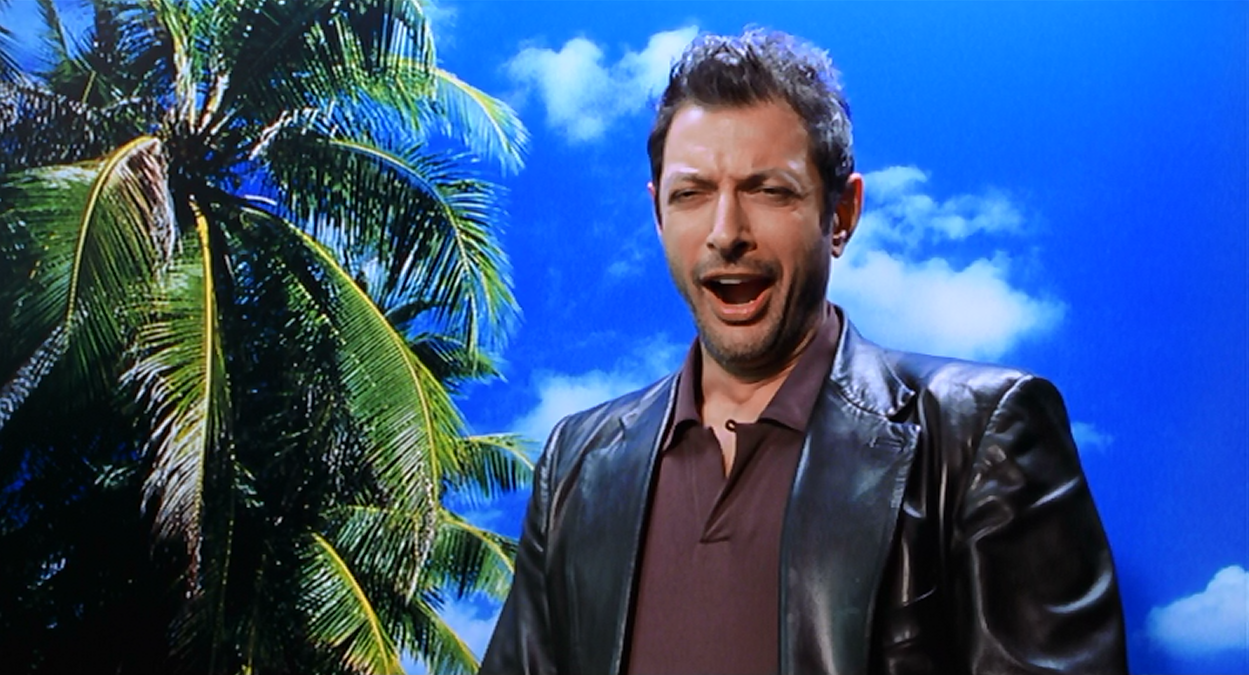
I lost interest in the Jurassic franchise about halfway through The Lost World: Jurassic Park and never got on board the franchise again (I still haven't seen Jurassic Park III and will most likely wait until Jurassic Not-Yet-5, as I like to call it, comes to Blu-ray). I remember falling asleep in the theater during The Lost World--at some point between Julianne Moore nearly falling to her death while glass slowly breaks beneath her and the lame moment when a raptor gets kicked in the face by the gymnastic moves of Jeff Goldblum's preteen daughter, I dozed off with my eyes open--and I got the sense that Spielberg, whose first shot of Goldblum in The Lost World shows the star yawning in a subway station, was equally disinterested with the material in his own sequel. (Fifteen years later, you could sense the same thing when Christopher Nolan only truly became alive during the stunning plane hijack sequence for The Dark Knight Rises, and for the rest of the project, it felt like the death of Dark Knight star Heath Ledger had sapped Nolan of his enthusiasm and energy.) Spielberg was phoning it in. He, in fact, later admitted in interviews to experiencing a constant feeling of "Is that all there is? It's not enough for me" throughout the filming of The Lost World. However, there is one moment in The Lost World where Spielberg didn't phone it in, and it's that literal cliffhanger scene with a petrified Moore unable to move or sneeze, the only genuinely nerve-wracking scene in The Lost World, as well as the only moment where Spielberg is back to his old enthusiastic and alert self, and it's not even a dinosaur attack.

So the Jurassics have never been my favorite kaiju movies. But Korean director Bong Joon-ho's The Host, a.k.a. Gwoemul (Korean for "monster")? Now that, to me, is the perfect kaiju movie, in which the human side of the movie is, for a change, as satisfying as the monster action and isn't an ordeal to sit through in order to get to the monster action. The Host is an effective mix of monster movie thrills, dysfunctional family comedy and political satire (about the incompetence of both American and Korean institutions) that's reminiscent of the anti-nuke satire in Ishirô Honda's original 1954 version of Godzilla.

Bong wanted to take everyday people like the extremely flawed members of the working-class Park family (in comparison to Sam Neill's sole flaw of being awkward and standoffish around kids, which isn't all that interesting as a character flaw) and place them in a central role that's usually reserved in monster movies for scientific geniuses or muscle-bound heroes, the kinds of characters Bong says he finds to be boring. His risky and unconventional decision resulted in my favorite human protagonists in an earthbound kaiju movie since, well, the trio in Jaws. Like all the films in Edgar Wright's superb Cornetto trilogy, The Host isn't a genre spoof; it's a thriller with genuine stakes that happens to be comedic and is full of characters worth being invested in, so that when one of the protagonists dies or is nearly dead, it's a moment that genuinely stings.

Even the creature in The Host, despite being an efficient and single-minded killing machine, or rather, in the parlance of both Matt Hooper and Jaws trailer announcer Percy Rodrigues, an "eating machine," is imbued with personality too. The film's digital FX may vary in quality, but they're never too cartoonish-looking. The creature's clumsy gait cleverly mirrors the klutziness of Host star Song Kang-ho's anti-hero Park Gang-du. Sure, Gang-du learns to be a better dad just like in that sappy Jurassic Park/Billy Crystal/Adam Sandler storytelling device that annoys me so much, but The Host handles that device so much better. It also handles humor better than Roland Emmerich's Jurassic Park-ified 1998 reboot of Godzilla--a kaiju movie in the form of a terrible and unfunny '90s Fox sitcom stretched out to over two excruciating hours--did (the terrible '90s Fox sitcomminess of it all is further enhanced by Emmerich's casting of both Maria Pitillo, star of Fox's short-lived Partners, as Matthew Broderick's love interest, and Simpsons veteran Hank Azaria, star of Herman's Head, a.k.a. Inside Out if it were an oversexed '90s Fox office sitcom).

The Host's effectiveness as both a character study and a creature feature is precisely why I've never warmed up to any of the old-school Godzilla movies, except for the intriguing first movie, which I first caught on TCM, luckily without the stupid Raymond Burr-related changes that were made to it by the movie's first American distributor (the horrendous dubbing in the American versions of these films has also made me avoid the Godzilla franchise; except for spaghetti westerns and some of the Studio Ghibli films, I can't stand watching foreign films when they're redubbed by Americans or the British). As a kid, I took one look at 1973's Godzilla vs. Megalon back when it was once the feature presentation on Mystery Science Theater 3000 and thought, "That's the formula for Godzilla? It's a terrible one. Nah, I think I'll skip the other Godzilla flicks."

Godzilla vs. Megalon is one of the least beloved Godzilla installments, partly because Godzilla was basically a guest star in his own movie. It was produced during a time when the Toho Studios franchise was past its prime and had abandoned its nifty roots as an allegory about post-war Japan to strictly cater to the kids in the audience. I know Godzilla vs. Megalon is a lousy way to be introduced to the Godzilla franchise. It would be like if someone who's never seen any of the 007 movies chose A View to a Kill or Die Another Day as their first 007 flick to watch; they won't understand what all the fuss over the other movies is about. But Godzilla vs. Megalon is a good example of how boring and pointless the human characters tend to be in kaiju movies, a problem that doesn't afflict the 1954 Godzilla and is also a problem I was hoping British director Gareth Edwards wouldn't fall prey to when he got the chance to not repeat Emmerich's countless mistakes while reintroducing Godzilla for a second time (not counting the two Americanized and badly butchered Godzillas that starred Perry Mason) to non-Japanese audiences.

Godzilla threatens to unleash his atomic garlic breath on this MUTO.

While there's much to enjoy about Edwards' gritty, Fukushima-inspired 2014 version--like Alison Willmore said, the MUTOs (Massive Unidentified Terrestrial Organisms) and the redesigned Godzilla look terrific and are "lumbering and massive with a sense of incredible heft to them, despite being CGI creations"--Edwards, unfortunately, has a problem of focusing his films on white lead characters who aren't as interesting as he thinks they are. It's a problem that goes back to Edwards' prior sci-fi film Monsters, his low-budget 2010 breakthrough. Monsters is a film about Mexico experiencing first contact with giant alien creatures, and it's told not through the eyes of any of its citizens but through the eyes of the most annoying white hipsters since those douches who gentrified the barrio side of Arlen and slipped salmon into Enrique's fish tacos?

As The Daily Dot astutely pointed out, Godzilla suffers from a boring white guy problem--a problem that mars another recent kaiju flick, Pacific Rim--and is part of a long line of Hollywood tentpole blockbusters that opt for the least interesting characters as their leads. Out of a cast that includes the likes of Ken Watanabe, Bryan Cranston, Elizabeth Olsen, David Strathairn and Sally Hawkins as audience surrogates, Edwards chose to center the film around the individual with the least charisma or personality? Yo, Honest Trailers, your "Discount Channing Tatum" line is dead fucking on.


"The funny thing here is that the franchise originated in Japan. I actually haven't seen any of the old movies, but I'm going to assume that they--at least the Japanese ones--don't use Japan and its people as merely the backdrop against which white protagonists can shine and save the day," noted one of the teen authors of the blog Cool Asian Kids. "And that's essentially what the new film does."

Warner Bros. advertised Edwards' whitened-up take on the Japanese franchise as Godzilla and his atomic breath vs. Cranston and his atomic toupee--the studio made it look like Cranston would be channeling Dr. Loomis from Halloween--but (spoilers!) that's not the movie we got. Edwards told Willmore in a BuzzFeed interview that he chose to kill off Cranston's nuclear physicist character early on in Godzilla in order to raise the movie's stakes and create the sense that "anything could happen." Sure, Cranston's physicist dad character is kind of a boring white guy too, but kicking his badacondunk out of the movie so early is such a mistake because Cranston is much more alive and present in his scenes than Blando McBombdefuser--who, as Willmore says, "jumps through a series of increasingly improbable plot hoops to stay in the path of the creatures"--is in his.

It's just the wrong character to be spending a huge chunk of the movie with (and as the type of white savior Cool Asian Kids rightly criticizes him as being, he's amusingly inconsequential in comparison to Godzilla's heroics in the movie), and it's a shame, because Edwards kicks the movie off so promisingly with one of my favorite opening title sequences in a recent tentpole blockbuster. The sequence is a cleverly assembled montage of both real and fake archive footage that establishes the history of MUTOs, nicely scored by Alexandre Desplat--who's skillfully following in the footsteps of the old Akira Ifukube score music that both Pharoahe Monch and Tracy Morgan love so much--and surrounded visually by hastily redacted text from fake government files. The Prologue Studios opening titles are one of the 2014 Godzilla's few instances of humor, one of many things Edwards accomplishes better than Emmerich did. The passages that are redacted to isolate the names of the cast and crew are either silly, freeze-frame-worthy sentences like "The monster communicates through music composed and conducted by Alexandre Desplat" or are full of in-jokes like "Walter Malcolm has claimed that government men dressed in white lab coats routinely appear at site and Bryan Cranston shortly after the event all residents are sworn to silence." Walter is a reference to Breaking Bad, and Malcolm is, of course, a shout-out to Malcolm in the Middle (although shouldn't it say Hal, Cranston's character's name on Malcolm, instead of Malcolm?).


Despite all the sleep-inducing moments involving Discount Channing Tatum, as well as the fact that it's nowhere near the league of The Host, the 2014 Godzilla is superior to Emmerich's previous attempt to bring Godzilla to America and is more effective at building tension and staging monster action. Also, it's not trying to rip off so much of Jurassic Park. Recent Throwback Thursday guest blogger Hardeep Aujla, who hails from Word Is Bond, a U.K.-based hip-hop blog I've contributed pieces to, disagrees. He dislikes the 2014 Godzilla so much that he's skeptical about how Edwards will handle Star Wars in his next directorial effort, Star Wars Anthology: Rogue One. So Hardeep, how would you have improved the 2014 Godzilla if you worked on it? Would you have made the reboot into a boy-and-his-best-friend-who's-a-strange-creature story like the old Godzilla sequels, the Gamera sequels and my favorite of all those stories, The Iron Giant? Or would you have said "Fuck the American audience" and told it from the point of view of Ken Watanabe's scientist character? Or would you have completely gotten rid of any audience surrogate characters and told it from the point of view of Godzilla, which would have probably caused the movie to cost 200 million more American dollars to make but is a kaiju movie that's never been done before?

***

Hardeep Aujla: I think I read that Godzilla's screen-time was only 10 minutes in the whole 130-something minute film. This isn't Jaws, Edwards - less is not more in kaiju films.

As for what I would have done, I love The Iron Giant and that whole story too but I would've gone with your last suggestion, hands down. This is what I always thought AvP should have been. I would have started the film introducing a crack team of badasses equal to Dutch's or Apone's team, but then would've had them torn apart gloriously by the titular creatures (perhaps they stumbled into the vicinity of a one-on-one confrontation). Then the title of the movie comes up accompanied by strong audio tone with the intention of stating "That's fucking right" to the audience and their expectations. I'm thinking a very loud shrill-type noise that starts off monotonous but evolves a couple of seconds later into something with a bit more character before ultimately revealing itself to be the war-cry of either a Predator or an Alien as we cut straight back to the duel (yep, this idea has been rolling around in my head for a while). From there on out we get a pure Aliens versus Predators narrative with no more English spoken.

'Speaking words of wisdom, let them fiiiiiiiiiiight.'

I haven't seen many of the old kaiju movies (the Gamera trilogy from the 90's is superb though), and the ones I did see were a long time ago, but I do remember some very protracted sequences where it's just Godzilla or his kid doing stuff and the audience just follows along. I may be completely fabricating those memories though. Either way, the challenge for Gareth Edwards would have been to make an engaging film like this in the modern era, one that is good enough to stand strongly unaided by human faces and words. There could of course be some human characters (retaining Ken Watanabe who was wasted in the actual film) but they should have minor roles. I can see how this would be tricky for a character like Godzilla who seemingly doesn't have a rich variety of activities to fill a movie with apart from swim, smash and roar, but therein lies the challenge, and I would be a lot more impressed with Gareth Edwards as a filmmaker if he pulled it off, or at least respect his effort if he tried.

None of Alexandre Desplat's score cues from Godzilla are currently in rotation on AFOS, but Desplat's main title theme ought to be.

Thursday, July 31, 2014

Not a Burger Stand becomes a viral sensation and makes me ask, "Why doesn't this kind of joint exist up in Northern Cali?"

'Are you kidding? I know I'm ugly. I stuck my head out the window, got arrested for mooning.'--Rodney Dangerfield
As someone who used to listen to No Respect repeatedly, I will probably nail this. (Photo source: Not a Burger Stand)
Down in Burbank, a city that, thanks to late '80s-era Nick at Nite's Laugh-In reruns, I can't refer to without channeling Gary Owens and calling it "Beautiful Downtown Burbank," the chalkboard specials at a burger joint called Not a Burger Stand have gone viral. Not a Burger Stand's specials, which the Burbank restaurant posts on its Tumblr and Facebook pages, are accompanied by terrific re-creations of TV and movie characters by illustrators Lila Gonzalez and Kyle Carrozza. These specials also offer the kind of wacky discounts that are atypical for a burger stand but aren't surprising to see coming from a restaurant that's right next to Hollywood and the voiceover industry: customers get discounts if they order in the voices of--or dress up as--the characters that Gonzalez or Carrozza drew on the chalkboard. It's a really clever way to both run a business and see how terrible everyone's Matthew McConaughey impressions are.

I wish one of Not a Burger Stand's specials was "Order the Cap'n Crunch Fried Chicken and Funnel Cake in Cap'n Crunch's voice and get 10% off," but nobody who was born after 1988 knows what Cap'n Crunch sounds like. However, these other specials would be fun to order, especially for someone like me who's a fan of many voiceover artists and actually practices doing a few impressions of celebrity voices. These discounts make me think, "Damn, we need a burger joint like this up in here in the Bay Area so that I can trot out my '60s-era Sean Connery or my Tracy Morgan and get 10% off a burger."


(Photo source: Kyle Carrozza)

If you're just like me and you've never seen The Lego Movie, and then you stumble into some business where you get 10% off if you sing "Everything Is Awesome," but you have no idea how the Lego Movie theme goes, it goes a little something like this:


I didn't weep for Oberyn, but I felt bad for all the Latino viewers out there who hate it whenever a likable Latino character gets killed off on white television. "Ritchiiiieeee!," screamed Esai Morales, right after he saw the end of "The Mountain and the Viper" that night, even though the Viper isn't named Ritchie.

(Photo source: Lila Gonzalez)

Sunday, September 29, 2013

In 2008, I sort of predicted Breaking Bad would blow up like Gus Fring

Damn, Buggin' Out looks like shit these days.
Tonight, AMC's Breaking Bad ends its run as one of TV's most genuinely nail-biting and nerve-wracking hour-long shows/trending topics, so I've unearthed from January 23, 2008 the review of the Breaking Bad pilot I wrote for another blog, which quickly folded. I'm not surprised that particular blog folded. It had the shittiest blog name in the history of shitty blog names.

As my pilot review points out, Breaking Bad wasn't the first cable drama to revolve around a morally ambiguous protagonist--or three, if you count Jesse and Skyler. But since its premiere, Breaking Bad has emerged as one of the better-made dramas with that kind of protag (while some of the other shows that you'll see me refer to at the end of the 2008 review, like Weeds and Dexter, won't stand the test of time like many individual Breaking Bad episodes will--especially the right-wing fantasy that was Dexter).

And Matt Damon.
It's interesting that the series finale of Breaking Bad--a signature example of "the age of the anti-hero" on cable--airs the same night that Showtime debuts Masters of Sex, a promising period drama that many critics are praising for veering away from the violence and nihilism of both the age of the anti-hero and the shitty newer dramas that are rehashing much of the morally ambiguous material that Breaking Bad has explored so well, but these newer shows are doing so to diminishing returns (one of these poorly received shows is AMC's own remake of the British cop show Low Winter Sun; like a Phish hater once said in Esquire about why he hates Phish's cover of Jay Z's "Big Pimpin'," these Breaking Bad wannabes know all the right notes, but they don't know what they mean). If Masters of Sex becomes a hit, will it usher in a new era for cable dramas and kill off the age of the anti-hero--just like how I presume Breaking Bad will kill off most of its entire cast tonight?

Return with me now to those thrilling days of AMC yesteryear, when the network's original series department was synonymous not with Heisenberg, zombies and Don Draper but with just Don and some PBS-y single-camera comedy called Remember WENN--and when Bryan Cranston used to look like a constipated Ned Flanders.

***

In 2008, who knew Dexter would degenerate into the total clusterfuck that it was last week? Oh, we were so young and naive back then.
This is a snapshot of the original 2008 post. I'm not going to bother linking to that inactive blog. That blog was so ugly, every time they updated it, God killed a kitten.
The original series department over at AMC (Alleged Movie Classics) had a major breakthrough last year with Mad Men, and it looks like it has another winner on its hands with Breaking Bad. Bryan Cranston, who frequently stole scenes on Malcolm in the Middle (remember Hal's roller disco act?), is at his tragicomic best as Walt White, a meek, terminally ill Albuquerque chem teacher who turns to cooking crystal meth to support his pregnant wife and disabled teenage son. I caught Breaking Bad's premiere episode on Sunday night, and this seven-week series looks promising, although like Malcolm, there are way too many shots of Cranston in his tighty-whiteys.

(Mad Men may be AMC's first original series to attain Sopranos-level success, but it actually isn't the channel's first series. Back during AMC's much-missed, commercial-free Bob Dorian/Nick Clooney days--when female nudity and curse words weren't wussily censored from AMC's broadcasts of late '60s and early '70s movies like they were during the airing of Breaking Bad's risqué pilot--the channel produced and aired Remember WENN, a cult favorite about the staff of a '30s radio station.)

Breaking Bad reunites creator Vince Gilligan with Cranston, who guest-starred in the Gilligan-penned "Drive," one of the few good eps from The X-Files' later, lesser seasons (TNT reairs that particular ep all the time, yet I never get tired of seeing it). The desperate, cancer-stricken Walt recalls Cranston's "Drive" character, a redneck carjacker who suffers from a condition that will cause his head to explode if he stops moving. Don't you hate when that happens?

The series' unconventional Albuquerque desert backdrop is an inspired choice. It makes Cranston's lower-middle-class doormat look even more minuscule and beaten-down than he already is. Plus it's nice to see an hour-long drama that wasn't shot in L.A., New York, Vancouver or some other overused coastal city. (Albuquerque seems to be turning into the it location for cable dramas. USA's upcoming show about a female Federal marshal, Karen Sisco In Plain Sight, has been filmed in the 'Bu as well.)

Jimmy McNulty, Omar Little, Vic Mackey, Tommy Gavin, Nancy Botwin and Dexter Morgan, your morally ambiguous corner of the cable dial just got a little more crowded. Make room for Mr. White.

'Here's to good friends. The night is kind of spe-- WHAT THE FUCK DID GRETCHEN AND ELLIOTT JUST SAY ABOUT ME ON TV?! FUCK A FAKE FRIEND, WHERE MY REAL FRIENDS AT?!'