Showing posts with label Terence Blanchard. Show all posts

Friday, February 24, 2017

Nobody says "Huh?" like Denzel


This is the second of 12 or 13 blog posts that are being posted on a monthly basis from January 2017 until this blog's final post in December 2017.

Once upon a time, I ran an Internet radio station that streamed film and TV score music. I don't really miss running it. The audience for it dwindled over the years, and even though Live365, the Bay Area company that powered the station before the end of the Webcaster Settlement Act led to Live365's demise early last year, is being resuscitated, I don't have any plans to bring back the station.

But I've kept the station alive on Mixcloud, where I've archived a few hours of old station content and posted lots of new one-to-two-hour mixes of music from original scores. The most popular of those mixes has been a mix of Kyle Dixon/Michael Stein score cues from the first season of Netflix's unexpectedly popular Stranger Things. It's called "Where's Barb?"

Late last year, the score albums for the Magnificent Seven remake and the film version of Fences, which both star Denzel Washington, were sent to my inbox, and that made me want to edit together an entire mix of score cues from Denzel movies. Denzel has been one of my favorite actors, ever since he stole the 1989 white savior movie Glory (and won an Oscar for stealing it) in the same way Don Cheadle would later steal Devil in a Blue Dress from Denzel. In Glory, he was basically the Toshiro Mifune character from Seven Samurai: the shit-talking troublemaker and outsider who learns to channel his anger and penchant for self-destruction into a worthy cause and then (SPOILER!) dies a hero.

The late James Horner's score from that 1989 Civil War movie, Terence Blanchard's 1992 Malcolm X score and Hans Zimmer's 1995 Crimson Tide score are a trifecta of Denzel-related instrumental badassery. Put those three scores together in either a mix or an hour of radio programming, and that hour of music is automatically going to sound as rousing and badass as a Denzel speech. Procrastinating on a writing project or that load of laundry? Put on the badass "Fruit of Islam" from Malcolm X's classic hospital march sequence. Immediately after hearing "Fruit of Islam," shit is going to be done. Laundry is going to be washed.

This month is the perfect time to post a mix of score cues from Denzel flicks. Several of Denzel's most highly regarded movies are frequently recommended during Black History Month by the likes of film critics and librarians, and Fences, Denzel's third big-screen directorial effort, is up for a few Oscars this weekend. Viola Davis, who reprised a role she had alongside Denzel in one of the various stage versions of Fences, is the frontrunner for the Best Supporting Actress trophy.


Throughout the Mixcloud mixes, I like to drop audio clips from the movies or TV shows that I've selected for score cue airplay. For this Denzel mix, I could have gone with audio from Denzel speeches as the connective tissue between each Denzel movie score cue, but I decided to go with something even more brash as connective tissue: clips from the very funny Earwolf podcast Denzel Washington Is the Greatest Actor of All Time Period, hosted by stand-ups W. Kamau Bell, the host of the CNN documentary series United Shades of America, and Kevin Avery, a writer for Last Week Tonight.

Bell, Avery and a special guest Denzealot, whether it's another comedian, a black filmmaker or one of Denzel's previous co-stars, dissect the work of their favorite charismatic actor, with lots of humor and occasional jabs at things like Virtuosity (the poorly received 1995 Denzel cyber-thriller that pitted 'Zel against a murderous A.I. played by a pre-L.A. Confidential Russell Crowe) and Denzel's visible discomfort during Much Ado About Nothing's frolicking scenes. Denzel himself is aware of the podcast's existence. But I highly doubt he's ever going to be a guest on this podcast that both celebrates his many triumphs as an actor (as well as a director of both episodic TV and small-scale feature films) and dredges up Virtuosity-esque career missteps, and Denzel's recent Fences press junket comment about not wanting to live in the past confirmed it. The podcast doesn't just live in Denzel's big-screen (and small-screen) past. It raises kids and builds a whole garden of gladioli in his past.

Thursday, November 20, 2014

The Wolf of Pop Street: Paul Scheer's new pop culture-themed podcast network introduces a pair of movie talk shows that are worth your time

On Wolfpop's new show Movies on Maltin, movie characters get to pick apart the most baffling capsule reviews by Leonard Maltin.

Midroll Media's Wolfpop is a new sister network to the Earwolf podcast network, and its aim is to bring both plenty of production polish and big names (from the worlds of comedy, publishing and entertainment reporting) to a type of podcast format that's been around since podcasting's not-so-polished-sounding beginnings: pop culture talk. On November 4, Wolfpop--which is being curated by Paul Scheer, star of The League and co-host of his own movie talk podcast, Earwolf's How Did This Get Made?--launched 563,000 different pop culture podcasts. Even though I'm unemployed, I don't have time to listen to all 563,000 of them, but there are two Wolfpop shows that immediately caught my attention because of both the talent involved and the intriguing film-related subjects of their shows.

Maltin on Movies pairs up Leonard Maltin with comedian Baron Vaughn and gives the duo a different film-related topic to discuss each week (for example, episode 2 was about the unexpected rise of the McConaissance). Meanwhile, former Totally Biased host W. Kamau Bell and his fellow Totally Biased staff writer (and old Bay Area roommate) Kevin Avery make a case for why Denzel Washington is the illest on the succinctly titled Denzel Washington Is the Greatest Actor of All Time Period.

Adolph Caesar's ghost attempts to beat up Denzel for making him sit through Virtuosity.

Vaughn, Bell and Avery are terrific choices for Wolfpop show hosts. Besides the conversational skills they've honed as hosts of previous podcasts (Vaughn hosted the All Things Comedy network's Deep Shit, while Bell did a podcast with Living Colour's Vernon Reid and had another movie talk podcast with Avery, Siskel & Negro, before they reteamed for the new Wolfpop show), it's also always wonderful to hear comedians of color hosting weekly podcasts. Sure, there's also Aisha Tyler (Girl on Guy), Margaret Cho (Monsters of Talk) and Kumail Nanjiani (The Indoor Kids, The X-Files Files), but, um, that's about it. The L.A. comedy podcast community is so lily-white it pours mayo into its tacos. It's so white it thinks Dilla was that lady who used to always tell jokes about her husband Fang on Carson. It's so white it has sex to Mumford & Sons. It's so white...

As an animation historian and an expert on older periods of film, Maltin is phenomenal. When I was a kid, I loved leafing through Of Mice and Magic, Maltin's thick tome about the history of American animation, so much that I would repeatedly renew it at the public library. But as a reviewer of live-action American films, the former Entertainment Tonight film critic isn't exactly one of my favorites. He gave only two (or two and a half) stars to Taxi Driver, The Long Goodbye, Kiss Kiss Bang Bang, Dead Men Don't Wear Plaid and Miller's Crossing, all movies I love. As long as Maltin doesn't talk about either Taxi Driver, The Long Goodbye, Kiss Kiss Bang Bang, Dead Men Don't Wear Plaid or Miller's Crossing on this new podcast, Maltin on Movies is worth a listen each week.

Despite some of his tastes in live-action films, Maltin is--like he's always been during his appearances on other podcasts--likable and level-headed in many of the same ways that the late Roger Ebert was. He may not agree with you about an unconventional indie flick you might adore, but at least he's not going to be a dick about it. He's never going to say something racist about your Korean friend like Rex Reed would do, and he's never going to boo you off the stage like Armond White rudely does to actors and directors he incomprehensibly dislikes.

Now if only the monster from Bong Joon-ho's The Host would do this to Rex Reed.

Maltin's friendliness and approachability ("The friendliest film critic I know," says DVD Savant author Glenn Erickson) must have been why Joe Dante let bygones be bygones after he was disappointed with Maltin's negative review of his first Gremlins movie, and he got Maltin to appear during Gremlins 2: The New Batch in a cameo as himself--delivering that same negative review of Gremlins. It's also why the L.A. comedy community likes to hang out with Maltin. Sarah Silverman memorably got him to pretend to be her date in the audience during her parody of award show acceptance speeches on Comedy Central's Night of Too Many Stars autism telethon ("Richard Roeper cannot hold a candle to you as a film critic or as an oral lover"), and Doug Benson frequently has Maltin on as a guest on Doug Loves Movies, which uses the Leonard Maltin Movie Guide app on Benson's phone to run the show's Leonard Maltin Game.

But does that same congeniality make for lively and entertaining discussions about film like the frequently contentious pairing of Siskel and Ebert did? Not very often. So this is where Baron Vaughn--who's actually as knowledgeable about modern-day cinema as Maltin but isn't quite as familiar with older periods of film like him--comes in. Vaughn's light banter with Maltin and his ability to keep their conversations engaging are why he's an ideal partner for Maltin. They're not contentious like the Sneak Previews and At the Movies hosts used to be, but fortunately, Vaughn and Maltin's congruent opinions about the three films they select for discussion each week (the first film is one they highly recommend, the second film is one they agree is an artistic failure and the third is a lesser-known title that they both wish had received more shine) haven't resulted in boring talk.

For the first time in his long career as a reviewer (and host of various film talk shows where, unlike in podcasts, the conversations have to be much shorter and snappier and completely edited down), Maltin is as interesting a conversationalist as either Siskel or Ebert, thanks to Vaughn. He's brought out some great stories from Maltin, like his recollection of the first time he taped a press-junket interview with the late Robin Williams, a famously energetic and laugh-inducing interviewee, for Entertainment Tonight.

Denzel Washington Is the Greatest is a less serious movie talk show than Maltin on Movies, but it's equally worthwhile. I was a fan of W. Kamau Bell's late, lamented Totally Biased and its progressive brand of humor about race (Totally Biased was as close as we got to a weekly TV version of one of my all-time favorite humor books, ego trip's Big Book of Racism!), so it's comforting to have a piece of that show back, even if it's just in the form of a podcast about Denzel movies starring two of its writers.

"Denzealots" Bell and Kevin Avery intend to analyze a different Denzel movie each week--I can't wait until they reach either Crimson Tide or Malcolm X, which are neck and neck as my favorite Denzel movie--and rate it in terms of "Denzelishness," like how often "Denzel does that thing with his lip." Because Washington has starred in so many movies since his big-screen debut in Carbon Copy, a 1981 comedy where George Segal co-starred as his newly discovered biological father, the size of his filmography is making me wonder if the run of Bell and Avery's new podcast will be as long as the decade-long run that's been estimated for Mission Log, the Roddenberry Entertainment podcast that's been reviewing every single episode of each screen incarnation of Star Trek in chronological order.

Even though it was closed by the time Siskel and Negro was on the air, this lobby looks so fucking much like Gould Cinemas, the most ratchet discount movie theater in San Jose during the '80s.

Whatever the case, I'm excited about where this Denzel podcast is going to go, especially because Bell says he wants to have guests on the show. I can't think of a more ideal guest than either Slate's Aisha Harris, who wrote a good piece about Washington's recent Liam Neeson-style career turns as a "geriaction" hero; stand-up comic Reggie Reg, who does the best Denzel impression anywhere; or Bronson Pinchot, who once said he hated working with Washington during the filming of Courage Under Fire--and due to Avery's current stint as a writer for the incredible Last Week Tonight with John Oliver, that has me crossing my fingers for Oliver himself to show up one day on Washington Is the Greatest. (That's mainly because Washington played a British military vet in 1988's For Queen & Country, and I want to hear Oliver evaluate Washington's accent in that film.)

Bell and Avery's entertaining podcast has also made me look back on the huge amount of terrific soundtracks or original scores in Washington's filmography, from Terence Blanchard's rousing Malcolm X score to Elmer Bernstein's work on Devil in a Blue Dress. Speaking of which, Bernstein's "Theme from Devil in a Blue Dress" and the Branford Marsalis Quartet's "Mo' Better Blues" can currently be enjoyed during "The Whitest Block Ever" on AFOS, while Hans Zimmer's "Roll Tide" from Crimson Tide and selections from Blanchard's Malcolm X score can be heard during "AFOS Prime." "Chaiyya Chaiyya," A.R. Rahman's classic tune from the 1998 Hindi film Dil Se, which is also part of "AFOS Prime" rotation, wasn't written for Inside Man, but that Spike Lee/Denzel collabo is the first place where most American moviegoers like myself vibed out to it (although in a slightly modified form with added trumpet riffs by Blanchard and newly recorded guest verses by Panjabi MC).


Best of all, Bell and Avery's discussions of why black people often leave movie screenings so early (Bell points out that it's most likely because they have to pick up their kids from school) or why Bell considers historical dramas like A Soldier's Story (Avery refers to the 1984 movie as "the thing that red-alerted a lot of black women to Denzel Washington") and Glory to be "black people homework" are imbued with the same insight and hilarious observations about life as a person of color that made Totally Biased such a keeper during its short life span. Here's hoping Wolfpop doesn't front on Washington Is the Greatest and abruptly put an end to it like FXX did to Totally Biased.

Monday, September 9, 2013

"Conan the Barbarian on a loop": Which film or TV score albums have helped us to get our work done?

Conan the Barbarian is shocked to discover that a Latina maid of his bore him a love child.
Film score music-wise, novelist Junot Díaz is all about Team Coco--the barbarian Coco, not the string-dancing Coco.

In a recent interview, Junot Díaz, the Pulitzer Prize-winning author of The Brief Wondrous Life of Oscar Wao and This Is How You Lose Her, was asked by The Daily Beast if his writing process entails any rituals, and he replied that he puts on movie soundtrack albums. "I can't listen to any music that has words in it, so soundtracks are good for this," said Díaz. "I wrote my first book listening to the soundtrack to the movie Conan the Barbarian on a loop. That's how I ride."


That must be how Ed Brubaker rides as well. A few days after The Daily Beast posted the Díaz Q&A, the creator and author of the Criminal and Fatale comics tweeted that the minimalist and moody score albums for The Assassination of Jesse James by the Coward Robert Ford and Brick are good soundtracks to write to, while Jerry Goldsmith's score from Planet of the Apes--a film Díaz has cited as an influence on his work, by the way--isn't such a good one to write to. Brubaker added, "It's a fantastic soundtrack, but it's like trying to write to Ornette Coleman."

True. I can understand why when you need to concentrate on writing something, ram's horn calls, cuíca riffs and dissonant chords aren't exactly helpful when you need to concentrate, and neither is avant-garde saxophone noodling.


Shit, I can't even remember the title of that Revenge clone Meagan Good starred in on NBC last season. NBC is so fucking creatively bankrupt they called her show Vengeance or some shit.
Brick (Photo source: DVD Beaver)

I wouldn't be surprised if "Emily's Theme" or some other Nathan Johnson score cue from Brick provided Brubaker with inspiration for how to pace a moment of tension or mayhem in Criminal or if he scripted dialogue between two Criminal characters while the Brick score played in his earbuds. These recent comments about film score albums from two respected authors have got me thinking about score albums I used as study music or term paper writing music when I was a university student (I also started wondering about what one of my listeners from AFOS' earlier years, Ginger Ludden, co-creator of the Brothers Grant webcomic, listens to when she draws; she simply told me, "Seeds in Pandora based upon fantasy and video game soundtracks" and "Jeremy Soule").

Back then, I lived in an apartment building on a busy downtown city street, so to block the outside noise when I needed to concentrate and finish typing up a term paper or a newspaper article, I'd bump either one of my hip-hop CDs, some local R&B or alt-rock station or a score album. As study music, score albums were especially effective because like Díaz said, they often don't contain words, so they don't distract you too much from whatever you're reading (the amount of soundtracks I used as study music led to me launch an early incarnation of AFOS at the local campus station). While Díaz prefers the orchestral bombast of the late Basil Poledouris, I preferred score music that's not too bombastic or dissonant, but not too dull either. I guess that would make me more like Brubaker.

But ever since the emergence of SoundCloud, Mixcloud and Mixcrate, which are sites where DJs post one-to-two-hour-long hip-hop, soul or house mixtapes that can be streamed or sometimes downloaded for free, those lengthy mixes have supplanted score music as my writing-time music of choice. Score albums just don't do it for me anymore as writing-time music. I play them only when I'm picking out selections to add to AFOS playlists. The following are the score albums I used to study to or finish assignments to when I was a student.

Blade Runner (Vangelis)
Below Brubaker's tweet about score albums, Abhimanyu Das of Slant Magazine tweeted that "the Blade Runner soundtrack fires my imagination like nothing else." I hope he's not referring to the Blade Runner "New American Orchestra" re-recording that Full Moon Records tried to trick moviegoers into thinking was the film's official soundtrack back in 1982. That re-recording is, as Edward James Olmos would put it, lófaszt.


Desperado (Los Lobos and Tito & Tarantula)
Los Lobos won a Best Pop Instrumental Grammy for "Mariachi Suite," the Desperado album's closing track. The East L.A. quintet's musical contributions to Desperado were solid (their score music for the 1993 Showtime movie The Wrong Man is pretty enjoyable too). But Tito & Tarantula's contributions (Tito's "White Train [Showdown]" is what's featured in the Desperado clip below) and existing songs like Dire Straits' "Six Blade Knife" and Roger and the Gypsies' "Pass the Hatchet" stole both the film and the album, which I remember playing a lot during the first semester of my first year as a university student. That album and the Pharcyde's Labcabincalifornia dominated my headphones that semester, and so did the next soundtrack.


Get Shorty (John Lurie)
Featured during the cameo-laden final scene of Get Shorty that's below, the easygoing original score Lurie wrote for the 1995 screen adaptation of the late Elmore Leonard's 1990 potshot at Hollywood holds up pretty well outside the context of the movie. The existing songs in the movie are even better. Booker T. & the M.G.'s "Can't Be Still" is the track John Travolta punches the late Dennis Farina in the nose to. Greyboy's "Panacea"--the main reason why I bought the Get Shorty cassette in the first place and the Get Shorty track I remember studying to the most--is what Travolta struts to when he tosses the late James Gandolfini down the stairs. ("Jimmy, what's a cassette? Daddy, what's Vietnam?")

Malcolm X (Terence Blanchard)
If you needed music while typing up a paper about racist moments in history for a class like an Asian American Experience course and you were feeling especially militant and pissed off about white people that day, you'd put on an album by either KRS-One, Paris, the Coup or Grand Puba, who frequently refers to white men as the Devil in his verses. If you were feeling militant but you wanted Blanchard's trumpet to inspire you, then you opted for Blanchard's Malcolm X score CD to set the mood.

More Mondo Morricone: More Mindblowing Film Themes by Ennio Morricone from Italian Cult Movies
While on a trip in Italy, my big sister copped the 1996 German compilation More Mondo Morricone. She gave it to me as a gift, and it's been an inseparable part of my AFOS playlists ever since. More Mondo Morricone got me to notice that there's more to Morricone than just the spaghetti western genre, and I've ended up digging the lesser-known scores that are represented on More Mondo Morricone slightly more than his spaghetti western material. I wouldn't be surprised if Adrian Younge possesses all the soundtrack LPs that are excerpted on the Mondo Morricone CDs, which work great as study music if you prefer it to be on the loungey tip.


Thursday, November 29, 2012

AFOS converts to stereo this Saturday, December 1--if there are no technical difficulties

I don't know why this guy's been staring at his portable air conditioner for 10 minutes. Yo, mister, it's not a TV!
After 10 years of AFOS being in mono (22050 Hz, 32 kbps, "Good audio quality for talk radio. Not great for music," according to Live365, which powers AFOS), I'm upgrading AFOS to stereo (22050 Hz, 56 kbps, "Audio quality is the illest," according to me). Since October 1, I've been going through the AFOS music library and re-converting five or 10 "AFOS Prime" playlist tracks per day, this time into stereo mp3s instead of saving them down as mono mp3s like I used to do for 10 straight years.

The conversion to stereo was originally going to take place on January 1, but because I now have enough mp3s that won't result in too much repetition, I'm moving the upgrade up to Saturday. That means I have to temporarily shut down the station tomorrow to upload all those redone files to the station locker. Hopefully, there won't be any technical snafus in the next two days because I don't have the patience for that shit right now.

The slightly bigger file sizes will result in less music in the locker, but far superior sound quality. In other words, AFOS won't sound like an AM station anymore. I streamed content in mono only because mono file sizes are smaller, and that allowed me to stream a lot more music (according to Live365, four times more music than I'll be capable of streaming in stereo, to be exact).

I was playing back the new stereo mp3 I just made out of "Malcolm and Martin" from the Do the Right Thing score album, and the difference is huge. I like being able to hear Terence Blanchard's trumpet during "Malcolm and Martin" with the same clarity and resonance it has on the album.


The downsized amount of music in the locker also means huge schedule changes. The "AFOS Prime" block will remain on the schedule, but the other blocks--"Beat Box," "Rock Box," "Rome, Italian Style," "Chai Noon," "New Cue Revue" and "Soda and Pie"--will not be back. However, some tracks from the "Chai Noon" playlist will be transferred to "AFOS Prime," and I might bring back "Beat Box" and "Rock Box" to the schedule at some point next year as I gradually rebuild those two playlists. I took another look at the revamped "AFOS Prime" playlist, and it turns out I do have enough not-so-John-Williams-y tracks to rebuild "Beat Box," so "Beat Box" is back on the schedule with a new time slot: Mondays through Fridays at 7-9am.

Frankly, I always hated mono, from the way it makes music sound so tinny to its very name. Audio formats shouldn't have the same exact names as diseases you get from kissing.

Friday, June 29, 2012

A track-by-track rundown of the current "New Cue Revue" playlist on A Fistful of Soundtracks

'Meesa planted seeds of humanity.'
Every Wednesday at 10am and 4pm and every Friday at 11am, A Fistful of Soundtracks streams the most recent additions to the station's "AFOS Prime" library for an hour-long block entitled "New Cue Revue." This is what the "New Cue Revue" playlist looked like back in November 2011. Here now is what's currently on the playlist.

1. Marc Streitenfeld, "A Planet" (from Prometheus)
Epic.


Diarrhea is like a sandstorm raging towards you.
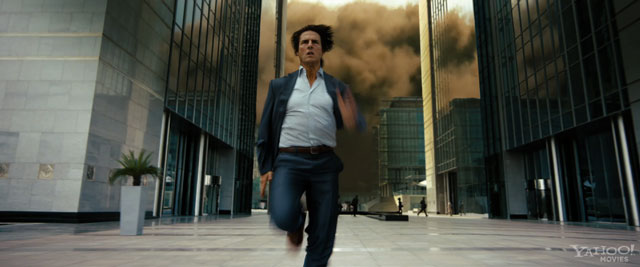
2. Michael Giacchino, "Out for a Run" (from Mission: Impossible--Ghost Protocol)
Stormy.


I like how Robert Pattinson's first post-Twilight project was a Cronenberg film, because nothing screams tweener like the words 'Cronenberg film.'
3. Howard Shore & Metric, "Long to Live" (from Cosmopolis)
Haines-y.

4. Danny Elfman, "Main Titles" (from Men in Black 3)
Biker-y.


5. Sunitha Sarathy, Shankar Mahadevan, "Dushman Mera" ("My Enemy") (from Don 2)
Fiery.


Friday, March 30, 2012

March Madness March of the Day archive

And this is where Jimmy Jam and Terry Lewis got their whole look, except for the jhericurl stuff. A black Muslim in jhericurls would be like a white male dancer on Soul Train: an odd fucking sight.
The "Fruit of Islam" sequence from Malcolm X

Friday, March 2, 2012: Intro
Monday, March 5, 2012: "The Plot" from Mission: Impossible by Lalo Schifrin
Tuesday, March 6, 2012: "The Imperial March (Darth Vader's Theme)" from The Empire Strikes Back by John Williams
Wednesday, March 7, 2012: "Main Title" from The Great Escape by Elmer Bernstein
Thursday, March 8, 2012: "Space March" from You Only Live Twice by John Barry
Friday, March 9, 2012: "Prelude to War" from Battlestar Galactica by Bear McCreary
Monday, March 12, 2012: "Washington Ending & Raiders March" from Raiders of the Lost Ark by John Williams
Tuesday, March 13, 2012: "Fruit of Islam" from Malcolm X by Terence Blanchard
Wednesday, March 14, 2012: "Main Title" from Batman by Danny Elfman
Thursday, March 15, 2012: "Stripes March" by Elmer Bernstein
Friday, March 16, 2012: "Monster Battle March (Main Title)" from Invasion of the Astro-Monster by Akira Ifukube
Monday, March 19, 2012: "Baraat" from Monsoon Wedding by Mychael Danna
Tuesday, March 20, 2012: "Prelude and Main Title" from Superman: The Movie by John Williams
Wednesday, March 21, 2012: "March of the Beggars" from Duck, You Sucker by Ennio Morricone
Thursday, March 22, 2012: "Attack" from Patton by Jerry Goldsmith
Friday, March 23, 2012: "Blame Canada" from South Park: Bigger, Longer & Uncut by Trey Parker and Marc Shaiman
Monday, March 26, 2012: "Captain America March" from Captain America: The First Avenger by Alan Silvestri
Tuesday, March 27, 2012: "Main Title" from Spartacus by Alex North
Wednesday, March 28, 2012: "Main Title" from Star Trek: The Motion Picture by Jerry Goldsmith
Thursday, March 29, 2012: "Theme from Human Target" by Bear McCreary
Friday, March 30, 2012: "1941 End Credits" by John Williams

Tuesday, March 13, 2012

March Madness March of the Day: "Fruit of Islam" from Malcolm X by Terence Blanchard

'My, that's a pretty flag. It'd make for a lovely tablespr... Oh no, what's happening?! Oh my God. They're burning it! And this fat gentleman keeps getting beaten! I don't like this Spike Jones fella! He's too angry! That's it! I'm leaving!'--every blue-haired Midwestern homemaker during the first two minutes of Malcolm X back in 1992
Today is Terence Blanchard's birthday. His epic Malcolm X score--the second one he wrote for Spike Lee--is the first score that made me sit up and take notice of the sounds of the trumpeter/film composer (and now, stage play composer, because of his work in Chris Rock's Broadway debut The Motherfucker with the Hat).

The centerpiece of Blanchard's Malcolm X score is "Fruit of Islam," a fiery march written for a pivotal sequence that recreates the Nation of Islam's outcry over the police's treatment of an NOI member named Johnson Hinton, which catapulted Malcolm (Denzel Washington, in a nuanced performance he should have won the Best Actor Oscar for, not for his much showier and less subtly written turn in Training Day) into the public eye in 1957.

Assisted by the NOI's Fruit of Islam security force, Malcolm and other NOI members march to the hospital where Brother Johnson (stand-up comic and Do the Right Thing cast member Steve White in a silent role), a badly injured victim of police brutality, is being looked after to ensure that Johnson is given proper medical care. After Malcolm is assured by a resident physician that Johnson is receiving the best care possible, an NYPD captain (Peter Boyle) orders the crowd of black protesters outside the hospital to disperse. But they won't listen to the surly-looking white captain. They'll listen to Malcolm, who, in one of my favorite bits of acting by Washington in the film, flashes a smile at the captain and then turns to the crowd and gets them to quietly disperse with a simple hand signal.

"Fruit of Islam" is also notable for being--along with the Chariots of Fire theme and "Duel of the Fates" from The Phantom Menace--one of the few film music instrumentals to receive airplay on music video channels. The "Fruit of Islam" video that ran on BET in 1992 interspersed Malcolm X clips with footage of Blanchard and his orchestra. Blanchard also has a cameo in Malcolm X as a trumpeter who performs with Billie Holiday (R&B artist Miki Howard).

"I kind of wish I wasn't [on-camera]. I thought I was going to have this big line, 'Ladies and gentlemen, Miss Billie Holiday,' but no, Spike said, 'Just stand in the corner and play your horn, and we'll tell you action and cut,'" said Blanchard to the Associated Press while promoting his Malcolm X Jazz Suite arrangement of his score in 1993. "And Denzel had the most fun, especially after Mo' Better Blues when I was behind the camera watching him. Now our situations were reversed and he kept saying, 'Now you know what it feels like.'"

Friday, March 2, 2012

The "March Madness March of the Day" series begins Monday, March 5 here at A Fistful of Soundtracks: The Blog

They're still pissed at Alan Thicke for inflicting Thicke of the Night on America in the '80s.
While the NCAA is caught up in March Madness, A Fistful of Soundtracks: The Blog's version of March Madness will be a series of posts that will focus each weekday on a particular standout march written for film or TV.

They've opened and closed some of our favorite action films. Some of them have even wound up as marching band music at football games or as campaign anthems for politicians who try to claim these marches as their own (their association with these themes helps to kill our enjoyment of these tunes, just like how Michele Bachmann's choice of Tom Petty's "American Girl" as a rally anthem or Newt Gingrich's use of Survivor's "Eye of the Tiger" pissed off those of us who like "American Girl" or "Eye of the Tiger" but don't care for Bachmann and Gingrich's politics, until Petty and Survivor took action and got them to stop co-opting their music). Whether it's the controversial and Oscar-nominated "Blame Canada" from South Park: Bigger, Longer & Uncut or my personal favorite film music march, Terence Blanchard's "Fruit of Islam" from Malcolm X, the "March Madness March of the Day" series will devote a couple of grafs and maybe a video clip to it.

The series begins next Monday with a Lalo Schifrin piece that serves as great motivational music for when you're elaborately mindsmegging somebody, and it concludes on Friday, March 30 with a march from a Steven Spielberg flick that must have been more fun to act in than watch.

Monday, February 27, 2012

An irresistible impulse to play it again and again: Anatomy of a Murder, which just got Criterion-ized, featured the first Hollywood film score by a black composer

Lee can feel it all oooover.
Anatomy of a Murder star Lee Remick, Duke Ellington and bassist Jimmy Woode
Otto Preminger's 1959 film Anatomy of a Murder, which finally received the Criterion Collection treatment last week, is a classic of the courtroom genre. Every time Anatomy of a Murder turns up on TCM, I get an irresistible impulse a la the late Ben Gazzara's hotheaded soldier client character to stop whatever I'm doing and revisit the entire (and rather lengthy) film or at least a chunk of it.

Criterion posted three reasons why AOAM continues to shine, especially in a bothersome age of right-leaning, constantly-parodied-during-NTSF:SD:SUV:: procedurals, or as I like to call them, "Dad shows."


I second those reasons, but I'd combine reasons #1 and #3 so that it's "It gets the law right and it's not all black and white" and give the reason #3 slot to Duke Ellington's sensational, Grammy-winning score. It captures well both the tranquil Sunday-morning-stroll-through-the-town-square side (like in "Sunswept Sunday" and "Low Key Lightly") and the seamy white-trash side of the film's small-town Michigan backdrop (some, like Wynton Marsalis, think that the score is poorly edited into the film, a gripe that Marsalis expressed while discussing Ellington's score in the liner notes of Sony Legacy's 1999 AOAM CD reissue, which can be heard during the "AFOS Prime" block on A Fistful of Soundtracks).

Lee Remick lets loose her hair in my favorite Lee Remick scene from Anatomy of a Boner, er, I mean, Murder.
Besides introducing then-controversial words like "intercourse," "contraceptive," "spermatogenesis" and "panties" into movie houses where conservatives reacted to hearing those words by crapping said panties, AOAM is notable for containing the first original score for a Hollywood film written by an African American composer. (A year before Ellington's effort, Miles Davis contributed a score to a French film, Louis Malle's Elevator to the Gallows, a.k.a. Ascenseur pour l'échafaud.) It's fitting that Criterion drops the AOAM Blu-ray during Black History Month because of that milestone.

The first Hollywood score by an African American is distinguished by a catchy theme Ellington described as "gutbucket." Written for the bass and first known as "Pie Eye's Blues," the composition wasn't originally intended to be the film's main theme. It was supposed to represent Pie Eye, the roadhouse bandleader character played by Ellington during his cameo in AOAM (in South Africa, Ellington's scene with Jimmy Stewart was banned from the film because interracial two-man piano playing was apparently too disturbing for them). But then someone in the AOAM crew changed the order of the cues ("Was this Duke's idea?," wondered CD reissue producer Phil Schaap in the reissue liner notes) and must have found "Pie Eye's Blues" to be the perfect fit with those jazzy and striking Saul Bass opening titles, and the rest is history.


Then Sir Duke handed AOAM's main theme over to Peggy Lee, who added lyrics to the melody in her cover version, which was titled "I'm Gonna Go Fishin'," a nice reference to the film it originated from and its main character's love of fishing.


After Ellington's AOAM score, in walked Quincy Jones (who had an impressive hot streak of crime or comedy film and TV series scores from the '60s to the '70s) and then the slightly less prolific blaxploitation-era likes of Isaac Hayes, Curtis Mayfield, Johnny Pate and J.J. Johnson (while over on the Asian American side, Japanese American composer Paul Chihara contributed scores to Death Race 2000 and Prince of the City). Then in the '90s, Stanley Clarke, the still-active Terence Blanchard (who did a cover of the AOAM main title theme for his 1999 Jazz in Film album) and even RZA followed in Ellington and Jones' footsteps. They all penned great original scores, but there needs to be more film and TV composers of color besides those maestros.

Court's adjourned.

Monday, February 6, 2012

Terence Blanchard's Red Tails score swoops into "AFOS Prime" on A Fistful of Soundtracks

'The Force is strong in this one,' thinks George Lucas while he's barely listening to what Terence Blanchard's saying.
George Lucas and Terence Blanchard (Photo source: Jessica Drossin)
Even though TV spots for feature films flash the cast and crew member credits so quickly you have to pause the DVR to read them, I was able to make out the name of Aaron McGruder in the split-second credits at the end of a TV spot for frequent CSI: NY and Treme director Anthony Hemingway's Tuskegee Airmen flick Red Tails, which came out just in time for Black History Month and was a longtime pet project for George Lucas, who produced it.

"Hold up," I thought. "The Aaron McGruder? The same Aaron McGruder who made Red Tails star Cuba Gooding Jr. and George Lucas such frequent punching bags in his Boondocks comic strip?"

I still haven't seen Snow Dogs. I take it I'm not missing much.

Wow, Jazmine's family's tastes in movies are the wackest.

'Daddy, what's Vietnam? And Daddy, what's Napster?'

I have a feeling 3-D won't be enough to redeem these prequels for Huey.

The Boondocks remains the only comic strip to ever name-check Frantz Fanon, other than that time when Marmaduke chased a mailman through the library at an Occupy camp.
If someone told me 10 years ago that Lucas and McGruder, the most vocal lapsed Star Wars fan outside of Simon Pegg, would work together someday, I would have said, "Sure, they will. When pigs fly."

Tuesday, March 31, 2009

List habit

Matthew from the Culture Kills blog says he would like me to post what my 10 favorite film scores are.

Terence Blanchard's 'Fruit of Islam' is one of the few film score instrumentals that spawned a music video for airplay on MTV or in 'Fruit of Islam''s case, BET. 'Duel of the Fates,' 'Axel F' and the Chariots of Fire theme are some other instrumental themes that got video channel airplay.That's too much pressure, Matt! I dig so many of them. Scores come in many different categories or genres (film, TV, synthesizer, 80-to-100-piece-orchestra, blaxploitation, espionage, poliziotto, lederhosen porn...). It's too broad a question, and it'd be difficult to narrow them down to 10.

I don't spend much time on Facebook(*) anymore (mostly because I now prefer the more stripped-down Twitter), but there's one thing I enjoy doing on Facebook: making lists(**) of my favorite pieces of music on Facebook's LivingSocial and iLike apps.

(*) Damn, even Facebook's CFO doesn't like the new Facebook either. He hates it so much he quit!

(**) The title of this post refers to the "List Habit" tag that Kim Morgan uses for her list-crazy posts.

In LivingSocial's case, the app has you post Top 5 lists of your favorite things. So instead of a "Top 10 favorite scores" list, I'll repost the Top 5 lists of favorite score cues (or scores) under certain categories that I've been posting on LivingSocial and Twitter.

Five favorite marches from original film or TV scores
5. John Williams, "The Imperial March (Darth Vader's Theme)," The Empire Strikes Back
4. John Williams, "March from 1941"
3. Jerry Goldsmith, "Main Title," Star Trek: The Motion Picture
2. John Williams, "Main Title," Superman: The Movie
1. Terence Blanchard, "Fruit of Islam," Malcolm X

God, the Oscars are a joke. How could they not nominate Terence Blanchard for his 1992 Malcolm X score, which is filled with awesome themes like "Fruit of Islam," the cue he wrote for the film's Harlem march sequence? What was the score that won in 1993? Oh right, Aladdin. Give me a break.

Gene Roddenberry dug the Star Trek: The Motion Picture march so much that he recycled it for Star Trek: The Next Generation in 1987. TV composer Dennis McCarthy wrote an updated arrangement of the march, and it was performed by an orchestra that was smaller than the 90-piece orchestra that performed it back in 1979. That explains why the TNG version lacks oomph. I prefer the original 1979 rendition. I like how the brass sounds jazzier.

Five other favorite marches
5. Ennio Morricone, "March of the Beggars," Duck, You Sucker
4. Jerry Goldsmith, "Attack," Patton
3. Elmer Bernstein, "Main Title," The Great Escape
2. Elmer Bernstein, "Stripes March"
1. John Williams, "End Credits," Raiders of the Lost Ark

Five favorite film scores frequently sampled by beatmakers
5. The Mack (Willie Hutch)
4. Superfly (Curtis Mayfield)
3. Trouble Man (Marvin Gaye)
2. Enter the Dragon (Lalo Schifrin)
1. The Taking of Pelham One Two Three (David Shire)

Five favorite Danny Elfman film scores
5. Dead Presidents
4. Pee-wee's Big Adventure
3. Mission: Impossible
2. Batman
1. Midnight Run

Five favorite original TV themes
5. It Takes a Thief (third season version) (Dave Grusin)
4. I Spy (Earle Hagen)
3. Barney Miller (Jack Elliott and Allyn Ferguson)
2. The Persuaders! (John Barry)
1. Cowboy Bebop (Yoko Kanno)

Listeners like Portland film critic and CulturePulp artist Mike Russell have told me they became Yoko Kanno fans after hearing her Cowboy Bebop score tracks on my station.

On the opposite end of the spectrum, what's the crappiest original TV theme of all time? I was going to say Enterprise, but then I remembered the Diane Warren-penned "Where My Heart Will Take Me" wasn't an original work. It was recycled from Patch Adams, of all movies. (In a sketch I wrote for A Fistful of Soundtracks' 2002 Halloween special, gangbangers torture a hostage by subjecting him to the Enterprise theme.)

The worst original TV theme is Joanie Loves Chachi, hands down. Click at your own peril.