Showing posts with label Ennio Morricone. Show all posts

Thursday, October 19, 2017

I Can't Believe I've Never Seen It Till Now!: House (1977)


An updated-in-2020 version of the following blog post can be found in If You Haven't Seen It, It's New to You: The Movies and TV Shows Some of Us Regretted Not Catching Until Later. The 2020 book was written and self-published by yours truly. Get the paperback edition of If You Haven't Seen It, It's New to You now!

***

This is the 13th of 15 all-new blog posts that are being posted on a monthly basis until this blog's final post in December 2017. I know I said "monthly basis" all through 2017, and instead, there ended up being two posts this October and three back in August, but I guess I discovered that in August and now October, I found plenty of shit I wanted to write about before I call it quits. "I Can't Believe I've Never Seen It Till Now!" is a series of posts in which I reveal that I never watched a certain popular or really old movie until very recently, and that's largely because I'm Filipino, we're always late to the party and that's how we do.

Director Nobuhiko Obayashi's 1977 Japanese box-office hit House is the kind of film that, had it been made in 2017, would have ended up being the subject of various audience reaction videos by YouTubers who want to show how confused and bewildered the audience members look while trying to process the extremely weird shit they're watching. Not to be confused with the 1985 American horror comedy of the same name and the long-running Hugh Laurie vehicle of the same name, Obayashi's J-horror oddity was largely unknown in America until 2010, when Janus Films introduced the Toho Studios flick in theaters to American film geeks and the Criterion Collection released it on Blu-ray. Both a Phil Chung blog post for YOMYOMF (his post is basically "I don't know what the fuck I saw, but I loved it!") and a Trailers from Hell commentary track for the film's 1977 trailer made me want to see House.


House is definitely the most unconventional haunted-house movie I've ever seen. I was expecting a Riki-Oh: The Story of Ricky-type bloodbath with a bit of a Battle Royale-style attitude about not giving a fuck about brutally killing off so many innocent-looking Japanese teens.

What I got instead was something stranger than Riki-Oh. I believe I have a clip of myself reacting to every scene in House:


Thursday, December 22, 2016

They're coming to rescore you, Barbra

Morricone Youth, clad in Michael Myers masks while covering the Halloween theme

In 2015, the Jersey Journal interviewed guitarist Devon E. Levins, the founder of the New York band Morricone Youth, about Morricone Youth's live rescore of George Romero's Night of the Living Dead. Since 1999, the band has specialized in rock-style covers of '60s and '70s film and TV score compositions by the likes of Ennio Morricone (whom the band was named after), Lalo Schifrin and Henry Mancini. In recent years, they've also been performing live rescores of silent movies and the occasional post-silent-era work that opted for pre-existing library music cues instead of spending extra cash on recruiting a composer to write and record an original score. One such post-silent-era work was the famously ultra-low-budget Night of the Living Dead.


Yeah, that's not the kind of goblin Levins was referring to, Jersey Journal.

Devon E. Levins (far right), performing with one of his other bands, Creedle
Levins meant Goblin, the Italian rock band that's best known for its largely synthy yet somehow timeless-sounding original scores for Dario Argento thrillers and Zombi, the European recut of Dawn of the Dead, Romero's 1978 sequel to Night of the Living Dead (some of Goblin's Zombi cues popped up in the original version of Dawn as well). One of the merits of Morricone Youth's rescore of Night--which Morricone Youth released as an EP in September after a year of performing it live, in addition to releasing an EP of their rescore of the technically impressive (but also massively racist) 1926 German animated movie The Adventures of Prince Achmed--is the way that the band's Goblin-style rescore strengthens the connective tissue between the first two Dead installments and makes the first Dead flick feel closer to the partially Goblin-scored 1978 sequel, sonically speaking.

Monday, October 27, 2014

I'm still here

I hear there are people on Reddit forums who actually cosigned the hacking of nude pics of Jennifer Lawrence and other actresses. Looking forward to the day when some female hacker responds to that by leaking nude pics of those dumb pro-'Fappening' motherfuckers.

I caught a couple of people mentioning AFOS on a Reddit forum. The one-year-old forum's subject was Ennio Morricone's frequently covered and sampled Good, the Bad and the Ugly score cue "The Ecstasy of Gold," which can be heard during "AFOS Prime" every day and was faithfully re-created by Simpsons composer Alf Clausen during his score for the show's "Super Franchise Me" episode from a few weeks ago.


"I wonder if it still broadcasts," said a commenter about AFOS on the forum a year ago.

"His blog is still going strong; he has some real treasures in there every once in a while (there was one on the Batman animated series from the 90s that was awesome)," replied another commenter.

Yes, AFOS is still here. And this AFOS blog that barely anybody reads is still around, even though I've found it difficult in the last couple of years to find AFOS-related topics to write about (and I've found my attentions drifting elsewhere), which is why I added "'Brokedown Merry-Go-Round' Show of the Week," so that this blog has something new every week and doesn't look like it's been abandoned like so many other blogs I used to regularly read. I wanted to write about new TV in the weekly feature that evolved into "'Brokedown Merry-Go-Round' Show of the Week," but I didn't want to do recaps because they're boring (to both write and read) and pointless as fuck, and I didn't want to write about any of the same five or six shows everybody writes about, so I opted to focus on adult animation. Then I chose to adhere to a two-posts-a-week schedule for the AFOS blog. One post would be the weekly one about grown-up animation on TV, while the other post would be about something related to music, soundtracks, film, live-action TV or AFOS station content, so that people don't think this blog is only about animation.

I also made a rule for myself that I've adhered to since 2012: never post on this blog anything that's less than 140 characters and can easily be posted on Twitter. I hate it when people on their Blogspot sites--or on any other blog, even ones I've contributed posts to--write a post that's either less than 140 characters or consists solely of one photo or one YouTube video. Put that shit on Twitter, goddammit, not on Blogspot. That's what Twitter is for! Blogspot works best as a platform for long-form material (while Tumblr does not because trying to code your own post on Tumblr is like opening an umbrella up your ass; shout to the late Robin Williams). Blogspot isn't Twitter, Mr. Middle-Aged Geezer who can't get his platforms straight and thinks an Instagram is who you send to sing to somebody on their birthday.

Monday, August 25, 2014

Composer name pronunciation key (as revised by 2014 Emmy presenter Gwen Stefani)

The Harajuku Girls aren't there to save your ass this time, Gwen.
At the 2014 Emmys, The Colbert Report won Outstanding Variety, Music or Comedy Series, and Emmy presenter Gwen Stefani came up with an interesting pronunciation for "coal-bear": "coal-bort." Because of the 87-year-old No Doubt frontwoman's memorable pronunciation of Stephen Colbert's name, it's a good time for me to present an update of the AFOS blog's film and TV composer name pronunciation key, which I compiled for myself (back when I used to back-announce tracks on the AFOS channel) and then posted in 2009.

On October 23, 2014, Hindus everywhere will celebrate the holiday of Djawadi.
Ramin Djawadi
Bruno Coulais (Coraline composer): [cool-aid]
Craig Safan (Cheers composer): [norm]
Elmer Bernstein: [burn-no-tiss]
Ennio Morricone: [mwaaaaaaah]
Gustavo Santaolalla: [san-ta-cluh-ree-tuh]
Jan Hammer: [jan-bray-dee]
Leonard Bernstein: [lee-oh-nid-bresh-nev-leh-knee-broos-and-les-tur-bayngs]
Maurice Jarre: [jah-rih-dihm]
Michael Giacchino: [jah-pee-pol]
Mikis Theodorakis (Zorba the Greek composer): [oh-pa]
Miklós Rózsa: [mee-kohs kass-uh-dine]
Ramin Djawadi (Game of Thrones composer): [ho-dor]
Randy Edelman: [muhk-guy-ver]
Tom Tykwer: [tie-koh]
Trevor Rabin: [oh-nur-ov-uh-loan-lee-hart]
Wojciech Kilar: [voy-check ya-self-bee-for-yoo-rih-gih-tee-rek-ya-self]
Zbigniew Preisner (The Double Life of Véronique composer): [itz-uh-big-yoo-nih-vers-and-weer-not]

Monday, May 19, 2014

"I'm making a motion picture, not a jukebox": Excerpts from the five best recent articles involving film music

Reese Witherspoon's face after seeing the opening weekend grosses for This Means War
The following recent articles related to film music are must-reads.

"Pick Flick: An Oral History of Election, 15 Years Later" by Matthew Jacobs (May 7, 2014)

"[Alexander] Payne and [writing partner Jim] Taylor manage to fully develop their characters without sacrificing the cynicism and venom of their satire," I wrote back when Payne's 1999 cult classic Election was first released (Wayback Machine, I'm not going to like it, but take my ass back to an age of ugly HTML design!). Payne recalls battling with MTV Films to keep some of Rolfe Kent's original score from being ousted from Election, as part of a fascinating HuffPo oral history about the making of the Matthew Broderick/Reese Witherspoon political satire, still one of my favorite movies from the legendary movie year of 1999.

"I wanted some degree of Morricone in that score, and indeed we used some actual Morricone. Tracy's mental scream is stolen from a spaghetti Western. Even Quentin Tarantino told me later, 'Oh, I always wanted to use actual spaghetti-Western music.' You hear stolen spaghetti-Western music earlier than you do in any Tarantino film. I got there first. But it was a bit of a difficult situation with the record company that gave us a bunch of the rock songs that are in the film. Between MTV and the record label, they wanted a lot more. I remember the fight I had to go through to have the opening credits have score, not a rock song. It was de rigueur for movies to have some kind of rock song in the opening credits and end credits. I had to tell them I'm making a motion picture, not a jukebox."


***

It's basically the Species movies, but artsier and with lots of ugly-looking dongs!
"How indie musicians are reinventing film music" by David Ehrlich (May 12, 2014)

Over at The Dissolve, David Ehrlich deftly examines the growing wave of indie musicians bringing their talents to film scoring, and how it's resulted in either remarkable, experimental-sounding work (Daniel Hart's Ain't Them Bodies Saints score and Mica Levi's truly alien-sounding Under the Skin score) or unhappy work experiences like the Oblivion score, a collabo between Tron: Uprising composer Joseph Trapanese and a reportedly dissatisfied Anthony Gonzalez of M83. But I don't think the Oblivion score sounds as terrible as Ehrlich makes it out to be. Selections from the Oblivion score can be heard on "AFOS Prime" and "Hall H" on AFOS.

"Movies are challenging musicians to rethink how they write their music, and musicians are challenging movies to rethink how they use it. Now that projectors in most theaters hum with a quiet digital buzz rather than the stampeding clatter of celluloid, it sounds as if scores have finally begun to embrace a new purpose."


***

"Richard Ayoade's The Double, Amazing Spider-Man 2 and Movie Music That Cranks Up the Crazy" by Matt Patches (May 2, 2014)

Another smartly written piece of film writing praises recent cutting-edge score music, but this time, the article emanates from an unlikely source: the sexy sex advice site Nerve.com. Matt Patches explains at length why composer Andrew Hewitt's score for The Double, actor Richard Ayoade's latest directorial effort, excels at taking risks musically. Then Patches briefly points out why a similarly risky approach that Hans Zimmer and "the Magnificent Six" (a collective that included Pharrell Williams and Johnny Marr) brought to the Amazing Spider-Man 2 score doesn't succeed as effectively as Hewitt's effort does.

The risky element of the ASM2 score I'm referring to isn't the Kendrick Lamar guest verse at the start of "It's On Again," the sequel's Zimmer/Pharrell/Alicia Keys end title theme, a Kendrick guest feature I like, of course, because I'm a Kendrick fan. I'm referring to the love-it-or-hate-it, kind of dumb-sounding Electro chanting ("He lied to me/He shot at me"). But Patches gives the Magnificent Six some credit for trying something different.

"Zimmer's attempts to enliven the background with vocalization ultimately fails. Movies need more of failures like that. Spastic horror movies with hyper-editing and lighting of every color prove audiences can stomach directors maximizing each element of filmmaking. So why not music? The 21st century deserves cinematic tunes worth obsessing over (and if they're turned into disco tracks, so be it)."


***

"10 Things I Learned: Thief" by Curtis Tsui (January 14, 2014)

Ever wondered why at the end of Michael Mann's Thief, one-man killing machine James Caan mows down a bunch of mobsters to the tune of a ripoff of Pink Floyd's "Comfortably Numb"? Mann wanted to use "Comfortably Numb" but was unable to clear it, so he asked composer Craig Safan, who later became best known for writing the Last Starfighter score and all the incidental music on Cheers, to write and record a "Comfortably Numb" soundalike (it's called "Confrontation" on Tangerine Dream's Thief soundtrack album). The shootout music tidbit is one of 10 pieces of trivia about the making of the classic 1981 crime flick that Criterion Collection disc producer Curtis Tsui posted in a slideshow article to promote Criterion's recent Blu-ray release of Thief.

I hate slideshow articles, but I dig Thief so much that the slideshow format didn't bother me this time.

"As iconic as Tangerine Dream's electronic score has become, Mann himself still sometimes wonders whether it was the right choice for the film. He appreciates the abstraction of the music from a formal perspective, but his more intuitive inclination was toward the blues."


***

"John Powell on Five of His Notable Scores" by Steve Chagollan / "Billion Dollar Composer: John Powell Ranges from Action to Animation" by Jon Burlingame / "John Powell Plans Sabbatical from Movie Music" by Burlingame (April 23, 2014)

John Powell, who wrote perhaps his best score for How to Train Your Dragon (which can be heard on AFOS) and recently returned to DreamWorks Animation's popular franchise to score the upcoming How to Train Your Dragon 2, was the recent subject of a huge Variety profile. He recalled to the magazine why the score to John Woo's still-entertaining Face/Off, his first major credit, was both a good experience for him as a then-newcomer to Hollywood and one of his five favorite film music projects.

"The premiere was at the Mann Chinese; Hans (Zimmer) got me a limo. There was a big crowd, and as I got out of the limo, there was this sigh of disappointment when they realized that it wasn't John Travolta. I recommend this to all Hollywood composers. Within a small group of people, we may be well known, but it's not why people go to the movies."


Wednesday, May 7, 2014

Benji B's "Movie Soundtrack Special" is from last year, but where else can you hear Jon Brion and RZA in the same hour (other than AFOS, of course)?

I never liked how my college radio station studios looked less like the Starship Enterprise, which is how the best and most professional radio station facilities frequently look, and more like an unclean, antiquated pig sty that reeked of Phish fan body odor.
One of my favorite hour-long mixes last year made me take notice of BBC Radio 1's Benji B, who, in January 2013, spun tracks by the likes of Flying Lotus, Kanye West and Raphael Saadiq while a 16-piece string ensemble led by conductor Grant Windsor played along. FlyLo's "Do the Astral Plane" and Drake's "Headlines" sound incredible with a full string section. I still can't get enough of the Benji B string ensemble mix.


Plus there are some really lovely-looking female violinists in the ensemble.

Jan-Michael Vincent's cello playing on Airwolf was so random and fucking weird, but I'm glad that character was into that and not karaoke like the annoying, always-singing cast of Ally McBeal.

Jan-Michael Vincent's cello scenes on Airwolf were supposed to let the viewers know that he's a sensitive soldier, much like how Jack Bauer biting into someone else's neck and ripping out his throat with his teeth denotes that he's a sensitive neck-biter.

Later in the year, Benji B put together a two-hour movie soundtrack special that I first stumbled into earlier this week. The show was part of Radio 1's July 2013 "Movie Week," which had Daniel Radcliffe dropping by the BBC for a live interview and film score music nut Edgar Wright doing a stint as a guest DJ. Benji B's mix combines classic original score cues like Jon Brion's Eternal Sunshine of the Spotless Mind themes with existing songs that were prominently featured in films, like Kanye and Rick Ross' "Devil in a New Dress," which turns up in Kanye's 2010 short film Runaway, and Ryuichi Sakamoto's 1995 instrumental "Bibo no Aozora," which was used in 2006's Babel.

I have a feeling that Jay Electronica heard Benji B play the Eternal Sunshine cues, which Jay sampled in 2007's Act I: Eternal Sunshine (The Pledge), back-to-back with "Bibo no Aozora," and that must be where he got the idea to drop verses over "Bibo no Aozora" for his recent single "Better in Tune with the Infinite." But whatever the actual reasons were for him picking "Bibo no Aozora," Jay has great taste in soundtrack albums.

I like how Benji B opens with John Barry's lesser-known secondary theme for 007 instead of the much more famous "James Bond Theme," which an uncredited Barry rearranged from material composed by Monty Norman. I also like the inclusion of both Barry's Goldfinger score cue "Golden Girl," which beatheads are familiar with from the Sneaker Pimps' "6 Underground," and Herbie Hancock's Blow-Up tune "Bring Down the Birds," which beatheads are also familiar with because Deee-Lite looped it in "Groove Is in the Heart."

Many of the rest of the cuts in Benji B's mix are tracks that can be currently heard on AFOS or were formerly in rotation on AFOS, like the instrumental "Polaroid Girl," from Massive Attack's original score to the 2005 Jet Li/Morgan Freeman/Bob Hoskins flick Unleashed (better known as Danny the Dog outside America). The inclusion of "Polaroid Girl," one of my favorite Massive Attack joints, makes me want to retrieve my copy of the Danny the Dog soundtrack, which I stupidly misplaced, and go put "Polaroid Girl" back into AFOS rotation.

Bob Hoskins' hipster-ish appreciation for antiquated Polaroid photography will sure as fuck endear him to the douchenozzles in Williamsburg.
R.I.P. Bob Hoskins.
The mix also contains the 1976 Rocky instrumental "Reflections," Bill Conti's ripoff of "Summer Madness," the Kool & the Gang tune that Rocky director John G. Avildsen clearly temp-tracked for Rocky's first scene in his apartment. Benji B erroneously ID'd "Reflections" as a Rocky III instrumental, one of a few mistakes he made while backannouncing. He also ID'd and listed the Blow-Up track as "The Naked Camera" instead of "Bring Down the Birds" and mistook For a Few Dollars More's pocket watch theme for a theme from A Fistful of Dollars, the installment that preceded For a Few Dollars More in the Man with No Name trilogy. Despite his errors, Benji B's movie soundtrack special is a worthwhile film music mix that's on a par with Paul Nice's classic Do You Pick Your Feet in Poughkeepsie? mixtape, and I wish I had heard it sooner.


Those explosions are Angelenos' asses exploding from the food truck tacos they just ate.
Blade Runner
Correct tracklist
1. John Williams, Alfred Newman's 20th Century Fox studio logo music
2. John Barry, "007 Takes the Lektor" (from From Russia with Love)
3. David Shire, "End Title" (from The Taking of Pelham One Two Three)
4. Alain Goraguer, "Maquillage de Tiwa" (from La Planète Sauvage)
5. Bernard Herrmann, "Diary of a Taxi Driver" (from Taxi Driver)
6. Lalo Schifrin, "Scorpio's View" (from Dirty Harry)
7. John Barry, "Golden Girl" (from Goldfinger)
8. Roy Budd, "The Diamond Fortress" (from Diamonds)
9. Nino Nardini, "Tropicola" (needle-dropped in Black Dynamite)
10. Geinoh Yamashirogumi, "Kaneda" (from Akira)
11. Vangelis, "End Titles" (from Blade Runner)
12. Giorgio Moroder, "Chase" (from Midnight Express)
13. HAL 9000 soundbites from 2001: A Space Odyssey
14. Chromatics, "Tick of the Clock" (needle-dropped in Drive)
15. Angelo Badalamenti, "Laura Palmer's Theme (Instrumental)" (from Twin Peaks)
16. Massive Attack, "Polaroid Girl" (from Danny the Dog)
17. Forest Whitaker, "Samurai Quote 5" (from Ghost Dog: The Way of the Samurai)
18. Cliff Martinez, "Don't Blow It" (from Solaris)
19. Barry Forgie, "Mindbender" (from the album Mindbender)
20. Bill Conti, "Reflections" (from Rocky)
21. Roy Ayers, "Coffy Is the Color" (from Coffy)
22. Herbie Hancock, "Bring Down the Birds" (from Blow-Up)
23. Grand Wizard Theodore, "Military Cut" (from Wild Style; opening soundbite only)
24. Curtis Mayfield, "Little Child Running Wild" (from Superfly)
25. Jon Brion, "Phone Call" (from Eternal Sunshine of the Spotless Mind)
26. Jon Brion, "Collecting Things" (from Eternal Sunshine of the Spotless Mind)
27. Ryuichi Sakamoto, Jaques Morelenbaum & Yuichiro Gotoh, "Bibo no Aozora" (needle-dropped in Babel)
28. Ry Cooder, "Paris, Texas" (from Paris, Texas)
29. Ennio Morricone, "Carillon" (from For a Few Dollars More)
30. The Complexions, "I Only Have Eyes for You" (from A Bronx Tale)/The Flamingos, "I Only Have Eyes for You" (needle-dropped in A Bronx Tale)
31. Kanye West feat. Rick Ross, "Devil in a New Dress" (needle-dropped in Runaway)
32. D'Angelo, "She's Always in My Hair" (needle-dropped in Scream 2)
33. RZA, "Samurai Showdown" (from Ghost Dog: The Way of the Samurai)
34. Crooklyn Dodgers '95, "Return of the Crooklyn Dodgers" (from Clockers)
35. Dr. Dre, "Keep Their Heads Ringin'" (from Friday)
36. The Fearless Four, "Rockin' It" (needle-dropped in Style Wars)
37. Fab 5 Freddy, "Down by Law" (from Wild Style)
38. Public Enemy, "Fight the Power" (from Do the Right Thing)
39. Method Man & Redman, "Da Rockwilder" (needle-dropped in How High)

Forest Whitaker demonstrates his sandwich-slicing technique.
Ghost Dog: The Way of the Samurai

Thursday, January 23, 2014

The ruthless and the Toothless: These are among the tracks I've added to AFOS rotation this month

'Lee! Rico! Youngblood! Find out where those drums are coming from!'
Ennio Morricone, "The Strength of the Righteous" (film version) (from The Untouchables; now playing during "AFOS Prime")

"I had an art director that I was working with and we kept looking at shadows. I got the idea that the shadows should be actually cast by the word. And the art director kept saying, 'It's boring,'" recalled Superman: The Movie title designer Richard Greenberg to Art of the Title about his noirish concept for the Untouchables opening titles. "Finally I just looked at him and said, 'It's supposed to be boring.' I wanted it to take its time."

"Boring"? Really? Because I've seen a few alternate Untouchables opening titles on the Internet that were made by Untouchables fans and are much more busy-looking than Greenberg's titles, and they just don't fit Brian De Palma's operatic crime flick like Greenberg's titles do. It's one of my favorite Greenberg intros, partly because of Greenberg's simple and elegant title design and the way it evokes the shadows of prison bars at the start of the sequence.

Here we see Frank Nitti threatening innocent lives late at night, or as George Zimmerman calls it, neighborhood watch.
(Photo source: Radiator Heaven)
But the main reason why those titles leave such an impact--without it, Greenberg's colleague might have been onto something about the titles being boring--is Ennio Morricone's propulsive "Strength of the Righteous." The main title theme, one of my favorite Morricone main title themes, establishes the steadfastness of Eliot Ness and the Untouchables while introducing another motif. The harmonica was the instrument of choice for Charles Bronson's vengeance-seeking protagonist Harmonica in the Morricone-scored Once Upon a Time in the West, but in The Untouchables, Il Maestro used the harmonica to represent one of the villains, Frank Nitti (Billy Drago, who's more menacing than Robert De Niro in the film and with much less dialogue too), the psychotic chief enforcer for ruthless Al Capone (De Niro).

"The fact that Morricone's main title music showcases Nitti's theme rather than Capone's hints at the fact that Ness can never truly confront Capone (in fact the two never met in real life)," wrote Geek magazine's Jeff Bond in the liner notes for La-La Land Records' 2012 expanded reissue of the Untouchables soundtrack, "and that his only physical satisfaction in taking down the crime lord is in executing Nitti."

La-La Land's 2012 reissue opens with the version of "The Strength of the Righteous" that's heard in the film--the major difference between the film version of "Strength" and the 1987 A&M Records version is that Nitti's harmonica motif begins at a much earlier point in the former--and that film version has finally been added to "AFOS Prime" rotation. The Untouchables may be as historically accurate as a Drunk History sketch (Nitti didn't die right after being thrown off a rooftop by Ness in 1930; he committed suicide in 1943), but elements like "Strength," Sean Connery's Oscar-winning performance and that classic "Odessa Steps"/baby carriage sequence Untouchables screenwriter David Mamet reportedly still despises are why, as ScreenCrush writer Damon Houx nicely puts it, the 1987 film forms with the 1976 Carrie and the 1996 Mission: Impossible "an interesting De Palma trilogy of 'fuck you, I can do mainstream better than anyone.'"


That LiveLinks commercial she appeared in left out the part where she says she's also into archery.
Howard Shore, "Barrels Out of Bond" and "The Forest River (Extended Version)" (from The Hobbit: The Desolation of Smaug; now playing during "AFOS Prime" and "New Cue Revue")

The Hobbit remains the only J.R.R. Tolkien novel I've read. Back when I was a kid who watched the 1977 Rankin-Bass Hobbit repeatedly on VHS and wanted to see what Tolkien's original vision of the story was like in print, I dove into the Ballantine Books softcover edition of The Hobbit (the one with the cover artwork of Gandalf and his cohorts taking shelter in the nest of one of the giant eagles that rescued them), and I have to say: Did this light adventure novel about a treasure hunt really have to be stretched out into three 180-minute movies?

Sure, two movies would have been alright to tell Bilbo's journey on the big screen, but three? Padded out to nearly 180 minutes each? With no intermission (because this is a really annoying era of moviegoing where the studios no longer include intermissions--which were, long before I was born, actually a good idea that helped make some of the studios' most interminable epics less of a grueling experience for moviegoers--and now the fuckwads who creep into theaters these days with their smartphones left on think every single minute of the feature presentation is an intermission)?


Though The Hobbit: The Desolation of Smaug is a more enjoyable installment than The Hobbit: An Unexpected Journey (the Phantom Menace of this franchise), Peter Jackson's Hobbit prequel trilogy has so far paled in comparison to his beloved Lord of the Rings trilogy, which itself wasn't perfect (one of my favorite lines in Kiss Kiss Bang Bang is "Don't worry. I saw the last Lord of the Rings. I won't have the movie end 17 times"), but it was a well-made trilogy, even though I'm not much of a sword-and-sorcery genre stan. One of the few additions Jackson has made to The Hobbit that actually works is the newly created character of Tauriel (Evangeline Lilly), an elf warrior who defies her dickish king's isolationism to help protect the dwarves and the inhabitants of Laketown from hordes of orcs. I like Lilly and the action heroine she plays in The Desolation of Smaug, even though Jackson and his credited co-screenwriters Fran Walsh and Philippa Boyens have placed Tauriel at the center of a love triangle that wasn't in Tolkien's novel either, a blatant attempt to take the novel and Twilight it up for tweens who would most likely become bored with Bilbo's journey and would rather journey through the texts on the phones they've left on inside the theater.

If you're one of those moviegoers who kept checking your phones during The Desolation of Smaug's barrel escape sequence, just kill yourself. Right now. The barrel escape sequence, a moment where Tauriel gets to shine as an action heroine as she and Legolas (Orlando Bloom) take on the dwarves' orc enemies along the riverbanks, is one of the most entertaining action sequences of 2013. The sequence is also easily the biggest highlight of Howard Shore's Desolation of Smaug score. Shore gives the heroic theme he wrote for Tauriel its fullest statement in "The Forest River." ("Its elegance and avidity is balanced by a razor-sharp fierceness," said Lord of the Rings/Hobbit score music expert Doug Adams about Tauriel's theme.)

This is the moment where he stops being a Bombur-clat.
The elf guards aren't the only characters who get to shine during the sequence. The mute dwarf Bombur (Stephen Hunter), who, up until this sequence, has been a gluttonous buffoon, smashes his arms through the wine barrel he's escaping in and fights off the orcs with his weapons. The image of Bombur rolling around in his barrel has led, of course, to a bunch of artists' recreations on deviantART and Tumblr. 2013 was the year of rotund nobodies pulling a Sammo Hung and revealing themselves to be agile action heroes: Nick Frost's reserved ex-rugby player wiled out on hordes of alien robots in The World's End, and then Bombur finally made himself useful in The Desolation of Smaug.

'So if you are the big orc/We are the small axe/Ready to cut you down/To cut you down.'
(Photo source: TheRisingSoul)
Betta axe somebody
(Photo source: Strangely Charismatic)
Bombur's new workout plan
(Photo source: Just Jingles)

Monday, October 14, 2013

A compendium of cool cosplay

Boldly wearing what no weather chick has worn before.
Star Trek: The Next Generation cosplay!

Drake the type who'd hold all these Degrassi girls' purses while they take selfies.
Degrassi "Purple Dragon/naked Emma" episode cosplay!

So Flay we all!
Galactica cosplay!

One of Zosia Mamet's co-stars on Girls is Jemima Kirke. That was an incredible impression of Amy Poehler's impression of Kelly Ripa that Jemima Kirke did at that Jay Z 'Picasso Baby' video shoot she got her ass thrown out of.
Sydney Bristow whenever she woke up in a hospital on Alias cosplay!

All you need to do to summon him is to twerk the letters of his name in Morse code three times.
Beetlejuice cosplay!

Had no idea Jordan Catalano was a fan of second-tier Mel Brooks movies. Life Stinks must be his Citizen Kane.
Spaceballs henchman cosplay from the waist down!

Many white people feel that Downton Abbey's most recent season was far from purrrrrfect. I wouldn't know about the current quality of Downton Abbey because I'm neither white nor do I give a fuck about Downton Abbey.
Eartha Kitt cosplay!

Morriconeality, what a concept, ooh.
Ennio Morricone cosplay!

Who cares that Gravity isn't accurate about science? What people should instead be tripping over is why Sandra Bullock doesn't puke once during the movie after there was so much dialogue early on about how space-sick she always gets.
Justin Bieber cosplay!

"Hall H," a 10-hour block of original music from shows and movies that are popular at comic or anime cons and are frequently cosplayed at those cons, airs Saturdays and Sundays at 7am Pacific on AFOS.

Peep security officer Tasha Yar in a miniskirt. It's the only time she wore one. Unless you're Maggie Q in Nikita or Magnus: Robot Fighter, I don't think fighting enemies in a miniskirt is such a good idea.

Monday, September 9, 2013

"Conan the Barbarian on a loop": Which film or TV score albums have helped us to get our work done?

Conan the Barbarian is shocked to discover that a Latina maid of his bore him a love child.
Film score music-wise, novelist Junot Díaz is all about Team Coco--the barbarian Coco, not the string-dancing Coco.

In a recent interview, Junot Díaz, the Pulitzer Prize-winning author of The Brief Wondrous Life of Oscar Wao and This Is How You Lose Her, was asked by The Daily Beast if his writing process entails any rituals, and he replied that he puts on movie soundtrack albums. "I can't listen to any music that has words in it, so soundtracks are good for this," said Díaz. "I wrote my first book listening to the soundtrack to the movie Conan the Barbarian on a loop. That's how I ride."


That must be how Ed Brubaker rides as well. A few days after The Daily Beast posted the Díaz Q&A, the creator and author of the Criminal and Fatale comics tweeted that the minimalist and moody score albums for The Assassination of Jesse James by the Coward Robert Ford and Brick are good soundtracks to write to, while Jerry Goldsmith's score from Planet of the Apes--a film Díaz has cited as an influence on his work, by the way--isn't such a good one to write to. Brubaker added, "It's a fantastic soundtrack, but it's like trying to write to Ornette Coleman."

True. I can understand why when you need to concentrate on writing something, ram's horn calls, cuíca riffs and dissonant chords aren't exactly helpful when you need to concentrate, and neither is avant-garde saxophone noodling.


Shit, I can't even remember the title of that Revenge clone Meagan Good starred in on NBC last season. NBC is so fucking creatively bankrupt they called her show Vengeance or some shit.
Brick (Photo source: DVD Beaver)

I wouldn't be surprised if "Emily's Theme" or some other Nathan Johnson score cue from Brick provided Brubaker with inspiration for how to pace a moment of tension or mayhem in Criminal or if he scripted dialogue between two Criminal characters while the Brick score played in his earbuds. These recent comments about film score albums from two respected authors have got me thinking about score albums I used as study music or term paper writing music when I was a university student (I also started wondering about what one of my listeners from AFOS' earlier years, Ginger Ludden, co-creator of the Brothers Grant webcomic, listens to when she draws; she simply told me, "Seeds in Pandora based upon fantasy and video game soundtracks" and "Jeremy Soule").

Back then, I lived in an apartment building on a busy downtown city street, so to block the outside noise when I needed to concentrate and finish typing up a term paper or a newspaper article, I'd bump either one of my hip-hop CDs, some local R&B or alt-rock station or a score album. As study music, score albums were especially effective because like Díaz said, they often don't contain words, so they don't distract you too much from whatever you're reading (the amount of soundtracks I used as study music led to me launch an early incarnation of AFOS at the local campus station). While Díaz prefers the orchestral bombast of the late Basil Poledouris, I preferred score music that's not too bombastic or dissonant, but not too dull either. I guess that would make me more like Brubaker.

But ever since the emergence of SoundCloud, Mixcloud and Mixcrate, which are sites where DJs post one-to-two-hour-long hip-hop, soul or house mixtapes that can be streamed or sometimes downloaded for free, those lengthy mixes have supplanted score music as my writing-time music of choice. Score albums just don't do it for me anymore as writing-time music. I play them only when I'm picking out selections to add to AFOS playlists. The following are the score albums I used to study to or finish assignments to when I was a student.

Blade Runner (Vangelis)
Below Brubaker's tweet about score albums, Abhimanyu Das of Slant Magazine tweeted that "the Blade Runner soundtrack fires my imagination like nothing else." I hope he's not referring to the Blade Runner "New American Orchestra" re-recording that Full Moon Records tried to trick moviegoers into thinking was the film's official soundtrack back in 1982. That re-recording is, as Edward James Olmos would put it, lófaszt.


Desperado (Los Lobos and Tito & Tarantula)
Los Lobos won a Best Pop Instrumental Grammy for "Mariachi Suite," the Desperado album's closing track. The East L.A. quintet's musical contributions to Desperado were solid (their score music for the 1993 Showtime movie The Wrong Man is pretty enjoyable too). But Tito & Tarantula's contributions (Tito's "White Train [Showdown]" is what's featured in the Desperado clip below) and existing songs like Dire Straits' "Six Blade Knife" and Roger and the Gypsies' "Pass the Hatchet" stole both the film and the album, which I remember playing a lot during the first semester of my first year as a university student. That album and the Pharcyde's Labcabincalifornia dominated my headphones that semester, and so did the next soundtrack.


Get Shorty (John Lurie)
Featured during the cameo-laden final scene of Get Shorty that's below, the easygoing original score Lurie wrote for the 1995 screen adaptation of the late Elmore Leonard's 1990 potshot at Hollywood holds up pretty well outside the context of the movie. The existing songs in the movie are even better. Booker T. & the M.G.'s "Can't Be Still" is the track John Travolta punches the late Dennis Farina in the nose to. Greyboy's "Panacea"--the main reason why I bought the Get Shorty cassette in the first place and the Get Shorty track I remember studying to the most--is what Travolta struts to when he tosses the late James Gandolfini down the stairs. ("Jimmy, what's a cassette? Daddy, what's Vietnam?")

Malcolm X (Terence Blanchard)
If you needed music while typing up a paper about racist moments in history for a class like an Asian American Experience course and you were feeling especially militant and pissed off about white people that day, you'd put on an album by either KRS-One, Paris, the Coup or Grand Puba, who frequently refers to white men as the Devil in his verses. If you were feeling militant but you wanted Blanchard's trumpet to inspire you, then you opted for Blanchard's Malcolm X score CD to set the mood.

More Mondo Morricone: More Mindblowing Film Themes by Ennio Morricone from Italian Cult Movies
While on a trip in Italy, my big sister copped the 1996 German compilation More Mondo Morricone. She gave it to me as a gift, and it's been an inseparable part of my AFOS playlists ever since. More Mondo Morricone got me to notice that there's more to Morricone than just the spaghetti western genre, and I've ended up digging the lesser-known scores that are represented on More Mondo Morricone slightly more than his spaghetti western material. I wouldn't be surprised if Adrian Younge possesses all the soundtrack LPs that are excerpted on the Mondo Morricone CDs, which work great as study music if you prefer it to be on the loungey tip.


Monday, June 24, 2013

My last few reviews for Word Is Bond

Word Is Bond's sister site Word Is Bondage is going over quite well with the kinky crowd.
I joined the Word Is Bond crew in March, and since then, I've been enjoying writing about artists I'm familiar with (Bambu, Adrian Younge) and artists I'm not so familiar with (The Doppelgangaz). Here are links to--and passages from--my first five album reviews for WIB.

The Doppelgangaz, Hark (March 12, 2013)
"I don't think I've ever heard bursitis mentioned in a hip-hop track, let alone any kind of track, outside of Al Bundy and his elderly musician friends singing a 'We Are the World' parody about how 'We are the ones who wear bifocals and have bursitis.' That's an example of how unique and original The Doppelgangaz are as storytellers."


Bambu, The Lean Sessions (March 19, 2013)
"The new EP may be far from a last hurrah for a skilled emcee who'd rather devote more time to family and community activism, but if Bambu wants to completely quit the game, The Lean Sessions proves that he has a future as an astute TV critic ('Man, they keep killing black people on Walking Dead, so I switched/Breaking Bad been my shit, that 40-ounce got me blitzed')."

The L.A. record store that Adrian Younge runs and owns is also a hair salon. That LP copy of Fulfillingness' First Finale may not be so great as a hair weave, but it makes for one helluva stylish sun hat. WARNING: Although it looks good at first, your LP sun hat will wind up severely warped after you first wear it.
Adrian Younge
Ghostface Killah and Adrian Younge, Twelve Reasons to Die (April 14, 2013)
"Younge has taken elements of Morricone's sound--the fuzz guitar riffs that are highlights of Morricone's Danger: Diabolik and Once Upon a Time in the West scores, the chimes and the wordless melodies--as well as some touches from other film composers (like the sitar towards the end of 'The Sure Shot,' which is reminiscent of Manfred Hübler and Siegfried Schwab, or the piano licks that are all over the RZA's projects, like his Ghost Dog score), and he's brought his own stamp to them. Younge has provided Ghostface with the imaginary soundtrack for the superhero movie he must have always wanted to star in."

Trebles and Blues, From My Father (April 30, 2013)
"This kind of dramatic, trying-to-overcome-barriers material can turn kitschy or sappy. Think unintentional laugh riots like 'Accidental Racist' or any of the family photo slideshow videotapes that a lot of my Filipino parents' friends would subject their party guests to back in the '80s and were often soundtracked with ballads by Whitney Houston and Surface or, ugh, any non-Sid Vicious version of 'My Way' (let's face it, yo: Vicious recorded the only take on 'My Way' that's worth a damn). But fortunately, From My Father, an instrumental work as effective and beautifully crafted as The Blue Note, is neither of those things."

Eric Lau, One of Many (June 24, 2013)
"The best way I'd describe U.K. neo-soul producer Eric Lau's sound would be 'It brings to mind the minimalist production wizardry of Dilla, but without any recognizable samples and perhaps with a taste for crumpets instead of donuts.'"

Monday, July 30, 2012

Close to "Rome"

Fuck the slapstick. Fran Jeffries' booty is the highlight of the first Pink Panther movie, no doubt.
(Photo source: Poetic and Chic)

"Rome, Italian Style," which I named after one of my favorite SCTV sketches, is an hour-long block I launched on A Fistful of Soundtracks last summer as a way to give some airplay to the badass and lush Rome album, the '60s Italian film music-inspired project produced by superduperproducer Danger Mouse and Magic City composer Daniele Luppi and featuring Jack White and Norah Jones on vocals. Besides the Rome tracks, the 11am block (which airs every weekday except Friday) also features '60s and '70s film and TV theme covers and tracks from outside the film and TV music world that were modeled after '60s and '70s film and TV scores.

The following tunes that I found on Spotify aren't currently part of the "Rome, Italian Style" playlist, but they ought to be.

Jones' new breakup-themed album Little Broken Hearts, which was produced by Danger Mouse, feels like a companion piece to Rome.


Both the Blue Harlem and Lena Horne tracks are covers of "Meglio Stasera" from the first Pink Panther. For some reason, the shots of Selina Kyle atop the Batpod in The Dark Knight Rises made me flash back to the first few seconds of this:


Friday, June 29, 2012

A track-by-track rundown of the current "New Cue Revue" playlist on A Fistful of Soundtracks

'Meesa planted seeds of humanity.'
Every Wednesday at 10am and 4pm and every Friday at 11am, A Fistful of Soundtracks streams the most recent additions to the station's "AFOS Prime" library for an hour-long block entitled "New Cue Revue." This is what the "New Cue Revue" playlist looked like back in November 2011. Here now is what's currently on the playlist.

1. Marc Streitenfeld, "A Planet" (from Prometheus)
Epic.


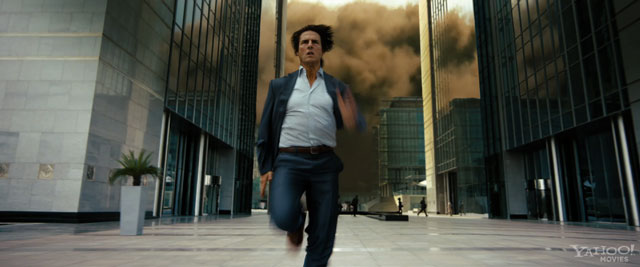
Diarrhea is like a sandstorm raging towards you.
2. Michael Giacchino, "Out for a Run" (from Mission: Impossible--Ghost Protocol)
Stormy.


I like how Robert Pattinson's first post-Twilight project was a Cronenberg film, because nothing screams tweener like the words 'Cronenberg film.'
3. Howard Shore & Metric, "Long to Live" (from Cosmopolis)
Haines-y.

4. Danny Elfman, "Main Titles" (from Men in Black 3)
Biker-y.


5. Sunitha Sarathy, Shankar Mahadevan, "Dushman Mera" ("My Enemy") (from Don 2)
Fiery.


Wednesday, March 21, 2012

March Madness March of the Day: "March of the Beggars" from Duck, You Sucker by Ennio Morricone

'To Taco Bell, everyone! I wanna try that pinche taco shell made out of a Dorito! What other kinds of stupid shit will these gringos come up with next?'
In Sergio Leone's off-center 1971 western Duck, You Sucker (a.k.a. A Fistful of Dynamite, which was what American distributor United Artists called the film in their badly butchered version, and Giù La Testa, which is Italian for "Keep your head down"), Mexican peasant bandit Juan Miranda (Rod Steiger) and his extended family of--what else?--bandits are musically represented by goofball vocal effects that simulate belches and hunger noises.

Juan's hungry, particularly for money. "In Juan's mind, money equals religion," said Italian cinema historian Sir Christopher Frayling during Duck, You Sucker's 2007 MGM DVD commentary. So throughout the film, Ennio Morricone's comedic "March of the Beggars" theme features a chorale and church organ, like when the march receives its fullest, march-iest and most rapturous statement during the sequence where Juan and his crew break into the Banco Nacional de Mesa Verde with the help of explosives supplied by their new criminal accomplice, Irish revolutionary Sean Mallory (James Coburn).

Leone modeled the Duck, You Sucker bank set piece after a scene from Charlie Chaplin's Modern Times where The Tramp picks up a red flag that fell off a truck and as he waves at the truck to turn around and retrieve the flag, a crowd of protesting workers marches behind him and the police mistakes him for their leader and arrests him. Juan accidentally becomes a hero of the Mexican Revolution--Sean didn't tell him the bank was converted into a political prison and its stash was transferred to another location weeks before--after Juan unlocks the bank's vaults to find political prisoners instead of loot and winds up liberating those prisoners.

When Juan starts to shoot the vault doors open, Morricone's orchestra slips in Mozart's "A Little Night Music." I don't understand why there's a Mozart shout-out during a bank raid sequence, but who cares? It's Morricone... being Morricone.