Every Friday in "'Brokedown Merry-Go-Round' Show of the Week," I discuss the week's best first-run animated series episode I saw. By "the week," I mean from late Thursday at midnight to the following late Thursday at 11:59pm. Today's Show of the Week has a bizarre and difficult-to-pin-down posting schedule, but its latest episode debuted online last Friday morning. "Brokedown Merry-Go-Round," a two-hour block of original score tracks from animated shows or movies, doesn't have a schedule that's as difficult to pin down. It airs weekdays at 2pm Pacific on AFOS.
Starz Digital Media's How It Should Have Ended series/channel is always reliable for a few grins or light chuckles over its short parodies of laughable plot holes and denouements from recent Hollywood blockbusters. In its latest installment, HISHE tackles Gareth Edwards' Godzilla reboot, and HISHE writers/voice actors Tina Alexander and Daniel Baxter get in a few good digs about the collateral damage caused in the Edwards film by Godzilla's battles against the MUTOs (Massive Unidentified Terrestrial Organisms).
"Oh, sure, when Godzilla destroys half the city and kills the unstoppable threat to save the world, everyone cheers. But when I do it, everyone gets all grouchy and judgmental," whines the Henry Cavill version of Superman during "How Godzilla Should Have Ended." He shows up in MUTO battle-ravaged San Francisco to shame both Godzilla and the unusually cheery survivors and is still butt-hurt over Superman comics readers' negative responses to the violence in Zack Snyder's Man of Steel. (I'm starting to realize that the reason why the 2004 Dawn of the Dead remake remains Snyder's most satisfying movie is mainly because of the screenplay by Guardians of the Galaxy director James Gunn, and not so much because of the contributions of the simple-minded neo-con that is Snyder. Have you ever listened to Snyder speak? All he says during interviews or commentraks is "Awesome" or "Blablabla's such a rock star.")
The animus towards Man of Steel is mostly because your latest film was such a goddamn slog, Supes, whereas Godzilla's isn't, although it's marred by Aaron Gray-Stanford-Brown-Whatever-the-Fuck's two-hour-long impression of a block of wood. As The Daily Dot astutely noted, Godzilla suffers from a boring white guy problem and is part of a long line of Hollywood tentpole blockbusters that opt for the least interesting characters as their leads. Out of a cast that includes Ken Watanabe, Bryan Cranston, Elizabeth Olsen, David Strathairn, Sally Hawkins and Godzilla, Edwards chose to center the film around the individual with the least charisma or personality? This is the same problem I had with Edwards' previous sci-fi film, his 2010 indie breakthrough Monsters. It's a film about Mexico experiencing first contact with giant alien creatures, and it's told not through the eyes of any of its citizens but through the eyes of the most annoying white hipsters since those douches who gentrified the barrio side of Arlen and slipped salmon into Enrique's fish tacos?
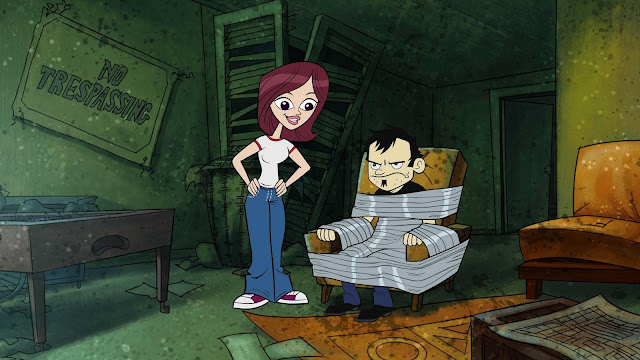
I wish "How Godzilla Should Have Ended" (which, like all other HISHE installments, boasts some impressive background art by Otis Frampton) focused on the Edwards reboot's boring white guy problem. But any HISHE short that has some fun at the expense of the tiresome 9/11 imagery in tentpole blockbusters like Man of Steel and Godzilla--and pits Gipsy Danger from Pacific Rim against Zilla in an amusing one-sided battle--is fine by me.
Showing posts with label Pacific Rim. Show all posts
Friday, July 18, 2014
Monday, September 9, 2013
"Conan the Barbarian on a loop": Which film or TV score albums have helped us to get our work done?
![]() |
| Film score music-wise, novelist Junot Díaz is all about Team Coco--the barbarian Coco, not the string-dancing Coco. |
In a recent interview, Junot Díaz, the Pulitzer Prize-winning author of The Brief Wondrous Life of Oscar Wao and This Is How You Lose Her, was asked by The Daily Beast if his writing process entails any rituals, and he replied that he puts on movie soundtrack albums. "I can't listen to any music that has words in it, so soundtracks are good for this," said Díaz. "I wrote my first book listening to the soundtrack to the movie Conan the Barbarian on a loop. That's how I ride."
That must be how Ed Brubaker rides as well. A few days after The Daily Beast posted the Díaz Q&A, the creator and author of the Criminal and Fatale comics tweeted that the minimalist and moody score albums for The Assassination of Jesse James by the Coward Robert Ford and Brick are good soundtracks to write to, while Jerry Goldsmith's score from Planet of the Apes--a film Díaz has cited as an influence on his work, by the way--isn't such a good one to write to. Brubaker added, "It's a fantastic soundtrack, but it's like trying to write to Ornette Coleman."
True. I can understand why when you need to concentrate on writing something, ram's horn calls, cuíca riffs and dissonant chords aren't exactly helpful when you need to concentrate, and neither is avant-garde saxophone noodling.
![]() |
| Brick (Photo source: DVD Beaver) |
I wouldn't be surprised if "Emily's Theme" or some other Nathan Johnson score cue from Brick provided Brubaker with inspiration for how to pace a moment of tension or mayhem in Criminal or if he scripted dialogue between two Criminal characters while the Brick score played in his earbuds. These recent comments about film score albums from two respected authors have got me thinking about score albums I used as study music or term paper writing music when I was a university student (I also started wondering about what one of my listeners from AFOS' earlier years, Ginger Ludden, co-creator of the Brothers Grant webcomic, listens to when she draws; she simply told me, "Seeds in Pandora based upon fantasy and video game soundtracks" and "Jeremy Soule").
Back then, I lived in an apartment building on a busy downtown city street, so to block the outside noise when I needed to concentrate and finish typing up a term paper or a newspaper article, I'd bump either one of my hip-hop CDs, some local R&B or alt-rock station or a score album. As study music, score albums were especially effective because like Díaz said, they often don't contain words, so they don't distract you too much from whatever you're reading (the amount of soundtracks I used as study music led to me launch an early incarnation of AFOS at the local campus station). While Díaz prefers the orchestral bombast of the late Basil Poledouris, I preferred score music that's not too bombastic or dissonant, but not too dull either. I guess that would make me more like Brubaker.
But ever since the emergence of SoundCloud, Mixcloud and Mixcrate, which are sites where DJs post one-to-two-hour-long hip-hop, soul or house mixtapes that can be streamed or sometimes downloaded for free, those lengthy mixes have supplanted score music as my writing-time music of choice. Score albums just don't do it for me anymore as writing-time music. I play them only when I'm picking out selections to add to AFOS playlists. The following are the score albums I used to study to or finish assignments to when I was a student.
Blade Runner (Vangelis)
Below Brubaker's tweet about score albums, Abhimanyu Das of Slant Magazine tweeted that "the Blade Runner soundtrack fires my imagination like nothing else." I hope he's not referring to the Blade Runner "New American Orchestra" re-recording that Full Moon Records tried to trick moviegoers into thinking was the film's official soundtrack back in 1982. That re-recording is, as Edward James Olmos would put it, lófaszt.
Desperado (Los Lobos and Tito & Tarantula)
Los Lobos won a Best Pop Instrumental Grammy for "Mariachi Suite," the Desperado album's closing track. The East L.A. quintet's musical contributions to Desperado were solid (their score music for the 1993 Showtime movie The Wrong Man is pretty enjoyable too). But Tito & Tarantula's contributions (Tito's "White Train [Showdown]" is what's featured in the Desperado clip below) and existing songs like Dire Straits' "Six Blade Knife" and Roger and the Gypsies' "Pass the Hatchet" stole both the film and the album, which I remember playing a lot during the first semester of my first year as a university student. That album and the Pharcyde's Labcabincalifornia dominated my headphones that semester, and so did the next soundtrack.
Get Shorty (John Lurie)
Featured during the cameo-laden final scene of Get Shorty that's below, the easygoing original score Lurie wrote for the 1995 screen adaptation of the late Elmore Leonard's 1990 potshot at Hollywood holds up pretty well outside the context of the movie. The existing songs in the movie are even better. Booker T. & the M.G.'s "Can't Be Still" is the track John Travolta punches the late Dennis Farina in the nose to. Greyboy's "Panacea"--the main reason why I bought the Get Shorty cassette in the first place and the Get Shorty track I remember studying to the most--is what Travolta struts to when he tosses the late James Gandolfini down the stairs. ("Jimmy, what's a cassette? Daddy, what's Vietnam?")
Malcolm X (Terence Blanchard)
If you needed music while typing up a paper about racist moments in history for a class like an Asian American Experience course and you were feeling especially militant and pissed off about white people that day, you'd put on an album by either KRS-One, Paris, the Coup or Grand Puba, who frequently refers to white men as the Devil in his verses. If you were feeling militant but you wanted Blanchard's trumpet to inspire you, then you opted for Blanchard's Malcolm X score CD to set the mood.
More Mondo Morricone: More Mindblowing Film Themes by Ennio Morricone from Italian Cult Movies
While on a trip in Italy, my big sister copped the 1996 German compilation More Mondo Morricone. She gave it to me as a gift, and it's been an inseparable part of my AFOS playlists ever since. More Mondo Morricone got me to notice that there's more to Morricone than just the spaghetti western genre, and I've ended up digging the lesser-known scores that are represented on More Mondo Morricone slightly more than his spaghetti western material. I wouldn't be surprised if Adrian Younge possesses all the soundtrack LPs that are excerpted on the Mondo Morricone CDs, which work great as study music if you prefer it to be on the loungey tip.
Wednesday, December 19, 2012
5-Piece Cartoon Dinner (12/19/2012): Teenage Mutant Ninja Turtles, Kaijudo, Dan Vs., Tron: Uprising and Motorcity
![]() |
| And then Elise tore off her clothes and reenacted Sandra Bernhard's crazy monologue from The King of Comedy. |
Back in September, I caught most of the series premiere of Nickelodeon's CG-animated Teenage Mutant Ninja Turtles. This reboot of the '80s indie comic-turned-cartoon is noteworthy for bringing back to the franchise '80s and '90s TMNT voice actor Rob Paulsen, who, when TMNT exploded as a merchandising phenomenon, was four years away from getting the chance to work with better and funnier animated material as the voices of Yakko, Pinky and Dr. Scratchansniff on Animaniacs (but on this new TMNT, Paulsen voices Donatello instead of his old role of Raphael). I might have liked this TMNT reboot if I were 12, but because I'm not 12, eh, it's not so appealing to me. The only other TMNT episode I've caught is "It Came from the Depths," the latest installment.
![]() |
| (Photo source: TMNTPedia) |
However, there's one genuinely funny gag during "It Came from the Depths," and it has nothing to do with the episode's boring plot, which reintroduces mutant alligator Leatherhead, a Killer Croc-ish character from the old show. Ninja Turtles leader Leonardo (Jason Biggs) is a fan of Space Heroes, a popular sci-fi cartoon that's a mash-up of Filmation's barely animated version of Star Trek from the '70s--a show I first caught on Nickelodeon!--and Hanna-Barbera's Sealab 2020. The cel-animated clip of Space Heroes is a great animation industry in-joke from episode director Juan Meza-Leon about how stiff and crappy the animation looked on the Trek cartoon. The Space Heroes clip even resembles an actual episode of the Trek cartoon, "More Tribbles, More Troubles" (but here, the Tribbles make honking noises instead of purring sounds and are called "Trumpets"). They even nailed the Trek cartoon's strange, Ingmar Bergman-esque two-shots of Kirk and Spock! That was one of Filmation's famously lazy-ass ways of restricting the animation to just mouth and eyebrow movements.
![]() |
| (Photo source: TMNTPedia) |
***
As someone who got involved in writing a few pieces of Asian American fiction (one published, the others either unpublished, unfinished or read by barely anybody) to help take away the power of the Jason Biggses of the world, I think it's kind of sad that the only current action show with an Asian American lead as the main hero is a kids' cartoon where he's voiced by Scott Wolf and the heroes cheesily shout aloud reverbed I-have-the-power incantations like "Tatsurion the Unchained!" and "Scaradorable of Gloom Hollow!," a kids' show-ism that usually makes me fumble for my remote. I initially didn't think I'd be able to withstand the TV-Y7-rated Kaijudo: Rise of the Duel Masters, but in spite of its kids' show-isms and occasionally clunky dialogue, the Hasbro Studios cartoon has grown on me. The fact that it's rather nicely animated by the Korean studio MOI instead of poorly animated like the '80s versions of G.I. Joe and Transformers sort of helps, along with little touches like the attention to Ray's biracial background, the lead duo's names of Bob and Ray (c'mon, man, that's gotta be a shout-out to Chris Elliott's dad and his late comedy partner!) and Bob's words to Ray when he wishes him luck in part 2 of "The Rising," the first-season finale.
"Don't forget: bob and weave," says Bob, a.k.a. Tatsurion, to Ray in a rousing callback to the battle instruction from Ray that was misunderstood so badly by Tatsurion in the series premiere that it wound up becoming his nickname.
Ray doesn't kill his cruel nemesis the Choten like I wanted him to, but with the help of the other Duel Masters, their kaiju sidekicks, a resurrected Sasha (Kari Wahlgren) and even his newly-outed-as-a-Duelist mom, Ray's able to foil the Choten's season-long plan to open the Veil that the Order of the Duel Masters keeps sealed in order to protect Earth from the creature realm. Alakshmi (Grey DeLisle), the Shane Vendrell of Kaijudo, continues to get screwed over, even after finally wising up about her evil boss and deciding to help Gabe thwart him. She's rewarded for her moment of clarity by winding up a prisoner in the Fire Civilization, where the Fire God excites a coliseum full of bloodthirsty Fire Civilization creatures by declaring war on Earth.
In another set-up for season 2, the Choten, now trapped in the creature realm with his henchmen and his new ally Nigel Brightmore, hatches another plan: to conquer the realm from the other side of the Veil. Meanwhile, the Order chooses the no-longer-inept Gabe as the new Light Civilization Master to replace the traitorous Nigel, and Ray must deal with losing his dad Ken again, but he's unaware that Ken is alive and was rescued by Water Civilization creatures. Also, Masters Chavez (Freddy Rodriguez) and Nadia (also DeLisle) stop playing timid and finally express their feelings for each other (as do Ray and Allie, but less overtly) to cap off a season-long romantic subplot that consisted of nothing but very minimal dialogue and strange electricity between Chavez and Nadia whenever the Choten's attacks forced them to be huddled together in tight corners.
Of course, nobody watches Kaijudo to see these humans make out. We tune in mainly to see kaiju wreak havoc on each other, and "The Rising, Part 2" delivers plenty of kaiju rampaging on each other (and emerging from the opened Veil to attack Earth during some of my favorite epic shots of the series), although Guillermo del Toro's robots-vs.-kaiju epic Pacific Rim, which hasn't been released yet but has just dropped an amazing-looking trailer, is already making Kaijudo look like a bunch of rough notebook doodles.
Subscribe to:
Posts (Atom)


