Oscar-winning Room star Brie Larson has had a killer year as a dramatic performer, so it's time to revisit my March 5, 2015 discussion of an offbeat cult movie in which Larson got to revisit her little-known past as a teenage pop singer, as well as experience a taste of her future. In this 2010 movie, Larson briefly dabbled in the same kind of pulpy material she'll be tackling soon as the star of the forthcoming tentpole blockbusters Kong: Skull Island and Captain Marvel. This 2010 movie has also been on its director's mind lately. When it aired on Channel 4 in the U.K. last month, the director live-tweeted a bunch of crazy behind-the-scenes details about the movie.
The 2010 coming-of-age flick Scott Pilgrim vs. the World is an interesting anomaly in the work of Edgar Wright, the great British director behind the innovative sitcom Spaced and the irreverent Cornetto trilogy with Spaced stars Simon Pegg and Nick Frost (Shaun of the Dead, Hot Fuzz and The World's End). It's his only adaptation of someone else's creation so far, it doesn't take place in England, neither Pegg nor Frost are in the cast and it was his first studio movie, so that meant he had to deal with the often absurd American test screening process.
I recently listened to Wright discuss gauging audience reactions in his Blu-ray audio commentary for Scott Pilgrim's deleted scenes, which include the film's original ending before it was reshot (should Scott have ended up with Knives Chau or Ramona Flowers?: I think the film should have ended either with Scott being single or Scott, Knives and Ramona becoming a threesome because a fight like the ones they had versus Gideon Graves is bound to make everyone horny). Something during that commentary didn't sit right with me. A brilliant and unique comedic filmmaker like Wright should not have to make decisions based on test screenings, even though he has said he considers it "a good thing to do because you see where the laughs are and where you can change things by half a second to get a bigger laugh."
Aside from comments from test screening audience members to DreamWorks Animation that Hiccup should be left disabled at the end of the first How to Train Your Dragon movie, have those test screenings ever been really useful? If Martin Scorsese tried to win back the 40 GoodFellas test screening audience members who walked out after the movie's first 10 minutes, GoodFellas wouldn't have been the GoodFellas we know and love. Unless I'm mistaken, neither of Wright's Cornetto flicks were tweaked due to test screening reactions (in fact, when Hot Fuzzdid go through the test screening process in America, Wright defied a suggestion to change Hot Fuzz's title). I hear those movies turned out okay.
While Wright has said he's proud of Scott Pilgrim's final cut, that first experience of trying to please studio execs during the making of that movie had to have colored his heartbreaking decision to quit directing his longtime pet project, this summer's adaptation of Marvel's Ant-Man, where Wright was replaced by Bring It On director Peyton Reed. While squabbling with Marvel Studios execs over the direction of Ant-Man, I'm sure Wright was thinking, "How can the same shit happen to the same guy twice?"
Every Throwback Thursday, I randomly pull out from my desk cabinet--with my eyes closed--a movie ticket I saved. Then I discuss the movie on the ticket and maybe a little bit of its score, which might be now streaming on AFOS.
The 2010 coming-of-age flick Scott Pilgrim vs. the World is an interesting anomaly in the work of Edgar Wright, the great British director behind the innovative sitcom Spaced and the irreverent Cornetto trilogy with Spaced stars Simon Pegg and Nick Frost (Shaun of the Dead, Hot Fuzz and The World's End). It's his only adaptation of someone else's creation so far, it doesn't take place in England, neither Pegg nor Frost are in the cast and it was his first studio movie, so that meant he had to deal with the often absurd American test screening process.
I recently listened to Wright discuss gauging audience reactions in his Blu-ray audio commentary for Scott Pilgrim's deleted scenes, which include the film's original ending before it was reshot (should Scott have ended up with Knives Chau or Ramona Flowers?: I think the film should have ended either with Scott being single or Scott, Knives and Ramona becoming a threesome because a fight like the ones they had versus Gideon Graves is bound to make everyone horny). Something during that commentary didn't sit right with me. A brilliant and unique comedic filmmaker like Wright should not have to make decisions based on test screenings, even though he has said he considers it "a good thing to do because you see where the laughs are and where you can change things by half a second to get a bigger laugh."
Aside from comments from test screening audience members to DreamWorks Animation that Hiccup should be left disabled at the end of the first How to Train Your Dragon movie, have those test screenings ever been really useful? If Martin Scorsese tried to win back the 40 GoodFellas test screening audience members who walked out after the movie's first 10 minutes, GoodFellas wouldn't have been the GoodFellas we know and love. Unless I'm mistaken, neither of Wright's Cornetto flicks were tweaked due to test screening reactions (in fact, when Hot Fuzzdid go through the test screening process in America, Wright defied a suggestion to change Hot Fuzz's title). I hear those movies turned out okay.
While Wright has said he's proud of Scott Pilgrim's final cut, that first experience of trying to please studio execs during the making of that movie had to have colored his heartbreaking decision to quit directing his longtime pet project, this summer's adaptation of Marvel's Ant-Man, where Wright was replaced by Bring It On director Peyton Reed. While squabbling with Marvel Studios execs over the direction of Ant-Man, I'm sure Wright was thinking, "How can the same shit happen to the same guy twice?"
It's remarkable that a movie as inventive as Scott Pilgrim survived such a maddening process where the comments from test audiences and studio execs often win out over what the filmmakers want--and did so with all its inventiveness intact. Scott Pilgrim is such a perfect marriage of source material and filmmaker. Bryan Lee O'Malley's original Scott Pilgrim graphic novels feel like a Toronto indie rock scene version of Spaced. Scott and his roommate Wallace are basically Tim and Mike, except Wallace isn't obsessed with joining the military and is aware he's gay. While Spaced imagines that time when you're trying to navigate yourself both professionally and romantically through your 20s as silly fan film-ish versions of either Star Wars, Hong Kong gun fu, a George Romero flick or The A-Team, Scott Pilgrim cleverly envisions relationship drama as both Kung Fu Hustle and an 8-bit Nintendo game. Wright's film really gets video games like the 8-bit ones I grew up playing. (Speaking of 8-bit, Radiohead producer Nigel Godrich's original score for the film, which can be heard during both "Hall H" on AFOS and "AFOS Prime," effectively combines 8-bit with orchestra, especially during the "Boss Battle" cue for the climactic moment when Gideon is handed his ass, and it goes completely 8-bit at times, like during that amusing cover of Jerry Goldsmith's Universal logo music at the start of the movie or the source cue Dan the Automator created for Scott and Knives' Ninja Ninja Revolution video game.) Along with Run Lola Run, The Raid: Redemption, Edge of Tomorrow and maybe Dredd, Scott Pilgrim is one of the best video game-style movies not based on an actual game.
Wright's understanding of another kind of visual language, that of comic books like O'Malley's Scott Pilgrim novels--and his ability to figure out which parts of that visual language work on screen and which ones don't--fortunately turn the Scott Pilgrim film into the opposite of Ang Lee's lead-footed overstuffing of 2003's Hulk with screen panels and visible page breaks, or as Stop Smiling magazine's Justin Stewart described the screen panels and page breaks in my favorite takedown of Lee's Hulk, "the cinematic equivalent of Karl Rove dancing." Also, thanks to action filmmaking skills he previously demonstrated in Shaun of the Dead, Hot Fuzz and even a few Spaced episodes, Wright makes convincing fight scene combatants out of the least likely actors you'd ever imagine to be in a fight scene, whether it's Michael Cera as Scott, Mae Whitman as Roxy Richter or Jason Schwartzman as Gideon the girlfriend-beating music producer douche (Wright went on to do the same with Nick Frost during his fight scenes in The World's End, transforming him into the most agile rotund action star who's not Sammo Hung).
As believable as Cera is in his fight scenes, he's overshadowed in his own movie (it was supposed to turn the gawky and conservatively dressed teen from Arrested Development and Superbad into a bigger movie star, but nobody outside of Scott Pilgrim novel fans flocked to the movie in the summer of 2010) by funny turns by Ellen Wong as Knives, Kieran Culkin as Wallace and Brandon Routh as dim-witted vegan bassist Todd Ingram, one of the Evil Exes who used to date Ramona (Mary Elizabeth Winstead) and are now challenging Scott to a duel. Scott Pilgrim proves that Routh, who brooded through all of his passable impression of Christopher Reeve in Superman Returns, is at his best as a light comedic actor, which is why I'm glad Arrow's current season is having him tap into those comedic gifts again as the Atom (it's refreshing to see a revenge-minded superhero--Ray Palmer's in the game to avenge his wife's murder--who's not brooding all the time).
As Knives, the clingy, too-young-for-Scott schoolgirl who doesn't take being dumped by Scott very well, Wong is a real find, and she deserves to go on to bigger and better things (since Scott Pilgrim, she's been a cast member on both the Canadian-made 2011 Afghanistan medical drama Combat Hospital and The Carrie Diaries). Part of me wishes the Scott Pilgrim graphic novels and movie version were mainly about Knives instead of Scott. It's interesting to read Asian moviegoers' varied reactions to Wong's performance as Knives five years after the movie's release. They were as divided about the Knives character as black moviegoers were divided about Denzel Washington's heel turn in Flight in 2012.
Writers from YOMYOMF would say things like "Ellen Wong alone was worth watching the film. She was freakin' ADORABLE. Dolls should be made of her," and Asian American Scott Pilgrim fans dug Knives so much that they've cosplayed as her. Meanwhile, a discontinued Asian Canadian collective of bloggers that called itself "the invazn" felt that "It's kind of sad to see Asian women be the 'exotic in-between' girlfriends who aren't even real girlfriends, but pure ego boosters for the main character's lack of masculinity" (someone should have told them O'Malley himself is half-Asian and not some white graphic novelist writing from the outside about people of color he's never interacted with), although the blog's reviewer enjoyed seeing Knives take charge towards the end of the movie and battle both Ramona and Gideon.
"I was just super-proud that I had created a plum role for someone like Ellen Wong, who otherwise may never have been in a major movie, just by being born Asian and Canadian," wrote O'Malley in a fascinating 2013 Tumblr post. He admitted in that post that the cast of mostly white characters and a few Asian characters in the original novels reflected an unenlightened attitude towards race he had for the first 20 years of his life, and he ended up being appalled by how white the movie looked. His willingness to admit those things must have taken as much guts as it does for Scott to admit to his exes Knives and Kim Pine (Alison Pill), the snarky and sullen drummer in Scott's band Sex Bob-omb (notice how all the drummers in the movie are female), that he shouldn't have been so careless about how he treated them when he dated them. Scott Pilgrim gets some flack for being an overly noisy and hyperactive movie that doesn't take enough time to breathe and be more naturalistic, but that scene where Kim briefly sets aside her snarky and sullen demeanor and wordlessly accepts Scott's apology is one of several human touches in the movie that make Scott Pilgrim more human than the average video game-inspired movie. It's also an example of how great an actor Pill is (watch her also command the screen in a much more broadly played way during her one scene as a fascist schoolteacher in Snowpiercer).
Scott Pilgrim does so many things well as a video game movie, a comic book adaptation and a coming-of-age farce that it's easy to forget what it also accomplishes as a movie about small-time rock bands. I knew Scott Pilgrim would be a solid battle-of-the-bands movie right when it had characters attempting to talk to each other inside a club, and they couldn't hear each other, a typical aspect of modern-day nightlife Hollywood rarely gets right. The running joke of the unenthusiastic MC who's as excited about introducing musical acts as Robert De Niro is about sitting through a press junket is another funny, straight-out-of-real-life touch during the movie's band scenes, as is the way that Beck, who wrote and recorded Sex Bob-omb's material, purposely downgraded the quality of his own sound to capture what a not-so-great band in the Toronto indie scene would sound like. Scott and his bandmates view the glitzy Clash at Demonhead--led by Scott's hot ex-girlfriend Envy Adams (Brie Larson)--to be evil corporate sellouts, but the ironic truth is Envy and her band don't sound as mediocre as Sex Bob-omb do, as we discover during "Black Sheep," sung quite nicely by Larson very briefly in the film (while it's sung on the Scott Pilgrim ABKCO song album by Metric frontwoman Emily Haines, whose Toronto-based band provided material for The Clash at Demonhead and whose fashions O'Malley used as the basis for Envy's in the novels). I wish the regular release of the ABKCO song album included the Larson version of "Black Sheep" as a bonus track, but fortunately, it can be heard in its entirety as a Blu-ray extra or right below.
You also have to be in lesbians with a movie that riffs on Goldsmith's Universal logo music not once but twice. While rewatching Scott Pilgrim in preparation for today's edition of Throwback Thursday, I completely forgot about Chris Evans cracking his neck to the pounding drums of the Universal logo music and laughed my ass off. What other movie has done a sight gag like that? It's also a moment where you're so relieved that those meddling kids from the test screening audiences who have attempted to ruin so many perfectly decent movies didn't get to intervene.
Selections from the Scott Pilgrim vs. the World score can be heard during the AFOS blocks "AFOS Prime" and "Hall H."
Every Wednesday at 10am and 4pm and every Friday at 11am, A Fistful of Soundtracks streams the most recent additions to the station's "AFOS Prime" library for an hour-long block entitled "New Cue Revue." This is what the "New Cue Revue" playlist looked like back in November 2011. Here now is what's currently on the playlist.
1. Marc Streitenfeld, "A Planet" (from Prometheus)
Epic.
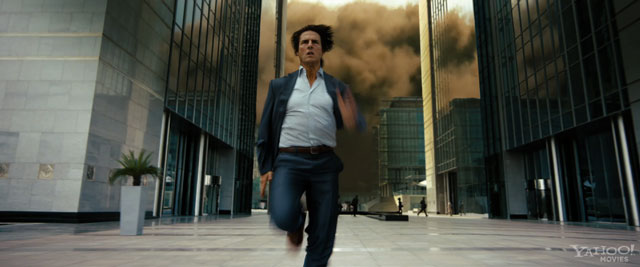
2. Michael Giacchino, "Out for a Run" (from Mission: Impossible--Ghost Protocol) Stormy.
3. Howard Shore & Metric, "Long to Live" (from Cosmopolis)
Haines-y.
4. Danny Elfman, "Main Titles" (from Men in Black 3)
Biker-y.
1. "This Is a Low" by Swipe (Tamara Drewe)
In High Fidelity director Stephen Frears' entertaining 2010 adaptation of Posy Simmonds' Far from the Madding Crowd-inspired comic strip-turned-graphic novel, childish drummer Ben Sergeant (Dominic Cooper) romances Gemma Arterton's title character, a London newspaper columnist and rock music journalist who, unlike most rock music journalists, looks smokin' in a red tanktop and a pair of Daisy Dukes. Ben may be what's known in the U.K. as a git, but the tunes by him and his Britpop band Swipe are pretty damn catchy, especially "This Is a Low," perhaps the catchiest song about a guy getting his ass kicked by his temperamental girlfriend ever written ("This is a call for a domestic dispute/She's got me by the collar and she's going to shoot"), which is why I've added it to the "Assorted Fistful" and "New Cue Revue" blocks on A Fistful of Soundtracks.
Not to be confused with the Blur tune of the same name, "This Is a Low" has an interesting pedigree. In the movie, the song is a source of tension between Swipe and the disgruntled Ben, who wrote "This Is a Low" and is steaming mad that the rest of the band doesn't give him enough credit for his work, but offscreen, it was actually written by Cooper's younger brother Nathan. (In another interesting tidbit, the female vocalist during "This Is a Low" is Sexy Beast star Ray Winstone's daughter Lois, who has a wordless bit part in Tamara Drewe as Ben's female bandmate and ex-girlfriend.)
Cooper's appearance as the younger version of Tony Stark's industrialist father Howard in Captain America: The First Avenger was an amusing bit of casting because in his Tamara Drewe emo garb, Cooper is a dead ringer for the effeminate partyman characters his cinematic son Robert Downey Jr. played in Weird Science and Back to School.
2. "Black Sheep" by The Clash at Demonhead (Scott Pilgrim vs. the World)
One of the best jokes in HBO's Flight of the Conchords TV series was that Bret and Jemaine were nothing like the Bret and Jemaine they imagined themselves to be in the show's fantasy sequences/musical numbers. In those sequences, Bret and Jemaine were expressive, self-confident and brimming with musical ability, while outside those sequences, Bret and Jemaine were inexpressive, socially awkward and sucky as musicians (they were always seen performing the same song, some terrible acoustic clone of Moby's "Bodyrock," and only one person liked their music, Kristen Schaal's child-like stalker Mel). That decision to make Bret and Jemaine untalented musicians that hardly anybody likes is what distinguishes Flight of the Conchords from other shows about fictional wannabe musicians that are filled with elaborate musical numbers but are worshipful of those characters, like The Monkees, Fame and Glee.
A similar joke recurs throughout Bryan Lee O'Malley's Scott Pilgrim graphic novels and Edgar Wright's film version of Pilgrim: Scott (Michael Cera) may be someone we're supposed to root for, despite his dickishness, but the Toronto band he plays bass for, Sex Bob-omb, sounds mediocre (and their Mel is Knives Chau). One of the charms of the original music in Wright's film is the way that Beck, who wrote Sex Bob-omb's material (while Metric, an actual band from Toronto, represented Sex Bob-omb's rival, The Clash at Demonhead, whose wardrobes O'Malley patterned after Metric's), purposely downgraded the quality of his own sound to capture how an amateurish band in the Toronto indie scene would sound like (that is until the climax, when Sex Bob-omb starts to gel at about the same time as Scott gains the power of self-respect).
Scott and his Sex Bob-omb bandmates view the glitzy Clash at Demonhead--led by Scott's ex-girlfriend Envy Adams (Brie Larson)--to be evil corporate sellouts, but the ironic truth is The Clash at Demonhead don't sound as mediocre as Sex Bob-omb do, as we discover during "Black Sheep," sung quite nicely by Larson in the film (while sung by Metric frontwoman Emily Haines in the album version).
"I think that it probably is poking fun at pop music and a band that's just so completely commercialized," said Larson about "Black Sheep" to Collider, "but at the same time, you can't deny that the song is the most infectious song."
No wonder "Black Sheep" was the first tune off the Pilgrim song soundtrack that was introduced to the public. And no wonder Heather Morris likes to do what I imagine are butt crunches to "Black Sheep" while she hears it on her iPod.
3. "Odyssey" by Andromeda (Buck Rogers in the 25th Century, "Space Rockers")
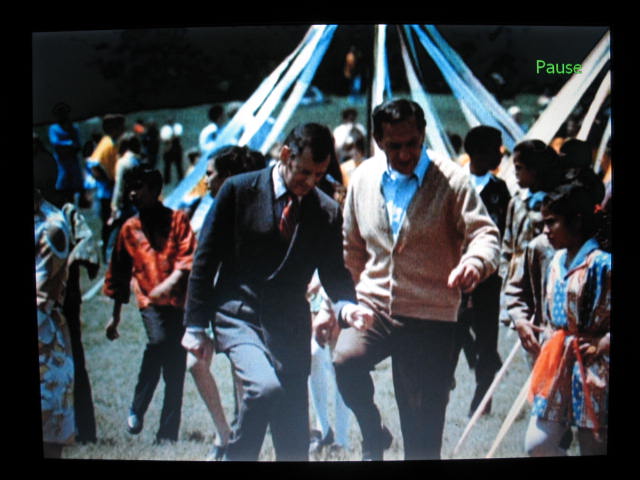
If Buck Rogers in the 25th Century is as accurate about the 25th century as I expect it to be, then in the future, we'll all be dancing with some giant rubber band/hula hoop/glowstick thing wrapped around us like we're some cross between a raver and Tony Randall and Jack Klugman awkwardly doing the Maypole dance in Central Park in the opening credits of The Odd Couple.
The dancing during the Buck Rogers "Space Rockers" episode may be on the lame side, but the music isn't. Scottish composer Johnny Harris, whose other dope contribution to film and TV music is the funktastic score to the 1970 British psychological thriller Fragment of Fear, came up with the proto-Daft Punk synth-pop instrumental sound of Andromeda, the 25th century's most popular rock band.
Twelve years before actor/song-and-dance man Jerry Orbach took on his most famous and final role, Law & Order's Detective Lennie Briscoe (sort of a kinder, gentler version of his crooked cop character in Prince of the City), he was on the opposite side of the law as Andromeda's evil manager Lars Mangros, who plots to use the synth-pop trio's music as a form of mind control on its teen fans.
Besides its guest stars (in addition to Orbach, the episode also features a Landers sister and Bull Shannon, or as I prefer to remember Richard Moll because I'm a Batman: The Animated Series fan, Two-Face), "Space Rockers" is my favorite non-Princess Ardala Buck Rogers episode because of the catchy "Odyssey." The Harris instrumental experienced a bit of a resurgence in 2004 when it appeared on the playlist of the Grand Theft Auto: San Andreas funk radio station Bounce FM.
"Odyssey" is surprisingly good synth-pop that's aged well. (The opposite of "Odyssey"--a.k.a. the worst synth-pop ever--has to be that wack "I Am America" song in Herman Cain's weird and creepy cigarette-smoking campaign ad, recorded by some right-wing version of Lady Gaga.) The instrumental is ideal popping-and-locking music. Speaking of which, the Andromeda footage in "Space Rockers" would be much more badass if the Jabbawockeez were on the dance floor instead of those whitebread-looking rubber band/hula hoop/glowstick ravers because the Jabbawockeez are what 25th-century dancing will look more like.
4. "I Would Die 4 U/Baby I'm a Star" by The Kid (Purple Rain)
Actually, every song by Prince's onscreen alter ego The Kid is not terrible. But the one-two punch of "I Would Die 4 U" and "Baby I'm a Star" has to be my favorite part of both the movie's performance footage and the Purple Rain album. As Jeremy Ohmes notes in PopMatters, "If 'I Would Die 4 U' was Purple Rain's spiritually anguished yin, then 'Baby I'm a Star' was its cocky, narcissistic yang... More than any other song on Purple Rain, 'Baby I'm a Star' documents the unbridled energy and graceful sleaziness that was Prince live."
Universal's Scott Pilgrim vs. the World, the adaptation of Bryan Lee O'Malley's popular comics by one of my favorite newer filmmakers, Shaun of the Dead director Edgar Wright, doesn't come out until August. But you can get a sneak peek of the star-studded soundtrack, thanks to the Toronto band Metric, which posted on Facebook this weekend one of several original songs they contributed to Pilgrim.
Metric provided the sounds for The Clash at Demonhead, one of the title bassist hero's fictional musical rivals, while Beck will represent Scott's own band Sex Bob-omb, and Broken Social Scene will represent another fictional band, Crash and the Boys.
Like everything else I've heard from Metric, "Black Sheep" sounds terrific. Hit the "Become a Fan" button on their Facebook page to hear "Black Sheep."