The following contains spoilers for the first-season finale of The Magicians.
So Syfy's bawdy and foul-mouthed The Magicians, which wrapped up its first season earlier this week, is Harry Potter for grown-ups, right? Well, I wouldn't really know. I never read any of J.K. Rowling's novels, and I've watched only Harry Potter and the Philosopher's Stone, better known in America as Harry Potter and the Sorcerer's Stone. I found the 2001 Chris Columbus movie to be a ponderous slog back in 2002, so I never sat through another Harry Potter flick again. Not even Daniel Radcliffe can sit through most of his own Potter movies: he actually dislikes most of his performances as the titular boy wizard ("My acting is very one-note and I can see I got complacent and what I was trying to do just didn't come across," he once admitted) and considers his performance in the fifth movie to be his least flawed.
Potter is a franchise that just won't die, even after I resisted watching the seven other Potter movies for so long because of both the tedium of much of the 152-minute (!) first movie and the fact that the Potter franchise is white as fuck. Universal opened the Wizarding World of Harry Potter attraction at its Universal Studios Hollywood theme park last weekend. In July, the Wizarding World attraction will be followed by the West End premiere of Harry Potter and the Cursed Child, a two-part stage play that takes place 19 years after the events of Rowling's final Potter novel, and then in November, Warner Bros. will attempt to build a series of Potter prequel movies out of the 2001 Rowling book Fantastic Beasts and Where to Find Them, a fake school textbook about the creatures Harry and his Hogwarts classmates encountered in the Potter novels.
So because of the onslaught of all this Potter shit (and because that new Fantastic Beasts teaser trailer actually looks enticing), I've lately been considering doing a rewatch of Sorcerer's Stone and a marathon in which I would be viewing the Potter sequels for the first time, as homework for the AFOS blog's "I Can't Believe I've Never Seen It Till Now!" series. For now though, if I want my magic school genre fix, I prefer Syfy's adaptation of Lev Grossman's Magicians trilogy, a series of novels I was unfamiliar with before the January debut of the Syfy version, which has been renewed for a second season.
"Potter for grown-ups"--the most frequently repeated shorthand description of The Magicians by the press--isn't a completely accurate breakdown of the show, although there are a few campus scenes of beloved character actors (whattup, "Cutthroat Bitch"!) teaching difficult sorcery techniques to the younger cast members, just like the only scenes in Sorcerer's Stone that didn't make me snooze. In its first season, The Magicians has been more like a millennial In the Mouth of Madness, which, for me, is a more enticing hook than "Potter for grown-ups."
Occasionally on Friday, I discuss the week's best first-run animated series episode I saw. It's the "Brokedown Merry-Go-Round" Show of the Week. Stream "Brokedown Merry-Go-Round," my one-hour mix of original score tracks from animated shows or movies, right now!
When The Venture Bros. pulled the in medias res trick--an overused storytelling device Rick and Morty, another equally great animated comedy from Team Venture's home network of Adult Swim, made fun of a few months ago--only 25 seconds into "A Party for Tarzan," I was worried. "No! Not you too, Astrobase Go," I thought to myself.
Fortunately, the episode's deployment of in medias res turned out to be a parody of Martin Scorsese's in medias res moments from the opening title sequences of GoodFellas and Casino (as well as Raging Bull). I almost forgot that Scorsese actually did this, decades before Morty Smith would lose his mind on the Purge planet, when an aspiring screenwriter on that planet pissed Morty off by starting his story at the point where it got interesting instead of where its timeframe actually began.
Set during a night when Gary, who doesn't enjoy the homicidal part of henching, reluctantly executes an arch in the Pine Barrens as dirty work and Dr. Mrs. the Monarch experiences some similar hesitation while Wide Wale gives her the chance to pull the trigger on the man she thinks is the supervillain-killing Blue Morpho, "A Party for Tarzan" ranks up there with Community's "Contemporary American Poultry" episode and Mr. Show's hilarious "Pallies" sketch as an entertaining Scorsese parody. "Pallies" was actually more of a parody of the Bill the Butcher-esque treatment commercial TV has subjected all of Scorsese's R-rated movies to than a parody of the director's signature filmmaking techniques, but it's still a great little sketch about the violence of GoodFellas.
"A Party for Tarzan," the penultimate episode of The Venture Bros.' sixth season, even has in common with "Pallies" the brief presence of Paul F. Tompkins. The Mr. Show alum reprises his role from earlier this season as the original Morpho, whose 1973 master plan of disguising himself as the then-closeted Billie Jean King and nakedly seducing Dr. Z (Jackson Publick) into relinquishing a priceless statuette known as the Jade Dragon (while somehow tucking in his dick like Buffalo Bill)--which is detailed in a flashback-within-a-flashback--is definitely something you would never have seen on The Green Hornet.
If you're going to give Patrick Warburton and Mike Sinterniklaas an entire episode off from voicing Brock and Dean, respectively, you better damn well make the episode worthwhile. The Scorsesean flashback gimmick Doc Hammer went with for the episode he scripted--perhaps to compensate for the lack of Warburton and Sinterniklaas--could have turned out to be annoying, like it would have probably been in the hands of some lesser writer whose go-to Scorsese references are limited to Raging Bull and GoodFellas. But luckily, the gimmick works. When Hammer's making fun of Scorsese's overreliance on "Gimme Shelter" instead of recreating Joe Pesci's most profane lines from GoodFellas and Casino, that's how you know "A Party for Tarzan" is a solid Scorsese spoof. The Stones and blues music soundalikes Venture Bros. composer J.G. Thirlwell came up with in place of too-pricey-to-clear Scorsese movie soundtrack cuts like "Gimme Shelter" or "Mannish Boy" are funnier than using the actual songs themselves.
Between the references to Scorsese's 1987 video for Michael Jackson's "Bad" during "It Happening One Night" and the homages to Scorsese's documentary narration-inspired style throughout "A Party for Tarzan," Publick and Hammer must have revisited much of Scorsese's work while looking for inspiration for the New York-based sixth season and planning the whole season out. Doing that must have given Publick and Hammer a renewed appreciation for the legendary New York director whose name is interestingly one of the most frequently misspelled, even by filmmakers who claim to be fans of his work.
Occasionally on Friday, I discuss the week's best first-run animated series episode I saw. It's the "Brokedown Merry-Go-Round" Show of the Week. Stream "Brokedown Merry-Go-Round," my one-hour mix of original score tracks from animated shows or movies, right now!
Brock might not think so, but The Venture Bros.' move to big, bad New York is the best thing to happen to the OSI's toughest agent, probably since the life-changing day he bought his first Zeppelin LP. "It Happening One Night" is the latest Venture Bros. episode to make abundantly clear that the Venture family bodyguard has been off his game ever since he rejoined Team Venture in New York.
Samson's clearly no match for the New York supervillains he's had to tussle with ever since the newly wealthy Dr. Venture went from being small potatoes to an antagonist everyone in the Guild of Calamitous Intent wants to arch (Brock's new fuckbuddy Warriana has had to save Brock twice), and now in "It Happening One Night," he thinks the ninja-themed family restaurant where Hank has his dinner date with Sirena Ong is an actual ninja hideout (the ninja restaurant is a real-life thing in Tribeca, by the way). So Brock roughs up the waiters, including Jared (Nathan Fillion), a.k.a. the Brown Widow, who's so badly in debt he makes flat-broke Peter Parker in Spider-Man 2 look like a Kardashian kid.
Ninja New York in Tribeca
The Venture Bros. version of Ninja New York
Earlier this season, Brock told Hank to Google one of his heroes, Steve McQueen. Maybe if Brock bothered to do the same kind of research online while trying to keep an eye on Hank during his night out with Wide Wale's daughter, he wouldn't have wound up looking kind of stupid after being told that the ninja stronghold he infiltrated--he and his temporary sidekick Rocco (Mark Gagliardi), the Ong family bodyguard Sirena so detests, even go through the trouble of knocking a couple of waiters out and donning their fake ninja garb--is merely a trendy sushi joint.
A lapse in judgment like that may make Brock look bad as a spy who was trained to always be aware of his surroundings, but it's a good creative move for the show, which clearly struggled over what to do with Brock a few seasons ago. I have a theory for why Venture Bros. creator Jackson Publick separated Brock from the Ventures for a while and replaced him with reformed pedophile Sgt. Hatred: he simply got bored with having Brock always save the day. That kind of thing makes for terrific action sequences, but it can also become boring in the middle of a comedy show that's primarily about mediocrity. Brock was becoming too perfect a human being, even though this Swedish murder machine will always somehow be a funny character, thanks to whatever the fuck Patrick Warburton brings to the page, as well as because of the brilliant thing Publick and Doc Hammer wanted to do with Brock from the start.
They wanted to take Race Bannon and make him both psychotic on the battlefield (go revisit "Victor. Echo. November." on Hulu if you've forgotten how psychotic Brock can really be) and a frequently bored-sounding blue-collar type who viewed the guarding of a narcissistic super-scientist like Dr. Venture as work that's beneath him, even though he likes Dean and Hank (and H.E.L.P.e.R. too). It's like how Benson hated being the butler to the Tates but was kind to Jessica, Corinne and Billy because they were the only Tates who weren't snooty or racist. A.V. Club contributor Kevin Johnson's weird assessment that Brock hates Dean and Hank (in a typo-ridden guest review the A.V. Club recently posted when its regular Venture Bros. reviewer was gone for a week) is a total misreading of Brock's relationship with them. The OSI agent's Benson-style attachment to these boys who so badly need someone like him to guide them through--and away from--the craziness Dr. Venture brought into their lives is an essential part of The Venture Bros. It brings some genuine warmth to the show but never crosses into sentimentality (someone in a Reddit forum about Johnson's review interestingly counteracted his misreading by astutely pointing out that whenever Brock gets frustrated with Dean or Hank, it brings to mind Louis C.K. whenever he talks about getting annoyed by his daughters).
Speaking of Benson, competence can become comedy kryptonite, so when Benson became too competent and sensible--and popular--to continue being around the craziness of the other characters on Soap, he was spun off into his own show. Publick and Hammer's way of keeping Brock's similar type of competence from becoming stale was not to give Brock his own show but to sideline Brock and give him a Craig-era-Bond-like identity crisis as a professional killer (like when he went off the grid and lived with the duo of Steve Summers and his boyfriend Sasquatch, the show's parody of The Six Million Dollar Man's Bigfoot storyline) or to bring him down to Earth and depower him a bit, like how Publick and Hammer are depowering him now in New York. I bet that's why Publick and Hammer reinstated him as the family's bodyguard: they finally figured out how to make Brock interesting again, and the soft reboot the show is experiencing in New York has a lot to do with that.
Brock's arc this season is basically "if 007 had to fight someone like MODOK, he would definitely lose, and if you put 007 in the bedroom with a woman like Warriana, he would definitely not be in charge in the bedroom like he's always written to be in the Bond movies." It's an enjoyable way to play around with the spy genre assassin character who's always good at everything and to mock the wish-fulfillment fantasy side of the Bond movies. The Swedish murder machine is at his most interesting when he gets knocked around a bit, whether in battle or in the bedroom, like in "Tanks for Nuthin'."
Dr. Mrs. the Monarch, the voice of reason in the Monarch household, is also being similarly depowered a bit, even though as a Guild member, she now has more power and authority than her husband. If she weren't so distracted by both the stress of being Councilwoman 1 and the marital discord that's developed due to her rise in power, she'd be her old smarter self again and she'd be better able to track down the supervillain-killing mystery man who's been creating a bloodbath within the Guild (but is doing so accidentally, of course). The Monarch uses that state of distractedness--and his wife's love of role-playing during sex--to trick her into getting tranqed and to lure her away from finding out he's been arching other Guild members as the Blue Morpho in order to have Dr. Venture all to himself again.
There have been some complaints in the past from Venture Bros. viewers about how often pedophilia has been used as humor on the show (speaking of which, I rewatched "Everybody Comes to Hank's" the other day because of this week's focus on Hank's love life and was surprised by how the revelation that Dermott Fictel was the product of a relationship between a Woody Allen-esque Dr. Venture and the underage president of his fan club was a rare reference to wrong-on-so-many-levels sex that wasn't totally played for laughs, and, man, Publick and Hammer were really sticking it to Allen in that scene too). But lately, ever since the tranq-addicted Pirate Captain's relapse, I feel like the constant tranqing of characters on the show has become a similarly tiresome gag. Dr. Mrs. the Monarch becomes the latest character to get tranqed--perhaps the repetition of the dart gags is intended to be a joke about how the Morpho and his son (and even the new villains this week) are the hackiest and least creative people when it comes to taking down their enemies--and this umpteenth tranqing sort of ruins the lovely sight of Dr. Mrs. the Monarch cosplaying as Daisy Mae from Li'l Abner and not even bothering to Deep South-ify her incongruous Harvey Fierstein accent.
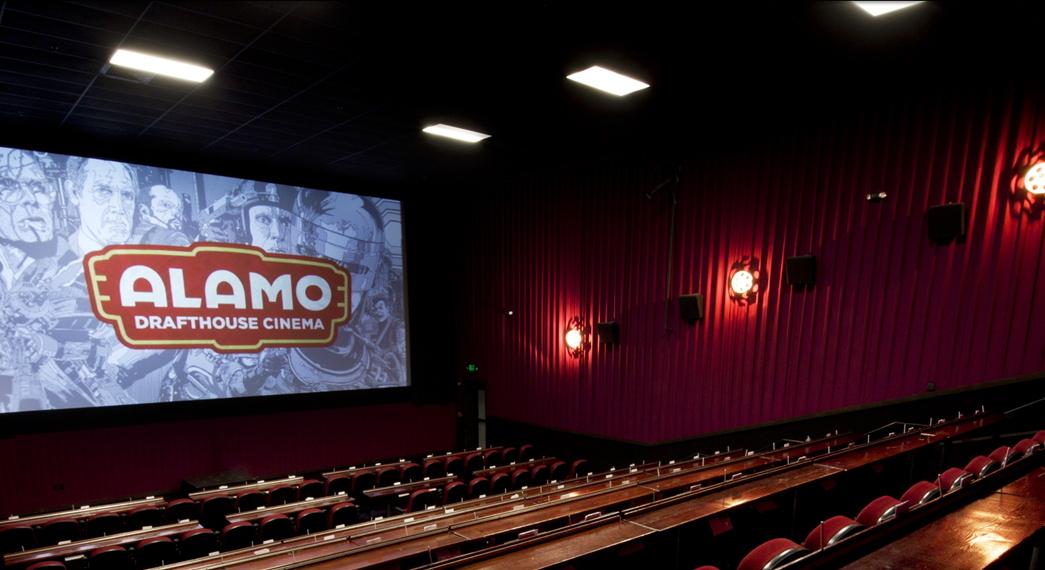
Spy wasn't just the last entry in the AFOS blog's ongoing and year-long Throwback Thursday series before I took a three-week-long break from blogging for most of July. The Paul Feig flick is also the final movie I'll be watching inside a theater. I'm disappointed that I'll have to wait to see Ant-Man, Trainwreck, Mission: Impossible--Rogue Nation, Spectre, Ryan Coogler's Creed and possibly The Force Awakens until they hit Blu-ray. After being subjected to yet another theater audience member switching on his or her glowing smartphone screen light in the theater--this happened in the middle of a screening of Spy--I've simply had it. I said to myself, "That's it. I'm not watching another movie in a theater until Alamo Drafthouse actually opens that San Francisco Drafthouse theater they've been talking about opening since the Bush (Sr.) Administration."
It's not like I'm an absolute fascist about it. Unlike that psycho in Florida who shot and killed someone in a theater for texting during a bunch of movie trailers, I'm not distracted by moviegoers who check their texts during the trailers. They're commercials. I don't care. Neither am I distracted by those who use their phones as flashlights to help them see their way out while the closing credits are rolling and I'm waiting for some lame and pointless post-credits scene to arrive.
But when some moron in one of the front rows (and I can see them from afar because ever since college, I always sit in the farthest back row, due to my hatred of having my seat get kicked from behind me by strangers when I was younger) is flicking on his or her phone light during the feature presentation, in the middle of an action sequence, that's when I really get distracted and angry. I never want to be that guy who either tells people to turn off their phones or shushes a noisy talker, which is why I've never done either of those things. But I've always felt like doing so. Rude people in theaters can't be reasoned with, so why bother?
I also never want to be that guy who complains to the theater staff to get them to reprimand some unruly moron, simply because multiplex employees don't do shit. But when that smartphone zombie in one of the front rows flicked on his screen in the middle of one of Melissa McCarthy's Spy action sequences, that was the last straw for me. My tolerance for this nonsense has ended. He switched it on only once during Spy, which actually isn't as awful as the imbecile who brought his tablet to Kingsman: The Secret Service and kept switching it on during the feature presentation (that tablet zombie at the Kingsman screening is reason number 4,081 for why I despise the Silicon Valley tech world, a world I regret having worked for during the '00s). But despite the Spy screening being less aggravating than the Kingsman screening, my tolerance for smartphone or tablet zombies inside theaters is kaput. Why the fuck does this always happen during spy movies?
During the last 1/2 hr of MISSION IMPOSSIBLE: GHOST PROTOCOL, the woman next to me was constantly texting. Still trying to fathom this. 1/2
I'll say it and I'll say it again: movie theaters don't need timid or indifferent ushers to handle texters. That squeaky-voiced teen from The Simpsons wouldn't have the ability or the guts to handle them anyway. Movie theaters need bouncers, and not just a regular bouncer: a Samoan bouncer. Samoan bouncers rule.
I'm not as violent as a bouncer. But smartphone zombies who check their texts in the movie theater (so that fucking phone light emerges out of nowhere and distracts everyone who's paying attention to the movie) drive me so bonkers--much more so than even people who talk out loud in the theater--that I wish Alamo Drafthouse, the theater chain that has broken the mold and won praise for actually doing something about texters and kicking them out of its theaters, would go the extra mile and not just kick them out. I would like Drafthouse to also take them to a back room and show them the respect and kindness they deserve. Here's an example of that kindness.
It's simple etiquette, man. I know there are moviegoers of color out there who, unlike this moviegoer of color, think it's okay to switch their goddamn flashlight on in the middle of the feature presentation. To them, I would like to say the following: don't you fucking frame this as "Man, enforcing etiquette like that is #peak" (as in Caucasity, for people who don't speak Desus Nice-ese). No, it's not.
I like making fun of moments of Caucasity as much as the next brown man, but someone telling you to shut off your phone in the theater isn't white privilege exerting itself. It's not white man etiquette. It's human etiquette.
#TheConjuring wasn't scary.The #millenials in the audience who couldn't stop texting, talking and taking pics during it were.
You're not just rudely distracting everyone who paid to watch a movie, whether the movie is good or Michael Bay; they didn't pay to watch you play with your phone. You're also making everything about yourself and diverting everyone's attentions in the theater to you, attention whore. Now that--the petulant "I have the right to keep my phone on whenever I want to!" defense--is acting exactly like the privileged white morons you so despise.
One of those privileged white morons is Madonna. You want to behave just like Madonna? I'm glad to see Lin-Manuel Miranda setting an example for how to handle lousy phone etiquette by banning Madonna from attending his Broadway musical Hamilton after she texted during one of Hamilton's Off-Broadway performances. "That bitch was on her phone. You couldn't miss it from the stage. It was a black void of the audience in front of us and her face there perfectly lit by the light of her iPhone through three-quarters of the show," grumbled Jonathan Groff, Miranda's Hamilton co-star. I'm even more glad to see Patti LuPone verbally and physically getting tough on these tech addicts who come to Broadway performances and show no respect for the actors. LuPone once paused in the middle of one of her Gypsy musical numbers to chew out an audience member who was snapping photos. Then a couple of weeks ago, she stepped out of character again during a performance of Shows for Days to confiscate a phone from a texter who's another one of what LuPone perfectly describes as "self-absorbed and inconsiderate audience members who are controlled by their phones."
Now if only those indifferent movie theater owners whom Matt Zoller Seitz complains about in his frequent tweets about lousy theater behavior would be as tough on morons in their theaters as LuPone has been on morons in hers. I like the writing of Anil Dash, but his idiotic defense of texting in theaters is both a lowlight of his writing and reason number 4,082 for why I hate the tech world. I'll always admire Seitz for his impassioned response to Dash's piece.
After I threw in the towel after seeing Spy and said, "I give up dealing with this shit," I happened to stumble into a comment about lousy theater behavior that was written a long time ago by one of my AFOS radio station listeners, graphic artist and Drafthouse theater fan Vincent Bernard, over in the comments section of the Drafthouse-owned Birth.Movies.Death., back when it was known as Badass Digest. Vincent's opinion is exactly the same as mine. He said, "When I want to watch a movie, I want to watch a movie. I don't give a flying fuck what anyone else thinks or feels about it. I'm trying to immerse myself in art, not sing Kumbaya around a campfire. I treat film the way I treat all serious art. I certainly don't want to read great literature or view great paintings surrounded by ill-mannered buffoons, so why should film be any different?"
That's precisely how I feel about moviegoing: it gives you the opportunity to immerse yourself in visual art, and you should be able to do that without any distractions or interruptions. I'll still enjoy the ability to be free from any distractions and immerse myself in a movie, which is what the Drafthouse folks--and now over on the stage acting side of showbiz, Lin-Manuel Miranda and Patti "The Cut-Wife" LuPone--are fighting so hard to preserve. I just won't be doing so in a theater anymore, until the day Drafthouse finally opens its Mission District theater. If you can't even manage to immerse yourself for two hours, you have no business being inside a theater. Just leave and take your shitty little screen with you. I hope a car hits you on your way out because you were too stupid to look where you're going, and I hope that car was driven by someone who wasn't paying attention to the wheel because that person was too busy texting.
When I recently wrote aboutThe Wolf of Wall Street, I said, "A lesser filmmaker would rain down judgment on Travis [in Taxi Driver]... or he'd make Rupert [in The King of Comedy] and Belfort... experience a personality change and become remorseful after their short prison time. But not Scorsese. He wants to sit back, let the audience judge Travis/Rupert/Jordan for themselves and see what happens. If many in the audience squirm over their behavior and the repercussions, that's great. If others view them as their hero or spirit animal--like how several Homer Simpsons out there cheered The Wolf of Wall Street on as if it's School of Hard Knockers... to the dismay of those who completely sympathize with Belfort's victims--that's great too. It's weird but great. As for a man named John Hinckley..."
Right-wing film critic Kyle Smith definitely belongs in the "It's weird" category. If you stayed away from Twitter all last week like I've been frequently doing lately, you might have missed the appalled reactions to Smith's umpteenth attempt to troll everyone: "Women are not capable of understanding GoodFellas," his so-ridiculous-it-could-be-easily-mistaken-for-a-ClickHole-parody New York Post op-ed.
It's funny how--like a clown--the New York Post published Smith's op-ed the day after GoodFellas re-entered my consciousness when I stumbled into the film's 25th Anniversary Blu-ray in a rack of Blu-rays at Target, and I became worried that I'd have to double-dip because the new Blu-ray contains a cast and crew commentrak with Scorsese, Ray Liotta, Lorraine Bracco and Paul Sorvino (I was relieved to find out a few days later that my copy of the 2004 GoodFellas DVD contains the same commentrak). In his article, Smith says things like "To a woman, the GoodFellas are lowlifes. To guys, they're hilarious, they're heroes. They rule the roost." Remember Henry Hill's coke-fueled meltdown on his last day as a wiseguy? Yeah, that was really heroic.
Fans of GoodFellas, both male and female, went apeshit on Twitter over Smith's sweeping statement--his op-ed is such a hacky '80s stand-up routine about the differences between men and women that I can practically smell the brick wall--but they went apeshit in sardonic and entertaining ways that made nuance-free, often way-too-shrill-and-humorless-for-my-tastes Twitter worth reading again.
That NY Post GOODFELLAS article akin to having someone explain to you that BREAKING BAD was all about how Walter White is the man.
Why do right-wing film critics often misread gangster movies as endorsements of gangster behavior, just like how so many right-wingers misinterpret rap lyrics? Smith's misreading of one of his favorite mob movies as Entourage with guns (I'm looking forward to someone--with way too much time on their hands--mocking the much-ridiculed Smith article by replacing GoodFellas' dialogue with dude-bro dialogue from Entourage) reminds me of when Armond White, who currently writes for the right-wing National Review, panned Better Luck Tomorrow in 2003 because he was dissatisfied with what he thought was the Justin Lin film's endorsement of the Asian American friends' slide into crime and bloodshed. Better Luck wasn't endorsing and fetishizing the murder in the garage towards the end of the movie, you old conservative fuck. Same to you, Mr. Rosso lookalike who prefers his entertainment to be Pollyannaish and, like White, condescendingly accused Lin of selling out his own people by making an "empty and amoral" portrayal of Asian Americans in Better Luck.
What GoodFellas and Better Luck--and in a not-as-gory way, The Wolf of Wall Street--are doing is initially reveling in the allure of a gangster lifestyle (for me, the most alluring part of the gangster lifestyle in Better Luck was Roger Fan's sociopathic character beating up at a party a racist jock who needed his ass kicked). Those films have to do so in order to sell you on why these characters are attracted to crime--Scorsese once described the Copacabana sequence in GoodFellas as a moment when the gangster lifestyle seduces Henry--but then they kick the seat from under you and switch to focusing on the downsides of such a lifestyle. Unlike the boring lifestyle porn of Entourage, those films intend to undermine the gangster fantasy they introduced.
GoodFellas excels at its hard right-hand turn into the downsides of its characters' behavior by not stupidly opting for the bad-movie-screenwriting route of having a character--or an on-the-nose pop song--flat out say, "This is bad, mmm-kay" (Scorsese's terrific use of existing songs to comment on a scene, but only "in an oblique way," was partly why existing songs from GoodFellas like "Monkey Man" were all over the playlist for the now-defunct AFOS block "Rock Box"). The pre-MTV Films, pre-DJ Shadow cut of Better Luck excels at that hard right-hand turn as well. The MTV Films cut? Uh, not so much. Lin, perhaps more rattled by Mr. Rosso's outburst at Sundance than he'd let on, tweaked the ending in the MTV Films version so that the characters, including a pre-Fast and the FuriousHan Seoul-Oh, ended up being a little more remorseful about their actions.
Of course Smith wouldn't be aware that a woman edited GoodFellas because he strikes me as an idiot who never reads the credits on the boxes of things. Last time I checked, reading the credits of things is one of the requirements of being a film critic. The outcry over the New York Post article is a good time--hell, it's always a good time--to reassess or pay more attention to longtime Scorsese editor Thelma Schoonmaker's pivotal role in making GoodFellas a classic of adrenalized pacing, rock n' roll filmmaking and moral ambiguity (my favorite line from Schoonmaker about the editing of GoodFellas was her reply to someone's bafflement over how such a demure and unassuming lady could be the cutter of Scorsese's most violent works: "Ah, but they aren't violent until I've edited them").
Scorsese and Schoonmaker's partnership ranks as one of the all-time greatest director/editor partnerships. Without Schoonmaker in the editing suite, I don't think Scorsese would have been able to take four hours' worth of material he shot for The Wolf of Wall Street and whittle all that material down to three hours. Yeah, three hours can be demanding on someone with a weak bladder, but that's why I never buy any beverages at the movie theater or drink anything before the feature presentation.
The outcry over the New York Post article is also a good time to remember that all Rupert Murdoch's right-wing daily is good for is lining a bird cage. One of the 4,080 things I learned from listening to Public Enemy in its prime was to never take anything published by the New York Post seriously. Like Chuck D said, it ain't worth the paper it's printed on.
Every Throwback Thursday, I randomly pull out from my desk cabinet--with my eyes closed--a movie ticket I saved. Then I discuss the movie on the ticket and maybe a little bit of its score, which might be now streaming on AFOS.
When many film directors reach their 60s or 70s and continue to direct, they tend to lose their spark. They're simply no longer the inventive or energetic filmmakers we used to know from their earlier work. Even the most beloved late-night hosts get this way too. In a 2012 WNYC interview, David Letterman, who retired from the late-night airwaves, admitted that one of the differences between his period at NBC, where he hosted two groundbreaking and anarchic talk shows, and the slightly less adventurousLate Show on CBS was simply that "I'm 65; I don't have the energy I had when I was 35."
As for directors as they age, they become either more hackneyed and sentimental or more out-of-touch and complacent--so their later films suffer as a result, and for fans of the original Star Wars trilogy, the worst example of this was the pointless and woodenly acted (except for in the case of Ewan McGregor) Star Wars prequels George Lucas directed after a 22-year hiatus from the director's chair. As the now-defunct Stylus magazine points out in a depressing 2007 overview of bold '70s filmmakers who had trouble sustaining their hot streak after their first few films, "Boldness and originality becomes [sic] harder to achieve as time moves on and business interests close in."
Another example of a distinctive director losing his spark is the late Billy Wilder. Although Wilder remained his usual sharp-witted self in interviews (man, I really ought to check out Cameron Crowe's Conversations with Wilder from the public library one of these days), his movies towards the end of his career aren't as fondly remembered as earlier Wilder masterpieces like Double Indemnity or Some Like It Hot. You don't exactly see cineastes jumping for joy over Buddy Buddy.
But there are a couple of recent exceptions to the theory that as filmmakers get older, they lose their edge. George Miller, who's now 70, was in his late 60s when he shot this summer's incredible Mad Max: Fury Road, and Martin Scorsese was 70 when he directed The Wolf of Wall Street, my favorite of the five films Scorsese has made with Leonardo DiCaprio so far.
Scorsese's invaluable and longtime editor Thelma Schoonmaker--who, together with Scorsese, remarkably whittled down four hours' worth of largely improvised material between DiCaprio and the rest of The Wolf of Wall Street's ensemble cast to 179 minutes--once said to Variety, "Marty's movies are so unusual. He doesn't repeat himself, so [the studios] don't know what to expect." Eh, actually, Scorsese's repeated himself--existing song-wise, that is. His umpteenth use of the Rolling Stones' "Gimme Shelter" in The Departed was a sign of a filmmaker who needed to take a break for a while from hitting repeat on Let It Bleed tracks on his iPod.
But otherwise, Schoonmaker's right. Scorsese's films have never had a problem of being interchangeable (he revisits motifs and themes like greed, media attention, addiction or religious guilt but is somehow able to do so without becoming repetitive and derivative), whereas many of his filmmaking peers have ended up making the same film three or four times--another example of when directors show their age. "Gangs of New York is so different from The Aviator, which was so different from The Departed or Age of Innocence or Kundun," said Schoonmaker to HitFix. And after Scorsese directed 2011's Hugo, he followed up his first family film--as well as one of his least controversial works, unless you're a stickler for accuracy in terms of how the Eiffel Tower gets depicted on film--with perhaps his most sexually explicit film to date, The Wolf of Wall Street.
Adapted from the memoirs of former stockbroker and former cokehead Jordan Belfort by screenwriter Terence Winter (who created and showran Boardwalk Empire, which Scorsese co-produced), the 2013 Scorsese flick reunited the New York filmmaker with an old pal: controversy. Many haters of the film felt it glorified the scummy and misogynist behavior of Belfort the white-collar criminal and his cronies at the Wall Street firm Stratton Oakmont. Other haters--particularly audience members who are about as old as Scorsese or older than him--found the amount of debauchery on display in the film to be excessive. They wished The Wolf of Wall Street contained less debauchery, even after Scorsese already kept the film from getting stamped with a financially risky NC-17 by making a few additional edits, like turning to Rob Legato, the Hugo visual FX wizard whom I'll always remember for giving away on Reading Rainbow the FX magicians' secret of how he filmed the Star Trek: The Next Generation transporter beam FX (hint: glitter stirred in a glass of water), and his team to digitally insert an Eyes Wide Shut-style chair as a visual barricade for a gay orgy scene.
But the excessiveness makes perfect sense in The Wolf of Wall Street: it's a film about hedonistic Wall Street culture and all its emptiness (as well as its enticing qualities), and it would have been inane to depict that culture in a watered-down, Hallmark Channel-friendly way. In the GQ blog post "Olds Heckle The Wolf of Wall Street for Being Too Awesome," Scott Christian nicely criticized the olds and their disgust with Scorsese's focus this time on sex--instead of the usual GoodFellas-style violence he's most known for--when he said, "He's not some pervy old man, he's actually trying to show us how fractured and ugly these characters are... What is shocking is that people are so outraged by a bit of T&A but not by violence. Of course, that's nothing new."
The Wolf of Wall Street is neither a pervy old man's movie nor the shrill cinematic equivalent of an old man shouting at millennials to get off his lawn, which was basically what Aaron Sorkin's The Newsroom was. Scorsese said repeatedly in interviews that he made The Wolf of Wall Street as an expression of his own frustration with how materialism has become a religion in the last 35 years--no wonder Scorsese staged Belfort's office pep talks to his employees as if they're revival meetings--but Scorsese has done something clever with that frustration. The easy way to approach anger over economic inequality and the swindling of ordinary working folk is to turn it into a solemn movie about the Way America Ought to Be, But America's Too Broken and We'll Never Be Able to Fix It. The problem with that kind of movie is that it's been done to death, and it's boring as hell.
When a rare hand-colored print of Georges Méliès' Jules Verne-inspired 1902 silent film A Trip to the Moon was meticulously restored and shown for the first time at Cannes in 2011, the cleaned-up imagery wasn't the only upgrade A Trip to the Moon received. The restored print also contained a new original score provided by the French electronica duo Air of "Surfing on a Rocket" and Virgin Suicides score fame.
Air
Air members Nicolas Godin and Jean-Benoît Dunckel have said that they found the restored Trip to the Moon to be a more liberating film project than The Virgin Suicides. "I don’t think we like doing soundtracks... We are not film composers. It’s a really intense job," said Godin to IFC. "You can’t go on tour, you are at the service of someone, and you are not the boss. You have no freedom. But on this project we were completely free. Basically we were writing the music the day before Cannes, so no one could say a word about it. It was a blank screen. We could do whatever we wanted."
Earlier this week, Godin and Dunckel released their Trip to the Moon themes on the Le Voyage Dans La Lune album from Astralwerks. Because the Méliès film is only 14 minutes long, the release expands upon Air's score material and adds guest vocals by the Brooklyn trio Au Revoir Simone and Victoria Legrand from the Baltimore duo Beach House (the album is twice the length of the restored film, which Astralwerks has also included in its entirety in mp4 form on the release).
The album's Legrand-sung highlight, "Seven Stars," isn't part of the restored film. But like much of the rest of the album, "Seven Stars" is a nice and richly crafted companion piece to the most famous "astronauts fly to moon and commit genocide by poking most of moon's native population with their umbrellas" story ever told.
CBS Sunday Morning's Trip to the Moon-style sun logo for a recent segment about Hugo (Photo source: The Faces of Sunday Morning)
(*) Several years ago, I wrote down an idea for a fantasy movie script that would have presented an alternate history in which there was a top-secret trip to the moon at the turn of the century, and one of the astronauts was Méliès, who, to me, is a fascinating figure and a silent-era genius, even though his films contain yellowface and unseemly French lady armpit hair. This script would have shown how his lunar experiences ended up being the actual inspiration for A Trip to the Moon, even though Méliès would embellish (or simplify) elements of his lunar experiences because real life is far less fanciful (or cost-effective) than the universe Méliès created in his films. I wanted the moon to have facial features like it did in Méliès' film, but this planetoid-sized creature was going to be depicted through modern effects technology and appear as large and craggy as the actual moon. This script idea never went past being an idea on a napkin, or as some people like to call it, a Word document. But Brian Selznick's 2007 graphic novelThe Invention of Hugo Cabretand Scorsese's Oscar-nominated adaptation of the Selznick book have told a better story about Méliès than whatever I envisioned in my head.
Song: "Walk on the Wild Side" by master Hammond B-3 organ player and Beastie Boys "Root Down" sample source Jimmy Smith Released: 1962 Why's it part of the "Rome, Italian Style" playlist?: I first took notice of "Walk on the Wild Side"--not to be confused with the Lou Reed classic of the same name--when I heard it during Martin Scorsese's Casino. I later discovered that Smith's exhilarating instrumental was a cover of a movie theme, Elmer Bernstein's theme from the 1962 New Orleans bordello drama Walk on the Wild Side, which starred Laurence Harvey, Capucine and Jane Fonda (that was an interesting way for Scorsese to insert a shout-out to Bernstein, whom he previously worked with on Cape Fear and The Age of Innocence: he needle-dropped a cover of one of Bernstein's earlier compositions).
The instrumental version of Bernstein's Walk on the Wild Side theme accompanies one of legendary movie title designer Saul Bass' best opening title sequences, which, unlike most of Bass' other sequences, doesn't use any animation and is simply footage of an alley cat, cleverly edited to the tempo of Bernstein's slinky-sounding theme. The catfight at the end of Bass' titles pits a black cat against a white cat. It's like a Real Housewives of Atlanta fight scene with better acting.
Though its lyrics contain gospel-style references to the promised land of heaven, it's odd how this theme from a then-risque '60s movie about New Orleans hoes has become a gospel standard. It's like if Blondie's "Call Me" from American Gigolo got rewritten as "Call Me (Hello Lord)" or something.
Walk on the Wild Side star Jane Fonda models Timbuk2's new "Hitchhiking Ho" line.
Because today marks the centennial of influential composer Bernard Herrmann, CBS News recently assembled a lengthy slideshow/audio clip gallery that's a pretty good overview of Herrmann's career. It's fitting that CBS would be the one to give Herrmann such a thorough and reverent centennial tribute because Herrmann had a long association with the network, from the days when radio was a more dominant medium (Herrmann served as conductor of the CBS Symphony Orchestra and composed score music for countless CBS radio dramas, including Orson Welles' 1938 War of the Worlds broadcast) to the period when CBS conquered TV in addition to radio (Herrmann provided music for several Twilight Zone episodes and composed the anthology show's somber and lesser-known first-season opening title theme).
These days, Herrmann is best known for his brilliant work with Welles, Alfred Hitchcock and Ray Harryhausen, which probably would have irked Herrmann because the famously testy maestro hated being labeled a film composer and wrote for more than just the screen (for instance, he composed an opera based on Wuthering Heights). His final film score, is, to me, his most stunning achievement. Herrmann initially had no interest in working on Martin Scorsese's Taxi Driver, the ultimate vision of '70s New York-as-hell, but then he changed his mind because he liked the part of Paul Schrader's script where Travis Bickle poured peach brandy on his Corn Flakes.
Perhaps because Herrmann knew he wasn't long for this world at the time he wrote it (he finished recording it only a few hours before he died in his sleep on December 24, 1975), the Taxi Driver score sounds like the last few gasps of a dying man, with its thunderous, apocalyptic-sounding percussion, a melancholy theme for alto sax that was performed by an uncredited Ronny Lang and a final cue where the last few notes quote at a funereal pace a previous Herrmann theme, the ominous three-note motif that concludes Psycho.
Be sure to check out the mp3 clips of the Taxi Driver title themes and other Herrmann compositions that CBS News has posted--or enjoy Herrmann's cues from Taxi Driver, The Man Who Knew Too Much, North by Northwest, Vertigo, Psycho, Jason and the Argonauts and Marnie whenever they're streamed during the "Assorted Fistful" block on A Fistful of Soundtracks.
Song: "Jump Into the Fire" by Harry Nilsson Released: 1971 Why's it part of the "Rock Box" playlist?: It's featured in GoodFellas. Some IMDb research revealed that the track is also part of Bottle Shock, The Girl Next Door, A Good Year and a CSI: NY episode. Which moment in GoodFellas does it appear?: It's one of six (!) existing songs in the unforgettable nine-minute "May 11, 1980" sequence that reportedly cost Martin Scorsese an arm and a leg... and a wing.
Last week, the music of Harry Nilsson--from his cover of Fred Neil's "Everybody's Talkin'" that was made famous by Midnight Cowboy to the charming original songs he penned for Robert Altman's Popeye--was the subject of an A.V. Club "Gateways to Geekery" piece. Below the article, several commenters cited "Jump Into the Fire" from Nilsson Schmilsson as the best part of GoodFellas.
The epic and apocalyptic-sounding "Jump Into the Fire" drum solo by Derek and the Dominos member and Gotham City police commissioner Jim Gordon is a great match with the cocaine-fueled descent of gangster Henry Hill (Ray Liotta). In the frenetic sequence (hey look, it's a young Kevin Corrigan as Henry's wheelchair-bound brother--and there's Isiah Whitlock Jr. not saying sheeeeeeeeeiiiiit!), GoodFellas music editor Christopher Brooks mashed up the kickass Nilsson track with The Stones' "Memo from Turner," a live version of The Who's "Magic Bus," The Stones' "Monkey Man," Muddy Waters' "Mannish Boy" and George Harrison's "What Is Life?" ("Ooh, that was an expensive scene," recalled Brooks in a fascinating GoodFellas oral history that GQ published last year). But the best piece of music during that sequence is silence. I'm referring to the ominous silence that surrounds Lois (Welker White), the smug and perpetually stoned babysitter/drug mule, as she pesters Henry about driving her home to pick up a lucky hat she can't fly on planes without, which leads him to his arrest. I love how Scorsese chose to leave that moment--the moment right before Henry gets pinched--unscored.
"He's one of the few people who knows how to match music and picture. It's not just about taking a great record and just slapping it up in there," said Scorsese fan Spike Lee in GQ's oral history. "That scene is directed, obviously, by someone who's used cocaine! Simple as that. And used it a lot. And if you've never tried cocaine, which I haven't, now I know what it feels like, after watching that scene."