Showing posts with label Kendrick Lamar. Show all posts
Friday, April 29, 2016
A memo to pop stars: If you're filming a highly stylized visual album and you take your preschooler daughter to work one day, she's going to get antsy
I've watched Beyoncé's Lemonade visual album only once, when HBO Go had the streaming rights to the visual album for just one day (I'm not a Tidal subscriber, and $9.99 a month is too steep for my blood--lower the price, Hov). Yet the sounds of Lemonade are still reverberating in my head.
The anthemic, Just Blaze-produced "Freedom" contains a typically superb Kendrick Lamar guest verse. "Hold Up," the Jack White contribution "Don't Hurt Yourself" and "Sorry" are a triptych of intriguing songs about coping with infidelity, and Beyoncé's jab at "Becky with the good hair" during "Sorry" makes me wonder if "Becky" isn't one lady but is actually a composite of several. I doubt Beyoncé's husband has had just one side chick since marrying Bey. "Daddy Lessons," a tune that explores both her Texan roots and her relationship with her estranged father (and former manager), is a rarity: a black country song, but this time from a woman instead of Charley Pride, Darius Rucker or Kool Moe Dee. Beyoncé experiments with country, but it's not an epic fail like that time Lil Wayne made a rock album.
I always thought Solange was the more musically interesting Knowles sister, and I still do, but with Lemonade, Beyoncé has really evolved from the "Independent Women"-style anthems and adult contemporary radio-friendly ballads she's known primarily for. I didn't expect something so introspective, confessional and politically charged from Beyoncé, although there have been hints of that introspective direction throughout her last visual album and during, of course, the #BlackLivesMatter-influenced "Formation" single (some say that direction surfaced as early as 2003's Dangerously in Love). Lemonade is basically Beyoncé's Craps (After Hours). In other words, it's the turning point for a new kind of Beyoncé. I believe I have a clip from her new visual album.
Woops, wrong artist.
Friday, November 6, 2015
AFOS Blog Rewind: "What's your favorite score?" is not a question I like to be asked
Today's post totally repurposes shit from August 26, 2014, except for one sentence, which is in bold.
I've been asked twice or thrice "What's your favorite score?" My answer to that will always be "55-10, Niners over Broncos."
I don't have one favorite score. I have lots of favorite scores, but there are too many out there to name. I've listened to thousands of them since my college radio programming days. It's impossible to pick one that's the best. It's like asking a parent who his or her favorite kid is.
Plus my answer to that "favorite score" question would change every other minute. One minute, it would be "Out of Sight by David Holmes," and then the next minute, it would be "An Oversimplification of Her Beauty by Flying Lotus." Then that would change to "the frequently rapped-along-to Samurai Champloo by the late, great Nujabes, Fat Jon, Force of Nature and Tsutchie." And so on.
The same thing applies to "favorite hip-hop album." It'll ping-pong back and forth between "De La Soul Is Dead," "good kid, m.A.A.d. city," "Barkada" and "whatever I bumped in its entirety last week."
But one thing I do know is that Drive composer Cliff Martinez's anachronistic score music to Cinemax's 1900s medical drama The Knick is a sublime piece of work. I've added Knick season 2 score selections to "AFOS Prime" rotation on AFOS, in addition to the season 1 score selections that are still in rotation. Martinez's Knick episode scores are the automatic winner of "best score to a TV show I'll never watch because I hate watching extremely graphic medical procedures."
Labels:
Cliff Martinez,
David Holmes,
De La Soul,
film music,
Flying Lotus,
Force of Nature,
hip-hop,
Kendrick Lamar,
Nujabes,
Portlandia,
Samurai Champloo,
scripted TV,
Shinichiro Watanabe,
The Bar,
The Knick,
TV music
Monday, September 14, 2015
If you want to try coding a blog post on Tumblr, you'd have a much easier time opening an umbrella up your own ass
AFOS has a Tumblr--an infrequently updated one, to be more accurate. I joined Tumblr in 2012 mostly to see if I could attract Tumblr users to either AFOS or the AFOS blog.
Since 2012, I've discovered that I don't care much for Tumblr as a platform or a place to compose original content (also after 2012, it was bought by Yahoo). If you want to write a long-form post on Tumblr or get that post to look exactly like how you want it to look, you can't rely on Tumblr for any of that. Any attempt to code on Tumblr a piece of writing of any size ought to be accompanied by nothing but Price Is Right failure horns.
How the fuck did Dan Harmon manage to accomplish paragraph breaks in the long-form posts he used to write on Tumblr? Over on that platform, a simple, normal-looking paragraph break is damn near impossible to code into existence. Tumblr makes it so impossible for you to create paragraph breaks because they want to make your writing look like that of a rambling and mentally unstable 14-year-old who doesn't know what a paragraph break is.
I like my paragraph breaks, Tumblr. Fuck you. I like being able to pause between ideas while reading through something and mentally catch a breath. If you can't give me that, Tumblr, catch a fade.
I looked around the Internet to see if I was alone in finding Tumblr to be the shittiest platform for composing long-form writing, and I stumbled into a 2014 listicle by a blogger named Liz Galvao. Yes, I know I've said I despise the listicle format so much that if I ever run into any hed that begins with a numeral, I refuse to read anything below that hed. But it was a critique of Tumblr's many fails as a platform, which became so frustrating for Galvao that she switched from Tumblr to WordPress for composing posts ("Most of the templates don't even let you pick your own font! This is supposed to be MY space on the Internet as a writer, and I can't even pick the font? That's fucked"), and I couldn't resist reading through her rant.
"In-post editing is SUPER limited on Tumblr. I can't italicize a word in the title of a post, for example, which drove me crazy every time I wrote about a TV show. I can't change the size or color of a word in the body of a text post, something that should be incredibly easy to do with basic HTML," wrote Galvao.
Meanwhile, all those things can be achieved on either WordPress, the service Word Is Bond contributors like myself and Hardeep Aujla use for composing Word Is Bond posts, or Blogger, which is why I've stuck to Blogger for composing long-form writing. All Tumblr is good for is reblogging .GIFs. Tumblr, you're as reliable as a Yahoo content editor who can't tell Damon Wayans Sr. and Damon Wayans Jr. apart. Tumblr and Yahoo, you deserve each other.
Friday, August 14, 2015
"Brokedown Merry-Go-Round" Show of Last Week: Rick and Morty, "Mortynight Run"
Occasionally on Friday, I discuss the week's best first-run animated series episode I saw. The "Brokedown Merry-Go-Round" Show of the Week is no longer a weekly feature, but sometimes, I'll catch a really good piece of animated TV one week or a few weeks after its original airdate, and I'll feel like devoting some paragraphs to it despite my lateness to the party. Hence the "Brokedown Merry-Go-Round" Show of Last Week. "Brokedown Merry-Go-Round," a two-hour block of original score tracks from animated shows or movies, airs weekdays at 2pm Pacific on AFOS.
In a Rolling Stone profile about the creative challenges Justin Roiland and Dan Harmon have faced while trying to equal the brilliant first season of their irreverent and renewed-this-week-for-a-third-season Adult Swim hit Rick and Morty, Harmon said, "Most second albums suck." Uh, Elvis Costello's This Year's Model, Public Enemy's It Takes a Nation of Millions to Hold Us Back, the Beastie Boys' Paul's Boutique, De La Soul Is Dead, A Tribe Called Quest's The Low End Theory, OutKast's ATLiens, D'Angelo's Voodoo and Kendrick Lamar's good kid, m.A.A.d. city would like a word with you, Harmon.
But yeah, otherwise, I see Harmon's point as he and Roiland admitted "A Rickle in Time"--Rick and Morty's complicatedly written second-season premiere about the side effects Rick and his grandkids Morty and Summer experience due to Rick's time-freezing device from "Ricksy Business"--is not as satisfying as they wish it could be. Harmon said, "It went off the deep end conceptually and got really over-complicated." I actually like "A Rickle in Time" a little more than Roiland and Harmon do, but the new season's second episode, "Mortynight Run," is where the season really starts cooking.
"Mortynight Run" taps into the thing that surprised me the most about Rick and Morty's first season and made the show stand out from other Adult Swim fare, outside of The Venture Bros.: its downbeat side (and more of that downbeat side surfaces in this week's Rick and Morty episode, "Auto Erotic Assimilation"). I hate to refer to a line from a movie I despise, but Gandalf's line to Bilbo about returning home a different person in The Hobbit: An Unexpected Journey really applies to Morty. His adventures with his scientist grandpa have made him a better person, and those adventures have allowed the learning disability-afflicted kid to prove to Rick that he's not as dumb as Rick thinks he is. But those adventures have also made Morty better understand his grandpa's misanthropic and nihilistic worldview, and like in "Meeseeks and Destroy" and "Rick Potion #9," we see how much Morty's gradual understanding of why Rick has that worldview wrecks Morty inside in "Mortynight Run." In only less than a half-hour, the episode ends up doing a better job than those interminable Hobbit movies of showing how these exhausting adventures affect the traveler who won't be the same.
Sure, "Mortynight Run" is hilarious. Special guest star Jemaine Clement gets to both sing and make fun of his own association with musical numbers. "Goodbye Moonmen," written by Harmon and credited "Mortynight Run" writer David Phillips and composed by series composer Ryan Elder, is the cleverest David Bowie parody since, well, Clement's Bowie tribute on Flight of the Conchords. Special guest star Andy Daly takes a stock hitman character and imbues him with amusingly incongruous chipperness in the mold of his Forrest MacNeil character from Comedy Central's Review. The Jerryboree--a day care center where the Ricks from various universes drop off the Jerrys of their universes when they don't have time to put up with the Jerrys' shit--is great "let's beat up on Jerry again" material, but it's also an intriguing subplot about Jerry's realization that his ordinariness isn't as awful as others think. I especially love how a maudlin VR game called Roy--the player determines the decisions of an ordinary guy in scenarios that are like a cross between a David Anspaugh sports movie and the Star Trek: The Next Generation episode "The Inner Light"--is the biggest arcade sensation in outer space instead of a first-person shooter ("You beat cancer and then you went back to work at the carpet store? Boo!").
But what makes "Mortynight Run" especially stand out is the way it treats the moment when Morty--after defying Rick and protecting the life of Clement's character, a benevolent and frequently singing gaseous being, from assassins and cops because he believes all life forms are precious no matter what their flaws are--discovers the being (Rick calls him "Fart") intends to wipe out all life, so Morty makes a difficult decision that was foreshadowed by the scene of him playing Roy at the Dave & Busters-ish Blips and Chitz. "Mortynight Run" doesn't play Morty's moment of anguish for laughs.
On Community, Harmon couldn't have characters actually kill people--hence all those bloodless paintball episodes--but on the much more fantastical and bleak Rick and Morty, Harmon can. Through Morty's dilemma regarding Fart, Phillips, Harmon and Roiland treat the consequences of causing many lives to end because of foolishly sticking to a belief that it's all for the best--and the first time Morty kills somebody in front of him--with the proper weight they deserve. "Mortynight Run" is a good example of what Vox describes as Rick and Morty's "exploration of morality that manages to avoid simplistic fables with pat lessons," as well as the implication during that exploration that "Rick's cynicism is well-founded--and that following Morty's well-intentioned instincts can lead to calamity."
While Bob's Burgers channeled the ambience of Midnight Run in its tribute to that 1988 film (for example, that episode's score music paid tribute to Danny Elfman's score from the film), "Mortynight Run" chooses to pay tribute to the non-comedic side of Midnight Run--one of Harmon's favorite films--without ever quoting a single line from it (the only blatant references to Midnight Run are the scene where all the Jerrys are enjoying a copy of Midnight Run with director's commentary, an extra that, sadly, by the way, doesn't exist in real life, and the moments of Rick, Morty and Fart evading the cops like De Niro and Grodin). Midnight Run is one of my favorite films too. On some days, it skyrockets to being my absolute favorite. GoodFellas may be a more challenging and brutal crime comedy, and Do the Right Thing may be more meaningful because it has something important and complex to say about community and injustice, but at the end of the day, I just want to be entertained by a well-made escapist work that doesn't make me say, "Well, that plot point was dumb"--or "Great, another Asian Stepin Fetchit with a cartoonish accent who helps make it fucking difficult for so many of us to get dates or actual jobs." And Midnight Run is exactly that.
Midnight Run also pulls off shifts in tone from comedic to dramatic more seamlessly than most big-screen comedies--and almost every small-screen comedy from the '80s--where the cast and crew attempt to do the same kind of tonal shifts. Harmon seems to have absorbed Midnight Run's lessons on how to skillfully juggle humor and seriousness during his work on both Community and Rick and Morty, and the De Niro/Grodin film's skillful juggling act receives a proper tribute in "Mortynight Run." The quality of episodes like "Mortynight Run" is why Rick and Morty is now receiving slightly similar tributes from the Internet as well. The Internet's way of paying tribute to Rick and Morty is to recut the dialogue of alcoholic Rick to the rhythm of unapologetic teetotaler Kendrick Lamar's "King Kunta." It makes no damn sense. But it's also brilliant, much like Rick and Morty itself.
In a Rolling Stone profile about the creative challenges Justin Roiland and Dan Harmon have faced while trying to equal the brilliant first season of their irreverent and renewed-this-week-for-a-third-season Adult Swim hit Rick and Morty, Harmon said, "Most second albums suck." Uh, Elvis Costello's This Year's Model, Public Enemy's It Takes a Nation of Millions to Hold Us Back, the Beastie Boys' Paul's Boutique, De La Soul Is Dead, A Tribe Called Quest's The Low End Theory, OutKast's ATLiens, D'Angelo's Voodoo and Kendrick Lamar's good kid, m.A.A.d. city would like a word with you, Harmon.
But yeah, otherwise, I see Harmon's point as he and Roiland admitted "A Rickle in Time"--Rick and Morty's complicatedly written second-season premiere about the side effects Rick and his grandkids Morty and Summer experience due to Rick's time-freezing device from "Ricksy Business"--is not as satisfying as they wish it could be. Harmon said, "It went off the deep end conceptually and got really over-complicated." I actually like "A Rickle in Time" a little more than Roiland and Harmon do, but the new season's second episode, "Mortynight Run," is where the season really starts cooking.
"Mortynight Run" taps into the thing that surprised me the most about Rick and Morty's first season and made the show stand out from other Adult Swim fare, outside of The Venture Bros.: its downbeat side (and more of that downbeat side surfaces in this week's Rick and Morty episode, "Auto Erotic Assimilation"). I hate to refer to a line from a movie I despise, but Gandalf's line to Bilbo about returning home a different person in The Hobbit: An Unexpected Journey really applies to Morty. His adventures with his scientist grandpa have made him a better person, and those adventures have allowed the learning disability-afflicted kid to prove to Rick that he's not as dumb as Rick thinks he is. But those adventures have also made Morty better understand his grandpa's misanthropic and nihilistic worldview, and like in "Meeseeks and Destroy" and "Rick Potion #9," we see how much Morty's gradual understanding of why Rick has that worldview wrecks Morty inside in "Mortynight Run." In only less than a half-hour, the episode ends up doing a better job than those interminable Hobbit movies of showing how these exhausting adventures affect the traveler who won't be the same.
Sure, "Mortynight Run" is hilarious. Special guest star Jemaine Clement gets to both sing and make fun of his own association with musical numbers. "Goodbye Moonmen," written by Harmon and credited "Mortynight Run" writer David Phillips and composed by series composer Ryan Elder, is the cleverest David Bowie parody since, well, Clement's Bowie tribute on Flight of the Conchords. Special guest star Andy Daly takes a stock hitman character and imbues him with amusingly incongruous chipperness in the mold of his Forrest MacNeil character from Comedy Central's Review. The Jerryboree--a day care center where the Ricks from various universes drop off the Jerrys of their universes when they don't have time to put up with the Jerrys' shit--is great "let's beat up on Jerry again" material, but it's also an intriguing subplot about Jerry's realization that his ordinariness isn't as awful as others think. I especially love how a maudlin VR game called Roy--the player determines the decisions of an ordinary guy in scenarios that are like a cross between a David Anspaugh sports movie and the Star Trek: The Next Generation episode "The Inner Light"--is the biggest arcade sensation in outer space instead of a first-person shooter ("You beat cancer and then you went back to work at the carpet store? Boo!").
But what makes "Mortynight Run" especially stand out is the way it treats the moment when Morty--after defying Rick and protecting the life of Clement's character, a benevolent and frequently singing gaseous being, from assassins and cops because he believes all life forms are precious no matter what their flaws are--discovers the being (Rick calls him "Fart") intends to wipe out all life, so Morty makes a difficult decision that was foreshadowed by the scene of him playing Roy at the Dave & Busters-ish Blips and Chitz. "Mortynight Run" doesn't play Morty's moment of anguish for laughs.
On Community, Harmon couldn't have characters actually kill people--hence all those bloodless paintball episodes--but on the much more fantastical and bleak Rick and Morty, Harmon can. Through Morty's dilemma regarding Fart, Phillips, Harmon and Roiland treat the consequences of causing many lives to end because of foolishly sticking to a belief that it's all for the best--and the first time Morty kills somebody in front of him--with the proper weight they deserve. "Mortynight Run" is a good example of what Vox describes as Rick and Morty's "exploration of morality that manages to avoid simplistic fables with pat lessons," as well as the implication during that exploration that "Rick's cynicism is well-founded--and that following Morty's well-intentioned instincts can lead to calamity."
While Bob's Burgers channeled the ambience of Midnight Run in its tribute to that 1988 film (for example, that episode's score music paid tribute to Danny Elfman's score from the film), "Mortynight Run" chooses to pay tribute to the non-comedic side of Midnight Run--one of Harmon's favorite films--without ever quoting a single line from it (the only blatant references to Midnight Run are the scene where all the Jerrys are enjoying a copy of Midnight Run with director's commentary, an extra that, sadly, by the way, doesn't exist in real life, and the moments of Rick, Morty and Fart evading the cops like De Niro and Grodin). Midnight Run is one of my favorite films too. On some days, it skyrockets to being my absolute favorite. GoodFellas may be a more challenging and brutal crime comedy, and Do the Right Thing may be more meaningful because it has something important and complex to say about community and injustice, but at the end of the day, I just want to be entertained by a well-made escapist work that doesn't make me say, "Well, that plot point was dumb"--or "Great, another Asian Stepin Fetchit with a cartoonish accent who helps make it fucking difficult for so many of us to get dates or actual jobs." And Midnight Run is exactly that.
Midnight Run also pulls off shifts in tone from comedic to dramatic more seamlessly than most big-screen comedies--and almost every small-screen comedy from the '80s--where the cast and crew attempt to do the same kind of tonal shifts. Harmon seems to have absorbed Midnight Run's lessons on how to skillfully juggle humor and seriousness during his work on both Community and Rick and Morty, and the De Niro/Grodin film's skillful juggling act receives a proper tribute in "Mortynight Run." The quality of episodes like "Mortynight Run" is why Rick and Morty is now receiving slightly similar tributes from the Internet as well. The Internet's way of paying tribute to Rick and Morty is to recut the dialogue of alcoholic Rick to the rhythm of unapologetic teetotaler Kendrick Lamar's "King Kunta." It makes no damn sense. But it's also brilliant, much like Rick and Morty itself.
Tuesday, August 26, 2014
"What's your favorite score?" is not a question I like to be asked
![]() |
| (Photo source: Katwalla) |
I've been asked twice or thrice "What's your favorite score?" My answer to that will always be "55-10, Niners over Broncos."
I don't have one favorite score. I have lots of favorite scores, but there are too many out there to name. I've listened to thousands of them since my college radio programming days. It's impossible to pick one that's the best. It's like asking a parent who his or her favorite kid is.
Plus my answer to that "favorite score" question would change every other minute. One minute, it would be "Out of Sight by David Holmes," and then the next minute, it would be "An Oversimplification of Her Beauty by Flying Lotus." Then that would change to "the frequently rapped-along-to Samurai Champloo by the late, great Nujabes, Fat Jon, Force of Nature and Tsutchie." And so on.
The same thing applies to "favorite hip-hop album." It'll ping-pong back and forth between "De La Soul Is Dead," "good kid, m.A.A.d. city," "Barkada" and "whatever I bumped in its entirety last week."
But one thing I do know is that Drive composer Cliff Martinez's anachronistic score music to Cinemax's 1900s medical drama The Knick is a sublime piece of work. I've added Knick score selections like "Son of Placenta Previa" to "AFOS Prime" rotation on AFOS. Martinez's Knick episode scores are the automatic winner of "best score to a TV show I'll never watch because I hate watching extremely graphic medical procedures."
Labels:
Cliff Martinez,
David Holmes,
De La Soul,
film music,
Flying Lotus,
Force of Nature,
hip-hop,
Kendrick Lamar,
Nujabes,
Portlandia,
Samurai Champloo,
scripted TV,
Shinichiro Watanabe,
The Bar,
The Knick,
TV music
Monday, July 21, 2014
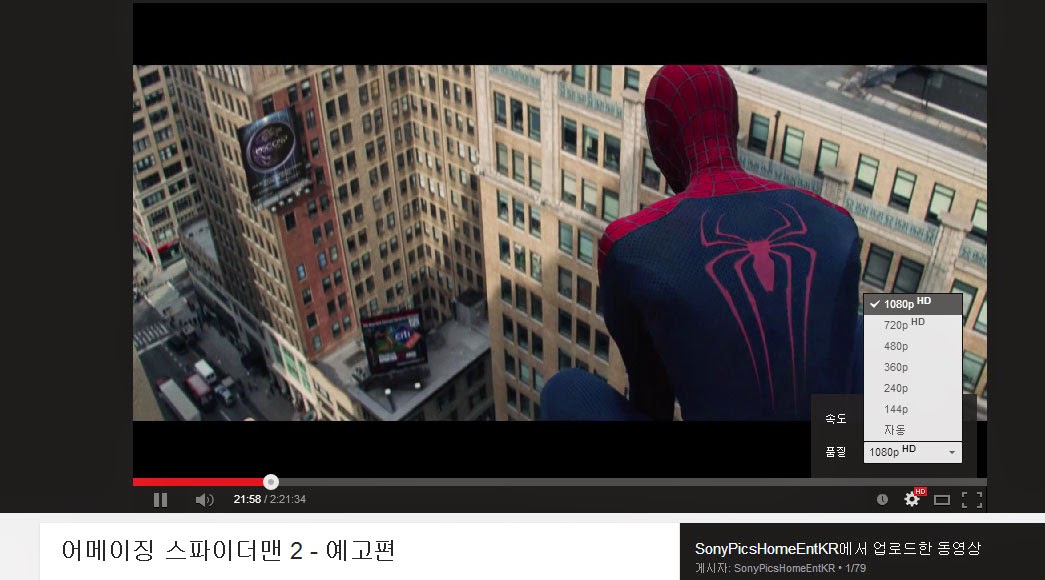
So about that night when Sony Korea accidentally posted all of The Amazing Spider-Man 2 on YouTube…
![]() |
| (Photo source: Gamma Squad; photo by Russell McGovern) |
Someone at Sony Korea is definitely getting both a J. Jonah Jameson-style tongue-lashing and their walking papers for this.
On Saturday night, podcaster and Portland Mercury blogger Bobby Roberts and a bunch of others pointed out on their Twitter feeds that Sony Korea's YouTube account accidentally posted The Amazing Spider-Man 2 in its entirety for free. Well, not all of the movie. The full upload, which Sony Korea immediately removed from YouTube once they realized the screw-up, was missing the mid-credits ad for X-Men: Days of Future Past. Amazing Spider-Man 2 director Marc Webb had to slip the Days of Future Past ad into his film's end credits in order to fulfill an obligation to his contract with Sony rival and Days of Future Past distributor 20th Century Fox.
![]() |
| (Photo source: OneHallyu) |
The Amazing Spider-Man 2 was an overstuffed and disjointed mess that was difficult to sit through for much of its bloated running time of two hours and 22 minutes, so I was in no mood to rewatch the entire movie right below Roberts' tweet, which he deleted when Sony Korea removed their accidental upload. And nope, not even skimming through the upload of Amazing 2 to revisit only my favorite scenes (and a few of my least favorite) improved the movie, which has become Sony's lowest-grossing Spider-Man movie in America (Sony studio execs' dissatisfaction with the sequel's U.S. box-office performance has caused them to put the kibosh on the studio's plans to do both a threequel and supervillain spinoff movies centering on the Sinister Six and Venom). This second (and this time, only partial) viewing of this extremely corporate product (as ScreenCrush's Britt Hayes tweeted, the movie "looks like it was made to sell pinball machines") failed to erase its flaws (SPOILERS), including...
The two Webb movies' misguided decision to make Peter Parker the Chosen One
Much of the original appeal of the character stemmed from Peter becoming a superhero by accident. When you make Peter a predestined hero like Harry Potter or Superman, you make him less of a relatable everyman. And who cares about all the boring new material about Peter's attempt to uncover the truth about both his dead but could-be-alive scientist/secret agent dad (Campbell Scott), who experimented on Peter and planted the seed for Peter receiving his powers, and his extremely dead secret agent mom (Embeth Davidtz)? (Why do I feel like Amazing 2 co-screenwriter Roberto Orci's bizarre adoration of Dubya the pampered Bush son was responsible for this shit, even though it was carried over from The Amazing Spider-Man, which Orci didn't co-write?)
Sony's inane attempts to build its own Marvel Cinematic Universe out of Webb's movies
Amazing Spider-Man movie universe, you may think you're the Marvel Cinematic Universe, but Amazing Spider-Man movie universe, you're no Marvel Cinematic Universe. Sony's postponement of the threequel and those baffling Sinister Six and Venom projects makes me hope that the postponement takes so long it causes Sony to lose the movie rights to Spidey and hand them over to Marvel Studios. For starters, Amazing Spider-Man movie universe, you have to have interesting villains on a par with Tom Hiddleston's charismatic Loki, which you don't. Speaking of which...
The overabundance of supervillains
Amazing 2 actually isn't a bad movie--that is if some nerd with a lot of time on his hands assembles a "Phantom Edit" of the movie and digitally replaces Jamie Foxx's obsessed Spidey fan character with Foxx's equally beaten-down but much less cartoonish character from Collateral. An even better "Phantom Edit" would be the removal of all material about Electro, Oscorp, the Green Goblin, that Michael Massee character who dresses like all those douches who always wore fedoras in high school and that Marton Csokas mad scientist character who's like a reject from Joel Schumacher's terrible Batman movies. Superhero movie writers and directors still haven't learned anything from the mistakes of those Schumacher Batman movies and other equally overcrowded and excessive superhero movies like Iron Man 2, X-Men Origins: Wolverine and of course, Spider-Man 3.
Part of why Sam Raimi's first two Spidey movies are superior to Webb's is because of their tautness: they pitted Spidey against only one villain in each movie. Like I've said before, Spidey's rogues gallery really pales in comparison to Batman's. I'll take psychotic comedians/showmen (Joker and Harley) and psychologically complex criminals (the Batman: The Animated Series version of Two-Face) over boring, one-dimensional monsters like the Lizard and Electro any day. So why did Sony have to subject us to five of those boring antagonists like they did when they awkwardly shoehorned an equal amount of antagonists into Spider-Man 3? Again, they learned nothing.
The inability to be moved by Gwen Stacy's death
Webb, the director of (500) Days of Summer and countless music videos (who has been, as Devin Faraci wrote, "toiling behind the scenes trying to make these movies good, and he's getting blocked at every turn by Avi Arad and Sony suits"), excels at two things in these Amazing Spider-Man movies. One of them is any moment where Spidey, whom I'm glad to see has regained his sense of humor after Tobey Maguire's less quippy portrayal, interacts with other New Yorkers, particularly the bullied little kid whose science fair project Spidey takes a shine to. (Spidey's scenes with kids he rescues are where Andrew Garfield--who's oddly derided for not being dorky enough by Spidey comics readers who have somehow developed amnesia about Brian Michael Bendis and Mark Bagley's depiction of a modernized, '60s sweater vest-less Peter in their acclaimed Ultimate Spider-Man comics--is at his best as Spidey. The fact that Garfield would like to see Miles Morales--who famously caused the repugnant Lou Dobbs to soil his Depends because of his biracial heritage and is the second Spidey of color in the comics--suiting up as Spidey in live-action form makes me like Garfield even more.)
The other thing Webb excels at is the romance between Peter and Gwen, a more entertaining on-screen relationship than the one between Peter and Mary Jane in the Raimi movies. Amazing 2's unsatisfying story isn't the only reason why its B.O. grosses are lower than those of other Spidey movies. Killing off Emma Stone, the most likable and interesting cast member in Webb's reboot, has a lot to do with its underwhelming B.O. as well. The moment when Gwen's back and head hit the floor made me wince, mostly due to its brutal sound FX, yet this classic angsty moment from the comics that was supposed to raise the reboot franchise's dramatic stakes and shock the audience ended up hampering post-opening weekend word-of-mouth and was oddly unmoving. As Kyle Buchanan noted in Vulture, the film's decision to rush through Peter's depression after failing to save Gwen robs her death of its dramatic impact, whereas Stoick's death and the impact it has on everyone else--not just his son Hiccup and his wife Valka--are better handled in How to Train Your Dragon 2 and therefore, far more moving.
I'm a cold fish. I don't cry during sad movies. But How to Train Your Dragon 2 got me emotional. Dammit, How to Train Your Dragon 2! Instead of weeping and tearing up, my bottom lip tends to tremble like Clint Eastwood's in his "I could have taken that shot" crying scene during In the Line of Fire. When How to Train Your Dragon 2 cut to Hiccup and Astrid's friends mourning Stoick at his Viking funeral and being genuinely serious instead of being their usual comic relief selves, my bottom lip went crazy. The lip didn't quiver once during the cemetary sequence in Amazing 2.
The cheesy "Itsy Bitsy Spider" scene
The most Spider-Man 3-ish--and Schumacher-ish--part of Amazing 2 has to be the source cue by Hans Zimmer and "the Magnificent Six" (a collective that included Pharrell Williams and Johnny Marr) for when Electro plays "Itsy Bitsy Spider" on giant Tesla coils while battling Spidey. It results in the Garfield one-liner that's most reminiscent of the terribly written comedic bits from Disney XD's Ultimate Spider-Man animated series ("I hate this song!"). The other cheesy element of the Zimmer/Magnificent Six score is...
Electro's equally cheesy theme
The nu metal chanting that's supposed to represent Electro's inner dialogue ("He lied to me/He shot at me/He hates on me/He's using me/Fragility/Electricity/He's dead to me") brings back memories of Zimmer's horribly dated, Limp Bizkit-inspired nu metal score to 2000's Mission: Impossible II. (And then that M:I-2 score brings back memories of Will Sasso's brutal impression of Fred Durst on MADtv.)
The Zimmer/Magnificent Six score is a mixed bag, but it also contains the best thing to come out of Amazing 2: "It's On Again," the surprisingly good original theme by Zimmer, the Magnificent Six, Alicia Keys and Kendrick Lamar. Kendrick goes hard in his verse. It's one of many tremendous guest verses from Kendrick.
"It's On Again" marks the first time that an end credits tune in a Spidey movie doesn't suck (and man, has this franchise suffered from such atrocious-sounding pieces of music). The Zimmer/Pharrell/Alicia/Kendrick tune deserves to conclude a better movie, like the one with Miles--and not Peter--in the Spidey suit that's currently playing in my head or the one with an Asian hero in the suit that's also currently playing in my head.
Thursday, December 26, 2013
The last five things I've written over at Word Is Bond
![]() |
| Rocky Rivera (pictured with her "GRLZ" and "Ain't No Way" collaborators DJ Roza and Irie Eyez) is one of the artists whose albums I most recently reviewed for Word Is Bond. I'm glad to have been made a part of WIB's review team in 2013. |
"Top it off with a well-chosen Jay Z sample hook and you have another tuneful banger along the lines of 2010's 'Rose Garden,' which was produced by returning beatmaker DJ T Lo, as well as one of many highlights of Flying Colours. Good thing Shad and Skratch Bastid sampled one of Hov's verses from the enjoyable 'Otis' instead of Hov's really imaginative 'Cake cake cake cake cake cake' verse from Drake's 'Pound Cake.'"
Rocky Rivera, Gangster of Love (November 12, 2013)
"As usual, executive producer and Beatrock label founder Fatgums works his production magic on another solid-sounding Beatrock album, which is also an album we need right now: a fierce antidote to what author Jeff Chang referred to as a painful summer for racial justice, the summer of such delightful moments as the Zimmerman acquittal and Levy Tran's 'Asian Girlz' debacle. Rocky is one Asian girl--or rather, woman--who doesn't play that 'I love your sticky rice' shit."
"10 Hilarious Rapper Impressions" (November 25, 2013)
"Whether it's Pharoah's impression of Kendrick's flow, which seems to have been inspired by K.Dot's killer guest verse on DJ Khaled's 'They Ready,' or former MADtv regular Aries Spears turning DMX into Sally whenever she orders food in When Harry Met Sally, these impressions are so entertaining that for a few minutes, they've made me briefly forget about the dual heartbreak of the creative stagnancy of a late-night show I grew up watching and the unjust demise of a late-night show that could have become a game-changer for progressively minded comedians of color."
![]() |
| Rapsody introduces a little anarchy in her video for "Dark Knights." |
"'Footnote: Kendrick ain't mention no females! Rapsody, we gotta change that!,' says DJ Drama during the Raleigh spitter's 2013 mixtape. With bangers like 'Lonely Thoughts,' which features a laugh-out-loud funny guest verse by Chance the Rapper, and the Dark Knight Rises-inspired 'Dark Knights,' which has Rapsody and Wale dropping the nerdiest Batman references outside of nerdcore, Rapsody proves she belongs on Kendrick's infamous 'Control' list of the game's most skilled MCs."
"Music Videos That Stood Out In 2013" (December 25, 2013)
"Director Patricio Ginelsa picks up on the tune's fake '90s vibe and surrounds Bambu and Geo with animated graphics straight out of Rob Base & DJ E-Z Rock's 'It Takes Two' video and backup dancers with moves from old Queen Latifah videos. You keep thinking, 'Yo, is Blossom gonna Cabbage Patch her way onto the set at some point?' The 'Books' video could have just consisted of the '90s R&B throwback material, and it would have been a decent video. But no, Ginelsa had to throw in footage of Bambu and Geo starring in a fake sitcom about an undocumented Filipino immigrant called Tago ng Tago (it's Tagalog for 'always hiding'), and that turned a decent video into a great one."
Labels:
Bambu,
Batman,
hip-hop,
Jay Pharoah,
Jay-Z,
Kendrick Lamar,
Prometheus Brown,
Rapsody,
Rocky Rivera,
Shad,
SNL,
The Bar,
The Dark Knight,
The Dark Knight Rises,
Trayvon Martin,
Word Is Bond
Monday, September 23, 2013
Pop that brefnish: Time to look at hip-hop and R&B's immense love for the Taxi theme
![]() |
| The effects of brefnish |
Nah Right posted last week a lengthy and interesting interview with jazz pianist Bob James, one of the most sampled musicians in hip-hop. What started out as a contentious relationship between James and beatmakers because of their tendency in the late '80s and early '90s to sample music without permission (James sued DJ Jazzy Jeff and the Fresh Prince over the unauthorized use of "Westchester Lady") has mellowed into something less hostile and gone in some unexpected directions. James started collaborating with former X-Ecutioners DJ Rob Swift and has now assembled the new release Rhodes Scholar: Jazz-Funk Classics 1974-1982, a compilation of his own most sampled instrumentals that's being marketed to newer fans who were first exposed to James through hip-hop.
James' 1975 cover of Paul Simon's "Take Me to the Mardi Gras," which the late Jam Master Jay flipped in Run-DMC's 1986 classic "Peter Piper," is included on Rhodes Scholar. So are "Nautilus," a 1974 tune James originally thought of as filler but has become one of his most frequently sampled compositions (it's looped in "Daytona 500," one of my favorite Ghostface Killah joints), and 1981's "Sign of the Times," which opens with a calliope solo by James that provided Prince Paul with a catchy hook for "Keepin' the Faith," a highlight of 1991's De La Soul Is Dead, my favorite De La Soul album. Of course, Rhodes Scholar would have been incomplete without the first James tune I ever heard, "Angela (Theme from Taxi)," which also has been frequently sampled by beatmakers.
Both "Angela" and "Groove for Julie," another theme James wrote for the still-hilarious sitcom about loser cabbies in Manhattan (a show that premiered 35 years ago on September 12, 1978--I didn't need Marilu Henner's highly superior autobiographical memory to verify that), are currently in rotation on "AFOS Prime" on AFOS. Why? Is it because I'm a smooth jazz softie? No, I'm hardly a smooth jazz softie, and who cares that it's smooth jazz? James' Taxi score music is just damn good.
![]() |
| "Sunshine Cab Company" by Noelle McClanahan |
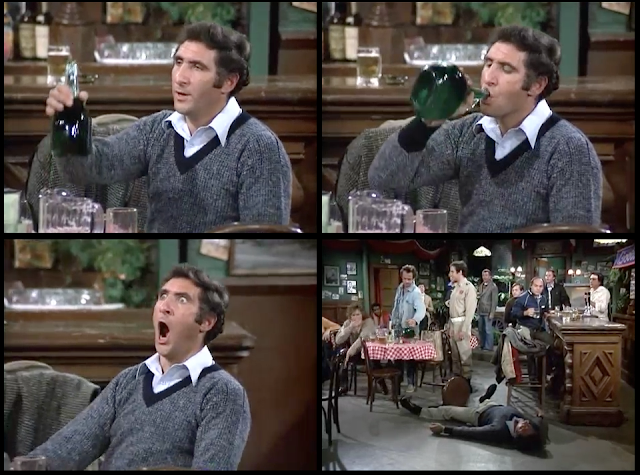
When the original Law & Order was filmed on location in New York City, TV reviewers would often say the city itself was like a seventh main character on L&O. Even though Taxi also took place in the Big Apple, you see very little of the actual city during Taxi.
That's because this studio-bound show was never filmed on location and never had any scenes outdoors due to the limitations enforced by three things: 1) the multi-camera sitcom format, 2) a modest budget ($260,000 per episode, much lower than the $1.5 million it cost to shoot each episode of the low-cost-by-today's-standards It's Always Sunny in Philadelphia in 2010) and 3) the Taxi producers' insistence on a realistic look (which was achieved by having all the cab scenes occur at night and shooting them on a pitch-black stage with remarkably convincing, stage play-style lighting effects to simulate passing lights, rather than shooting them against a cheesy-looking blue screen). So instead of New York, James' score music is the eighth character on this seven-member ensemble sitcom, and it does the job of establishing the troubled but oddly alluring late '70s/early '80s New York setting that the city itself couldn't do (outside of stock footage) because like many sitcoms at the time, Taxi was filmed in front of a live studio audience in Hollywood.
That's how integral James' music is to Taxi, even though you hear only 10 or 15 seconds of it during the zoom lens-reliant establishing shots that co-creator/showrunner James L. Brooks carried over from his previous sitcom The Mary Tyler Moore Show. James' groovetastic and mostly melancholy instrumentals--the sort of themes you'd encounter while watching a gritty poliziotto from Italy but not a multi-camera '70s sitcom--helped define and distinguish Taxi, its character-based humor and its distinctively bleak tone in the same way Henry Mancini's West Coast jazz sounds defined Peter Gunn, Angelo Badalamenti's ethereal and sometimes kitschy motifs defined Twin Peaks and Yoko Kanno's brassy, J-pop-meets-the-Knitting-Factory jams defined Cowboy Bebop.
The bleak tone was why both Taxi and the equally sophisticated and gritty Barney Miller stuck out like sore thumbs on the late '70s/early '80s ABC sitcom schedule, surrounded by much broader and more dumbed-down sitcoms like Happy Days, its gazillion spinoffs and Three's Company. It's also why Taxi continues to stick out like a sore thumb in reruns (good luck finding Taxi on cable, although I hear Me-TV network affiliates are rerunning it again) and continues to have a reputation as a slept-on classic, even though it influenced Taxi staff writers Glen and Les Charles' hit creation Cheers; the earlier seasons of The Simpsons, Brooks' biggest hit as a TV producer; the original Office; Party Down; and Community--and even though the animalistic asshole persona of Danny DeVito's Louie De Palma paved the way for misanthropic Larry David creations like Seinfeld and Curb Your Enthusiasm and even DeVito's own It's Always Sunny.
![]() |
| (Photo source: A.V. Club) |
I abhor most older sitcoms with studio audience laughter or laugh tracks, a.k.a. canned laughter. But Taxi is one of the few I still revisit either on the CBS streaming service or in bootlegged form on YouTube (screw Paramount's DVDs of the show, which are disappointingly bare-bones and slightly butchered due to music rights issues) because the writing and acting on Taxi were always tops (even during that occasionally bumpy first season where the writers had trouble figuring out what to do with Randall Carver's John Burns, a proto-Woody Boyd who was written out of the show in the second season and replaced in the cast by a guest star from the previous season, the much more funny Christopher Lloyd as drug-addled Reverend Jim Ignatowski). It remains one of my favorite shows.
You read about--or if you're a masochist, you watch--a racist piece of shit like the Seth MacFarlane production Dads, and its lame-ass punchlines bum you out about many things, like the shabby state of multi-camera sitcoms today. None of these newer multi-cams--even with frequent Taxi director James Burrows at the helm of many of their pilots--measure up to Taxi. Quality writing and genuine laughs elude these multi-cams like the meaning of a yellow light during Reverend Jim's driver's license exam.
Taxi's more low-key and realistic side was represented by the characters of world-weary pragmatist Alex Rieger, ambitious single mom Elaine Nardo, aspiring actor Bobby Wheeler and thick-headed prizefighter Tony Banta and what current Dissolve writer Noel Murray referred to in a 2004 A.V. Club piece as "building small stories out of the cabbies' money troubles or their offbeat passengers while dealing more honestly and humorously with the indignity of a service economy." Some critics and even some Taxi fans felt that low-key and realistic side meshed awkwardly with the show's Simpsons-y, outlandish side. That other side consisted of Ignatowski's confused wordplay shtick and stoned hijinks; Latka Gravas and his split personality issues; the strange customs and brefnish-fueled pastimes of the unnamed Eastern European country Latka and his girlfriend/wife Simka emigrated from; and of course, tyrannical Louie and his various schemes. I never agreed that it was an awkward juxtaposition. I always thought the way Taxi juggled both sides was perfect. Speaking of perfection...
"And then there's that Bob James theme song, so pretty and forlorn, playing in the opening credits over an endless shot of a cab crossing a bridge and never getting anywhere," wrote Murray. "It's the whole mood and meaning of the show, established in less than a minute."
True. There are several interesting bits of trivia about that opening credits footage. Who's the driver inside that cab on the Queensboro Bridge (which, by the way, was renamed in 2010, in honor of former NYC mayor Ed Koch, an enemy of hip-hop culture who was famously put on blast by Spike Lee in Do the Right Thing)? He's none other than Tony Danza, and the Taxi producers culled the footage from the same shoot where they filmed the only scene shot on location in NYC in the show's history: Tony's amusingly brief "Memories of Cab 804" flashback to the moment when he stopped a passenger from jumping off the Queensboro Bridge. The problem with the footage that was chosen for the intro was that it was only 15 seconds long, which wasn't enough time to flash the credits of Taxi's sizable cast, so the editor looped the footage. It resulted in a clever and dark-humored encapsulation of the show's premise of working-class dreamers struggling to succeed. It also made the bridge as long as that airport runway in the climax of Furious 6.
The choice of "Angela" was another happy accident, and like the bridge footage, the tune wasn't originally intended for the opening credits. It was a theme James wrote for a character named Angela Matusa (Suzanne Kent), an obese and lonely phone operator Alex befriends in "Blind Date," one of the show's earliest episodes.
Labels:
A Fistful of Soundtracks,
Bob James,
DJ Jazzy Jeff,
hip-hop,
James L. Brooks,
Kendrick Lamar,
live music footage,
NSFW,
Rob Swift,
sampling,
scripted TV,
Souls of Mischief,
Taxi,
TV music,
TV themes,
X-Ecutioners
Subscribe to:
Posts (Atom)