Thursday, June 4, 2015

Throwback Thursday: Mad Max: Fury Road

Aeon Flux, Charlize Theron's last big attempt at a tentpole action flick before Mad Max, tanked back in 2005, simply because it didn't have a guy with a flamethrower guitar.
Every Throwback Thursday, I pull out from my desk cabinet--with my eyes closed--a movie ticket stub I didn't throw away, and then I discuss the movie on the ticket. Today, instead of drawing some random ticket, I'm intentionally pulling out the ticket that says "Mad Max: Fury Road" because I'm just in awe of both the film's visuals and the intriguing writing for its female characters, and I want to discuss how satisfying an action film the fourth Mad Max installment is--as well as discuss the one aspect that's disappointing. Mild spoilers ahead.

The boldest thing about director Destin Cretton's 2013 indie drama Short Term 12 is its lack of on-the-nose exposition and speechifying, which makes it stand apart in a genre where dramas about counselors or social workers who want to protect child abuse victims are frequently on-the-nose about their storytelling and over-explanatory or preachy. "None of the backstories of the film's four main characters... are unveiled in clumsily written infodumps or pointless flashbacks," I said a couple of months ago. "They're unveiled gradually, piece by piece, and at believable moments."

The same goes for Mad Max: Fury Road, Australian director George Miller's incredible and much-talked-about return to the post-apocalyptic action franchise that made his career 36 years ago. Aside from an introductory voiceover that's reminiscent of the recap about the fall of civilization at the start of Miller's earlier action masterpiece The Road Warrior, Aussie ex-cop Max Rockatansky (Tom Hardy, ably taking over Mel Gibson's titular role) has even less dialogue in Fury Road than he did in The Road Warrior. He makes Detective Frank Bullitt look like a flibbertigibbet doing an Aaron Sorkin walk-and-talk.

It's remarkable how outside of the introductory voiceover, Fury Road conveys Max's PTSD and his guilt over the lives he was unable to save strictly in visual terms, namely two-second flashbacks to a dead little girl who keeps taunting him (either she's a daughter he raised many years after bikers killed both his toddler son and his wife in the first Mad Max film or a kid he failed to save from a recent massacre). During one of those flashbacks, another apparition appears in Max's mind, and he's the only Aboriginal in the whole goddamn movie. The Nerds of Color blog points out that out of Fury Road's cast, "actress Courtney Eaton is part Maori and Chinese, Zoe Kravitz is African American and Megan Gale is half-Maori. The text of the film does not reveal these to be necessarily conscious choices, meaning these actresses did not need to be persons of color, but here they are." But aside from those three cast members, the movie's ensemble, just like the casts in so many other recent movies about the future, is as white as a Lawrence Welk Show taping.

Max ignores Chris Rock's advice about staying off the pole.

The Caucasity is a small speed bump in a car chase movie that's a mother lode of great examples of show-don't-tell storytelling, from Max's minimal dialogue to any scene involving war-rig driver Furiosa (Charlize Theron), both the film's real hero--even more so than her adversary-turned-ally Max--and its breakout character (aside from, of course, the bad motherfucker with the flamethrower guitar, a.k.a. the Doof Warrior). Not until Fury Road's third act does the audience realize why Furiosa chose to turn against her despotic, water-hoarding boss Immortan Joe (Hugh Keays-Byrne) and help five of the warlord's female sex slaves--one of whom is pregnant with Joe's child--escape to safety.

Furiosa's doing it out of remorse for being previously complicit in the same exact sex-slavery system that kidnapped her as a child. She was abducted from her home in the region known as the Green Place, along with her mother, and was raised in the Citadel, the mountaintop society ruled by Joe, and she wants to return to her matriarchal tribe in the Green Place and provide Joe's breeders with sanctuary there. But the film never specifies if Furiosa was actually one of Joe's sex slaves before becoming one of his imperators, a.k.a. lieutenants (a character detail that's not stated in the movie is Furiosa's infertility, which explains why she's a rig driver and imperator instead of one of Joe's breeders), and it doesn't have to. Like Chris Klimek said in an NPR piece about Fury Road, "We're not subjected to a cinemas-interruptus monologue where she tells us why [she's helping the women escape]. We get why. Theron's eyes show us why."

Lenny Kravitz's daughter and Elvis' granddaughter are two of the escapees. Replace the other two girls with Keith Richards' granddaughter and Bob Dylan's granddaughter, and they all could form the world's most interesting new rock band.

The beauty of Theron's lean and mean performance--by the way, when Theron said "guzzoline" instead of "gasoline," that moment, even more so than either the return of Max's old Interceptor or the presence of Junkie XL's suitably chaotic-sounding score, really made me feel like I was home again in the dystopic desert world I grew to enjoy during The Road Warrior--is similar to the beauty of Brie Larson's performance in Short Term 12, where many of the things Larson's equally laconic character doesn't say and is unable to share with other people are more powerful than the things she does say. If Short Term 12 is a triumph of economical storytelling, Fury Road is a fucking 62-foot buzzer-beater of economical storytelling.

"Miller didn't have much money [for 1979's Mad Max], but he made his action look astounding by focusing on clarity," noted Kevin Lincoln in the Dissolve essay "What modern action films could learn from the original Mad Max." In Fury Road, which was filmed on location in Namibia, Miller has much more money, but his action sequences continue to focus on clarity--instead of opting for something like ultra-fast cuts that end up making everything incomprehensible--and they emphasize old-school stuntwork and old-school practical FX in the age of 007 windsurfing a fake-looking CGI tidal wave and Indiana Jones being chased through an equally fake-looking CGI jungle. Fury Road is 80% practical FX and 20% CGI, and most of that CGI was used not for explosions--or animating Max's leaps and dives in the same way that animation was used to create Spider-Man's movements in live-action Spidey movies--but for removing stunt rigs and creating Furiosa's mechanical left arm.


There's a purity to Fury Road's action sequences that's as appealing and intriguing as the purity in both the film's dialogue (part of me wishes Miller made Fury Road into a silent movie like Buster Keaton's The General, which he's cited as an influence on his "western on wheels" and has already been mashed up with one of Junkie XL's Fury Road score cues by some genius over on Vimeo) and the characters' motivations. So it bugs me when I stumble into a criticism about the purity of those motivations, like Leonard Maltin's complaints that "I didn't care about any of the characters" and "They are so sketchily drawn." Are you basically saying, Mr. Maltin, that Fury Road could have used more exposition to get you inside the characters' heads? Because Fury Road really doesn't need more. Just like Short Term 12, it's a film about survivors of abuse and PTSD sufferers learning to overcome their difficulties with both communication and trusting others--or turning those difficulties into their strengths--to fight their adversaries together and regain their agency. There's no time for speechifying or letting everyone know at length how they feel. They've got a Green Place they need to drive to.

'Is it weird that I think the most romantic movie moment of the year is Furiosa resting the rifle on Max's shoulder to aim?'--Kyle Buchanan from Vulture
(Photo source: Feminist Mad Max)

None of Junkie XL's score cues from Mad Max: Fury Road are currently in rotation on AFOS, but they ought to be.

Monday, June 1, 2015

Trevor Noah is taking the reins of The Daily Show, not the "reigns"

Jon Stewart has visibly aged so much since the year 1999 that he now looks like he could be the granddad of Howard, the dorky announcer from his '90s MTV talk show days.

After I watch any movie, whether on Netflix or in the theater, I like to read the reviews it received or the think pieces it spawned, if it's a movie that has left or is leaving an impact on the zeitgeist. Since its release, Avengers: Age of Ultron has been the subject of many think pieces about either robot sci-fi; the ways innocent bystanders are portrayed in superhero movies; the fear that the Marvel Cinematic Universe will lead to the infantilization of cinema; the lack of female leads in MCU movies (which shows how badly the MCU--the film division, that is, not the TV division behind Agent Carter and A.K.A. Jessica Jones, both projects anchored by female leads and spearheaded by female showrunners--is lagging behind the progressiveness and diversity of current Marvel superheroine comic books like Ms. Marvel, the Marvel Now! revamp of X-Men, the gender-swapped Thor, Spider-Gwen, Silk and A-Force); feminism on social media; or the fact that people on social media really need to take a breath and siddown, relax, have a sandwich, drink a glass of milk, do some fuckin' thing, will ya?

Age of Ultron's connection to the last two items is due to female Marvel geeks' Twitter rants about their frustrations with the film and Age of Ultron director Joss Whedon's departure from Twitter after he encountered so much Twitter vitriol from a not-so-civil segment of those female geeks. I planned to watch this blockbuster that caused these lapsed Whedon fans to Hulk out on Twitter--and broke Whedon's spirit "a little bit" while he worked on it--about three or four weeks after its crowded opening weekend, which is when the crowds for these tentpole blockbusters usually dwindle completely, as does the possibility of having your morning or afternoon movie screening be ruined by an imbecile who brings his tablet to the theater and keeps switching on his tablet during the feature presentation (that, by the way, happened during Kingsman: The Secret Service). Trying not to click to any of the Age of Ultron think pieces during those three weeks before I saw the movie was quite a challenge. I was interested in what the writers of these pieces were talking about, but at the same time, these pieces gave away much of the movie, and I hadn't watched it yet. So it was a relief to finally be able to read them after watching Age of Ultron.

For Age of Ultron and other summer blockbusters, YOMYOMF likes to take several of their writers and have them give roundtable discussions of those blockbusters. I'm often interested in what YOMYOMF has to say in these discussions, even if it results in an inane moment like one of their writers giving director Bong Joon-ho's terrific Snowpiercer--a Chris Evans-led comic book adaptation that, as a movie, is superior to even any of the MCU comic book adaptations that either feature Evans or don't--only one out of four stars (actually, YOMYOMF uses bananas instead of stars for their movie rating system). So I went over to YOMYOMF's discussion of Age of Ultron, and the most interesting part of the discussion has to be the spelling of "take over the reins" as "take over the reigns." Yeah, that's not how you spell it.

YOMYOMF

It's a common mistake. "Reigns" and "reins" are both homonyms related to control and dominance, so they can be easily mixed up. I don't want to single out YOMYOMF because everyone does it. Even newspapers like the New York Observer misspell "reins" as "reigns" too, like when the Observer brought up South African stand-up comic Trevor Noah's controversial--and, of course, just like in the case of Age of Ultron, led-to-an-outcry-on-Twitter--promotion from Daily Show correspondent to Daily Show host.

New York Observer

It should be "Mr. Noah will officially take the reins on September 28," not "Mr. Noah will officially take the reigns on September 28." The reign of "reigns" over "reins" continues elsewhere.

KCET

Racialicious

Double O Section

Daily Mail

No Room for Democracy: The Triumph of Ego Over Common Sense by Richard M. Rosenbaum and ‎Henry Kissinger

'Psst, Wiiiilbur, I am really the Devil! Tonight, bring me the body of that nosy neeeeigh-bor of yours, and you will rule beside me in the kingdom of hell!'

Like Ann Peebles said, I can't stand the "reigns" against my window. Here's how I differentiate "reigns" from "reins" and avoid misspelling one or the other: yes, both words are related to control and dominance, but "reign," when used as a noun, means the time period when someone--or a team like the Golden State Warriors--is in charge or is dominant. "Rein," as a noun, means either a restraint, as in Tobey Maguire pulling on Seabiscuit's reins to slow the horse down, or a metaphorical steering wheel ("Mr. Noah will officially take the reins").

In verb form, to "reign" means to rule as a king or to conquer like one ("Marvel may currently reign supreme at the box office"), and to "rein" means to restrain, but unlike "reign," "rein" must always be accompanied by "in" or "back" (two such sentences are two of the above sentences with circled typos, which should be spelled as "It reined in character development!" and "The Wild Wild West reined itself in with Season 3"). Another difference between "reign" and "rein" when they're verbs is that "reign" is an intransitive verb, which means it doesn't take an object, while "rein" is more often a transitive verb, which means it needs an object ("character development," "itself"). Here's a fun way to remember how to differentiate "reign" from "rein": "reign" is the verb that prefers to be alone at the top, while "rein" is the verb that doesn't like being alone. It's the Al Green of verbs.

Now that they've stopped making Hawkeye so boring and have given him more juicy dialogue, this team needs a new boring character with no useful talents. Where's Rick Jones when you need him?

So on August 6, Jon Stewart will cause Daily Show fans' living rooms to get dusty when he vamooses his exhausted dad-bod out of Comedy Central and hands over the reins of his show to Noah, not the "reigns." Meanwhile, at the end of Age of Ultron, Danny Elfman temporarily takes over the musical reins from the film's other composer, Brian Tyler, and restates for the last time in the film his "New Avengers" theme, a straight-out-of-vintage-Elfman-circa-1990 update of Alan Silvestri's main theme from the first Avengers. Also at the end of Age of Ultron, Joss lets the Russo brothers take the reins of the Avengers movie franchise and is now probably giggling to himself the following: "They are gonna be so exhausted halfway through the making of Infinity War Part I."

Thursday, May 28, 2015

Throwback Thursday: The Dark Knight Rises (with guest blogger Hardeep Aujla from Word Is Bond)

Much of The Dark Knight Rises was based on DC's Knightfall crossover event, or as I like to call it, 'the one where DC thought it was wise to give Batman a fucking ugly '90s Image Comics-style makeover.'

Every Throwback Thursday, I randomly pull out from my desk cabinet--with my eyes closed--a movie ticket I saved, and then I discuss the movie on the ticket. This time I've gotten Hardeep Aujla, an editor from a U.K.-based hip-hop blog I've contributed pieces to, Word Is Bond, to come back after his guest TBT post about The Signal and discuss the movie on the ticket I drew.

I've noticed that the strongest Christopher Nolan movies contain the least amount of scenes of male actors crying, while the least satisfying Nolan movies are the ones with the most male cry-face scenes. Following? I haven't watched that one yet. Memento and Insomnia? Barely any male weeping scenes in those standout Nolan thrillers. Batman Begins, The Dark Knight and Inception? Slightly more male blubbering. But it was kept to a minimum--just three or four male crying scenes in the first two Batman films--and in each of those two films, one of those three or four scenes proved how much of an asset Gary Oldman, who's great at crying scenes and didn't overdo it in those films, was to Nolan's Batman trilogy. I can't remember if Hugh Jackman or Christian Bale were ever in need of one of those magician's hankies for more than just a magic trick in The Prestige, but I believe the crying was also kept to a minimum in that one.

As for The Dark Knight Rises and Interstellar, Michael Caine had to cry in every single scene of his in The Dark Knight Rises, and he did it in that anguished voice I can't ever hear again without thinking of Steve Coogan and Rob Brydon's hilarious impressions of later-period Caine sounding like he's yodeling during emotional scenes, while 70% of Interstellar's nearly three-hour running time consisted of Matthew McConaughey blubbering exactly like Jon Hamm in the SNL auto-tuned crying sketch. The Dark Knight Rises and Interstellar have turned out to be two of Nolan's least satisfying blockbusters, although I'll take The Dark Knight Rises over the Joel Schumacher version of Batman any day. So Mr. Nolan, if you want to win back some of the critics who weren't impressed with Interstellar, maybe you should try relying less on making several of your stars cry-talk like Felicity on Arrow all last season. Meanwhile, Hardeep enjoyed The Dark Knight Rises more than I did. He explains why.--JJA

Batman and Bane face off to see who could sound the most like a goofy monster from The Muppet Show.

The Dark Knight Rises
By Hardeep Aujla

Bob Kane thought the cake-bomb-pondering Batman of the 60's was an enjoyable farce, but that wasn't the character he had in mind when pencilling his way to a 6000% pay-rise in 1939. Such was the success of Batman. But it wasn't all enjoyable for the one-time kid who just wanted to draw goofballs like Popeye when he grew up. If things went south when he slapped the first sketches on DC editor Vince Sullivan's desk, he would have gladly gone back to drawing funnies. "I received more pleasure from drawing them than I ever did from drawing Batman", wrote Kane in his '89 auto-biography Batman and Me. And that's kinda the point of Batman; we're supposed to feel uneasy about being in the company of this character who at first glance looks like he reps the villainous axis. Furthermore, Batman is alluded to be a personal projection of Kane's; it's right there in the bio's title, the coalescence of a beat-down he took as a kid whilst pretending to be Zorro and rum-running-era New York. Roger Ebert found Tim Burton's noir-laden Batman (1989) to be "a depressing experience". Then many viewers deemed Christopher Nolan's recent trilogy, particularly the concluding entry Dark Knight Rises, to be sullen and overwrought, which was vindication in the ears of others who were on board with Bob's (and writer/character flesher-outer Bill Finger's) intimate, dark vision and had waited years to see it return to the screen.

It's as if the Halle Berry Catwoman movie never existed.

Sure, the films might not bring a whole lot of new ideas to the table that the many weekly rags and hardback "graphic novels" have given us over the decades, but if you asked Bob Kane, nothing else ever did after Superman and Batman bookended the continuum of all superhero possibilities. Regardless, it's probably fair to say that Bob and Bill would've approved of Nolan's submersion of Batman back into the dark and his eagerness to use him as a device to speak to audiences on a different level. And I have enjoyed how Nolan speaks about contemporary issues pervading our times in these films.

In The Dark Knight Rises, Selina Kyle, covertly anomalous (or perhaps not entirely given the crowd) during a ballroom thing, whispers to Bruce Wayne, "You'll wonder how you ever lived so large and left so little for the rest of us..." While this does echo contemporary economic injustices and does unsettle Bruce in a similar way it probably unsettles the real-life financial "elite" in the West who are somehow surprised that billions in the East would like the same standard of living as them, this film doesn't have a neo-imperialist agenda just like The Dark Knight didn't have a pro-George Bush agenda, despite how many opinions would have you otherwise believe. Instead we have Bane, whose character is conveyed superbly, overriding the need for facial expressions with a menacing mask and subtly expressive body language, from placing the back of his hand on someone's shoulder to an unflinching walk despite the surprise revelation of the Bat-Glider: small touches that spoke volumes. Bane attacks a city we are shown to be undeserving of pity or protection primarily, again, through the indignation of Selina Kyle, who observes how the rich show no austerity and resorts to cat-burglary out of inevitability in an unjust city: a product of Gotham (a character in its own right in this film) as much as Batman or his supervillains are. Bane's storm on the stock exchange is therefore a not-so-subtle device to this end, and from there on in we get a few big plot holes and, more importantly, a Tale Of Two Cities-style discourse which Nolan openly footnotes the entire film with via a direct quote at the end.

Christopher Nolan kept the IMAX footage to a minimum in the Batman movies because IMAX cameras are so fucking noisy when you switch them on. They're the Sam Kinison of movie cameras.
Fan-made poster

But like he did in The Dark Knight with the ferry climax, Nolan counters villainy with the kind of virtuous responses that all great comic books often do (Raimi also struck gold with the same idea during the train sequence in Spider-Man 2). This time Batman must re-live his genesis following a beat-down of his own that would've had Bob Kane flashing back. Spurred on by the words of his late-father that've echoed throughout the entire trilogy, he rises once again from defeat but this time things are noticeably different. Most striking cinematically is that his final punch-up with Bane is in broad daylight, a departure from pretty much every major fight scene in the series. He no longer relies on the shadows as an accomplice; his mission now is not to strike fear into the enemy but to inspire Gotham's oppressed inhabitants. The classic formalities of narrative dictate that Batman too must perish with the darkness of the city that created him, and his sacrifice at the end achieves this whilst also redeeming him from the long-standing dishonour established at the end of The Dark Knight. In this regard, The Dark Knight Rises has a much more positive and conclusive ending than many attribute it with: a story that shows Bruce Wayne won't always be a victim of both the city and himself, and a story that Bob and Bill, at least, might've taken professional and personal comfort from.

Batman w Slanket: Yawn of Justice

Hardeep Aujla writes and edits album reviews for Word Is Bond in Leicester, England. Selections from Hans Zimmer's Dark Knight Rises score can be heard during the AFOS blocks "AFOS Prime" and "Hall H."

Tuesday, May 26, 2015

Is Christina Hendricks a "trouper" or "trooper"?

Before Mad Men, Christina Hendricks was best known for appearing on Firefly, the show where white people always curse in Chinese, but none of the writers ever stopped to think, 'Hmm, isn't it fucking weird that none of the cast is actually Chinese?'
A few days ago, I was looking for the YouTube link to that old viral video of a KTLA morning TV interviewer transforming into a total dweeb after Christina Hendricks, star of the recently-concluded-for-good, unlikely-to-do-reunion-movies-guest-starring-the-Harlem-Globetrotters AMC hit Mad Men, mentions how she received news of her first-ever Emmy acting nomination while she was preparing to take a bath. The image of her bathing is all the interviewer can talk about for the rest of the interview. Way to keep it professional, KTLA guy! "He sits there silently for a whole minute, and by the time he gets back into the conversation, he's a stuttering mess. Although to his credit, he still has his pants on," wrote Uproxx in 2010.

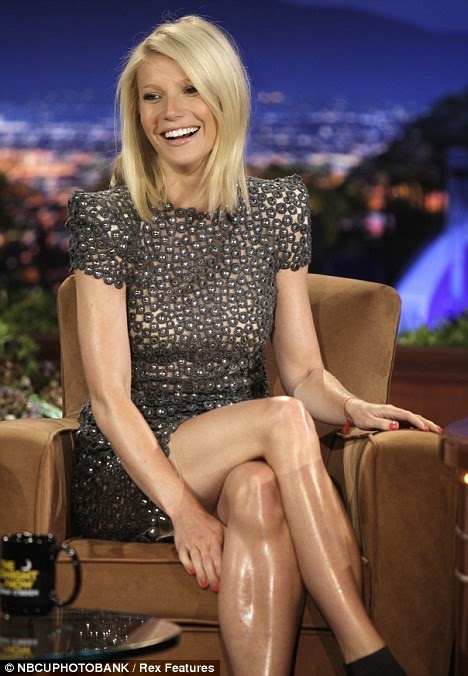
This wasn't Conan turning his awkwardness around hot women into the kind of comedy bit Inside Amy Schumer hilariously parodied in its recent sketch about the clichés that always take place during late-night talk show interviews with flirty female guests (I love how Schumer's sketch references that 2009 Conan-era Tonight Show interview where Gwyneth Paltrow's legs somehow got greasier and greasier after each commercial break). This was a journalist who, in front of an all-female news desk, was unable to prevent himself from regressing into a nervous 14-year-old school dance attendee in the middle of one of the least suitable places for doing that, a mostly non-comedic morning news show, with Hendricks throwing in a couple of amusing "Down, boy!"-type responses, like "That [bath story] was like two conversations ago, but thank you for remembering," which were both why the clip went viral. Why do the most awkward and NewsBeFunny YouTube channel-friendly things always happen on morning shows, whether it's The Today Show, The View or Fox & Friends?


Then I finally found the KTLA clip and copied and pasted into TextEdit both the URL and embed code, which is something I always need to do with YouTube videos I might want to include someday in posts such as this. I gave the TextEdit file the name of "Christina Hendricks Handles Brian McFayden's Drooling Like a Trooper."

But as I was typing out the file name, I became unsure about the spelling of "trooper." I kept changing it back and forth between "trooper" and "trouper."


I hear the expression "handling it like a trooper" all the time. But I've never stopped to think, "Where the hell does that expression come from?"

I opened the dictionary in my MacBook. A trooper is either "a state police officer" or "a private soldier in a cavalry, armored or airborne unit." I knew that. I didn't know a trooper can also be "a cavalry horse" or British jibber-jabber for "a ship used for transporting troops." So in the U.K., I guess that means the novel and movie title Starship Troopers sounds to them like Starship Starships. The title Starship Starships would be as absurd as whitewashing the Filipino hero of a sci-fi novel, which Hollywood would never do, right? Oh, wait...

Meanwhile, a trouper is "an actor or other entertainer, typically one with long experience" or "a reliable and uncomplaining person." I always thought it was "handling it like a trooper" because they're handling it like a brave soldier or a slick and smooth member of the '90s R&B group Troop.


I guess "a reliable and uncomplaining person" makes sense too. So which sides have professional writers taken in the war between "trouper" and "trooper"? While mentioning Sopranos star Nancy Marchand back in his Newark Star-Ledger, pre-HitFix days (the year 2000, to be exact), TV critic Alan Sepinwall said, "Marchand, who has cancer, proved herself to be a real trouper." Over at MTV News, where a Nicki Minaj backup dancer who received a snake bite qualifies as news, they said that the bitten dancer "handled it like a trooper." Meanwhile, what do etymologists outside of Dr. Webster, Dr. Merriam, Dr. Wagnalls and Dr. Uptown Funk have to say about all this?

The Grammarphobia Blog says "trouper," which also means "a member of a performing company (theatrical, singing or dancing)," also known as a troupe, has evolved in the 20th century so that the term can be used to refer to "a hard worker, a good sport, a reliable person, a mensch." Their stand on "Trouper or trooper?" is "trouper" over "trooper" because it's been spelled "trouper" since the 19th century, but due to Google searches showing "like a trooper" to be more commonly used than "like a trouper," "trooper" is alright with them too.


I also checked with a site called Daily Writing Tips. The site, which notes that "troop" and "troupe" both originated from the same French word ("troupeau," a variation of "troppus," the Latin word for "flock," according to my MacBook's dictionary), takes the following stand: "If the context has to do with courage, trooper is appropriate. If the context has to do with cooperation, dependability and the show business attitude of 'the show must go on,' then trouper is the word to use."

Joan from Mad Men was both a bit courageous (to be awake and sharp-witted that early in the day) and very unflappable in the face of live-on-L.A.-morning-TV drooling. So either spelling is correct--unless you're in the galaxy where a band of rebels has been fighting an oppressive intergalactic empire for decades and "handling it like a trooper" means you're handling it like a genocidal space Nazi in a shiny white helmet.

Thursday, May 21, 2015

Throwback Thursday: The Wolf of Wall Street

No Rolling Stones tracks during this one!
Every Throwback Thursday, I randomly pull out from my desk cabinet--with my eyes closed--a movie ticket I saved. Then I discuss the movie on the ticket and maybe a little bit of its score, which might be now streaming on AFOS.

When many film directors reach their 60s or 70s and continue to direct, they tend to lose their spark. They're simply no longer the inventive or energetic filmmakers we used to know from their earlier work. Even the most beloved late-night hosts get this way too. In a 2012 WNYC interview, David Letterman, who retired from the late-night airwaves, admitted that one of the differences between his period at NBC, where he hosted two groundbreaking and anarchic talk shows, and the slightly less adventurous Late Show on CBS was simply that "I'm 65; I don't have the energy I had when I was 35."

As for directors as they age, they become either more hackneyed and sentimental or more out-of-touch and complacent--so their later films suffer as a result, and for fans of the original Star Wars trilogy, the worst example of this was the pointless and woodenly acted (except for in the case of Ewan McGregor) Star Wars prequels George Lucas directed after a 22-year hiatus from the director's chair. As the now-defunct Stylus magazine points out in a depressing 2007 overview of bold '70s filmmakers who had trouble sustaining their hot streak after their first few films, "Boldness and originality becomes [sic] harder to achieve as time moves on and business interests close in."

Another example of a distinctive director losing his spark is the late Billy Wilder. Although Wilder remained his usual sharp-witted self in interviews (man, I really ought to check out Cameron Crowe's Conversations with Wilder from the public library one of these days), his movies towards the end of his career aren't as fondly remembered as earlier Wilder masterpieces like Double Indemnity or Some Like It Hot. You don't exactly see cineastes jumping for joy over Buddy Buddy.

But there are a couple of recent exceptions to the theory that as filmmakers get older, they lose their edge. George Miller, who's now 70, was in his late 60s when he shot this summer's incredible Mad Max: Fury Road, and Martin Scorsese was 70 when he directed The Wolf of Wall Street, my favorite of the five films Scorsese has made with Leonardo DiCaprio so far.

'Must... insert... Rolling Stones track during husband-taunting scene,' thinks Scorsese to himself.

Scorsese's invaluable and longtime editor Thelma Schoonmaker--who, together with Scorsese, remarkably whittled down four hours' worth of largely improvised material between DiCaprio and the rest of The Wolf of Wall Street's ensemble cast to 179 minutes--once said to Variety, "Marty's movies are so unusual. He doesn't repeat himself, so [the studios] don't know what to expect." Eh, actually, Scorsese's repeated himself--existing song-wise, that is. His umpteenth use of the Rolling Stones' "Gimme Shelter" in The Departed was a sign of a filmmaker who needed to take a break for a while from hitting repeat on Let It Bleed tracks on his iPod.

But otherwise, Schoonmaker's right. Scorsese's films have never had a problem of being interchangeable (he revisits motifs and themes like greed, media attention, addiction or religious guilt but is somehow able to do so without becoming repetitive and derivative), whereas many of his filmmaking peers have ended up making the same film three or four times--another example of when directors show their age. "Gangs of New York is so different from The Aviator, which was so different from The Departed or Age of Innocence or Kundun," said Schoonmaker to HitFix. And after Scorsese directed 2011's Hugo, he followed up his first family film--as well as one of his least controversial works, unless you're a stickler for accuracy in terms of how the Eiffel Tower gets depicted on film--with perhaps his most sexually explicit film to date, The Wolf of Wall Street.

Favorite movie newspaper or magazine headline: 'Boy Trapped In Refrigerator Eats Own Foot' from Airplane!

Adapted from the memoirs of former stockbroker and former cokehead Jordan Belfort by screenwriter Terence Winter (who created and showran Boardwalk Empire, which Scorsese co-produced), the 2013 Scorsese flick reunited the New York filmmaker with an old pal: controversy. Many haters of the film felt it glorified the scummy and misogynist behavior of Belfort the white-collar criminal and his cronies at the Wall Street firm Stratton Oakmont. Other haters--particularly audience members who are about as old as Scorsese or older than him--found the amount of debauchery on display in the film to be excessive. They wished The Wolf of Wall Street contained less debauchery, even after Scorsese already kept the film from getting stamped with a financially risky NC-17 by making a few additional edits, like turning to Rob Legato, the Hugo visual FX wizard whom I'll always remember for giving away on Reading Rainbow the FX magicians' secret of how he filmed the Star Trek: The Next Generation transporter beam FX (hint: glitter stirred in a glass of water), and his team to digitally insert an Eyes Wide Shut-style chair as a visual barricade for a gay orgy scene.

But the excessiveness makes perfect sense in The Wolf of Wall Street: it's a film about hedonistic Wall Street culture and all its emptiness (as well as its enticing qualities), and it would have been inane to depict that culture in a watered-down, Hallmark Channel-friendly way. In the GQ blog post "Olds Heckle The Wolf of Wall Street for Being Too Awesome," Scott Christian nicely criticized the olds and their disgust with Scorsese's focus this time on sex--instead of the usual GoodFellas-style violence he's most known for--when he said, "He's not some pervy old man, he's actually trying to show us how fractured and ugly these characters are... What is shocking is that people are so outraged by a bit of T&A but not by violence. Of course, that's nothing new."

The Wolf of Wall Street is neither a pervy old man's movie nor the shrill cinematic equivalent of an old man shouting at millennials to get off his lawn, which was basically what Aaron Sorkin's The Newsroom was. Scorsese said repeatedly in interviews that he made The Wolf of Wall Street as an expression of his own frustration with how materialism has become a religion in the last 35 years--no wonder Scorsese staged Belfort's office pep talks to his employees as if they're revival meetings--but Scorsese has done something clever with that frustration. The easy way to approach anger over economic inequality and the swindling of ordinary working folk is to turn it into a solemn movie about the Way America Ought to Be, But America's Too Broken and We'll Never Be Able to Fix It. The problem with that kind of movie is that it's been done to death, and it's boring as hell.