The following is a repost of my October 1, 2014 discussion of The Fresh Prince of Bel-Air, particularly "Def Poet's Society."
I've been sent music journalist Brian Coleman's second Check the Technique book to review for Word Is Bond, and the new volume, part of Coleman's series of books of exhaustive interviews with rappers and beatmakers about classic albums they recorded, contains behind-the-scenes stories I've always wanted to read about Black Sheep's A Wolf in Sheep's Clothing and Raekwon's Only Built 4 Cuban Linx... One chapter I didn't expect to enjoy was the chapter about DJ Jazzy Jeff and the Fresh Prince's rise from a sensation in Philly to national chart-toppers, thanks to 1988's He's the DJ, I'm the Rapper, the first double album in hip-hop history.
The chapter notes that He's the DJ, I'm the Rapper's double-LP format stemmed from the duo's original conception of the project as a scratch album to showcase Jazzy Jeff's turntablist skills. In the late '80s, a scratch album was unheard of, but today, they're a commonplace thing in hip-hop. For example, DJ Qbert recently dropped simultaneously on iTunes a scratch album and a more accessible-sounding album loaded with guest features by rappers, and those two recent Qbert releases were sort of like if He's the DJ, I'm the Rapper got split into two separate albums instead of being the mammoth two-headed beast we know of today.
That story of He's the DJ, I'm the Rapper's evolution from a DJ-only album to a showcase for both the skills of Jazzy Jeff the beatmaker and Will Smith the storyteller is an interesting read. So are the recollections of the trouble the duo got into with New Line Cinema over "A Nightmare on My Street," their proto-horrorcore track about the '80s and '90s New Line cash cow Freddy Krueger, and Jazzy Jeff's tidbit about him and Smith turning down the script for House Party (Coleman was unable to interview Smith, presumably because Smith's too busy being one of the biggest movie stars in the world).
He's the DJ, I'm the Rapper is best known for introducing the massive 1988 hit "Parents Just Don't Understand" (which isn't my favorite track on the album; that would be the Bob James-sampling "Here We Go Again"). The album doesn't contain the duo's much more frequently quoted theme from The Fresh Prince of Bel-Air because, of course, the hit sitcom--which based its "inner-city kid in a mansion" premise on pop music industry bigwig Benny Medina's life as an extra member of the household of his mentor Berry Gordy--didn't exist yet, and its premiere on NBC was only two years away.
It's great that He's the DJ, I'm the Rapper has gotten the oral history treatment. But I wish The Fresh Prince of Bel-Air received the oral history treatment somewhere else as well, even though the famously bitter and still-disgruntled Janet Hubert, who wrote a tell-all book about how much she hated working with Smith on The Fresh Prince, would probably refuse to participate and then write another tell-all book about how much she hated seeing an oral history about The Fresh Prince.
The show never got much shine from TV critics when it first aired, and it still doesn't--today's critics remain more taken with Seinfeld, Friends and Roseanne as '90s live-action sitcoms. Sure, The Fresh Prince's storylines weren't exactly groundbreaking and formula-defying like Seinfeld's, and Roseanne did a better job at seriousness--when The Fresh Prince tried to get serious with an occasional Very Special Episode, the results would often be preachy and only occasionally effective and genuinely wrenching--but I find myself rewatching The Fresh Prince more often than Seinfeld. Okay, it kind of went off the rails after Hubert was fired and the producers pulled a Darrin on us with a new Aunt Viv, but otherwise, The Fresh Prince is a funnier show than Seinfeld. There, somebody had to say it.
Every Throwback Thursday, I randomly pull out from my desk cabinet--with my eyes closed--a movie ticket I saved. Then I discuss the movie on the ticket and maybe a little bit of its score, which might be now streaming on AFOS.
Jurassic World just experienced the most successful opening weekend in film history, outgrossing even the opening weekend of the original Jurassic Park, a kaiju (Japanese for "strange beast") movie where smaller-sized dinosaurs are the kaiju instead of a 164-foot-tall lizard with atomic breath. But as much as I like both the craftsmanship Steven Spielberg brought to the moments of suspense (and occasionally, levity) in the first installment and Stan Winston and ILM's effective blend of practical FX and CGI in that installment, I find the Jurassic movies to be oddly underwhelming in comparison to Spielberg's masterful work in the original Jaws. As material in between the creature scenes, which are the main reason for flocking to these Jurassic blockbusters, the "Sam Neill learns to get in touch with his paternal side" storyline--a tiresome staple of post-SNL comedy vehicles starring either Billy Crystal, Adam Sandler or more recently, Will Ferrell--is less intriguing than the character interplay between Roy Scheider, Richard Dreyfuss and Robert Shaw in Jaws.
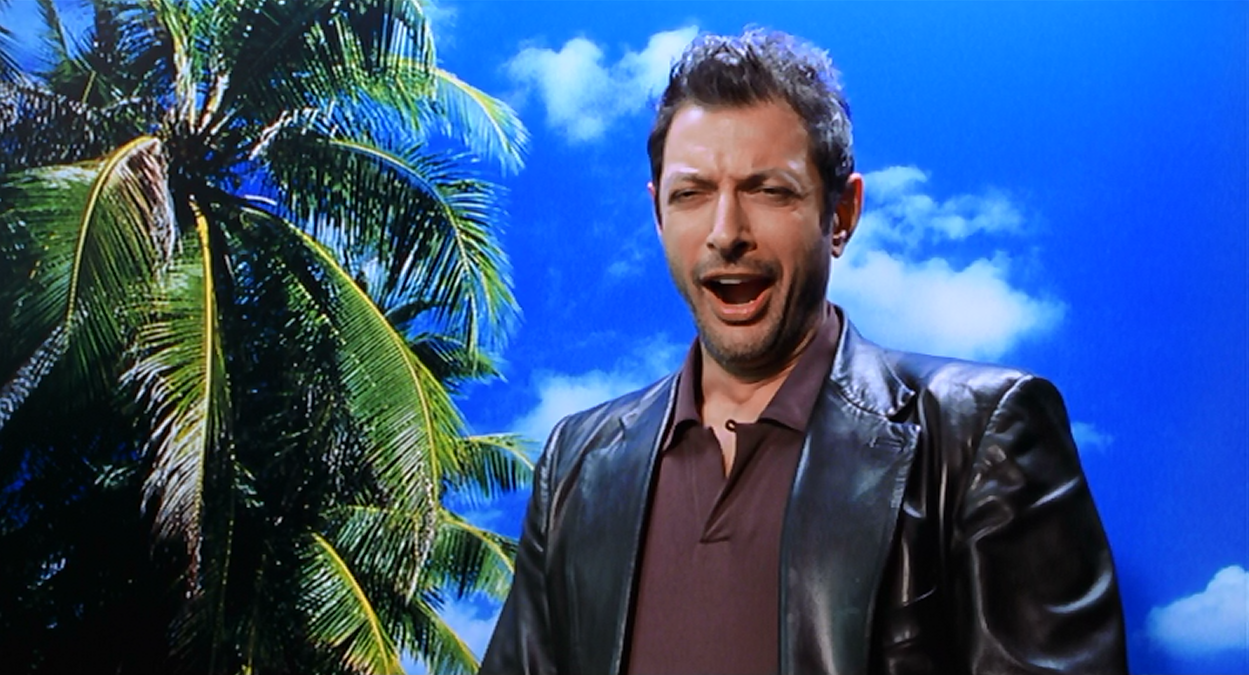
I lost interest in the Jurassic franchise about halfway through The Lost World: Jurassic Park and never got on board the franchise again (I still haven't seen Jurassic Park III and will most likely wait until Jurassic Not-Yet-5, as I like to call it, comes to Blu-ray). I remember falling asleep in the theater during The Lost World--at some point between Julianne Moore nearly falling to her death while glass slowly breaks beneath her and the lame moment when a raptor gets kicked in the face by the gymnastic moves of Jeff Goldblum's preteen daughter, I dozed off with my eyes open--and I got the sense that Spielberg, whose first shot of Goldblum in The Lost World shows the star yawning in a subway station, was equally disinterested with the material in his own sequel. (Fifteen years later, you could sense the same thing when Christopher Nolan only truly became alive during the stunning plane hijack sequence for The Dark Knight Rises, and for the rest of the project, it felt like the death of Dark Knight star Heath Ledger had sapped Nolan of his enthusiasm and energy.) Spielberg was phoning it in. He, in fact, later admitted in interviews to experiencing a constant feeling of "Is that all there is? It's not enough for me" throughout the filming of The Lost World. However, there is one moment in The Lost World where Spielberg didn't phone it in, and it's that literal cliffhanger scene with a petrified Moore unable to move or sneeze, the only genuinely nerve-wracking scene in The Lost World, as well as the only moment where Spielberg is back to his old enthusiastic and alert self, and it's not even a dinosaur attack.
So the Jurassics have never been my favorite kaiju movies. But Korean director Bong Joon-ho's The Host, a.k.a. Gwoemul (Korean for "monster")? Now that, to me, is the perfect kaiju movie, in which the human side of the movie is, for a change, as satisfying as the monster action and isn't an ordeal to sit through in order to get to the monster action. The Host is an effective mix of monster movie thrills, dysfunctional family comedy and political satire (about the incompetence of both American and Korean institutions) that's reminiscent of the anti-nuke satire in Ishirô Honda's original 1954 version of Godzilla.
Bong wanted to take everyday people like the extremely flawed members of the working-class Park family (in comparison to Sam Neill's sole flaw of being awkward and standoffish around kids, which isn't all that interesting as a character flaw) and place them in a central role that's usually reserved in monster movies for scientific geniuses or muscle-bound heroes, the kinds of characters Bong says he finds to be boring. His risky and unconventional decision resulted in my favorite human protagonists in an earthbound kaiju movie since, well, the trio in Jaws. Like all the films in Edgar Wright's superb Cornetto trilogy, The Host isn't a genre spoof; it's a thriller with genuine stakes that happens to be comedic and is full of characters worth being invested in, so that when one of the protagonists dies or is nearly dead, it's a moment that genuinely stings.
Even the creature in The Host, despite being an efficient and single-minded killing machine, or rather, in the parlance of both Matt Hooper and Jaws trailer announcer Percy Rodrigues, an "eating machine," is imbued with personality too. The film's digital FX may vary in quality, but they're never too cartoonish-looking. The creature's clumsy gait cleverly mirrors the klutziness of Host star Song Kang-ho's anti-hero Park Gang-du. Sure, Gang-du learns to be a better dad just like in that sappy Jurassic Park/Billy Crystal/Adam Sandler storytelling device that annoys me so much, but The Host handles that device so much better. It also handles humor better than Roland Emmerich's Jurassic Park-ified 1998 reboot of Godzilla--a kaiju movie in the form of a terrible and unfunny '90s Fox sitcom stretched out to over two excruciating hours--did (the terrible '90s Fox sitcomminess of it all is further enhanced by Emmerich's casting of both Maria Pitillo, star of Fox's short-lived Partners, as Matthew Broderick's love interest, and Simpsons veteran Hank Azaria, star of Herman's Head, a.k.a. Inside Out if it were an oversexed '90s Fox office sitcom).
The Host's effectiveness as both a character study and a creature feature is precisely why I've never warmed up to any of the old-school Godzilla movies, except for the intriguing first movie, which I first caught on TCM, luckily without the stupid Raymond Burr-related changes that were made to it by the movie's first American distributor (the horrendous dubbing in the American versions of these films has also made me avoid the Godzilla franchise; except for spaghetti westerns and some of the Studio Ghibli films, I can't stand watching foreign films when they're redubbed by Americans or the British). As a kid, I took one look at 1973's Godzilla vs. Megalon back when it was once the feature presentation on Mystery Science Theater 3000 and thought, "That's the formula for Godzilla? It's a terrible one. Nah, I think I'll skip the other Godzilla flicks."
Godzilla vs. Megalon is one of the least beloved Godzilla installments, partly because Godzilla was basically a guest star in his own movie. It was produced during a time when the Toho Studios franchise was past its prime and had abandoned its nifty roots as an allegory about post-war Japan to strictly cater to the kids in the audience. I know Godzilla vs. Megalon is a lousy way to be introduced to the Godzilla franchise. It would be like if someone who's never seen any of the 007 movies chose A View to a Kill or Die Another Day as their first 007 flick to watch; they won't understand what all the fuss over the other movies is about. But Godzilla vs. Megalon is a good example of how boring and pointless the human characters tend to be in kaiju movies, a problem that doesn't afflict the 1954 Godzilla and is also a problem I was hoping British director Gareth Edwards wouldn't fall prey to when he got the chance to not repeat Emmerich's countless mistakes while reintroducing Godzilla for a second time (not counting the two Americanized and badly butchered Godzillas that starred Perry Mason) to non-Japanese audiences.
While there's much to enjoy about Edwards' gritty, Fukushima-inspired 2014 version--like Alison Willmore said, the MUTOs (Massive Unidentified Terrestrial Organisms) and the redesigned Godzilla look terrific and are "lumbering and massive with a sense of incredible heft to them, despite being CGI creations"--Edwards, unfortunately, has a problem of focusing his films on white lead characters who aren't as interesting as he thinks they are. It's a problem that goes back to Edwards' prior sci-fi film Monsters, his low-budget 2010 breakthrough. Monsters is a film about Mexico experiencing first contact with giant alien creatures, and it's told not through the eyes of any of its citizens but through the eyes of the most annoying white hipsters since those douches who gentrified the barrio side of Arlen and slipped salmon into Enrique's fish tacos?
As The Daily Dot astutely pointed out, Godzilla suffers from a boring white guy problem--a problem that mars another recent kaiju flick, Pacific Rim--and is part of a long line of Hollywood tentpole blockbusters that opt for the least interesting characters as their leads. Out of a cast that includes the likes of Ken Watanabe, Bryan Cranston, Elizabeth Olsen, David Strathairn and Sally Hawkins as audience surrogates, Edwards chose to center the film around the individual with the least charisma or personality? Yo, Honest Trailers, your "Discount Channing Tatum" line is dead fucking on.
"The funny thing here is that the franchise originated in Japan. I actually haven't seen any of the old movies, but I'm going to assume that they--at least the Japanese ones--don't use Japan and its people as merely the backdrop against which white protagonists can shine and save the day," noted one of the teen authors of the blog Cool Asian Kids. "And that's essentially what the new film does."
Warner Bros. advertised Edwards' whitened-up take on the Japanese franchise as Godzilla and his atomic breath vs. Cranston and his atomic toupee--the studio made it look like Cranston would be channeling Dr. Loomis from Halloween--but (spoilers!) that's not the movie we got. Edwards told Willmore in a BuzzFeed interview that he chose to kill off Cranston's nuclear physicist character early on in Godzilla in order to raise the movie's stakes and create the sense that "anything could happen." Sure, Cranston's physicist dad character is kind of a boring white guy too, but kicking his badacondunk out of the movie so early is such a mistake because Cranston is much more alive and present in his scenes than Blando McBombdefuser--who, as Willmore says, "jumps through a series of increasingly improbable plot hoops to stay in the path of the creatures"--is in his.
It's just the wrong character to be spending a huge chunk of the movie with (and as the type of white savior Cool Asian Kids rightly criticizes him as being, he's amusingly inconsequential in comparison to Godzilla's heroics in the movie), and it's a shame, because Edwards kicks the movie off so promisingly with one of my favorite opening title sequences in a recent tentpole blockbuster. The sequence is a cleverly assembled montage of both real and fake archive footage that establishes the history of MUTOs, nicely scored by Alexandre Desplat--who's skillfully following in the footsteps of the old Akira Ifukube score music that both Pharoahe Monch and Tracy Morgan love so much--and surrounded visually by hastily redacted text from fake government files. The Prologue Studios opening titles are one of the 2014 Godzilla's few instances of humor, one of many things Edwards accomplishes better than Emmerich did. The passages that are redacted to isolate the names of the cast and crew are either silly, freeze-frame-worthy sentences like "The monster communicates through music composed and conducted by Alexandre Desplat" or are full of in-jokes like "Walter Malcolm has claimed that government men dressed in white lab coats routinely appear at site and Bryan Cranston shortly after the event all residents are sworn to silence." Walter is a reference to Breaking Bad, and Malcolm is, of course, a shout-out to Malcolm in the Middle (although shouldn't it say Hal, Cranston's character's name on Malcolm, instead of Malcolm?).
Despite all the sleep-inducing moments involving Discount Channing Tatum, as well as the fact that it's nowhere near the league of The Host, the 2014 Godzilla is superior to Emmerich's previous attempt to bring Godzilla to America and is more effective at building tension and staging monster action. Also, it's not trying to rip off so much of Jurassic Park. Recent Throwback Thursday guest blogger Hardeep Aujla, who hails from Word Is Bond, a U.K.-based hip-hop blog I've contributed pieces to, disagrees. He dislikes the 2014 Godzilla so much that he's skeptical about how Edwards will handle Star Wars in his next directorial effort, Star Wars Anthology: Rogue One. So Hardeep, how would you have improved the 2014 Godzilla if you worked on it? Would you have made the reboot into a boy-and-his-best-friend-who's-a-strange-creature story like the old Godzilla sequels, the Gamera sequels and my favorite of all those stories, The Iron Giant? Or would you have said "Fuck the American audience" and told it from the point of view of Ken Watanabe's scientist character? Or would you have completely gotten rid of any audience surrogate characters and told it from the point of view of Godzilla, which would have probably caused the movie to cost 200 million more American dollars to make but is a kaiju movie that's never been done before?
***
Hardeep Aujla: I think I read that Godzilla's screen-time was only 10 minutes in the whole 130-something minute film. This isn't Jaws, Edwards - less is not more in kaiju films.
As for what I would have done, I love The Iron Giant and that whole story too but I would've gone with your last suggestion, hands down. This is what I always thought AvP should have been. I would have started the film introducing a crack team of badasses equal to Dutch's or Apone's team, but then would've had them torn apart gloriously by the titular creatures (perhaps they stumbled into the vicinity of a one-on-one confrontation). Then the title of the movie comes up accompanied by strong audio tone with the intention of stating "That's fucking right" to the audience and their expectations. I'm thinking a very loud shrill-type noise that starts off monotonous but evolves a couple of seconds later into something with a bit more character before ultimately revealing itself to be the war-cry of either a Predator or an Alien as we cut straight back to the duel (yep, this idea has been rolling around in my head for a while). From there on out we get a pure Aliens versus Predators narrative with no more English spoken.
I haven't seen many of the old kaiju movies (the Gamera trilogy from the 90's is superb though), and the ones I did see were a long time ago, but I do remember some very protracted sequences where it's just Godzilla or his kid doing stuff and the audience just follows along. I may be completely fabricating those memories though. Either way, the challenge for Gareth Edwards would have been to make an engaging film like this in the modern era, one that is good enough to stand strongly unaided by human faces and words. There could of course be some human characters (retaining Ken Watanabe who was wasted in the actual film) but they should have minor roles. I can see how this would be tricky for a character like Godzilla who seemingly doesn't have a rich variety of activities to fill a movie with apart from swim, smash and roar, but therein lies the challenge, and I would be a lot more impressed with Gareth Edwards as a filmmaker if he pulled it off, or at least respect his effort if he tried.
None of Alexandre Desplat's score cues from Godzilla are currently in rotation on AFOS, but Desplat's main title theme ought to be.
I've been sent music journalist Brian Coleman's second Check the Technique book to review for Word Is Bond, and the new volume, part of Coleman's series of books of exhaustive interviews with rappers and beatmakers about classic albums they recorded, contains behind-the-scenes stories I've always wanted to read about Black Sheep's A Wolf in Sheep's Clothing and Raekwon's Only Built 4 Cuban Linx... One chapter I didn't expect to enjoy was the chapter about DJ Jazzy Jeff and the Fresh Prince's rise from a sensation in Philly to national chart-toppers, thanks to 1988's He's the DJ, I'm the Rapper, the first double album in hip-hop history.
The chapter notes that He's the DJ, I'm the Rapper's double-LP format stemmed from the duo's original conception of the project as a scratch album to showcase Jazzy Jeff's turntablist skills. In the late '80s, a scratch album was unheard of, but today, they're a commonplace thing in hip-hop. For example, DJ Qbert recently dropped simultaneously on iTunes a scratch album and a more accessible-sounding album loaded with guest features by rappers, and those two recent Qbert releases were sort of like if He's the DJ, I'm the Rapper got split into two separate albums instead of being the mammoth two-headed beast we know of today.
That story of He's the DJ, I'm the Rapper's evolution from a DJ-only album to a showcase for both the skills of Jazzy Jeff the beatmaker and Will Smith the storyteller is an interesting read. So are the recollections of the trouble the duo got into with New Line Cinema over "A Nightmare on My Street," their proto-horrorcore track about the '80s and '90s New Line cash cow Freddy Krueger, and Jazzy Jeff's tidbit about him and Smith turning down the script for House Party (Coleman was unable to interview Smith, presumably because Smith's too busy being one of the biggest movie stars in the world).
He's the DJ, I'm the Rapper is best known for introducing the massive 1988 hit "Parents Just Don't Understand" (which isn't my favorite track on the album; that would be the Bob James-sampling "Here We Go Again"). The album doesn't contain the duo's much more frequently quoted theme from The Fresh Prince of Bel-Air because, of course, the hit sitcom--which based its "inner-city kid in a mansion" premise on pop music industry bigwig Benny Medina's life as an extra member of the household of his mentor Berry Gordy--didn't exist yet, and its premiere on NBC was only two years away. However, I do know of one place that contains the Fresh Prince of Bel-Air theme--in its rarely heard entirety--and that would be "The Whitest Block Ever" on AFOS, every weekday at 10am Pacific.
It's great that He's the DJ, I'm the Rapper has gotten the oral history treatment. But I wish The Fresh Prince of Bel-Air received the oral history treatment somewhere else as well, even though the famously bitter and still-disgruntled Janet Hubert, who wrote a tell-all book about how much she hated working with Smith on The Fresh Prince, would probably refuse to participate and then write another tell-all book about how much she hated seeing an oral history about The Fresh Prince.
The show never got much shine from TV critics when it first aired, and it still doesn't--today's critics remain more taken with Seinfeld, Friends and Roseanne as '90s live-action sitcoms. Sure, The Fresh Prince's storylines weren't exactly groundbreaking and formula-defying like Seinfeld's, and Roseanne did a better job at seriousness--when The Fresh Prince tried to get serious with an occasional Very Special Episode, the results would often be preachy and only occasionally effective and genuinely wrenching--but I find myself rewatching The Fresh Prince more often than Seinfeld. Okay, it kind of went off the rails after Hubert was fired and the producers pulled a Darrin on us with a new Aunt Viv, but otherwise, The Fresh Prince is a funnier show than Seinfeld. There, somebody had to say it.
I'll always admire Seinfeld for its disregard for Full House hugs and other equally cuddly Miller-Boyett clichés, as well as finally giving Julia Louis-Dreyfus--who, before Seinfeld, had a less-than-great stint on SNL and was the highlight of Fresh Prince co-creator Andy Borowitz's otherwise bland day care sitcom Day by Day--a shitload of material that was worthy of her comedic talents (Elaine's my favorite Seinfeld character who isn't Bookman the library cop; Bookman is, of course, the greatest character Seinfeld came up with). But Seinfeld is also a very white show with several unfunny and stereotypical moments involving characters of color (and I'm getting less enamored with the show when its star/co-creator, who really should have kept his mouth shut when he was recently asked about the subject of the push for more diversity in comedy, instead chose to respond to the subject with "Who cares?"). The Fresh Prince doesn't have that race problem. Seinfeld would never have done an episode like "Def Poet's Society," where white privilege gets mocked instead of celebrated and reinforced. That brief mockery of white privilege and, of course, the frequently quoted moments of both classic and not-so-classic poetry are why "Def Poet's Society," which was written during the show's first season by John Bowman (a white veteran of SNL and In Living Color who later co-created Martin), remains my favorite Fresh Prince episode, as well as one of my favorite episodes of any '90s sitcom.
Like I said before, The Fresh Prince's storylines weren't exactly original. The "making up a fake poet or musician in order to get into a girl's pants" storyline is as old as "locked in the bank vault with Mr. Mooney." But what "Def Poet's Society" does with it is hysterical. There's the very name of Will's fake street poet Raphael De La Ghetto, network TV's first and only gag about the odd-sounding band name of De La Soul, as well as the inspiration for an Asian American YouTube star to dub himself Timothy DeLaGhetto.
There's the sight of Jazzy Jeff, who, like Smith, had no previous sitcom acting experience but wasn't exactly as charismatic as Smith, taking his lack of range and--just like in all his other appearances on the show--somehow building out of that lack of range a genuinely funny take on the sitcom staple of the lazy and weird best friend character. What about Buddy from Charles in Charge? Nah, Jazz was funnier.
There's British actor Joseph Marcell's lousy impression of an African American street poet when Will talks Geoffrey the butler into donning an Afro and a dashiki to bring to life the reclusive Raphael De La Ghetto (a name that's so great I have to say it in full every time). My favorite part of Marcell's scenes as Raphael De La Ghetto--other than "Cannon to the right of them, cannon to the left of them!"--is a moment that goes unnoticed by the studio audience, and it's when he's unable to keep his fake American accent from slipping when he says "Mask your fears."
Finally, there's Smith himself, no longer nervously mouthing the lines of his co-stars like he did in the Fresh Prince pilot (at the end of the poetry club night scene, he's mouthing Jazz's poem, but that's part of the episode's script this time). He's already the confident and charismatic lead who would continue to help anchor, along with the late, great James Avery as Uncle Phil, The Fresh Prince for five more seasons.
But in recent years, the funniest part of "Def Poet's Society" for me has ended up being neither Jazz nor Geoffrey nor Will. It's any time that Mr. Fellows (Jonathan Emerson), Will and Carlton's English teacher, claims he knows the work of Raphael De La Ghetto or makes that hilarious post-poetry-reading O-face over what he thinks is the brilliance of Raphael De La Ghetto's prose. Mr. Fellows is every single culture vulture I ran into at UC Santa Cruz. He's every white person in the audience who stupidly applauded both Warren Beatty's shitty rapping and Amiri Baraka's cringeworthy line "You got to be a spirit!" back when I saw Beatty's white savior film Bulworth in Santa Cruz in 1998. He's also every single douche in Williamsburg or Silver Lake who claims he was into this band or that band before everybody else.
Like when Tajai from Souls of Mischief tweeted that "Eventually #Hipsters bathe, shave and become the 'out' republicans they are," eerily about a year before the Republican Party's hipster ad, leave it to hip-hop to speak the truth about the fraudulences of hipsters. In the case of The Fresh Prince's classic "Def Poet's Society" episode, it did so long before the present-day form of hipsters existed. Now that's worthy of an exhaustive oral history.
My favorite monthly section in old Source magazine issues was "Hip-Hop Quotables," in which the Source editors printed out their favorite new rap verse of the month, from the first bar to the last. "Tip-Top Quotables," which I've named after that Source section, is a collection of my favorite quotes of the week from anywhere, whether it's a recent TV show or a new rap verse. "TTQ" won't appear on this blog every week. It'll appear whenever the fuck I feel like it.
* "The show needed him as much as he needed it. As scripted, Brisco's infallibility has the potential to read as smug and overbearing, and there are moments early in the run where even Campbell's charms can't quite overcome the 'oh thank God the white man is here to save us' vibe. But the clear pleasure the actor takes in everything he does on screen comes through, and keeps the hero from turning into a bland, square-jawed twerp. Typically Campbell plays lovable blowhards and larger-than-life buffoons, but here, he's called on to be a largely traditional leading man, and he delivers a mixture of steadfast decency, optimism, and perpetual bemusement that is just about perfect."--the A.V. Club's Zack Handlen, recalling the one-season wonder The Adventures of Brisco County Jr., which remains rewatchable despite its "oh thank God the white man is here to save us" vibe
* "That's right: some payday lenders are currently dressing themselves up as Native Americans. I thought only Johnny Depp was allowed to do that!"--Last Week Tonight's John Oliver
* "Perfectly placed in a set at a bar's dance night, it will just about burn the place down as sweaty drunk people go absolutely fucking nuts over the Purple One's coos and weird chatter about that 'Electric word, life.' And while Prince is certainly not perfect, though he might think he is, 'Let's Go Crazy,' well, it's as perfect as a song can be."--the A.V. Club's Marah Eakin on "Let's Go Crazy" from Purple Rain
* "And it is a hip-hop generation that is being stopped and harassed. They are being targeted and forced to carry the weight of assumptions heaped onto them. Just because the music they listen to carries violent themes doesn't mean that they do."--Stephen A. Crockett Jr., The Root, "Rage Is the Right Response to What Happened in Ferguson"
Comedian/performance artist Kristina Wong trolls the SketchFactor app, after racist SketchFactor users posted warnings about ethnic neighborhoods that they deem as "sketchy" (Photo source: Wong)
* "When corporations refuse to protect their employees from harassment through cultural, bureaucratic, and technological failures, they not only enable this sort of specialized abuse but contribute to it. It would be easy—too easy—for people to dismiss this sexist-trolling of Jezebel as the same problems and roadblocks dealt with by any other Gawker site. But, no, the reality is that this abuse is not the same. If companies that publish the writing of authors who disproportionately experience hatred and harassment want to address those issues ethically and according to need, they cannot do so simply by addressing them 'equally'—by asking them, as Jezebel has tacitly been asked, to work within a technological framework that taxes and punishes them significantly more."--Laura Hudson, Wired, "How Indifferent Corporations Help Sexist Internet Trolls Thrive"
* "Bacall is terrified of her first movie role. She can barely hold a match to light her cigarette without trembling like a leaf. In take after take, she tilts her chin downward, burying it into her chest to steady her nerves, while lifting her eyes up—a pose that manages to convey both sexiness and street smarts. It will later be called 'The Look.' Watching the movie, you would never guess she is anything other than defiant and confident. She’s hypnotic."--EW film critic Chris Nashawaty, discussing the late Lauren Bacall's breakout performance in To Have and Have Not
* "We watched the show together every week. And for those thirty minutes, my grandmother and I communicated in a way we couldn't otherwise—through our shared laughter and understanding that what we were witnessing was a phenomenal talent who transcended things like language and culture."--playwright Philip W. Chung, recalling how the late Robin Williams' antics on Mork & Mindy broke the language barrier between his grandmother, who spoke no English, and himself (he spoke barely any Korean)
* "You know, Alan Menken wrote a beautiful score for Aladdin, and he wrote score for the Genie's bits, too. But here's what happened: When we got on the dubbing stage, Alan realized that the score fought Robin's comedy rhythms. It was like two sets of rhythms that you were trying to listen to. So in many cases, we diminished that score when Robin was going to town—or just didn't have it altogether—and instead let his voice provide the rhythm. Comedy is a very delicate thing a lot of the time, and a factor like that can make a huge difference as to whether or not you're laughing."--Aladdin animator Eric Goldberg, recalling the trickiness of finding the right kind of score music to accompany Williams' voice work
* "Comedians can be a sad bunch, you know. You know what's the saying? Ignorance is bliss. So if ignorance is bliss, what's the opposite of ignorance? Must not be bliss. And your job as a comedian, you know, is basically to notice everything. And the better the comedian, the more aware he or she is of the world around them. So you know, it can be not a happy place. Sometimes you can have too much information. Sometimes you can know too much. So no, I was not, I'm never shocked at a comedian dealing with depression."--Chris Rock, explaining to ABC News why he thinks so many comedians suffer from severe depression, which Williams struggled with
(Photo source: Daily Show staff writer Travon Free)
* "It's a role that showcases Williams' underappreciated capacity for nuance — the scene in which he's being comforted by a total stranger and can't stop himself from giggling at the absurdity, a reaction the woman he's talking to keeps mistaking for tears, passing him tissues. Or like this scene from the end (mild spoilers!), in which his face conveys such a quicksilver mix of sadness, regret, resignation, and the slightest touch of mischief. That clip doesn't include the lines that follow, in voiceover, as the soundtrack kicks off the perfect song and a callback to earlier in the film: 'I used to think the worst thing in life was to end up all alone. It's not. The worse thing in life is ending up with people who make you feel all alone.' It's an observation to break your heart, but the sequence that it's a part of is filled with such complex but exhilarated joy and mourning all at once. It's the kind of role Williams could pull off so well. God, he'll be missed."--film writer Alison Willmore, explaining why the 2009 indie World's Greatest Dad contains her favorite Williams performance (it also happens to be my favorite non-genie performance of his)
* "There will be much celebration, in the coming weeks and months, of Robin Williams' life and career. But perhaps the best tribute to him would be if we all reached out to the troubled people in our lives and let them know that we are here for them. Because Robin Williams was there for us."--Paul F. Tompkins
Every Friday in "'Brokedown Merry-Go-Round' Show of the Week," I discuss the week's best first-run animated series episode I saw. By "the week," I mean from late Thursday at midnight to the following late Thursday at 11:59pm. Today's Show of the Week has a bizarre and difficult-to-pin-down posting schedule, but its latest episode debuted online last Friday morning. "Brokedown Merry-Go-Round," a two-hour block of original score tracks from animated shows or movies, doesn't have a schedule that's as difficult to pin down. It airs weekdays at 2pm Pacific on AFOS.
Starz Digital Media's How It Should Have Ended series/channel is always reliable for a few grins or light chuckles over its short parodies of laughable plot holes and denouements from recent Hollywood blockbusters. In its latest installment, HISHE tackles Gareth Edwards' Godzilla reboot, and HISHE writers/voice actors Tina Alexander and Daniel Baxter get in a few good digs about the collateral damage caused in the Edwards film by Godzilla's battles against the MUTOs (Massive Unidentified Terrestrial Organisms).
"Oh, sure, when Godzilla destroys half the city and kills the unstoppable threat to save the world, everyone cheers. But when I do it, everyone gets all grouchy and judgmental," whines the Henry Cavill version of Superman during "How Godzilla Should Have Ended." He shows up in MUTO battle-ravaged San Francisco to shame both Godzilla and the unusually cheery survivors and is still butt-hurt over Superman comics readers' negative responses to the violence in Zack Snyder's Man of Steel. (I'm starting to realize that the reason why the 2004 Dawn of the Dead remake remains Snyder's most satisfying movie is mainly because of the screenplay by Guardians of the Galaxy director James Gunn, and not so much because of the contributions of the simple-minded neo-con that is Snyder. Have you ever listened to Snyder speak? All he says during interviews or commentraks is "Awesome" or "Blablabla's such a rock star.")
The animus towards Man of Steel is mostly because your latest film was such a goddamn slog, Supes, whereas Godzilla's isn't, although it's marred by Aaron Gray-Stanford-Brown-Whatever-the-Fuck's two-hour-long impression of a block of wood. As The Daily Dot astutely noted, Godzilla suffers from a boring white guy problem and is part of a long line of Hollywood tentpole blockbusters that opt for the least interesting characters as their leads. Out of a cast that includes Ken Watanabe, Bryan Cranston, Elizabeth Olsen, David Strathairn, Sally Hawkins and Godzilla, Edwards chose to center the film around the individual with the least charisma or personality? This is the same problem I had with Edwards' previous sci-fi film, his 2010 indie breakthrough Monsters. It's a film about Mexico experiencing first contact with giant alien creatures, and it's told not through the eyes of any of its citizens but through the eyes of the most annoying white hipsters since those douches who gentrified the barrio side of Arlen and slipped salmon into Enrique's fish tacos?
I wish "How Godzilla Should Have Ended" (which, like all other HISHE installments, boasts some impressive background art by Otis Frampton) focused on the Edwards reboot's boring white guy problem. But any HISHE short that has some fun at the expense of the tiresome 9/11 imagery in tentpole blockbusters like Man of Steel and Godzilla--and pits Gipsy Danger from Pacific Rim against Zilla in an amusing one-sided battle--is fine by me.
10. The Top 10 List for May 14, 2004 was read by people working the graveyard shift.
9. I was too young to stay up and watch NBC's Late Night with David Letterman when it first aired. But I grew up watching the soon-to-retire Letterman's CBS show (if the words "Happy Da Birthday Ve" or "Dave and Steve's Gay Vacation" don't make you smile, you're clearly a Leno fan), and the May 14, '04 episode with Amy Sedaris and musical guest Modest Mouse, which Letterman taped earlier that morning at 4am in front of an amazingly awake (but not really amazing to most of New York) Ed Sullivan Theater studio audience, was the closest Late Show has gotten to recapturing the weirdness of Letterman's Late Night years.
8. Unless I'm mistaken, Late Show remains the only late-night talk show that ever taped an episode at 4am. "We thought it would be cool, just something different to try... The city is always interesting, but particularly interesting at 4am," said Late Show executive producer Rob Burnett to USA Today in '04 about the show's one-time decision to switch from Letterman's usual late-afternoon recording time to an ungodly hour.
7. Letterman made one of his grandest entrances by riding on horseback to the Ed, to the tune of Paul Shaffer and the CBS Orchestra's rendition of John Barry's Midnight Cowboy instrumental theme. An underrated John Barry movie theme as walk-on music on a late-night talk show! Shaffer's walk-on music choices have occasionally been questionable (he once soundtracked black SNL cast member Ellen Cleghorne's entrance with "Jimmy Crack Corn," a song about a black slave, and then claimed it was because "Cleghorne" sounded to him like "Crack Corn"--I'm not making this up), but otherwise, they've always been clever, and I'm going to miss that part of the show, as well as Letterman's wit and snarkiness.
6. I stopped liking Sedaris ever since Angry Asian Man wrote in 2009 about her history of doing this, but the 4am show was worthwhile also because it featured the frequent Late Show guest, who wasn't accustomed to being in front of a camera at 4am, at her loopiest.
5. Shaffer soundtracked the porno video store part of Sedaris' 4am walking tour of her Greenwich Village neighborhood with the Vince Guaraldi Trio classic "Cast Your Fate to the Wind."
4. There was a segment about catching rats in Manhattan.
3. The rat expert's reply to Letterman's question about why he studied rats was "Because I hate them."
2. Everyone in the studio audience received an Egg McMuffin. I don't care for Mickey D's, but the only worthwhile part of the Mickey D's menu is its breakfast items. Want to scare away a hipster? Hurl Egg McMuffins at him.
Every Wednesday in "5-Piece Cartoon Dinner," I dine on five of the week's most noteworthy animated shows. The episodes are reviewed in the order of when they first aired. "5-Piece" has been posted for 54 consecutive weeks--a.k.a. one year and two weeks--since May 11, 2012. I need a goddamn break. "5-Piece" returns on June 5 with a discussion of the first new episode of The Venture Bros. in 47 years.
Goofy-looking rotoscoping of Michael Jackson footage and a polite, purple-skinned baby who speaks in full sentences with a Julia Child-like falsetto are the highlights of "Just Me and You Now, Bud," another enjoyably surreal installment of Apollo Gauntlet. When animator Myles Langlois first streamed Apollo Gauntlet on his own, a few years before the Rug Burn Channel picked up the show to stream it exclusively, someone wrote, "If they were ever to make this into a live-action film, I'm going to suggest Will Forte take the lead." Apollo has the bullheadedness--and pornstache--of a typical Forte character, combined with a "What Up with That?"-style habit of interrupting people, especially his enemies, with rapping and dancing.
For Apollo's big "If I put my golden boot in your ass" dance number, "Just Me and You Now, Bud" recycles Apollo's dance moves from "Belenus Blade"--just as how Filmation used to always recycle footage to cut costs--but this time, the episode cops a few classic Michael Jackson moves, including the late Jackson's still-dope-ass anti-gravity lean from the "Smooth Criminal" segment of Moonwalker. That's not all that "Just Me and You Now, Bud" cops. The character design for the purple baby who agrees to help the Princess free herself from her cell appears to be lifted from the Dancing Baby. The voice Langlois chose for what's clearly a man in a baby's body is unsurprisingly strange--and amusing. The man-baby sounds more like the French Chef than Baby Herman. I keep expecting him to start giving the Princess tips about how to prepare a soufflé.
***
"The Unnatural," the Bob's Burgers third-season finale, caps off one of the most consistently funny seasons of any show--animated or live-action--in typically strong and endlessly quotable fashion. Gene dabbles in a sport he has no understanding of, while Tina gets addicted to espresso and can't bear to give it up. These two storylines are kind of standard-issue for a sitcom, but when Bob's Burgers gets its inventive, "Electric Boogie"-covering hands on them, these storylines soar.
Tina's storyline hits the same comedic beats as other "kid gets hooked on a drink she's too young for" storylines (I'm having flashbacks to Maggie Simpson going buckwild after tasting coffee ice cream). But then Bob's Burgers diverges from the other shows by intertwining her storyline quite smoothly with Gene's A-story (Tina has to go through caffeine withdrawal after Linda pawns the restaurant's new espresso machine to pay for Gene's overpriced baseball camp) and then tossing in a funny Trainspotting shout-out when Tina copes with withdrawal. (According to the comments section below the Movieclips excerpt of Renton's withdrawal hallucinations from Trainspotting, My Little Pony: Friendship Is Magic referenced the same Trainspotting nightmare scene as well. Sure, that's cool, and yeah, that Trainspotting gag is proof that Friendship Is Magic ain't your mommy's My Little Pony, but that's still not going to make me want to watch more of that cartoon. Sorry, Bronies, I'm still not feeling it.)
I'm glad to hear Rob Huebel return as a guest voice actor, even though it's as the "Dr. Yap" scam artist formerly known as "the Prince of Persuasia," the seduction guru Yap sought advice from, instead of his other Bob's Burgers role, as the Family Fracas producer who kept trying to make out with his show's male host a few weeks ago. Now known as the "Deuce of Diamonds," Huebel's con man character has been scamming wanna-be Little Leaguers and their parents out of their cash by running a half-assed baseball camp full of no actual baseballs and lots of amusingly ill-informed advice about the game ("A famous baseball player whose name I can't remember right now had Lou Gehrig's Disease and he didn't let it slow him down"). When Mr. Manoogian (Jason Mantzoukas, reprising his thick foreign accent from his role on Enlightened), the manager of the motel where the Deuce currently lives, threatens to throw him out on the street for not paying him back $1100, the Deuce tricks the kids into thinking he's taking them on a road trip and makes them act as his hired muscle at the motel ("We're just gonna take some swings... at your soda machine").
I enjoy seeing Bob's pragmatic approach to parenting (he doesn't think Gene is cut out for baseball and would rather have him quit, and he can see through the Deuce's scam) bump up against Linda's optimism (she believes Gene has lots of potential in the sport, and she keeps thinking the Deuce is a legit coach), especially when it leads to a hilarious scene where Bob and Linda argue like an umpire and a manager over Gene's hit in the climactic game, a great example of the overlapping dialogue that distinguishes Bob's Burgers from the rest of the Fox "Animation Domination" lineup. "Ah, you're such a dick, Bob," grumbles Linda to her husband, whose unwillingness to root for Gene and the fact that the kid's baseball skills don't really improve overnight both make "The Unnatural" a cut above the overdone "bumbling kid athlete succeeds at the right moment in the game" story.
Other memorable quotes:
* "I love baseball: the pizza parties, the spiky shoes, the parade at the end of the season where we ride on a float." And later: "I'm gonna have a killer fastball and a magnificent perm!" Yup, Gene bats for the other team. He just doesn't know it yet.
* Teddy, refusing Bob's offer of a cup of espresso: "I don't like those tiny cups! They make it look like I have giant hands!"
* Louise, overhearing Bob's opinion that Gene's thought-to-be-permanent abandonment of baseball has a quiet dignity: "Quiet dignity? Have you met us?!"
* An overcaffeinated Tina rattles off Burger of the Day ideas: "Woulda Coulda Gouda. You Gouda Be Kidding Me. As Gouda as It Gets. Gouda Gouda Gumdrops. A Few Gouda Men. Gouda Gouda Two Shoes, comes with shoes. Gouda Day, Sir..."
(Photo source: Bob's Burger of the Day)
* The Deuce to the kids: "Okay, any questions so far? About anything at all? Girls, boys, life, money, inkjet printer repair?"
* Andy, recognizing the Deuce's motel: "Hey, this is where our dad goes for his naps."
* The Deuce, encouraging the kids to damage Mr. Manoogian's soda machine: "Babe Ruth used to beat the crap out of a root beer machine. Now look at him."
* "Soda, you made me fat, but you also made me strong!"
* Ollie, defending the Deuce: "He's gifted; he said so." Andy: "He's gonna do a TED Talk."
* Gene, regarding the Deuce: "He gave us his magic and then he disappeared. Just like Toad the Wet Sprocket."
I never really cared for Skrillex's music, but I thought a couple of the score cues that the EDM DJ/producer composed for Spring Breakers were decent (the film also features score cues by the always terrific Cliff Martinez, who worked on Drive). I added one of the Skrillex cues to "AFOS Prime" rotation last week. And then while enjoying Jezebel's guide to hipster racism, a post from last year that I've seen a few blogs mention but I've never gotten around to actually reading until now, I encountered this:
Uh, no, you're not "aloud" to use that word at all, Skrillex.
This Milli Vanilli-haired shithead's off the playlist.
He's being replaced by the never-before-released score cues from Trouble Man, which are bonus tracks on the Trouble Man soundtrack's recent 40th anniversary reissue and were composed by someone who'd probably beat the shit out of Skrillex if he heard him use that word.
Each Tuesday in "5-Piece Cartoon Dinner," I dine on five of the week's most noteworthy animated cable shows that are found outside my Adult Swim comfort zone.
In previous weeks, I've covered Cartoon Network's Green Lantern: The Animated Series, which just quietly ended its first season. The same week as the season finale, Green Lantern became the talk of the non-comics media and trended on Twitter because DC announced that it's reintroducing one of the Green Lanterns, the previously straight Alan Scott, as openly gay.
While I'm happy for GLBT comics readers because the not-diverse-enough world of superhero comics just got a skosh more diverse, DC and Marvel still have a lot more work to do in terms of diversity. And as Grantland's Alex Pappademas said, maybe DC is making too big of a deal over this. It's second-tier Green Lantern Alan Scott, who hasn't been a major DC character since the '50s, and he's not the first-ever gay superhero.
Topless Robot editor Rob Bricken called shenanigans on DC's announcement about its "major new iconic gay character," which he found to be exploitative. "Alan Scott is not that iconic. In fact, I don't think any non-comics fans even know who the fuck he is," grumbled the always squeaky-clean-sounding Bricken on his blog. "He's not even going to be part of the main DC universe. At least Marvel has Northstar's wedding taking place in the normal Marvel U."
DC's outing of Alan led to lots of quips on Twitter like "Can the Green Lantern please come and organize my closet and tell me which jeans I look fat in?" (Molly Ringwald) and "Hope the first issue of the gay Green Lantern comic has him dishing lots of catty remarks about the Green Lantern movie" (awesomely anti-conservative ex-MST3K joke writer Frank Conniff). I was going to tweet an ultra-nerdy quip like "DC's rebooted Green Lantern Alan is now gay. So when he goes on & on about Will, he means some fabulous dude he met at the gym."
But I wasn't in the mood to have my tweet appear in Twitter searches for "Green Lantern" alongside lame and hateful tweets from conservatives like "Thanks to our depraved society, the Green Lantern will now be known as the Pink Nightlight" from a "Pastor Greg Locke." If that's your idea of humor, stick to announcing bingo numbers, pastor.
While all this is going on, the "DC Nation" block is re-airing the entire first season of GL:TAS, starting with the "Beware My Power" premiere episode. I hadn't watched that installment since last year, so I forgot that during "Beware My Power," Hal Jordan, whom I referred to as a Rey Curtis-y space cop (a.k.a. bland and sanctimonious), was a little less Rey Curtis-y than I thought and willing to defy authority, particularly his fuddy-duddy Guardian superiors when they get too fuddy-duddy. The series opens with Hal fresh out of boot camp (his drill sergeant-turned-partner Kilowog frequently kids him about how he's such a naive poozer) and still adjusting to Green Lantern Corps procedure, a more interesting way to write Hal than having him easily get the hang of being a Lantern like in the live-action Ryan Reynolds flop.
I always liked how GL:TAS skipped the origin story--the least interesting kind of story in the superhero genre--and cut to the chase in "Beware My Power." It's something a lot more live-action superhero movies ought to do, and I'm glad Joss Whedon's The Avengers does what GL:TAS did and basically says, "Hey, origin story structure, fuck off into the night."
***
Jeffrey Combs, whose voice work I praised while briefly discussing his regular role on the currently-on-hiatus Transformers Prime, is unsurprisingly terrific during his guest shot as the tragic title character of "The Soul Sever," the last episode of Cartoon Network's ThunderCats reboot before its two-part season (or series) finale. I appreciate how the new ThunderCats is better animated and more sophisticated than the cheesy '80s Rankin-Bass version. But I'm neither a sword-and-sorcery guy nor a furry, so other than the two-part "Omens" premiere and an episode about rapidly aging woodland creatures that looked like a Studio Ghibli remake of the Doctor Who story "The Girl in the Fireplace," I haven't been watching ThunderCats, which is apparently on the bubble.
One change that makes this new version superior to the original is the reworking of lead hero Lion-O (former Batman Beyond star Will Friedle) into an insecure and hotheaded teen adjusting to his role as leader, a far cry from the totally confident preteen-in-a-man's-body who brings to mind Shazam, the DC Property Formerly Known as Captain Marvel. On the original show, Lion-O was a grown-up with a 12-year-old boy's mind because he spent all of his teens in suspended animation on a spaceship that fled from the planet Thundera to Third Earth.
The reimagining dispenses with Lion-O's strange origin and makes the character more relatable. He's also angstier. The series opened with Mumm-Ra (Robin Atkin Downes) murdering Lion-O's father and king Claudus (who, in a nice way of passing the baton, was played by Larry Kenney, the voice of Lion-O on the '80s show, as well as the father of State and Reno 911! alum Kerri Kenney-Silver). Mumm-Ra and his minions used advanced technology to destroy Thundera (now just a kingdom on Third Earth instead of another planet) and forced the Thunderian survivors into exile or, in the case of those who weren't as lucky as the escaped ThunderCats, slavery.
So Lion-O hates technology because of its role in obliterating his homeland. In "The Soul Sever," the Luddite becomes less resentful of technology and realizes it's "neither the disease nor the cure" as he attempts to recover the magical Book of Omens, which guides the ThunderCats on their mission to defeat Mumm-Ra and was stolen from them by Combs' mad scientist character, the show's shout-out to the actor's signature role in Re-Animator.
The Soul Sever is a robot scientist who once was flesh. An alien whose wife and children died from a plague, he made a Faustian bargain to resurrect them by allowing a Cybermen-like race known as the Necromechers to rebuild him as one of their own, with the hopes that the technology they utilized to make him immortal would do the same for this family. But when the Necromechers refused to grant the Soul Sever access to their tech because they thought his plans would have Frankenstein-ian consequences, the Soul Sever wiped out the Necromechers. After stealing their tech, the Soul Sever was able to recover his loved ones' floating souls but has been unsuccessful in putting their souls into robot bodies.
When he learns the Book of Omens carries the soul of Obi-Wan Jaga (Corey Burton), the Soul Sever believes the artifact can bring his family back to corporeal form. Lion-O, Panthro (Kevin Michael Richardson) and Tygra (Matthew Mercer), Lion-O's adopted older brother, end up as the scientist's unwilling guinea pigs for his flesh-to-metal experiment. With the help of a chittering mechanical bug sidekick named Flicker, Lion-O and Panthro are able to break out of their restraints. But they're too late to pull out Tygra, whose soul is transferred by the Soul Sever's Book of Omens-powered experiment into an out-of-control mecha monstrosity that, in a wild sequence reminiscent of Tetsuo's grisly climactic transformation in Akira, keeps growing and growing due to spare parts it affixes to its body.
The mad scientist, who realizes the folly of his actions, must sacrifice his loved ones' souls to save himself, Lion-O and Panthro from Mecha Tygra and transfer Tygra's soul back to his normal body. It's rare to see kids' animation on TV tackle a downbeat ending like the one for the Soul Sever, his family and Flicker, which gives its life to activate the power surge that destroys Mecha Tygra (the pet euthanasia subject matter that Star Trek: The Animated Series' "Yesteryear" episode got away with on NBC back in 1973 comes to mind). But ThunderCats undercuts the ending with a final shot of Flicker coming back to life in the Soul Sever's hand, which indicates that if Flicker can Iron Giant its shattered little self back to power, then maybe the Soul Sever will be able to restore his family after all.
"The Soul Sever" may chicken out at the end, but Combs' gravitas, guided by beloved voice director Andrea Romano, redeems the episode. As a voice actor, Combs helped make the previously uninteresting and un-creepy Scarecrow a more formidable and creepy villain on Batman: The Animated Series and later stole scenes as the bubblegum pop music-loving weirdo The Question on Justice League Unlimited. The guy just can't do no wrong.