This week, The Simpsons aired its 600th episode, "Treehouse of Horror XXVII." The following is a repost of my October 30, 2015 discussion of the first Simpsons Halloween episode that wasn't a "Treehouse of Horror" anthology. This 2015 episode is streamable on FXX's Simpsons World app.
The 27th season of The Simpsons marks the first time the show has produced two Halloween episodes in the same season. In addition to the annual "Treehouse of Horror" anthology--where every short story takes place outside the show's continuity, so a character like Bart or Groundskeeper Willy can be killed off in horrible fashion and then be brought back in the next story or later on in the same half-hour--the show has treated us to its first canonical Halloween episode ever, "Halloween of Horror."
Late-period Simpsons can often be so tiresome and stale or so desperate to be trending again (Homer separates from Marge and goes out with guest star Lena Dunham?: I think I'll pass) that I've sometimes gone for months without watching it, so I wasn't prepared for "Halloween of Horror," which is credited solely to staff writer Carolyn Omine, to fire on so many cylinders. It's a better Halloween episode than this week's "Treehouse of Horror XXVI," which isn't an atrocious edition of "Treehouse," but when its most enjoyable segment is the bizarre and grisly couch gag guest-directed by John Kricfalusi (my favorite detail in Kricfalusi's couch gag is Bart's Huckleberry Hound mask appearing in red instead of blue, because the licensed Huckleberry Hound costume Kricfalusi owned as a kid came in an incorrect red instead of blue), that's how disposable a "Treehouse" episode it is. I would have swapped the "Homerzilla" spoof of both the 1954 Godzilla and the 2014 Godzilla (it's kind of weird how the writers didn't have Harry Shearer deliver any jokes about his involvement in the 1998 Godzilla, a movie Shearer probably Lacuna'd from his memories) for the Psycho parody that the "Halloween of Horror" gag writers joke about being featured "next week."
When even the writing staff is starting to express on the show some boredom with the "Treehouse of Horror" format and showrunner Al Jean is admitting that "we've used up 78 horror stories and you can't do them anymore," maybe The Simpsons should just retire "Treehouse of Horror" and do canonical Halloween episodes like "Halloween of Horror" from now on. The "Treehouse" segments haven't been consistently funny in eons. Or maybe the show should start getting guest couch gag directors like Kricfalusi and Bill Plympton to do more than just guest-direct couch gags by having them guest-direct entire episodes as well (or guest-write them like Judd Apatow once did last season). That could provide late-period Simpsons with the creative shot in the arm it often badly needs.
"You ever been in a fight?," wonders Joe Manganiello--who stars as himself in the new Netflix original movie Pee-wee's Big Holiday--to Pee-wee Herman (Paul Reubens), the Magic Mike star's new best friend, as Joe realizes Pee-wee has never left his hometown of Fairville and has basically lived an uneventful life.
"No," replies Pee-wee.
"You ever broken a rule?"
"No."
"You ever had two women fight over you?"
But this time Pee-wee has to pause for a couple of beats to try to remember. If you've been down with Pee-wee since the classic 1985 Tim Burton movie Pee-wee's Big Adventure (or maybe even as far back as The Pee-wee Herman Show, Reubens' early '80s L.A. stage show at the Roxy, which the Groundlings alum revived on Broadway to much success in 2010), you might recall that the bow-tied man-child had to choose between the affections of a really hot Italian trapeze artist played by Valeria Golino--her hotness is the most rewatchable part of 1988's poorly received Big Top Pee-wee, the last Pee-wee flick--and a schoolteacher played by Penelope Ann Miller during Big Top. In this age of meta-humor permeating everything from Rick and Morty to Deadpool, you'd expect Pee-wee to break the fourth wall, wink at the audience and make a reference to that love triangle from 28 years ago.
But Pee-wee doesn't do so. He instead replies with "Have I? No." Or maybe Reubens is indeed referencing the last movie, and the brief pause is his way of saying, "Yeah, the public was right: Big Top Pee-wee was kind of a mistake. But enough about that movie!"
Whatever the case, Pee-wee movies aren't known for being constantly self-aware and meta like the Muppet movies. Pee-wee's Big Holiday, which centers on Pee-wee's cross-country odyssey to attend Joe's star-studded birthday party at his Manhattan penthouse, doesn't really acknowledge any of the events from the prior Pee-wee movies because it actually takes place in its own separate continuity, just like how the Randal Kleiser-directed Big Top doesn't take place in the same continuity as Pee-wee's Big Adventure's. Certain traits of Pee-wee's will always remain constant--the red bow tie, the too-small gray suit, the white shoes, the mischievous giggling, the Rube Goldberg gadgets, the weird animal sidekicks (whether they're puppets or actual animals)--but Reubens has interestingly always rebooted his own character in each Pee-wee project, including the beloved and timeless Pee-wee's Playhouse. Even after 38 years of man-child antics, Pee-wee's basically still a work-in-progress.
You know the amiable Pee-wee who hosted a Saturday morning kids' show that was meant for all ages--aside from an occasional double entendre related to Miss Yvonne, the most beautiful woman in Puppetland, or an L.A. Law-era Jimmy Smits cameoing as a repairman who catches Miss Yvonne's eye and suggestively talks about his "tools" and knowing how to use them? That Pee-wee was quite different from the more devilish Pee-wee who attached mirrors to his shoes to peek at girls' panties in the not-for-kids Pee-wee Herman Show, which was a parody of the type of old-fashioned, Howdy Doody-ish kids' show Pee-wee's Playhouse would later channel in a much less parodic fashion that was also still somehow subversive, due mostly to the presence of then-unprecedented-on-American-TV characters like a black cowboy and an animated Latino superhero who speaks only in unsubtitled Spanish.
One of the funniest running jokes in Pee-wee's Big Adventure centers on Pee-wee's obliviousness to how much Dottie (future legendary voice actor E.G. Daily), the pretty bike shop employee who tries to cajole him into taking her out to the drive-in, is in love with him. He's more in love with his bike. It's a riff on the weird behavior of little boys who think the opposite sex is yucky and haven't quite figured out yet that the opposite sex--or whatever sex they'll later become attracted to--isn't really so yucky. In another bit of soft rebooting way before the term existed, Big Top rebooted the "Ew, girls are gross" Pee-wee as a slightly more mature Pee-wee who juggles two women and gets laid off-screen.
Big Top turned Pee-wee into yet another conventional rom-com lead, and it wasn't what the public wanted from Reubens at the time. They weren't interested in a more sensitive and lovey-dovey Pee-wee (they also clearly wanted to see the playhouse itself make the jump to the big screen, not Pee-wee in some '50s circus movie). The public was right: Big Top's elimination of one of Big Adventure's best running jokes ended up sapping Pee-wee of a lot of the comic anarchy that made Big Adventure so enjoyable and endlessly rewatchable.
But Reubens' refusal to repeat himself in Big Top, even when it results in artistic failure, is also one of the most admirable things about the Pee-wee movies as a comedy franchise in a world of comedy franchises that misguidedly believe that constantly rehashing jokes is a wise creative move. When the audience wanted Pee-wee to remain asexual, Reubens pushed against that. Or when the audience was itching for the immensely popular likes of Chairy, Pterri and Conky 2000 to share the big screen with Pee-wee, Reubens gave them a talking pig instead.
Every Throwback Thursday, I randomly pull out from my desk cabinet--with my eyes closed--a movie ticket I saved. Then I discuss the movie on the ticket and maybe a little bit of its score, which might be now streaming on AFOS.
Jurassic World just experienced the most successful opening weekend in film history, outgrossing even the opening weekend of the original Jurassic Park, a kaiju (Japanese for "strange beast") movie where smaller-sized dinosaurs are the kaiju instead of a 164-foot-tall lizard with atomic breath. But as much as I like both the craftsmanship Steven Spielberg brought to the moments of suspense (and occasionally, levity) in the first installment and Stan Winston and ILM's effective blend of practical FX and CGI in that installment, I find the Jurassic movies to be oddly underwhelming in comparison to Spielberg's masterful work in the original Jaws. As material in between the creature scenes, which are the main reason for flocking to these Jurassic blockbusters, the "Sam Neill learns to get in touch with his paternal side" storyline--a tiresome staple of post-SNL comedy vehicles starring either Billy Crystal, Adam Sandler or more recently, Will Ferrell--is less intriguing than the character interplay between Roy Scheider, Richard Dreyfuss and Robert Shaw in Jaws.
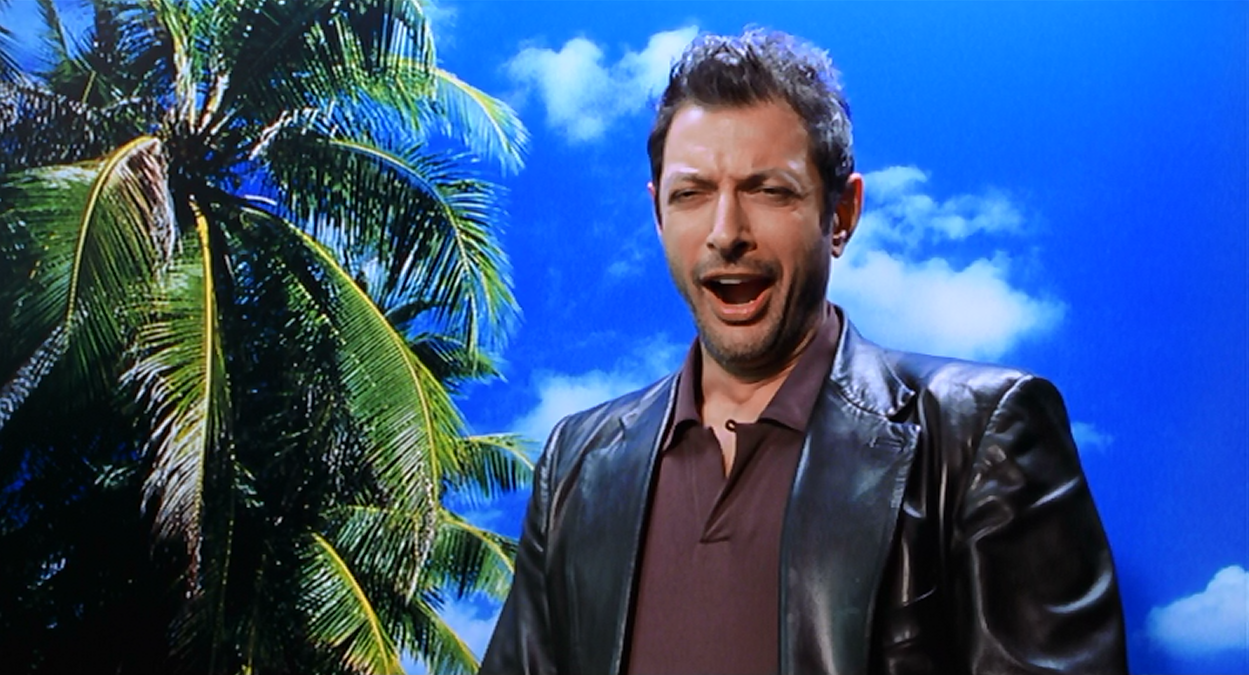
I lost interest in the Jurassic franchise about halfway through The Lost World: Jurassic Park and never got on board the franchise again (I still haven't seen Jurassic Park III and will most likely wait until Jurassic Not-Yet-5, as I like to call it, comes to Blu-ray). I remember falling asleep in the theater during The Lost World--at some point between Julianne Moore nearly falling to her death while glass slowly breaks beneath her and the lame moment when a raptor gets kicked in the face by the gymnastic moves of Jeff Goldblum's preteen daughter, I dozed off with my eyes open--and I got the sense that Spielberg, whose first shot of Goldblum in The Lost World shows the star yawning in a subway station, was equally disinterested with the material in his own sequel. (Fifteen years later, you could sense the same thing when Christopher Nolan only truly became alive during the stunning plane hijack sequence for The Dark Knight Rises, and for the rest of the project, it felt like the death of Dark Knight star Heath Ledger had sapped Nolan of his enthusiasm and energy.) Spielberg was phoning it in. He, in fact, later admitted in interviews to experiencing a constant feeling of "Is that all there is? It's not enough for me" throughout the filming of The Lost World. However, there is one moment in The Lost World where Spielberg didn't phone it in, and it's that literal cliffhanger scene with a petrified Moore unable to move or sneeze, the only genuinely nerve-wracking scene in The Lost World, as well as the only moment where Spielberg is back to his old enthusiastic and alert self, and it's not even a dinosaur attack.
So the Jurassics have never been my favorite kaiju movies. But Korean director Bong Joon-ho's The Host, a.k.a. Gwoemul (Korean for "monster")? Now that, to me, is the perfect kaiju movie, in which the human side of the movie is, for a change, as satisfying as the monster action and isn't an ordeal to sit through in order to get to the monster action. The Host is an effective mix of monster movie thrills, dysfunctional family comedy and political satire (about the incompetence of both American and Korean institutions) that's reminiscent of the anti-nuke satire in Ishirô Honda's original 1954 version of Godzilla.
Bong wanted to take everyday people like the extremely flawed members of the working-class Park family (in comparison to Sam Neill's sole flaw of being awkward and standoffish around kids, which isn't all that interesting as a character flaw) and place them in a central role that's usually reserved in monster movies for scientific geniuses or muscle-bound heroes, the kinds of characters Bong says he finds to be boring. His risky and unconventional decision resulted in my favorite human protagonists in an earthbound kaiju movie since, well, the trio in Jaws. Like all the films in Edgar Wright's superb Cornetto trilogy, The Host isn't a genre spoof; it's a thriller with genuine stakes that happens to be comedic and is full of characters worth being invested in, so that when one of the protagonists dies or is nearly dead, it's a moment that genuinely stings.
Even the creature in The Host, despite being an efficient and single-minded killing machine, or rather, in the parlance of both Matt Hooper and Jaws trailer announcer Percy Rodrigues, an "eating machine," is imbued with personality too. The film's digital FX may vary in quality, but they're never too cartoonish-looking. The creature's clumsy gait cleverly mirrors the klutziness of Host star Song Kang-ho's anti-hero Park Gang-du. Sure, Gang-du learns to be a better dad just like in that sappy Jurassic Park/Billy Crystal/Adam Sandler storytelling device that annoys me so much, but The Host handles that device so much better. It also handles humor better than Roland Emmerich's Jurassic Park-ified 1998 reboot of Godzilla--a kaiju movie in the form of a terrible and unfunny '90s Fox sitcom stretched out to over two excruciating hours--did (the terrible '90s Fox sitcomminess of it all is further enhanced by Emmerich's casting of both Maria Pitillo, star of Fox's short-lived Partners, as Matthew Broderick's love interest, and Simpsons veteran Hank Azaria, star of Herman's Head, a.k.a. Inside Out if it were an oversexed '90s Fox office sitcom).
The Host's effectiveness as both a character study and a creature feature is precisely why I've never warmed up to any of the old-school Godzilla movies, except for the intriguing first movie, which I first caught on TCM, luckily without the stupid Raymond Burr-related changes that were made to it by the movie's first American distributor (the horrendous dubbing in the American versions of these films has also made me avoid the Godzilla franchise; except for spaghetti westerns and some of the Studio Ghibli films, I can't stand watching foreign films when they're redubbed by Americans or the British). As a kid, I took one look at 1973's Godzilla vs. Megalon back when it was once the feature presentation on Mystery Science Theater 3000 and thought, "That's the formula for Godzilla? It's a terrible one. Nah, I think I'll skip the other Godzilla flicks."
Godzilla vs. Megalon is one of the least beloved Godzilla installments, partly because Godzilla was basically a guest star in his own movie. It was produced during a time when the Toho Studios franchise was past its prime and had abandoned its nifty roots as an allegory about post-war Japan to strictly cater to the kids in the audience. I know Godzilla vs. Megalon is a lousy way to be introduced to the Godzilla franchise. It would be like if someone who's never seen any of the 007 movies chose A View to a Kill or Die Another Day as their first 007 flick to watch; they won't understand what all the fuss over the other movies is about. But Godzilla vs. Megalon is a good example of how boring and pointless the human characters tend to be in kaiju movies, a problem that doesn't afflict the 1954 Godzilla and is also a problem I was hoping British director Gareth Edwards wouldn't fall prey to when he got the chance to not repeat Emmerich's countless mistakes while reintroducing Godzilla for a second time (not counting the two Americanized and badly butchered Godzillas that starred Perry Mason) to non-Japanese audiences.
While there's much to enjoy about Edwards' gritty, Fukushima-inspired 2014 version--like Alison Willmore said, the MUTOs (Massive Unidentified Terrestrial Organisms) and the redesigned Godzilla look terrific and are "lumbering and massive with a sense of incredible heft to them, despite being CGI creations"--Edwards, unfortunately, has a problem of focusing his films on white lead characters who aren't as interesting as he thinks they are. It's a problem that goes back to Edwards' prior sci-fi film Monsters, his low-budget 2010 breakthrough. Monsters is a film about Mexico experiencing first contact with giant alien creatures, and it's told not through the eyes of any of its citizens but through the eyes of the most annoying white hipsters since those douches who gentrified the barrio side of Arlen and slipped salmon into Enrique's fish tacos?
As The Daily Dot astutely pointed out, Godzilla suffers from a boring white guy problem--a problem that mars another recent kaiju flick, Pacific Rim--and is part of a long line of Hollywood tentpole blockbusters that opt for the least interesting characters as their leads. Out of a cast that includes the likes of Ken Watanabe, Bryan Cranston, Elizabeth Olsen, David Strathairn and Sally Hawkins as audience surrogates, Edwards chose to center the film around the individual with the least charisma or personality? Yo, Honest Trailers, your "Discount Channing Tatum" line is dead fucking on.
"The funny thing here is that the franchise originated in Japan. I actually haven't seen any of the old movies, but I'm going to assume that they--at least the Japanese ones--don't use Japan and its people as merely the backdrop against which white protagonists can shine and save the day," noted one of the teen authors of the blog Cool Asian Kids. "And that's essentially what the new film does."
Warner Bros. advertised Edwards' whitened-up take on the Japanese franchise as Godzilla and his atomic breath vs. Cranston and his atomic toupee--the studio made it look like Cranston would be channeling Dr. Loomis from Halloween--but (spoilers!) that's not the movie we got. Edwards told Willmore in a BuzzFeed interview that he chose to kill off Cranston's nuclear physicist character early on in Godzilla in order to raise the movie's stakes and create the sense that "anything could happen." Sure, Cranston's physicist dad character is kind of a boring white guy too, but kicking his badacondunk out of the movie so early is such a mistake because Cranston is much more alive and present in his scenes than Blando McBombdefuser--who, as Willmore says, "jumps through a series of increasingly improbable plot hoops to stay in the path of the creatures"--is in his.
It's just the wrong character to be spending a huge chunk of the movie with (and as the type of white savior Cool Asian Kids rightly criticizes him as being, he's amusingly inconsequential in comparison to Godzilla's heroics in the movie), and it's a shame, because Edwards kicks the movie off so promisingly with one of my favorite opening title sequences in a recent tentpole blockbuster. The sequence is a cleverly assembled montage of both real and fake archive footage that establishes the history of MUTOs, nicely scored by Alexandre Desplat--who's skillfully following in the footsteps of the old Akira Ifukube score music that both Pharoahe Monch and Tracy Morgan love so much--and surrounded visually by hastily redacted text from fake government files. The Prologue Studios opening titles are one of the 2014 Godzilla's few instances of humor, one of many things Edwards accomplishes better than Emmerich did. The passages that are redacted to isolate the names of the cast and crew are either silly, freeze-frame-worthy sentences like "The monster communicates through music composed and conducted by Alexandre Desplat" or are full of in-jokes like "Walter Malcolm has claimed that government men dressed in white lab coats routinely appear at site and Bryan Cranston shortly after the event all residents are sworn to silence." Walter is a reference to Breaking Bad, and Malcolm is, of course, a shout-out to Malcolm in the Middle (although shouldn't it say Hal, Cranston's character's name on Malcolm, instead of Malcolm?).
Despite all the sleep-inducing moments involving Discount Channing Tatum, as well as the fact that it's nowhere near the league of The Host, the 2014 Godzilla is superior to Emmerich's previous attempt to bring Godzilla to America and is more effective at building tension and staging monster action. Also, it's not trying to rip off so much of Jurassic Park. Recent Throwback Thursday guest blogger Hardeep Aujla, who hails from Word Is Bond, a U.K.-based hip-hop blog I've contributed pieces to, disagrees. He dislikes the 2014 Godzilla so much that he's skeptical about how Edwards will handle Star Wars in his next directorial effort, Star Wars Anthology: Rogue One. So Hardeep, how would you have improved the 2014 Godzilla if you worked on it? Would you have made the reboot into a boy-and-his-best-friend-who's-a-strange-creature story like the old Godzilla sequels, the Gamera sequels and my favorite of all those stories, The Iron Giant? Or would you have said "Fuck the American audience" and told it from the point of view of Ken Watanabe's scientist character? Or would you have completely gotten rid of any audience surrogate characters and told it from the point of view of Godzilla, which would have probably caused the movie to cost 200 million more American dollars to make but is a kaiju movie that's never been done before?
***
Hardeep Aujla: I think I read that Godzilla's screen-time was only 10 minutes in the whole 130-something minute film. This isn't Jaws, Edwards - less is not more in kaiju films.
As for what I would have done, I love The Iron Giant and that whole story too but I would've gone with your last suggestion, hands down. This is what I always thought AvP should have been. I would have started the film introducing a crack team of badasses equal to Dutch's or Apone's team, but then would've had them torn apart gloriously by the titular creatures (perhaps they stumbled into the vicinity of a one-on-one confrontation). Then the title of the movie comes up accompanied by strong audio tone with the intention of stating "That's fucking right" to the audience and their expectations. I'm thinking a very loud shrill-type noise that starts off monotonous but evolves a couple of seconds later into something with a bit more character before ultimately revealing itself to be the war-cry of either a Predator or an Alien as we cut straight back to the duel (yep, this idea has been rolling around in my head for a while). From there on out we get a pure Aliens versus Predators narrative with no more English spoken.
I haven't seen many of the old kaiju movies (the Gamera trilogy from the 90's is superb though), and the ones I did see were a long time ago, but I do remember some very protracted sequences where it's just Godzilla or his kid doing stuff and the audience just follows along. I may be completely fabricating those memories though. Either way, the challenge for Gareth Edwards would have been to make an engaging film like this in the modern era, one that is good enough to stand strongly unaided by human faces and words. There could of course be some human characters (retaining Ken Watanabe who was wasted in the actual film) but they should have minor roles. I can see how this would be tricky for a character like Godzilla who seemingly doesn't have a rich variety of activities to fill a movie with apart from swim, smash and roar, but therein lies the challenge, and I would be a lot more impressed with Gareth Edwards as a filmmaker if he pulled it off, or at least respect his effort if he tried.
None of Alexandre Desplat's score cues from Godzilla are currently in rotation on AFOS, but Desplat's main title theme ought to be.
Every Friday in "'Brokedown Merry-Go-Round' Show of the Week," I discuss the week's best first-run animated series episode I saw. By "the week," I mean from late Thursday at midnight to the following late Thursday at 11:59pm. Today's Show of the Week has a bizarre and difficult-to-pin-down posting schedule, but its latest episode debuted online last Friday morning. "Brokedown Merry-Go-Round," a two-hour block of original score tracks from animated shows or movies, doesn't have a schedule that's as difficult to pin down. It airs weekdays at 2pm Pacific on AFOS.
Starz Digital Media's How It Should Have Ended series/channel is always reliable for a few grins or light chuckles over its short parodies of laughable plot holes and denouements from recent Hollywood blockbusters. In its latest installment, HISHE tackles Gareth Edwards' Godzilla reboot, and HISHE writers/voice actors Tina Alexander and Daniel Baxter get in a few good digs about the collateral damage caused in the Edwards film by Godzilla's battles against the MUTOs (Massive Unidentified Terrestrial Organisms).
"Oh, sure, when Godzilla destroys half the city and kills the unstoppable threat to save the world, everyone cheers. But when I do it, everyone gets all grouchy and judgmental," whines the Henry Cavill version of Superman during "How Godzilla Should Have Ended." He shows up in MUTO battle-ravaged San Francisco to shame both Godzilla and the unusually cheery survivors and is still butt-hurt over Superman comics readers' negative responses to the violence in Zack Snyder's Man of Steel. (I'm starting to realize that the reason why the 2004 Dawn of the Dead remake remains Snyder's most satisfying movie is mainly because of the screenplay by Guardians of the Galaxy director James Gunn, and not so much because of the contributions of the simple-minded neo-con that is Snyder. Have you ever listened to Snyder speak? All he says during interviews or commentraks is "Awesome" or "Blablabla's such a rock star.")
The animus towards Man of Steel is mostly because your latest film was such a goddamn slog, Supes, whereas Godzilla's isn't, although it's marred by Aaron Gray-Stanford-Brown-Whatever-the-Fuck's two-hour-long impression of a block of wood. As The Daily Dot astutely noted, Godzilla suffers from a boring white guy problem and is part of a long line of Hollywood tentpole blockbusters that opt for the least interesting characters as their leads. Out of a cast that includes Ken Watanabe, Bryan Cranston, Elizabeth Olsen, David Strathairn, Sally Hawkins and Godzilla, Edwards chose to center the film around the individual with the least charisma or personality? This is the same problem I had with Edwards' previous sci-fi film, his 2010 indie breakthrough Monsters. It's a film about Mexico experiencing first contact with giant alien creatures, and it's told not through the eyes of any of its citizens but through the eyes of the most annoying white hipsters since those douches who gentrified the barrio side of Arlen and slipped salmon into Enrique's fish tacos?
I wish "How Godzilla Should Have Ended" (which, like all other HISHE installments, boasts some impressive background art by Otis Frampton) focused on the Edwards reboot's boring white guy problem. But any HISHE short that has some fun at the expense of the tiresome 9/11 imagery in tentpole blockbusters like Man of Steel and Godzilla--and pits Gipsy Danger from Pacific Rim against Zilla in an amusing one-sided battle--is fine by me.
Turner Classic Movies first launched on April 14, 1994 with Robert Osborne as its host, so the channel turns 20 years old today. I don't have cable anymore, but I was able to hold onto hours and hours of unwatched programming in my DVR (whattup, Pacquiao/Clottey fight), and I DVR'd so many movies off TCM it was as if I still had access to TCM long after I lost all those channels. I don't like really old things--especially old racist movies--and TCM airs a lot of old racist movies. Yet it remains one of my favorite channels because it does much more than air the usual old racist movies. (Most of its audience is also surprisingly young. Two-thirds of the channel's estimated 62 million viewers each month are ages 18 to 49, according to the New York Times' 2013 piece on TCM.)
During Asian Pacific American Heritage Month, Hispanic Heritage Month and Black History Month, TCM devotes hours of programming to works featuring actors of color (or made by filmmakers of color) and gets film historians of color to sit with Osborne and provide their input on those films. It's aired cult favorites and obscure gems like The Crimson Kimono and Killer of Sheep that I was dying to see and weren't available on DVD when they aired (before a manufactured-on-demand service like Warner Archive came along to rescue many of those titles from unavailability) or were difficult to get access to on Netflix because they'd get stamped with that dreaded "Very long wait" status. The channel frequently exposes you to marathons of works by filmmakers you wish you were more familiar with. TCM is like film school without the outrageous tuition fees.
Ted Turner's movie channel isn't the first basic cable channel to broadcast movies uncut, commercial-free and in their original aspect ratios, but as competitors like TCM's precursor AMC, IFC and FXM succumbed to censoring their movies and inserting commercials to stay afloat, TCM has stubbornly stuck to its principles of never laying a finger on its movies (if a movie from the '70s, '80s or '90s is full of profanities, TCM airs it only late at night). Instead of ads, TCM makes a profit through experiential marketing, or as the Times explains that lofty term, "a guided tour of New York movie sites and sights on a sightseeing bus, to be offered by TCM and On Location Tours three days a week, beginning on Thursday; an annual Hollywood film festival in April; a yearly TCM Classic Cruise in December; an auction of movie memorabilia, planned for November, in partnership with Bonhams; screenings of movies like Frankenstein and To Kill a Mockingbird in theaters around the country; and DVD collections sold online and by retailers." As Osborne told the Times, all those things are "anything we can do to keep the company making enough of a profit so we don’t have to have commercials, sell underarm deodorants and all that."
Isn't Osborne just the coolest host? He's the anti-Rex Reed, as in he knows what he's talking about and he isn't a racist douchebag. And when he interviews older movie stars or filmmakers, he's the anti-James Lipton, as in he's respectful to them without coming off as creepy and he doesn't do that stupid "I'd like you to respond as your character from blankety-blank" thing. It's amazing that Osborne's still the face of TCM, even though he's started cutting back on his on-air time due to his age and recent health problems. The day when he either completely retires or dies is going to be a very sad one for TCM. I'm grateful to TCM for the following 20 moments in the channel's history (16 of them are movies I first saw on TCM and the rest of them are either special programming events or activities outside the channel schedule).
The Crimson Kimono
Asian America loves it when a young Asian American actor gets to defy Hollywood's tendency to emasculate Asian guys and play the romantic lead on TV for once, whether it's John Cho hooking up with Gabrielle Union on FlashForward or currently, Steven Yeun romancing Lauren Cohan on The Walking Dead. But decades before Cho or Yeun, James Shigeta actually got the girl in Samuel Fuller's amazing 1959 noir The Crimson Kimono. As Philip W. Chung wrote in YOMYOMF, "Now Fuller wasn't perfect. His House of Bamboo (1955) was a typical white man in Asia action thriller, and in China Gate (1957), he couldn't resist putting Angie Dickinson in yellow face, but overall, his films were pretty progressive." And The Crimson Kimono is a great example of Fuller's progressiveness, as Shigeta's Nisei homicide detective Joe Kojaku falls for art expert Christine Downs (Victoria Shaw) while he and his partner (James Corbett) investigate a stripper's murder in Little Tokyo, a part of L.A. that receives a remarkably non-stereotypical treatment from Fuller's film. As Ryan Reft said in his piece on The Crimson Kimono for KCET, "Fuller attempts to distinguish Little Tokyo, but not in any exoticized way; these are just normal Americans going about their business." The Crimson Kimono is one of several Fuller films I was introduced to by TCM, and it's made me want to see more of his works.
Killer of Sheep
A black-and-white 1977 gem that UCLA grad student Charles Burnett made about the working class in Watts, Killer of Sheep wasn't released theatrically until 2007 and is a landmark achievement in both African American cinema and indie cinema I was first exposed to through a TCM marathon of Burnett works hosted by Burnett and Osborne. Too many contemporary American films that are centered on communities of color are heavy on the speechifying or pandering and do more telling than showing. Killer of Sheep simply shows. At one point, Burnett's camera captures a little girl (dog mask-wearing Angela Burnett, the director's daughter) playing with her doll and clapping and mumble-singing along to Earth, Wind & Fire's "Reasons." The kid's off-key sing-along and a wordless slow dance between her parents to Dinah Washington's "This Bitter Earth" are examples of how Killer of Sheep establishes the film's setting and mood more effectively than any piece of lengthy dialogue or voiceover ever could. Another moment along those lines is the visual of kids leaping from rooftop to rooftop--hey, they're the first parkourers--and it's such a striking shot that it's no wonder Mos Def turned it into the cover of his 2009 album The Ecstatic.
Three Days of the Condor
I first caught Three Days of the Condor back-to-back with Marathon Man as part of a TCM night of '70s political thrillers, one of the channel's countless, cleverly programmed theme nights. Long before Robert Redford gave one of the best performances in a Marvel Studios blockbuster in Captain America: The Winter Soldier, he was attempting to outwit assassins hired by his own CIA employers to snuff him out in this enjoyable 1975 conspiracy thriller that heavily influenced the Russo brothers when they directed The Winter Soldier. While Chris Evans is joined in his crusade against HYDRA by a nicely diverse cast of allies (Scarlett Johansson, Anthony Mackie, Samuel L. Jackson and Cobie Smulders), Redford, the lone survivor of a CIA office massacre, has only his wits to keep him alive. The silliest part of Three Days of the Condor is that Redford's supposed to be playing a book nerd, and when you think "book nerd," you don't picture Redford. You picture sickly Steve Rogers before the super-soldier serum transformed him into Captain America. But it's a testament to Redford's skills as an actor that he makes you buy his character's nerdiness and inexperience in the field despite his movie-star looks.
Godzilla (1954)
If your idea of Godzilla is that it's a cheesy and campy franchise, prepare to be surprised by how dark and suffused with post-Hiroshima/Nagasaki paranoia the first and most serious of the Toho Godzilla films really is. Monsters director Gareth Edwards' upcoming Godzilla remake is reportedly modeled after the 1954 Godzilla, so if you're turnt up by the recent Godzillatrailer footage, check out the 1954 film to get a taste of what Edwards intends to accomplish with his gritty remake. The version of the 1954 film I saw on TCM was the original Japanese version, so if you wind up with the version where Perry Mason is frequently seen interrupting Zilla's rampage, get the hell rid of it.
Dersu Uzala
My journalism teacher Conn Hallinan once recommended Dersu Uzala to me in class while we were discussing a capsule I wrote in the campus paper about the video release of one of my favorite films, Akira Kurosawa's Seven Samurai. So when the 1975 Kurosawa film turned up on TCM 17 years after he first mentioned it to me, I finally saw it and was particularly impressed by the nail-biting sequence where Russian explorer Arseniev (Yuri Solomin) and his Siberian guide (Maksim Munzuk), the titular woodsman, battle both the harsh winter winds and their own physical exhaustion to build a straw hut in order to save themselves. It's one of my favorite sequences in a Kurosawa film.
Yesterday, Today and Tomorrow
Like Kurosawa, Vittorio De Sica, the director of Bicycle Thieves, is another foreign filmmaker whose works I got to see on TCM. I don't think I've ever seen a film like De Sica's Yesterday, Today and Tomorrow, a 1963 triptych of stories each set in a different part of Italy, with Sophia Loren and Marcello Mastroianni starring as a different couple in each one. Loren's striptease towards the end of the film still sizzles despite its chasteness.
This one's for any Godzilla fan. Unlike say, Tracy Morgan, I'm not much into Godzilla movies, but as someone who's a fan of the 2006 Korean monster movieThe Host, I can understand why some of my listeners in the past were so enthusiastic about Godzilla flicks and would request to hear themes from those films. Out of all the Akira Ifukube marches I've heard from Godzilla score compilations, "Monster Battle March" from Invasion of the Astro-Monster, a.k.a. Godzilla vs. Monster Zero, is the best-sounding one.
Is it me or do Ifukube's Godzilla scores sound more like Jewish monster movie music than Japanese monster movie music? I keep expecting Godzilla to dance the hora.
1. Michael Giacchino, "Roar!" (from Cloverfield), Little Jacket Music, Inc.
2. Akira Ifukube, "Godzilla Main Title" (from Godzilla), The Best of Godzilla 1954-1975, GNP/Crescendo
3. Akira Ifukube, "Four Monsters Attack Tokyo" (from Destroy All Monsters), The Best of Godzilla 1954-1975, GNP/Crescendo
4. Akira Ifukube, "Ending Title" (from Godzilla vs. Destoroyah), The Best of Godzilla 1984-1995, GNP/Crescendo
5. Takayuki Hattori, "Godzilla Roars/Godzilla's Theme: 2000 Millennium," Godzilla 2000: Millennium, GNP/Crescendo
6. Max Steiner, "Main Title," King Kong, Turner Classic Movies Music/Rhino Movie Music
7. The Radio Symphony Orchestra of Cracow, "Main Title" (from The Beast from 20,000 Fathoms), Sci-Fi's Greatest Hits Vol. 3: The Uninvited, TVT
8. The Radio Symphony Orchestra of Cracow, "Main Title" (from Them!), Sci-Fi's Greatest Hits Vol. 3: The Uninvited, TVT
9. Jerry Goldsmith, "Parker's Death," Alien: Complete Original Motion Picture Soundtrack, Intrada
10. Alan Silvestri, "Main Title" (from Predator), Sci-Fi's Greatest Hits Vol. 3: The Uninvited, TVT
11. Dimitri Tiomkin, "Main Title" (from The Thing from Another World), The Thing from Another World/Take the High Ground!, Film Score Monthly
12. Ennio Morricone, "Humanity (Part II)," The Thing, Varèse Sarabande
13. Byeong Woo Lee, "Sudden Attack in Broad Daylight," The Host, Milan
14. Byeong Woo Lee, "Hyun Suh!," The Host, Milan
15. Mel Tormé, "Monsters Lead Such Interesting Lives" (from Daffy Duck's Quackbusters), Mel Tormé at the Movies, Rhino
16. Jerry Goldsmith, "Gremlin Credits" (from Gremlins 2: The New Batch), Hollywood Soundstage: Big Movie Hits Volume 1, Varèse Sarabande