Showing posts with label Alan Sepinwall. Show all posts

Friday, October 9, 2015

"Brokedown Merry-Go-Round" Show of the Week and Last Week: Rick and Morty, "The Wedding Squanchers" and "Look Who's Purging Now"

Look, it's that baby sun from Teletubbies, 40 years and six kids later.
Occasionally on Friday, I discuss the week's best first-run animated series episode I saw. It's the "Brokedown Merry-Go-Round" Show of the Week. "Brokedown Merry-Go-Round," a two-hour block of original score tracks from animated shows or movies, airs weekdays at 2pm Pacific on AFOS. Jemaine Clement and Rick and Morty series composer Ryan Elder's "Goodbye Moonmen," the original song from Rick and Morty's "Mortynight Run" earlier this season, is now in rotation during "Brokedown."

Last week's "Look Who's Purging Now," the penultimate episode of Rick and Morty's second season, and this week's "The Wedding Squanchers," the Red Wedding-inspired second-season finale, aren't intended to be viewed as a two-part story. But they have a lot in common, so they could have been packaged together as one big finale, which would have been nice to experience because I can never get enough of this often brilliant show. The purging episode is a final statement on Morty before the long break between seasons, just as "The Wedding Squanchers," which doesn't pay as much attention to Morty, is a final statement on Rick, and a couple of threads tie both episodes together.

One of those threads is the way the smartest man in the multiverse continually puts on a tough and macho exterior to never let anybody--whether it's Evil Rick last season or, in these last two episodes, any of the Smiths or even his friend and occasional criminal accomplice Birdperson (Dan Harmon)--see him at his most vulnerable, afraid or emotionally open, like when he pretends that he doesn't get sickened by the violence he witnesses in "Look Who's Purging Now," even as he's puking over how gory the carnage gets. The other thread is Rick's unspoken love for the family that, because of that tough exterior of his, will never be able to know of the grand gestures he makes to protect them.


The funniest moment in "Look Who's Purging Now," the first Rick and Morty episode where Harmon, his showrunning partner Justin Roiland and frequent Rick and Morty writer Ryan Ridley ("Meeseeks and Destroy") all share writing credit, has little to do with the episode's comedic and ultra-gory take on the "ordinary law-abiding citizens are given an hour or 12 hours to wile out and unleash their repressed rage on people" trope from Star Trek's "The Return of the Archons" and more recently, The Purge. Instead, the funniest moment is a scene that takes a pause from the bloodshed to revisit Harmon's frustrations about one of the most overused storytelling devices in screenwriting in recent years.


The tired device known as in medias res, a staple of Alias and Arrow or any network TV pilot of the last 10 years, gets another tongue-lashing from Harmon, this time in the form of Morty. Rick and Morty are trapped on an Amish-like cat people planet where the laws appear to have been modeled after the totalitarian society in The Purge ("That movie sucked," says Summer in a line that was perhaps contributed by Ridley, who reportedly found the concept of a Purge-inspired story to be hacky). Carjacked by a teen named Arthrisha (Baby Daddy star Chelsea Kane, an old castmate of Roiland's from his Disney/Fish Hooks days who clearly relishes being allowed to curse on this show), Rick and Morty are forced to seek refuge from the temporarily trigger-happy participants of the nighttime "Festival" by hiding out in the home of an old lighthouse keeper who refuses to participate in any of the purging. The kindly lighthouse keeper tells Rick and Morty, "I will let you use my lighthouse for shelter and beacon-sending on the condition that you listen to my tale." But instead of regaling Morty with a captivating story about an adventure on the sea, his tale turns out to be a clichéd rom-com screenplay he's been writing. The moment he read aloud to Morty the words "TITLE: THREE WEEKS EARLIER," I knew where the scene was headed and laughed my head off.

"I'm not a huge fan, personally, of the whole 'three weeks earlier' teaser thing," says Morty as he gives a critique to the lighthouse keeper about his screenplay. "I feel like, you know, we should start our stories where they begin, not start them where they get interesting."

I'm with you on that, Harmon, er, I mean, Morty.

Jesus, Dutch Wagenbach, take it fucking easy. It's just a cat.

Morty's argument with the old man over screenwriting and bad manners triggers a rage that Morty, who's initially appalled by the ways of the purge planet, is in denial about. Once that murderous rage is unleashed, Morty, like any other hormonal teenager, is unable to shut it off, and that leads to the show's most enjoyable use of an existing song this season, Tony! Toni! Toné!'s 1990 new jack hit "Feels Good."

I'm not so fond of the clunky way "Feels Good" has been looped and re-edited by the show's music editor (it's been shorn of the classic sample of a girl's orgasmic moans from "When Boys Talk" by Indeep of "Last Night a D.J. Saved My Life!" fame). But I love how the episode first uses "Feels Good" non-diegetically and then changes it to diegetic after Rick--who sedates the mech-suited Morty with electric shocks because even he's had enough of Morty's killing spree--hands over Morty's mech suit to Arthrisha to allow her to go after the rich assholes who have created the Festival just to get the planet's lower-class citizens to kill each other off.


In "Look Who's Purging Now," Morty becomes even more of a monster than Rick at his most cold-blooded. It's a really dark way to close out this season's arc of Morty becoming desensitized to the madness around him--is this also how Evil Morty originated in that other dimension we haven't heard from since "Close Rick-Counters of the Rick Kind"?--but when you look back at the many different kinds of mayhem Morty has encountered since the very first episode, his repressed rage makes a lot of sense.

But as IGN points out in its review of "Look Who's Purging Now," a tiny light emerges at the end of this darkness, and it comes from a surprising source: Rick. "Several times in the past we've seen Rick show a genuine affection for Morty and even go out of his way to spare his grandson from emotional suffering. That trend repeated here as Rick led Morty to believe that the boy's murderous behavior was the result of a drugged candy bar rather than latent emotional trauma and teenage hormones," said IGN. Rick's act of deception to make Morty feel better is an interesting way to foreshadow the sacrifice Rick makes at the end of "The Wedding Squanchers."

Tuesday, May 26, 2015

Is Christina Hendricks a "trouper" or "trooper"?

Before Mad Men, Christina Hendricks was best known for appearing on Firefly, the show where white people always curse in Chinese, but none of the writers ever stopped to think, 'Hmm, isn't it fucking weird that none of the cast is actually Chinese?'
A few days ago, I was looking for the YouTube link to that old viral video of a KTLA morning TV interviewer transforming into a total dweeb after Christina Hendricks, star of the recently-concluded-for-good, unlikely-to-do-reunion-movies-guest-starring-the-Harlem-Globetrotters AMC hit Mad Men, mentions how she received news of her first-ever Emmy acting nomination while she was preparing to take a bath. The image of her bathing is all the interviewer can talk about for the rest of the interview. Way to keep it professional, KTLA guy! "He sits there silently for a whole minute, and by the time he gets back into the conversation, he's a stuttering mess. Although to his credit, he still has his pants on," wrote Uproxx in 2010.

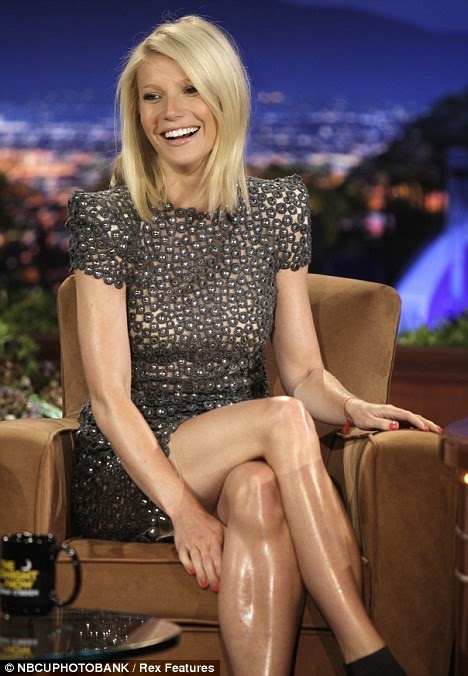
This wasn't Conan turning his awkwardness around hot women into the kind of comedy bit Inside Amy Schumer hilariously parodied in its recent sketch about the clichés that always take place during late-night talk show interviews with flirty female guests (I love how Schumer's sketch references that 2009 Conan-era Tonight Show interview where Gwyneth Paltrow's legs somehow got greasier and greasier after each commercial break). This was a journalist who, in front of an all-female news desk, was unable to prevent himself from regressing into a nervous 14-year-old school dance attendee in the middle of one of the least suitable places for doing that, a mostly non-comedic morning news show, with Hendricks throwing in a couple of amusing "Down, boy!"-type responses, like "That [bath story] was like two conversations ago, but thank you for remembering," which were both why the clip went viral. Why do the most awkward and NewsBeFunny YouTube channel-friendly things always happen on morning shows, whether it's The Today Show, The View or Fox & Friends?


Then I finally found the KTLA clip and copied and pasted into TextEdit both the URL and embed code, which is something I always need to do with YouTube videos I might want to include someday in posts such as this. I gave the TextEdit file the name of "Christina Hendricks Handles Brian McFayden's Drooling Like a Trooper."

But as I was typing out the file name, I became unsure about the spelling of "trooper." I kept changing it back and forth between "trooper" and "trouper."


I hear the expression "handling it like a trooper" all the time. But I've never stopped to think, "Where the hell does that expression come from?"

I opened the dictionary in my MacBook. A trooper is either "a state police officer" or "a private soldier in a cavalry, armored or airborne unit." I knew that. I didn't know a trooper can also be "a cavalry horse" or British jibber-jabber for "a ship used for transporting troops." So in the U.K., I guess that means the novel and movie title Starship Troopers sounds to them like Starship Starships. The title Starship Starships would be as absurd as whitewashing the Filipino hero of a sci-fi novel, which Hollywood would never do, right? Oh, wait...

Meanwhile, a trouper is "an actor or other entertainer, typically one with long experience" or "a reliable and uncomplaining person." I always thought it was "handling it like a trooper" because they're handling it like a brave soldier or a slick and smooth member of the '90s R&B group Troop.


I guess "a reliable and uncomplaining person" makes sense too. So which sides have professional writers taken in the war between "trouper" and "trooper"? While mentioning Sopranos star Nancy Marchand back in his Newark Star-Ledger, pre-HitFix days (the year 2000, to be exact), TV critic Alan Sepinwall said, "Marchand, who has cancer, proved herself to be a real trouper." Over at MTV News, where a Nicki Minaj backup dancer who received a snake bite qualifies as news, they said that the bitten dancer "handled it like a trooper." Meanwhile, what do etymologists outside of Dr. Webster, Dr. Merriam, Dr. Wagnalls and Dr. Uptown Funk have to say about all this?

The Grammarphobia Blog says "trouper," which also means "a member of a performing company (theatrical, singing or dancing)," also known as a troupe, has evolved in the 20th century so that the term can be used to refer to "a hard worker, a good sport, a reliable person, a mensch." Their stand on "Trouper or trooper?" is "trouper" over "trooper" because it's been spelled "trouper" since the 19th century, but due to Google searches showing "like a trooper" to be more commonly used than "like a trouper," "trooper" is alright with them too.


I also checked with a site called Daily Writing Tips. The site, which notes that "troop" and "troupe" both originated from the same French word ("troupeau," a variation of "troppus," the Latin word for "flock," according to my MacBook's dictionary), takes the following stand: "If the context has to do with courage, trooper is appropriate. If the context has to do with cooperation, dependability and the show business attitude of 'the show must go on,' then trouper is the word to use."

Joan from Mad Men was both a bit courageous (to be awake and sharp-witted that early in the day) and very unflappable in the face of live-on-L.A.-morning-TV drooling. So either spelling is correct--unless you're in the galaxy where a band of rebels has been fighting an oppressive intergalactic empire for decades and "handling it like a trooper" means you're handling it like a genocidal space Nazi in a shiny white helmet.

Wednesday, April 11, 2012

And now, something interesting someone else wrote about a work that's represented in my "Ask for Babs" mix: Midnight Run

There was this weirdo Southern-accented Internet film critic in San Jose named Steve Rhodes who always wore brown Cosby sweaters and looked like the guy whose head blew up at the beginning of Scanners. He was always seen at press screenings talking into pay phones. So whenever I see an old-timey pay phone, I'm reminded of Steve Rhodes, who would make for a great Halloween costume someday.
Why did I put together a 67-minute DJ mix about Universal, which is celebrating its 100th anniversary (the official anniversary date is April 30)? Because Universal was the studio that Spike Lee turned to when Paramount wanted him to change the ending of Do the Right Thing, and Universal simply said, "Don't change it." And when Martin Brest wanted to make Midnight Run with difficult-to-work-with, not-exactly-a-box-office-draw-anymore Charles Grodin as The Duke because he saw in Grodin a certain something he couldn't see in other stars if they played The Duke, Paramount kept insisting to Brest that he hire Cher (WTF?) or Robin Williams instead. But not Universal. They said yes to the casting of Grodin.

Do the Right Thing and Midnight Run are two of my favorite movies, and I know my "Ask for Babs" mix makes it look like I'm fawning over a corporation, but Universal is a major reason why those movies are two of my favorites. They didn't interfere with what Lee and Brest wanted to accomplish with their respective works.

And why am I doing so many posts about the Universal movies that are referenced in my "Ask for Babs" mix? I want some more people to listen to the mix. It's not attracting as many people as say, HitFix TV critic Alan Sepinwall's blog posts do.

Sepinwall, whom I once had the honor of running into at a very small line at Comic-Con while waiting to get a graphic novel purchase signed (I had forgotten what Sepinwall looked like, so I didn't realize it was him until he introduced himself to the novel's author), does many of the best recaps of Mad Men and Community, and long before Mad Men, his weekly analysis of The Wire was the best. There's a Sepinwallism I've picked up from reading so many of his recaps. It's this.(*) It sometimes irritates me if he does it more than once in a recap, and I hate that I picked it up from him for a while. It's a habit I recently got rid of.

(*) Putting asterisked footnotes between paragraphs instead of placing them where they belong: at the very bottom of the article. I've started putting all footnotes at the bottom again.

This Sepinwallism can make his posts have a bizarre and choppy flow(**) to them. The placement of footnotes between grafs makes it feel like Pop-Up Video, the show that turned viewers into experts on important sociopolitical concerns like the making of Lionel Richie's 1983 "Hello" video, is invading my reading.

(**) Like Das EFX's "diggity-diggity" flow, which every other rapper started biting in 1992 before finding it to be passé in 1993.

Sepinwall is an excellent writer, but if a post of his is interrupted by five of these asides--hello!(***)--instead of just one or two, it can be a little frustrating. However, I've learned to live with it. To borrow a memorable line from a drama Sepinwall used to cover, I've learned to let Sepinwall be Sepinwall.

(***) The not-so-blind actress who played Laura, Lionel Richie's blind object of desire, was always mistaken for being blind by people on the street.

I especially like how Sepinwall is a Midnight Run fan. He's blogged at length about the 1988 movie twice.

An AFOS listener once whined on my Facebook wall about having to hear so many selections from Danny Elfman's Midnight Run score get shuffled by AFOS in one day. The reason why there are so many selections from Midnight Run in rotation is because I adore Midnight Run and its score, moron #1. The dismissal by some people of Midnight Run as just another lousy buddy movie (it isn't, moron #2, moron #3 and moron #4), as well as the fact that film and TV score album labels like La-La Land or Intrada haven't reissued the film's out-of-print score, which, for a couple of years, was ubiquitous in movie trailers, are examples of how underappreciated the film has been since its release (even though home video made it popular enough to spawn a series of '90s TV-movies starring Christopher McDonald as Jack Walsh).

When I discovered this delightfully foul-mouthed, mostly improvised road movie and its score in 1989, a few months after the movie had to compete with the likes of Die Hard and Who Framed Roger Rabbit in theaters and ended up getting lost in the summer shuffle, I felt like the only kid in the world who loved Midnight Run (I even read the novelization, which must have been adapted from a really early version of George Gallo's script because the book depicted Jack as a total racist, a trait that was eliminated from the movie). It's fantastic to see I wasn't alone in 1989:
Here's the thing: if "Midnight Run" was just an action comedy about an odd couple joined at the wrist while dodging bullets across the country, it would still be a fun, memorable movie. But what's always elevated it above that, to me, are a pair of scenes, with the first and most important being Jack's visit to his ex-wife Gail's house in Chicago. It starts out funny, with The Duke telling Gail's young son that he's a white collar criminal, then turns ugly as Jack and Gail relive the same old arguments for the 5000th time, then goes heartbreaking when the daughter Jack hasn't seen in nine years appears in the door and, like flipping a switch, stops the argument in an instant…

In that moment, you feel the weight of every single thing Jack has lost and how far he's fallen, and then once you connect Serrano to Jack, it becomes a redemption story. You don't want Jack to bring The Duke to jail and set him up to be killed, but you do want Jack to get a win, badly.

And not only does that scene give much greater heft to Jack's character, but to the relationship between the two men. From that moment on, while they still fight and curse and claw and argue, it's different. The Duke saw a part of Jack Walsh that very few people have ever seen, and he was quiet and respectful in that moment (and never once brings her up again, even though it would be so easy to push Jack's buttons that way), and Jack respects and appreciates him in turn for that…

And here's the other big dramatic moment, as Serrano finally comes face to face with the man who embezzled millions from him and gave it to charity. To this point, it's not like the stakes of the movie have been low - Jack and The Duke have been shot at and beaten up many, many times over - but the violence was all on some level cartoonish (again, see Jack and the helicopter) and Serrano was mostly used as comic relief, showing up for 30 seconds at a time to threaten to hurt someone in an amusing way. But when he gets into the back of that car with The Duke, there's nothing funny happening. This is stone-cold, sincere menace (the added promise to kill The Duke's wife is a nice touch), it is a man who will do anything to hurt the characters we've grown to like, and it makes the tension of the airport scene that follows so much more palpable than if Serrano was always played for comedy…

And this post is now at least one week later and a thousand words longer than I had planned. (And that's without even going into other parts of the movie, like Danny Elfman's marvelous blues-y score, which I will listen to if the writer's block is really hitting me hard.) There's really no point to writing 3000+ words about a two-week-old screening of a 23-year-old movie. But it's the movie I love watching most in all the world. And every now and then it's nice to be able to articulate the many reasons why.

Wednesday, January 5, 2011

"Rock Box" Track of the Day: Pulp, "Like a Friend"

On Monday, I began a series of weekday posts about each of the existing songs that are streamed during the "Rock Box" block on A Fistful of Soundtracks (4-6am, 9-11am and 3-5pm on Mondays and 5-7am, 9-11am and 3-5pm on Fridays). Each post will provide info on a different track from the "Rock Box" playlist and point out the movie or TV series moment where the track is so effectively used. Sometimes, the post will be brief, and sometimes, it'll be long. Today, it's a long one.

The Venture Bros. was able to afford a Pulp song, but at the cost of decent lighting.

Song: "Like a Friend" by Pulp
Released: 1998
Why's it part of the "Rock Box" playlist?: This awesome track--written by Pulp and composer Patrick Doyle for the 1998 Great Expectations remake that Doyle also scored--showed up in The Venture Bros.' recent fourth-season finale "Operation P.R.O.M."
Which moment in "Operation P.R.O.M." does it appear?: It was the most effective use of an existing song on TV in 2010. I'm referring to the finale's closing montage, where the wildly funny animated series briefly hits pause on the comedy to deepen the character of badass SPHINX operative and former Venture family bodyguard Brock Samson, with the help of "Like a Friend." In less than four minutes, the sequence brings closure to both Brock's love/hate relationship with love interest and nemesis Molotov Cocktease and the season-long thread about Brock's self-imposed separation from the Ventures.

Dean and Hank Venture by Annie Wu
Artwork by Annie Wu (Photo source: Wu)

Alan Sepinwall, the biggest championer of NBC's cult show Chuck, once said he found The Venture Bros. to be unfunny (huh?) and unappealing. Of the two pop culture reference-heavy action comedies, which are both about losers who are trying to make sense of a crazy universe full of comic book supervillain-style adversaries who constantly want them dead, The Venture Bros. is clearly the more consistent and superior show. It's more willing to shake things up in its universe, like keeping Brock separated from the Ventures for most of the fourth season or having The Monarch's meek and flabby underling 21 gradually morph into a more capable, assertive and muscled henchman, yet still retain a bit of his previously buffoonish self when he continues to talk to his dead best friend 24 as if he's still alive. (As someone who often finds the Buy More hijinks on Chuck to be less entertaining than the spyjinks and thinks the Morgan character is better utilized in the latter because of Josh Gomez's chemistry with Adam Baldwin, I was hoping the destruction of the store at the end of last season would mean no more stories at that limited and increasingly tiresome setting. But that was not to be when the CIA rebuilt the Buy More this season.) Team Venture is also far less reliant on music montages than Chuck. Like The Wire, the animated series is aware that music montages have more of an impact when they're used sparingly.

Storytelling drawbacks aside, there's a lot to like about Chuck, but the more flawed and screwy characters in The Venture Bros. make Jackson Publick and Doc Hammer's creation a more interesting show. Chuck is ultimately about triumphing over cowardice and self-doubt to win both the girl of your dreams and the respect of the U.S. government (or the respect of the Buy More). It's a nerd's fantasy that presents how nerds would like to see themselves. That's not a bad thing, but it can also make for formulaic viewing (Chuck's current season has been an uneven one where I've found my attention wandering, despite whatever Yvonne Strahovski's almost wearing that week and the presence of Timothy Dalton, who has to be the show's greatest casting coup so far). Meanwhile, The Venture Bros. isn't concerned with triumph. It's about failure, the inability to impress or satisfy women and the difficulty of overcoming inner demons like cowardice, self-denial or unhealthy sexual appetites--in other words, it shows the ugly reality of how most nerds really are.

Okay, now I see why Sepinwall doesn't like The Venture Bros.

Tuesday, October 13, 2009

There's old friends and new friends and even a Bear: Grading this fall's new TV themes

I'm glad Jason Schwartzman sorted out his hair issues halfway through Bored to Death's first season. Private eyes aren't supposed to look like that helmet-haired douche from Million Dollar Listing.

The TV theme isn't quite dead yet. The endangered art form is finding refuge in scripted cable shows like Bored to Death and nighttime network cartoons like Seth MacFarlane's shows, where opening title sequences aren't limited to five seconds, unlike almost all other prime-time network shows (according to film music scholar Jon Burlingame, many showrunners have downsized title sequences because the five networks are desperate to keep viewers from changing the channel and are ordering showrunners to keep things fast-paced).

On the Fistful of Soundtracks channel, I stream a few TV themes, but my tastes lean more towards the longer instrumental themes (Cowboy Bebop, The Persuaders!) than the 30- or 60-second ones with lyrics. I don't miss the latter category, but once in a while, it's nice to see a new prime-time show open with an old-fashioned example of the latter (The Cleveland Show). Here's a rundown of five of this fall's new original themes, including Cleveland's.

Archer: The new spy spoof from Adult Swim veteran Adam Reed (Sealab 2021, Frisky Dingo) doesn't join the FX schedule until January, but I caught a sneak peek of the first episode right after the It's Always Sunny in Philadelphia season premiere. I'm a sucker for spy show themes like Archer's. Aqua Teen sound designer Michael Kohler's Scott Sims' theme is like a less avant-garde take on J.G. Thirlwell's over-the-top Venture Bros. theme. (Kohler is the same guy who remixed the Superfriends theme for a classic Cartoon Network promo.) Grade: B.

Bored to Death: Jon Brion meets A Shot in the Dark-era Henry Mancini in a brassy theme written by Jason Schwartzman and series creator Jonathan Ames and performed by the Rushmore star/ex-Phantom Planet drummer and his current band Coconut Records. The lyrics are like the show's dorky P.I. hero (also named Jonathan Ames): under a slick veneer lies a not-so-slick bundle of nerves. The full version of the theme can be streamed at Entertainment Weekly. Grade: B+.

The Cleveland Show: MacFarlane's '80s fetish continues with an old-fashioned theme that's easily the best part of the show. It's reminiscent of the peppy themes from forgotten late '70s/early '80s sitcoms like Angie and House Calls. I've found myself singing along in Cleveland's nasally voice. The final version closely resembles the preview rendition performed last year by Mike Henry--Cleveland's very white portrayer--except "my happy black-guy face" is now "my happy mustached face." Grade: B+.

NCIS: Los Angeles: This spinoff-of-a-spinoff opens with a so-so and really brief Media Ventures/Remote Control Productions-style instrumental from Media Ventures vet James S. Levine, who apparently has been instructed to score the show's comic relief moments in ABC "Please Laugh Now" music mode, to borrow Alan Sepinwall's words. LL Cool J's old producer Marley Marl would have come up with a doper theme. Grade: C.

Trauma: Bear McCreary's latest opening theme isn't as memorable as his work from Battlestar Galactica, but it's an energetic, ass-whupping 7/4 opener in the style of his Terminator: The Sarah Connor Chronicles chase cues. Too bad the rest of the low-rated Trauma, which is set in a San Francisco where all the Asians have disappeared, isn't as interesting as McCreary's theme (though Cliff Curtis is always a standout actor, and I like to check in on the show occasionally to play a game of "Spot the S.F. location I once passed by"). I like how McCreary is candid about some of the show's missteps on his blog: "They really messed with [the intro] after I delivered it. It sounds like it is almost mono now and sounds really small and wimpy. I'm hoping in the next few episodes I can re-mix it and make it sound better." That is if there will be any next few episodes. Grade: B.

Saturday, September 27, 2008

Paul Newman (1925-2008)

'Dunlop, you suck cock.' 'All I can get.'If you've never seen the Newman cult favorite Slap Shot, you're missing out on one of the 10 greatest sports flicks of all time. After reading about the death of Newman, whose performances I've always enjoyed watching because of what Alan Sepinwall calls Newman's "anti-vanity," I immediately popped into my DVD player the only Newman movie in my DVD collection, Slap Shot. (I wish I had a copy of Nobody's Fool in my collection, but Slap Shot sufficed.)

Every time someone posts a list of their favorite sports movies, they tend to pick the earnest ones (Rocky, Rudy, Field of Dreams, The Pride of the Yankees) as their favorites. You know, movies that make grown men cry? To borrow a classic Kay Howard line from Homicide: Life on the Street, "Oh, make me puke!" I prefer the more off-kilter and humorous sports flicks like Slap Shot, Diggstown, Breaking Away and Shaolin Soccer.

Nobody's Fool may be my favorite Newman movie, but Slap Shot contains my favorite Newman character, Reggie Dunlop, the aging hockey coach with a rather relaxed attitude towards on-the-rink behavior. Dunlop's insults are so delightfully foul-mouthed and politically incorrect that I'd hate to see what this movie is like when it airs on basic cable ("You know, your son looks like a fuddy-duddy to me. You better get married again 'cause he's gonna wind up with somebody's sock in his mouth before you can say Jack Robinson.").

I doubt TCM will include Slap Shot in its inevitable Newman marathon tribute. Even though TCM never censors its movies, I don't think they've ever aired a movie that's filled to the brim with F-bombs like Slap Shot.

Moviegoers in 1959 winced when they saw Jimmy Stewart discuss panties and sperm in the courtroom in Anatomy of a Murder. They probably had a coronary when they heard Newman curse up a storm in Slap Shot.

No wonder Newman considered Dunlop to be his favorite character and called Slap Shot the most fun movie shoot he ever did. I guess he didn't mind wearing what has to be some of the ugliest pants in movie history. (Plaid trousers? That pair of bell-bottom leather pants Newman tried to rock later in the film? Not even someone as cool as Newman in Slap Shot, Kurt Russell in Escape from New York or Eddie Murphy in his concert movies could persuade me to slip into a pair of leather pants. There are two things I'll never wear: leather pants and open-toed shoes. They're the least manly-looking pieces of fashion ever invented.)

It's interesting that Newman's final role was in another sports movie (and an animated one too!), Cars. I'm glad he went out as a talking Hudson Hornet instead of a planet-eating lardass.

Monday, July 16, 2007

Recappin' and yappin'

Because of the Judd Apatow media empire's success with The 40-Year-Old Virgin and this summer's Knocked Up, Alan Sepinwall has been recapping episodes of Apatow's earlier work, the cult favorite Freaks and Geeks (1999-2000), all summer long on his What's Alan Watching? blog. Sepinwall ought to compile his insightful recaps into a book--maybe a Freaks and Geeks Compendium like that Star Trek Compendium tome I bought when I was a kid and was into Star Trek reruns. I recommend checking out Alan's recaps, as well as the interesting fan discussions in the comments section. If you're a Freaks and Geeks fan like I am, you probably already have read two or three of the recaps.

The recaps have made me want to dust off my limited edition Freaks and Geeks yearbook box set and revisit some of the eps, especially one of my personal favorites that Alan has recapped, "Girlfriends and Boyfriends," which features some great non-verbal acting by Linda Cardellini and John Francis Daley. The scene between them at the end of "Girlfriends and Boyfriends," in which Lindsay comes home from her bizarre Styx-scored evening with Nick and watches her brother Sam get stuck on the phone with Cindy Sanders, who's prattling on and on about the jock she's crushing on, is my favorite Lindsay/Sam moment, as well as one of my favorite scenes in the whole series. The way Lindsay and Sam interact in this scene is a lot like how I interact with my older sister.

Alan's posts have even made me want to watch the last three or four eps, including the series finale, "Discos and Dragons," all eps I never saw because I was so bummed about the show's cancellation.